Bank of Canada Holds Steady While the Fed Prepares for Rate Cut
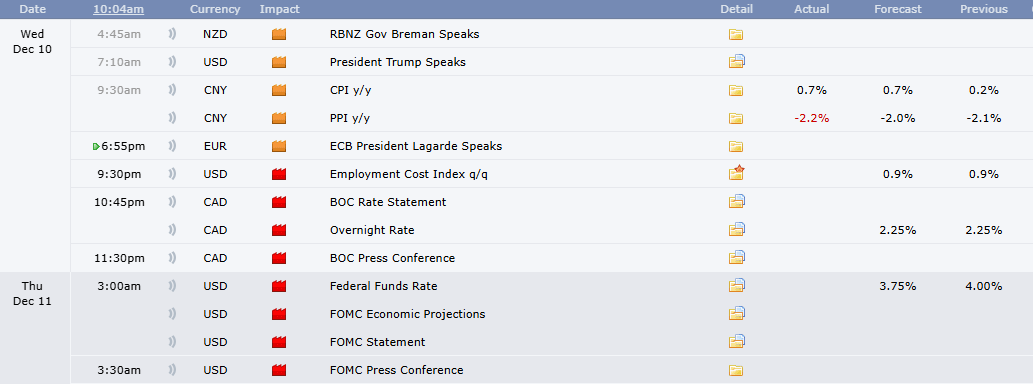
The Canadian economy finds itself at a turning point as the Bank of Canada prepares for its final policy meeting of the year. After several months of cutting interest rates, the central bank is now widely expected to hold the overnight rate steady. Recent data show that the economy is stronger than many anticipated, leaving little justification for additional easing. This raises an important question for investors and observers alike: what comes next for Canada’s economy and how might the Bank of Canada and the United States Federal Reserve respond after their upcoming decisions?
Over the past quarter, Canada delivered a far stronger growth result than expected. Third quarter output rebounded sharply, surprising analysts who had expected only modest expansion. That bounce, together with robust job creation and a falling unemployment rate, has strengthened the view that the economy no longer requires monetary support. The focus has shifted toward ensuring that growth does not overheat and that inflation remains under control.
On the inflation front, core measures remain stubborn. Excluding volatile items such as food and energy, prices continue to rise at rates above what the Bank of Canada considers sustainable in the long term. Wage growth has also remained firm, supporting household income and consumer spending. Domestic demand continues to show resilience, and supply pressures in certain sectors suggest a risk that businesses may pass higher costs on to consumers, keeping inflation elevated.
Given this backdrop, the Bank of Canada appears ready to conclude the era of easy money. Holding the policy rate steady signals that the bank is now focused on stability, aiming to keep inflation near its target while supporting continued growth and employment. Policymakers are likely to remain vigilant, and if inflation accelerates or the labor market remains unusually tight, the central bank may reconsider rate increases in the future.
Meanwhile, the Federal Reserve is charting a different course. The United States economy is showing signs of slowing, but remains on a soft landing without a clear slide into recession. Growth has moderated compared with the post-pandemic boom, with forecasts indicating that economic activity will continue at a modest pace over the next year. Consumer demand remains an important support, with incomes rising and personal spending holding up despite elevated borrowing costs.
The labor market in the United States has cooled from its hot phase earlier in the year. Job creation has slowed, and hiring is weaker than in the boom months. Unemployment remains low, but the pace of new job additions has softened, particularly in sectors sensitive to interest rates such as durable goods, transportation, and certain services. At the same time, inflation continues to complicate the policy outlook. Headline consumer prices remain elevated, while core inflation is steady near three percent. Consumers continue to anticipate rising costs for essentials, including rent, healthcare, and education.
This divergence between Canada and the United States could have important implications for global money flows and exchange rates. A stable or potentially higher Canadian policy rate alongside a falling US rate could make Canadian assets more attractive to investors seeking yield. This may strengthen the Canadian dollar and direct capital into domestic bond markets. It may also give the Bank of Canada room to adjust its balance sheet, potentially slowing the pace of asset reductions or reintroducing selective short-term funding operations as it transitions toward a neutral stance.
The Federal Reserve’s decision will also have significant effects. If the Fed cuts rates but signals that this is the last easing for some time, markets may view the move as a hawkish cut, limiting the decline of the US dollar. Even so, higher Canadian yields and steady domestic growth may keep the loonie competitive and potentially attract capital northward.
Analysis by Coach Angel
——
Disclaimer: Investing is risky. Investors should study the information before making investment decisions.
