บทความและความรู้ด้านการลงทุน
อัปเดตความรู้เรื่องหุ้นต่างประเทศ คู่สกุลเงิน และการสร้าง EA
รวบรวมบทความและสาระน่ารู้สำหรับผู้ที่สนใจเรื่อง การลงทุน ไม่ว่าจะเป็นมือใหม่ที่กำลังเริ่มศึกษาหรือผู้ที่ต้องการเพิ่มความรู้ให้รอบด้านมากขึ้น พบกับเนื้อหาเกี่ยวกับหุ้นต่างประเทศ คู่สกุลเงิน การสร้าง EA การวิเคราะห์ตลาด เทคนิคการเทรด การวางแผนลงทุน และการบริหารความเสี่ยง อธิบายในรูปแบบที่เข้าใจง่าย เพื่อให้คุณติดตามความรู้ใหม่ ๆ และนำแนวคิดที่ได้ไปต่อยอดกับการเรียนรู้และการลงทุนของตัวเอง
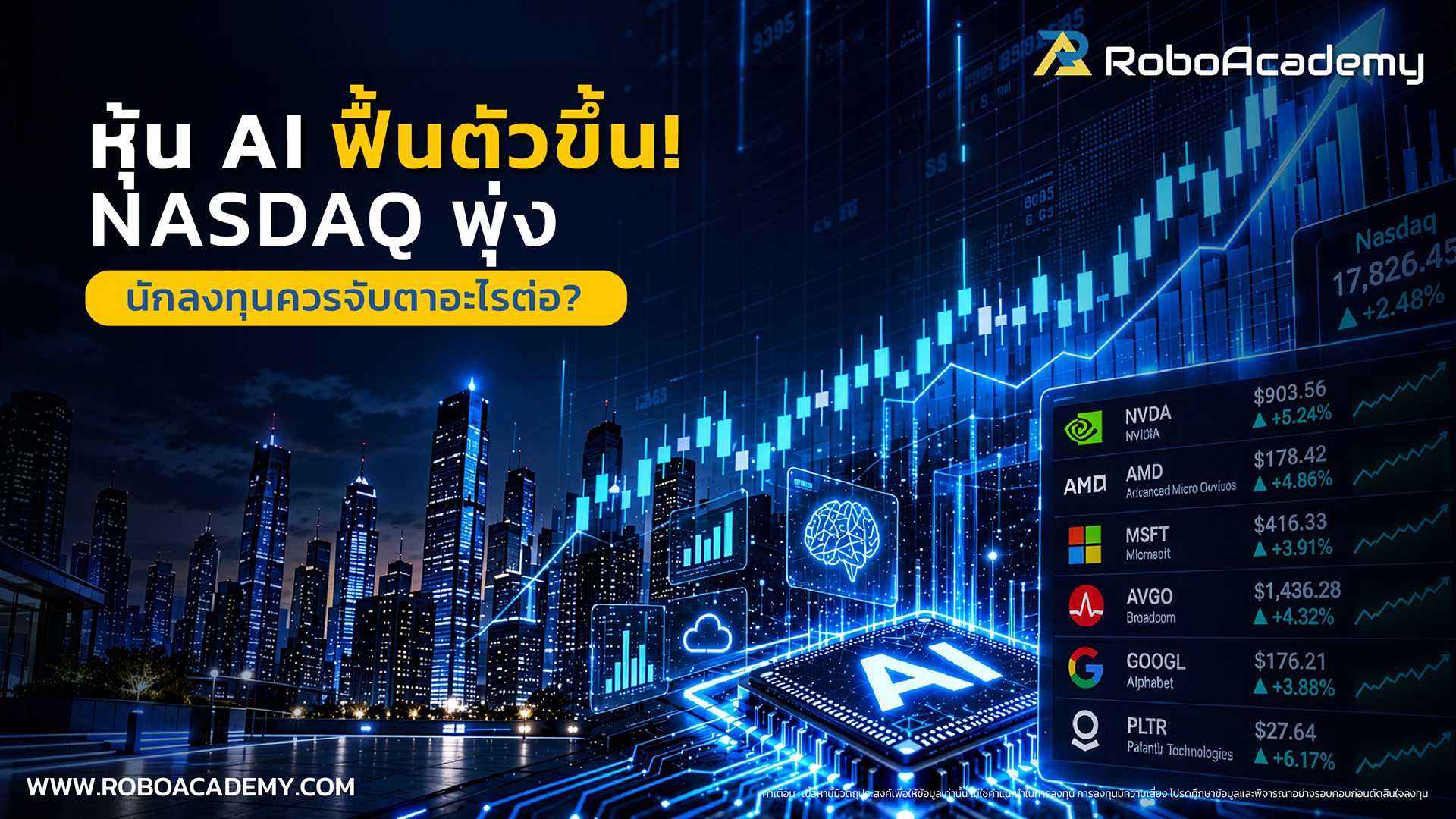
หุ้น AI ฟื้นตัว! Nasdaq พุ่ง นักลงทุนควรจับตาอะไรต่อ?
หุ้น AI ฟื้นตัวและดัชนี Nasdaq Composite ปรับตัวขึ้นกว่า 1% ในวันที่ 21 ตุลาคม 2569 หลังผลประกอบการบริษัทเทคโนโลยีช่วยสร้างความเชื่อมั่นให้ตลาด โดยเฉพาะธุรกิจที่เกี่ยวข้องกับโครงสร้างพื้นฐาน AI อย่างไรก็ตาม นักลงทุนควรติดตามผลประกอบการบริษัทเทคโนโลยี ทิศทางดอกเบี้ยสหรัฐฯ และมูลค่าหุ้นก่อนตัดสินใจลงทุน ซึ่งการเรียนรู้ผ่านคอร์สสอนเทรดจะช่วยให้เข้าใจปัจจัยเหล่านี้และวางแผนรับมือกับความผันผวนได้อย่างเป็นระบบ หุ้น AI ฟื้นตัว ดัน Nasdaq พุ่งขึ้น สัญญาณบวกของตลาดเทคโนโลยีสหรัฐฯ ตลาดหุ้นสหรัฐฯ กลับมาคึกคักอีกครั้ง โดยวันที่ 21 ตุลาคม 2569 ดัชนี Nasdaq Composite ปิดที่ 26,702.86 จุด เพิ่มขึ้นประมาณ 1.05% ขณะที่ S&P 500 ปรับตัวขึ้นประมาณ 0.58% แรงซื้อส่วนหนึ่งมาจากความเชื่อมั่นต่อธุรกิจ AI หลังบริษัทเทคโนโลยีรายงานผลประกอบการและแนวโน้มธุรกิจที่ดีกว่าตลาดคาดการณ์ หนึ่งในหุ้นที่ได้รับความสนใจคือ Super Micro Computer ซึ่งปรับตัวขึ้นประมาณ 9.6% หลังเปิดเผยแนวโน้มรายได้และอัตรากำไรที่เป็นบวก สะท้อนความต้องการเซิร์ฟเวอร์สำหรับประมวลผล AI ที่ยังแข็งแกร่ง ขณะเดียวกันกลุ่มเซมิคอนดักเตอร์ก็ปรับตัวขึ้นตามกระแสการลงทุนในเทคโนโลยี อย่างไรก็ตาม การฟื้นตัวของหุ้น AI ไม่ได้หมายความว่าหุ้นเทคโนโลยีทุกบริษัทจะปรับตัวขึ้นพร้อมกัน นักลงทุนจึงควรพิจารณาปัจจัยพื้นฐานของแต่ละบริษัทควบคู่กับภาพรวมตลาด ทำไมหุ้น AI ถึงกลับมาได้รับความสนใจจากนักลงทุน? ปัจจัยสำคัญที่สนับสนุนการฟื้นตัวของหุ้น AI คือความคาดหวังว่าการลงทุนด้านปัญญาประดิษฐ์จะสร้างรายได้ให้ธุรกิจได้อย่างต่อเนื่อง โดยเฉพาะบริษัทที่เกี่ยวข้องกับชิปประมวลผล เซิร์ฟเวอร์ และโครงสร้างพื้นฐาน Data Center นอกจากนี้ ผลประกอบการที่ออกมาดีกว่าคาดยังช่วยลดความกังวลเกี่ยวกับการเติบโตของอุตสาหกรรม แต่ตลาดยังต้องประเมินว่ารายได้และกำไรจะเติบโตทันกับมูลค่าหุ้นที่เพิ่มขึ้นหรือไม่ เพราะแม้ธุรกิจมีแนวโน้มเติบโตดี ราคาหุ้นก็อาจปรับตัวลดลงได้หากความคาดหวังของนักลงทุนสูงเกินไป นักลงทุนควรจับตาอะไร หลัง Nasdaq ปรับตัวขึ้น? การปรับตัวขึ้นของ Nasdaq เป็นสัญญาณเชิงบวกในระยะสั้น แต่ยังมีปัจจัยที่อาจส่งผลต่อทิศทางตลาดในช่วงต่อไป ปัจจัยที่ต้องติดตาม ผลกระทบที่อาจเกิดขึ้น ผลประกอบการหุ้นเทคโนโลยี รายได้และกำไรที่ดีกว่าคาดอาจช่วยหนุนราคาหุ้น นโยบายดอกเบี้ย Fed อัตราดอกเบี้ยและผลตอบแทนพันธบัตรส่งผลต่อการประเมินมูลค่าหุ้นเติบโต การลงทุนโครงสร้างพื้นฐาน AI ช่วยสะท้อนความต้องการชิป เซิร์ฟเวอร์ และ Data Center มูลค่าหุ้นและอัตราส่วน P/E ใช้ประเมินว่าราคาหุ้นสะท้อนความคาดหวังมากเกินไปหรือไม่ ปริมาณซื้อขายและแนวโน้มดัชนี ช่วยประเมินความแข็งแกร่งของการฟื้นตัว นักลงทุนไม่ควรใช้การปรับตัวขึ้นเพียงวันเดียวเป็นสัญญาณยืนยันแนวโน้มขาขึ้นระยะยาว แต่ควรวิเคราะห์ทั้งปัจจัยพื้นฐานและพฤติกรรมราคา เพื่อประกอบการตัดสินใจอย่างรอบคอบ หุ้น AI ฟื้นตัวแล้ว ควรเข้าซื้อทันทีหรือรอจังหวะ? การเข้าซื้อหุ้นหลังราคาปรับตัวขึ้นแรงอาจทำให้นักลงทุนเผชิญความเสี่ยงจากการซื้อในระดับราคาสูง โดยเฉพาะหุ้นเทคโนโลยีที่มีความผันผวนมาก นักลงทุนจึงควรกำหนดเป้าหมายการลงทุน ระดับความเสี่ยงที่ยอมรับได้ และเงื่อนไขในการซื้อขายให้ชัดเจน สำหรับผู้ที่สนใจเทรดดัชนี Nasdaq การวิเคราะห์แนวรับ แนวต้าน ปริมาณซื้อขาย และข่าวเศรษฐกิจสามารถช่วยประเมินจังหวะตลาดได้ แต่เครื่องมือเหล่านี้ไม่สามารถรับประกันทิศทางราคาได้เช่นกัน เรียนรู้การวิเคราะห์ Nasdaq และหุ้นสหรัฐฯ ก่อนตัดสินใจลงทุน ตลาดหุ้นเทคโนโลยีมีโอกาสเติบโตจากนวัตกรรม AI แต่ก็มาพร้อมความเสี่ยงจากความคาดหวังของตลาดและภาวะเศรษฐกิจ การเข้าใจว่าข่าวเศรษฐกิจ ผลประกอบการ และกระแสเงินทุนส่งผลต่อราคาหุ้นอย่างไร จึงเป็นพื้นฐานสำคัญสำหรับนักลงทุนทุกระดับ ผู้เริ่มต้นควรฝึกอ่านข้อมูลบริษัท วิเคราะห์แนวโน้มตลาด และเรียนรู้การบริหารเงินทุนก่อนลงทุนจริง เพื่อหลีกเลี่ยงการตัดสินใจจากกระแสข่าวหรือความกลัวพลาดโอกาสเพียงอย่างเดียว คำถามที่พบบ่อยเกี่ยวกับหุ้น AI และ Nasdaq Q1. หุ้น AI ฟื้นตัวแล้ว หมายความว่า Nasdaq จะขึ้นต่อหรือไม่? A: ไม่จำเป็น เพราะการฟื้นตัวระยะสั้นยังขึ้นอยู่กับผลประกอบการบริษัทเทคโนโลยี นโยบายดอกเบี้ย และความเชื่อมั่นของนักลงทุน จึงควรติดตามแนวโน้มตลาดอย่างต่อเนื่อง Q2. Nasdaq กับ Nasdaq 100 แตกต่างกันอย่างไร? A: Nasdaq Composite ครอบคลุมหุ้นส่วนใหญ่ที่จดทะเบียนในตลาด Nasdaq ส่วน Nasdaq 100 ประกอบด้วยบริษัทขนาดใหญ่ที่ไม่ใช่สถาบันการเงินจำนวน 100 บริษัทที่จดทะเบียนใน Nasdaq ซึ่งเป็นดัชนีที่ RoboAcademy นำมาใช้ประกอบการเรียนรู้การเทรดดัชนีสหรัฐฯ Q3. มือใหม่สามารถเริ่มลงทุนในหุ้น AI ได้หรือไม่? A: สามารถเริ่มศึกษาได้ แต่ควรทำความเข้าใจธุรกิจ ความเสี่ยง และการประเมินมูลค่าหุ้นก่อน โดย RoboAcademy มีคอร์สสอนเทรดและหลักสูตรพื้นฐานหุ้นต่างประเทศสำหรับผู้ที่ต้องการพัฒนาความรู้ด้านการลงทุน Q4. คอร์สสอนเทรดของ RoboAcademy ช่วยวิเคราะห์ Nasdaq ได้อย่างไร? A: RoboAcademy มีหลักสูตร US Index Mastery ที่ครอบคลุมการวิเคราะห์ดัชนีหุ้นสหรัฐฯ ปัจจัยเศรษฐกิจ ข่าวสำคัญ และการบริหารความเสี่ยง ช่วยให้ผู้เรียนเข้าใจความสัมพันธ์ระหว่างเศรษฐกิจกับการเคลื่อนไหวของตลาด Q5. ควรเรียนวิเคราะห์ปัจจัยพื้นฐานหรือเทคนิคก่อนเทรดหุ้น AI? A: ทั้งสองด้านมีความสำคัญ โดยปัจจัยพื้นฐานช่วยประเมินคุณภาพและมูลค่าธุรกิจ ส่วนการวิเคราะห์ทางเทคนิคช่วยศึกษาพฤติกรรมราคา ผู้เรียนสามารถเลือกคอร์สของ RoboAcademy ให้เหมาะกับพื้นฐานและเป้าหมายของตนเอง เข้าใจตลาดก่อนลงทุน เพิ่มโอกาสวางแผนเทรดอย่างมีระบบ การฟื้นตัวของหุ้น AI และการปรับตัวขึ้นของ Nasdaq สะท้อนความเชื่อมั่นที่กลับเข้าสู่ตลาดเทคโนโลยี แต่สิ่งสำคัญไม่ใช่เพียงการคาดการณ์ว่าหุ้นจะขึ้นต่อหรือไม่ หากเป็นการเข้าใจเหตุผลเบื้องหลังการเคลื่อนไหวของราคา รวมถึงรู้ว่าควรจัดการความเสี่ยงอย่างไรเมื่อสถานการณ์เปลี่ยนแปลง เริ่มต้นเรียนรู้การลงทุนกับ RoboAcademy สำหรับผู้ที่ต้องการพัฒนาทักษะการวิเคราะห์ตลาดหุ้นสหรัฐฯ RoboAcademy มีคอร์สสอนเทรดตั้งแต่พื้นฐานหุ้นต่างประเทศ การวิเคราะห์กราฟ ไปจนถึงหลักสูตร US Index Mastery ที่ช่วยให้เข้าใจการเคลื่อนไหวของ Nasdaq และดัชนีสำคัญ พร้อมเรียนรู้การวางแผนซื้อขายและบริหารความเสี่ยงอย่างเป็นระบบ อ้างอิงข้อมูลจาก : https://www.reuters.com/legal/transactional/nasdaq-futures-lead-gains-spacex-super-micro-results-lift-ai-trade-2026-10-21/
มือใหม่ห้ามพลาด! คำศัพท์การลงทุนที่ต้องรู้ก่อนเข้าตลาด
สำหรับคนที่กำลังมองหาคอร์ส สอนเทรดหุ้น มือใหม่ การเข้าใจคำศัพท์การลงทุนเป็นพื้นฐานสำคัญก่อนเข้าตลาด เพราะช่วยให้อ่านข้อมูลและบทวิเคราะห์ได้ง่ายขึ้น คำที่ควรรู้มีตั้งแต่ Stock, Portfolio, Bull Market, Bear Market, Leverage, Option ไปจนถึงคำศัพท์ด้านกราฟอย่าง Support, Resistance และ Volume รวมคำศัพท์การลงทุนสำคัญที่มือใหม่ควรรู้ ก่อนเริ่มวิเคราะห์และเทรดด้วยตัวเอง เปิดกราฟครั้งแรกแล้วเจอทั้ง Bull Market, Volume, Leverage หรือ Option เต็มไปหมด เป็นเรื่องปกติที่มือใหม่จะรู้สึกว่าการลงทุนมีศัพท์เฉพาะเยอะมาก แต่เราไม่จำเป็นต้องจำทั้งหมดในครั้งเดียว สิ่งสำคัญคือเข้าใจว่าแต่ละคำหมายถึงอะไร และเกี่ยวข้องกับการตัดสินใจในตลาดอย่างไร โดยเฉพาะคนที่เริ่มค้นหาคอร์ส สอนเทรดหุ้น มือใหม่ การปูพื้นฐานเรื่องคำศัพท์ไว้ก่อน จะช่วยให้เรียนเรื่องการวิเคราะห์หุ้น การอ่านกราฟ และการบริหารความเสี่ยงในขั้นต่อไปได้ง่ายขึ้น 14 คำศัพท์การลงทุน มือใหม่ควรรู้จัก 1. Stock หรือ หุ้น หุ้นคือหลักทรัพย์ที่แสดงความเป็นเจ้าของส่วนหนึ่งของบริษัท เมื่อเราซื้อหุ้นจึงเท่ากับเข้าไปถือสิทธิความเป็นเจ้าของในบริษัทตามสัดส่วนที่ถืออยู่ 2. Portfolio หรือ พอร์ตการลงทุน Portfolio คือภาพรวมสินทรัพย์ที่เราถือ เช่น หุ้นต่างประเทศ กองทุน หรือตราสารประเภทต่าง ๆ การจัดพอร์ตมีเป้าหมายเพื่อให้สัดส่วนสินทรัพย์สอดคล้องกับเป้าหมาย ระยะเวลาลงทุน และระดับความเสี่ยงที่ยอมรับได้ 3. Dividend หรือ เงินปันผล เงินปันผลคือเงินที่บริษัทอาจจัดสรรให้แก่ผู้ถือหุ้นตามผลการดำเนินงานและนโยบายของบริษัท อย่างไรก็ตาม การถือหุ้นไม่ได้หมายความว่าจะได้รับเงินปันผลเสมอไป 4. Bull Market ภาวะตลาดที่ราคาสินทรัพย์โดยภาพรวมมีแนวโน้มปรับตัวสูงขึ้นต่อเนื่อง และมักสะท้อนมุมมองเชิงบวกของผู้ลงทุนต่อตลาดในช่วงนั้น 5. Bear Market ภาวะที่ราคาสินทรัพย์โดยภาพรวมมีแนวโน้มปรับตัวลดลงเป็นระยะเวลาหนึ่ง ทำให้ผู้ลงทุนมักเพิ่มความระมัดระวังในการตัดสินใจ 6. Bid / Ask Bid คือราคาที่ผู้ซื้อต้องการซื้อ ส่วน Ask คือราคาที่ผู้ขายต้องการขาย การเข้าใจสองคำนี้จะช่วยให้อ่านข้อมูลราคาและหน้ากระดานซื้อขายได้ง่ายขึ้น 7. Volume Volume คือปริมาณการซื้อขายที่เกิดขึ้นในช่วงเวลาหนึ่ง นักเทรดมักใช้ Volume ประกอบการอ่านกราฟ เพื่อพิจารณาว่าการเคลื่อนไหวของราคาในช่วงนั้นมีปริมาณการซื้อขายสนับสนุนมากน้อยเพียงใด 8. Support หรือ แนวรับ แนวรับคือบริเวณราคาที่ในอดีตเคยมีแรงซื้อเข้ามามากขึ้น จนอาจทำให้การปรับตัวลงชะลอลง แต่ไม่ได้หมายความว่าราคาจะหยุดอยู่บริเวณดังกล่าวทุกครั้ง เพราะแนวรับสามารถถูกทะลุได้ 9. Resistance หรือ แนวต้าน แนวต้านคือบริเวณราคาที่เคยมีแรงขายเพิ่มขึ้นและทำให้ราคาผ่านขึ้นไปได้ยากในบางช่วง อย่างไรก็ตาม แนวต้านสามารถถูกทะลุได้เช่นเดียวกับแนวรับ 10. Trend หรือ แนวโน้ม Trend คือทิศทางหลักของราคาในช่วงเวลาหนึ่ง โดยมักแบ่งเป็น Uptrend แนวโน้มขึ้น, Downtrend แนวโน้มลง และ Sideway ซึ่งราคาเคลื่อนไหวอยู่ในกรอบและยังไม่มีทิศทางชัดเจน 11. Leverage Leverage คือการใช้เงินทุนจำนวนหนึ่งเพื่อเปิดสถานะที่มีมูลค่าสูงกว่าเงินทุนที่วางไว้ เช่น Leverage 1:10 หมายความว่าเงินทุน 10,000 บาทสามารถควบคุมสถานะมูลค่า 100,000 บาทได้ สิ่งที่มือใหม่ต้องเข้าใจคือ Leverage จะขยายผลของการเคลื่อนไหวของราคาเมื่อเทียบกับเงินทุนที่วางไว้ด้วย จึงต้องศึกษาเรื่อง Margin, Position Size และการบริหารความเสี่ยง ควบคู่กัน ไม่ควรมอง Leverage เป็นเพียงวิธีเพิ่มขนาดการเทรด 12. Option หรือ ออปชัน Option คือตราสารอนุพันธ์ที่ให้สิทธิแก่ผู้ซื้อในการซื้อหรือขายสินทรัพย์อ้างอิงตามราคาและช่วงเวลาที่กำหนด โดยทั่วไปแบ่งออกเป็น Call Option ให้สิทธิในการซื้อสินทรัพย์อ้างอิง Put Option ให้สิทธิในการขายสินทรัพย์อ้างอิง ผู้ซื้อ Option จะจ่าย Premium เพื่อได้รับสิทธิดังกล่าว และควรเข้าใจคำที่เกี่ยวข้อง เช่น Strike Price และ Expiration Date เนื่องจากราคาของ Option ไม่ได้ขึ้นอยู่กับทิศทางของสินทรัพย์อ้างอิงเพียงอย่างเดียว 13. Fundamental Analysis Fundamental Analysis หรือการวิเคราะห์ปัจจัยพื้นฐาน คือการศึกษาข้อมูลของกิจการ เช่น รูปแบบธุรกิจ รายได้ กระแสเงินสด งบการเงิน ความสามารถในการแข่งขัน รวมถึงสภาพเศรษฐกิจและอุตสาหกรรม เพื่อทำความเข้าใจพื้นฐานของบริษัท 14. Technical Analysis Technical Analysis หรือการวิเคราะห์ทางเทคนิค คือการศึกษาข้อมูลราคาและปริมาณการซื้อขายผ่านกราฟ โดยอาจพิจารณา Trend, Support, Resistance, Volume และ Indicator ต่าง ๆ เพื่อศึกษาพฤติกรรมของตลาดและนำไปประกอบการวางแผนเทรด จากจำศัพท์ สู่การเข้าใจตลาดอย่างเป็นระบบ การเริ่มเรียนเทรดไม่จำเป็นต้องรีบใช้ Indicator จำนวนมากหรือศึกษากลยุทธ์ที่ซับซ้อนตั้งแต่วันแรก พื้นฐานที่สำคัญกว่าคือการเข้าใจว่าตลาดทำงานอย่างไร สินทรัพย์แต่ละประเภทแตกต่างกันอย่างไร อ่านข้อมูลที่เกี่ยวข้องเป็น และรู้ว่าความเสี่ยงของสิ่งที่กำลังศึกษาอยู่มาจากตรงไหน เมื่อพื้นฐานเหล่านี้แข็งแรงขึ้น คำอย่าง Trend, Volume, Fundamental Analysis หรือ Technical Analysis จะไม่ใช่เพียงคำศัพท์ที่ต้องท่องจำ แต่จะกลายเป็นส่วนหนึ่งของกระบวนการวิเคราะห์ตลาด อยากเรียนเทรดหุ้น มือใหม่ควรเลือกเรียนแบบไหน? สำหรับมือใหม่ ควรมองหาหลักสูตรที่เรียงเนื้อหาจากพื้นฐานไปสู่การนำไปใช้ ไม่ควรเริ่มจากเทคนิคที่ซับซ้อนทันที โดยหัวข้อที่ควรศึกษา ได้แก่ ความรู้พื้นฐานเกี่ยวกับตลาดและสินทรัพย์ การอ่านข้อมูลหุ้น การวิเคราะห์ปัจจัยพื้นฐาน การวิเคราะห์ทางเทคนิค การจัดสรรสินทรัพย์ และการบริหารความเสี่ยง การเรียนเป็นลำดับจะช่วยให้เข้าใจว่าเครื่องมือหรือแนวคิดแต่ละอย่างถูกนำมาใช้เพื่ออะไร และลดการเรียนแบบจำเป็นจุด ๆ โดยไม่เห็นภาพรวมของตลาด คำถามที่พบบ่อยเกี่ยวกับคำศัพท์และการเรียนเทรดหุ้น Q1. มือใหม่ควรจำคำศัพท์การลงทุนทั้งหมดก่อนเริ่มเรียนหรือไม่? A: ไม่จำเป็น ควรเริ่มจากคำที่พบได้บ่อย เช่น Stock, Portfolio, Trend, Volume, Support และ Resistance จากนั้นค่อยเพิ่มคำศัพท์ตามเนื้อหาที่กำลังศึกษา จะช่วยให้เข้าใจและจดจำจากบริบทได้ง่ายกว่า Q2. Leverage คืออะไร และมือใหม่ควรรู้อะไรเป็นพิเศษ? A: Leverage คือการใช้เงินทุนเพื่อควบคุมสถานะที่มีมูลค่าสูงกว่าเงินทุนที่วางไว้ ทำให้ผลจากการเปลี่ยนแปลงของราคามีขนาดมากขึ้นเมื่อเทียบกับเงินทุนที่ใช้ มือใหม่จึงควรศึกษา Margin, Position Size และการบริหารความเสี่ยงควบคู่กัน Q3. Option ต่างจากหุ้นอย่างไร? A: หุ้นแสดงความเป็นเจ้าของส่วนหนึ่งของบริษัท ส่วน Option เป็นตราสารอนุพันธ์ที่ให้สิทธิในการซื้อหรือขายสินทรัพย์อ้างอิงภายใต้เงื่อนไขที่กำหนด โครงสร้างและปัจจัยที่มีผลต่อราคาจึงแตกต่างจากการซื้อหุ้นโดยตรง Q4. ไม่มีพื้นฐาน สามารถเริ่มเรียนกับ RoboAcademy ได้หรือไม่? A: ผู้เริ่มต้นสามารถเลือกศึกษาหลักสูตรของ RoboAcademy ที่เน้นการปูพื้นฐานก่อน แล้วจึงค่อยต่อยอดไปสู่การวิเคราะห์ตลาดและหัวข้อที่มีรายละเอียดมากขึ้นตามระดับความเข้าใจของตนเอง Q5. เรียนเทรดหุ้นกับ RoboAcademy แล้วควรเริ่มจาก Fundamental หรือ Technical Analysis? A: มือใหม่ควรรู้พื้นฐานของทั้งสองแนวทาง เพราะ Fundamental Analysis ช่วยให้เข้าใจธุรกิจและปัจจัยที่เกี่ยวข้องกับบริษัท ขณะที่ Technical Analysis ช่วยให้เข้าใจพฤติกรรมราคาและข้อมูลบนกราฟ การเรียนทั้งสองด้านจะช่วยให้มองตลาดได้รอบด้านมากขึ้น ปูพื้นฐานการลงทุนและการเทรดกับ RoboAcademy หากกำลังมองหาหลักสูตร สอนเทรดหุ้น มือใหม่ และยังไม่รู้ว่าควรเริ่มเรียนจากเรื่องไหน RoboAcademy มีหลักสูตรด้านการลงทุนและการเทรดที่สามารถเลือกเรียนตามระดับความรู้และหัวข้อที่สนใจ ตั้งแต่พื้นฐานตลาด การลงทุนในหุ้นต่างประเทศ การวิเคราะห์ปัจจัยพื้นฐาน ไปจนถึงการวิเคราะห์ทางเทคนิค แนวทางการเรียนที่ดีไม่ใช่การรีบหาวิธีเทรดที่ซับซ้อนที่สุด แต่คือการค่อย ๆ ทำความเข้าใจหลักการ ฝึกวิเคราะห์ข้อมูล และพัฒนากระบวนการตัดสินใจของตัวเอง ซึ่งเป็นพื้นฐานที่สามารถนำไปต่อยอดกับการศึกษาตลาดในระยะยาวได้
S&P 500 คืออะไร? ทำไมมือใหม่ควรรู้จักก่อนเริ่มเรียนคอร์สสอนเทรด
S&P 500 คือดัชนีที่ติดตามบริษัทขนาดใหญ่ชั้นนำในตลาดหุ้นสหรัฐประมาณ 500 บริษัท ครอบคลุมธุรกิจหลายอุตสาหกรรม และมักถูกใช้เป็นหนึ่งในตัวชี้วัดภาพรวมของตลาดหุ้นสหรัฐ สำหรับมือใหม่ที่กำลังมองหา คอร์สสอนเทรด การเข้าใจ S&P 500 จะช่วยปูพื้นฐานก่อนเรียนรู้เรื่องหุ้น ดัชนี และการวิเคราะห์ตลาดในระดับต่อไป S&P 500 คืออะไร? ทำไมดัชนีนี้ถึงสำคัญกับคนเริ่มเรียนเทรด หากเริ่มติดตามตลาดหุ้นสหรัฐ ชื่อ S&P 500 น่าจะเป็นหนึ่งในคำที่พบเห็นบ่อยที่สุด ไม่ว่าจะเป็นในข่าวเศรษฐกิจ บทวิเคราะห์ตลาด หรือรายงานเกี่ยวกับทิศทางหุ้นสหรัฐ S&P 500 ย่อมาจาก Standard & Poor's 500 Index เป็นดัชนีที่รวบรวมบริษัทขนาดใหญ่ของสหรัฐประมาณ 500 บริษัทจากหลายอุตสาหกรรม บริษัทที่อยู่ในดัชนีมีทั้งกลุ่มเทคโนโลยี การเงิน สุขภาพ สินค้าอุปโภคบริโภค พลังงาน อุตสาหกรรม และธุรกิจประเภทอื่น ด้วยความหลากหลายนี้ S&P 500 จึงถูกติดตามอย่างกว้างขวางในฐานะหนึ่งในดัชนีสำคัญสำหรับมองภาพตลาดหุ้นขนาดใหญ่ของสหรัฐ S&P 500 มีหุ้นอะไรบ้าง? แม้ชื่อจะบอกว่า 500 แต่ S&P 500 ไม่ได้หมายถึงการนำหุ้นสหรัฐ 500 ตัวมาใส่รวมกันแบบสุ่ม บริษัทต้องผ่านเกณฑ์หลายด้านก่อนที่จะได้รับการพิจารณาเข้าดัชนี และองค์ประกอบสามารถเปลี่ยนแปลงได้ตามเวลา ตัวอย่างบริษัทขนาดใหญ่ที่เป็นที่รู้จักและอยู่ใน S&P 500 เช่น Apple, Microsoft, NVIDIA, Amazon, Meta Platforms และ Alphabet จุดสำคัญสำหรับมือใหม่คือ S&P 500 ไม่ได้มีเฉพาะหุ้นเทคโนโลยี ภายในดัชนียังประกอบด้วยบริษัทจากหลายอุตสาหกรรม ทำให้ภาพการเคลื่อนไหวของ S&P 500 แตกต่างจากดัชนีที่ให้น้ำหนักกับธุรกิจบางกลุ่มมากเป็นพิเศษ S&P 500 คำนวณอย่างไร? อีกเรื่องที่มือใหม่ควรรู้คือ หุ้นทุกบริษัทใน S&P 500 ไม่ได้มีอิทธิพลต่อดัชนีเท่ากัน S&P 500 ใช้วิธีคำนวณแบบ Market-Capitalization Weighted Index หรือให้น้ำหนักตามมูลค่าตลาดที่ปรับด้วยหุ้นที่ซื้อขายได้ พูดง่าย ๆ คือ บริษัทที่มีขนาดใหญ่มากจะมีน้ำหนักต่อการเคลื่อนไหวของดัชนีมากกว่าบริษัทขนาดเล็กกว่า ดังนั้น บางวันที่เห็น S&P 500 เคลื่อนไหวชัดเจน ไม่ได้หมายความว่าหุ้นทุกบริษัทในดัชนีกำลังเคลื่อนไหวในทิศทางเดียวกันทั้งหมด การเข้าใจเรื่อง Weight จึงช่วยให้มือใหม่อ่านดัชนีได้ละเอียดกว่าการดูเพียงว่าตัวเลขวันนี้เป็นบวกหรือลบ อะไรทำให้ S&P 500 ขึ้นหรือลง? ไม่มีปัจจัยเพียงอย่างเดียวที่กำหนดทิศทางของ S&P 500 เพราะบริษัทภายในดัชนีอยู่ในหลายอุตสาหกรรมและได้รับอิทธิพลจากสภาพเศรษฐกิจแตกต่างกัน ปัจจัยสำคัญที่ตลาดมักติดตาม เช่น ทิศทางอัตราดอกเบี้ยของธนาคารกลางสหรัฐ เงินเฟ้อและข้อมูลเศรษฐกิจ ตัวเลขการจ้างงาน ผลประกอบการและแนวโน้มธุรกิจของบริษัท สถานการณ์เศรษฐกิจและภูมิรัฐศาสตร์ Sentiment ของผู้เข้าร่วมตลาด นี่จึงเป็นเหตุผลว่าทำไมการติดตาม S&P 500 ไม่ควรมองเฉพาะกราฟ แต่ควรทำความเข้าใจทั้งเศรษฐกิจและสิ่งที่เกิดขึ้นกับบริษัทภายในดัชนีประกอบกัน ทำไมมือใหม่ควรรู้จัก S&P 500 ก่อนเริ่มเรียนเทรด? เพราะ S&P 500 สามารถใช้เป็นจุดเริ่มต้นในการทำความเข้าใจหลายเรื่องพร้อมกัน ตั้งแต่โครงสร้างตลาดหุ้นสหรัฐ ความหมายของดัชนี Market Capitalization ความแตกต่างของแต่ละอุตสาหกรรม ไปจนถึงความสัมพันธ์ระหว่างเศรษฐกิจกับตลาดหุ้น เมื่อเห็นข่าวว่า “S&P 500 ปรับตัว” เราจึงไม่ควรหยุดอยู่แค่คำถามว่า “ขึ้นหรือลง?” แต่สามารถตั้งคำถามต่อได้ว่า “กลุ่มธุรกิจไหนกำลังมีอิทธิพลต่อตลาด?” “มีข้อมูลเศรษฐกิจอะไรเกิดขึ้น?” “บริษัทขนาดใหญ่ในดัชนีกำลังเคลื่อนไหวอย่างไร?” การฝึกตั้งคำถามแบบนี้เป็นพื้นฐานสำคัญของการเรียนวิเคราะห์ตลาด คำถามที่พบบ่อยเกี่ยวกับ S&P 500 สำหรับมือใหม่ Q1. S&P 500 คือหุ้นหรือดัชนี? A: S&P 500 เป็น “ดัชนี” ไม่ใช่หุ้นบริษัทเดียว โดยใช้ติดตามบริษัทขนาดใหญ่ชั้นนำในตลาดหุ้นสหรัฐประมาณ 500 บริษัท Q2. S&P 500 มีแต่หุ้นเทคโนโลยีหรือไม่? A: ไม่ใช่ S&P 500 ครอบคลุมหลายอุตสาหกรรม ทั้งเทคโนโลยี การเงิน สุขภาพ พลังงาน สินค้าอุปโภคบริโภค และกลุ่มธุรกิจอื่น ๆ Q3. S&P 500 กับ Nasdaq 100 เหมือนกันไหม? A: ไม่เหมือนกัน S&P 500 มีบริษัทขนาดใหญ่จากหลายอุตสาหกรรม ขณะที่ Nasdaq 100 ประกอบด้วยบริษัทขนาดใหญ่ที่ไม่ใช่สถาบันการเงินในตลาด Nasdaq และมีสัดส่วนกลุ่มเทคโนโลยีที่โดดเด่นกว่า Q4. มือใหม่ควรเรียนอะไรเพื่อทำความเข้าใจ S&P 500? A: ควรเริ่มจากพื้นฐานตลาดหุ้นและดัชนี จากนั้นค่อยเรียน Fundamental Analysis, Technical Analysis, Risk Management และฝึกติดตามข้อมูลเศรษฐกิจควบคู่กัน Q5. RoboAcademy มีคอร์สสำหรับมือใหม่ที่สนใจตลาดหุ้นหรือไม่? A: มี RoboAcademy มีคอร์ส “ก้าวแรกสู่การเป็นนักลงทุน : คอร์สเทรดหุ้นแบบ Step-by-Step” ซึ่งออกแบบสำหรับมือใหม่ ครอบคลุมตั้งแต่พื้นฐานตลาด หุ้น การวิเคราะห์กิจการ ดัชนีเศรษฐกิจ ไปจนถึงหุ้นต่างประเทศ เหมาะสำหรับผู้ที่ต้องการค่อย ๆ สร้างพื้นฐานก่อนศึกษาเนื้อหาในระดับต่อไป รู้จัก S&P 500 คือหนึ่งในพื้นฐานของการเข้าใจตลาดหุ้นสหรัฐ S&P 500 ไม่ได้เป็นเพียงตัวเลขที่ปรากฏในข่าวทุกวัน แต่สามารถใช้เป็นจุดเริ่มต้นในการเรียนรู้ว่าตลาดหุ้นสหรัฐ เศรษฐกิจ และบริษัทขนาดใหญ่เชื่อมโยงกันอย่างไร สำหรับมือใหม่ จึงไม่จำเป็นต้องรีบเรียนเทคนิคจำนวนมากพร้อมกัน เริ่มจากเข้าใจโครงสร้างของตลาดก่อน แล้วค่อยต่อยอดไปสู่ Fundamental Analysis, Technical Analysis และการวางแผนอย่างเป็นระบบ เริ่มสร้างพื้นฐานตลาดหุ้นกับ RoboAcademy หากกำลังมองหา คอร์สสอนเทรด เพื่อเริ่มทำความเข้าใจตลาดหุ้น RoboAcademy มีหลักสูตรสำหรับผู้เริ่มต้นและเนื้อหาเกี่ยวกับหุ้นต่างประเทศที่สามารถเลือกเรียนตามระดับความรู้ได้ เริ่มจากการเข้าใจว่าตลาดทำงานอย่างไร แล้วค่อยพัฒนาทักษะการอ่านข้อมูล วิเคราะห์ธุรกิจและกราฟ เพื่อสร้างกระบวนการวิเคราะห์ตลาดของตัวเองอย่างเป็นขั้นตอน
Fear & Greed Index คืออะไร? เมื่อความกลัวครองตลาด นักลงทุนควรรับมืออย่างไร
Fear & Greed Index เป็นดัชนีที่ใช้สะท้อน Sentiment หรืออารมณ์ของผู้เข้าร่วมตลาดว่า ณ ช่วงเวลาหนึ่งตลาดมีแนวโน้มอยู่ภายใต้อิทธิพลของ “ความกลัว” หรือ “ความโลภ” มากน้อยเพียงใด โดยเฉพาะช่วงที่ความกลัวเพิ่มสูง นักลงทุนอาจตัดสินใจจากอารมณ์มากกว่าแผนที่วางไว้ สำหรับมือใหม่ การ เรียนคอร์สสอนเทรด ควบคู่กับการทำความเข้าใจ Market Psychology, Risk Management และการวิเคราะห์ตลาด จะช่วยให้มองสถานการณ์ได้อย่างเป็นระบบมากขึ้น แทนการตัดสินใจจาก Sentiment เพียงอย่างเดียว Fear & Greed Index คืออะไร? Fear & Greed Index คือดัชนีที่พยายามสะท้อนอารมณ์หรือ Sentiment ของผู้เข้าร่วมตลาด โดยแบ่งภาพรวมตั้งแต่ภาวะที่มีความกลัวสูง ไปจนถึงภาวะที่ตลาดมีความโลภสูง เมื่อดัชนีสะท้อนระดับ Fear สูง หมายความว่าผู้เข้าร่วมตลาดโดยรวมกำลังมีความกังวลมากขึ้น ซึ่งอาจเกิดขึ้นพร้อมกับเหตุการณ์ต่าง ๆ เช่น เศรษฐกิจชะลอตัว ความขัดแย้งระหว่างประเทศ การเปลี่ยนแปลงนโยบายการเงิน ข่าวที่เหนือความคาดหมาย หรือราคาสินทรัพย์ที่ผันผวนอย่างรุนแรง อย่างไรก็ตาม Fear & Greed Index ไม่ได้เป็นเครื่องมือที่ใช้ยืนยันว่าราคาจะขึ้นหรือลงในอนาคต แต่ควรนำมาใช้ประกอบกับข้อมูลและการวิเคราะห์ด้านอื่น H2: เมื่อ Fear สูง ทำไมจึงกระทบการตัดสินใจของนักลงทุน? ปัญหาในช่วงที่ตลาดมีความกลัวสูงไม่ได้อยู่ที่การเคลื่อนไหวของกราฟเพียงอย่างเดียว แต่อยู่ที่กระบวนการ “ตัดสินใจ” ของนักลงทุนด้วย Behavioral Finance อธิบายว่ามนุษย์ไม่ได้ตัดสินใจเรื่องการเงินด้วยเหตุผลเพียงอย่างเดียว อารมณ์และอคติทางความคิดหรือ Behavioral Bias สามารถเข้ามามีอิทธิพลได้ โดยเฉพาะในช่วงที่ตลาดเต็มไปด้วยความไม่แน่นอน สำหรับมือใหม่ที่ยังไม่มี Trading Plan ชัดเจน อาจพบพฤติกรรม เช่น เห็นราคาเคลื่อนไหวแรงแล้วรีบเปลี่ยนแผน ตัดสินใจตามข่าวโดยยังไม่ได้วิเคราะห์ข้อมูล เปิดสถานะเพราะกลัวพลาดโอกาส เปลี่ยนมุมมองตามความคิดเห็นใน Social Media ใช้ขนาดสถานะไม่สัมพันธ์กับความเสี่ยงที่รับได้ ดังนั้น ยิ่งตลาดมีความผันผวนสูง การมี Trading Plan และ Risk Management ที่ชัดเจนก็ยิ่งมีความสำคัญ Fear & Greed Index ต่างจาก Bear Market อย่างไร? สองแนวคิดนี้ไม่เหมือนกัน และไม่ควรใช้แทนกัน Fear & Greed Index เป็นดัชนีที่ใช้สะท้อน Sentiment หรืออารมณ์ของผู้เข้าร่วมตลาดในช่วงเวลาหนึ่ง ส่วน Bear Market เป็นคำที่ใช้อธิบายภาวะตลาดที่ราคาปรับตัวลดลงอย่างมีนัยสำคัญ โดยในตลาดหุ้นมักมีการใช้ระดับการลดลงประมาณ 20% จากจุดสูงสุดล่าสุดเป็นเกณฑ์อ้างอิงทั่วไป ดังนั้น การที่ Fear & Greed Index อยู่ในระดับ Fear หรือ Extreme Fear ไม่ได้หมายความว่าตลาดจะต้องเป็น Bear Market หรือราคาจะต้องปรับตัวลงต่อเสมอไป H2: ทำไมช่วงที่ตลาดมี Fear สูง คนจึงตัดสินใจพลาดได้ง่าย? ตัดสินใจตามอารมณ์มากกว่าแผน: เมื่อราคาเคลื่อนไหวรุนแรง ความกลัวอาจทำให้นักลงทุนละทิ้งแผนเดิมและตัดสินใจตามสถานการณ์เฉพาะหน้า การเข้าใจ Investment Psychology จึงเป็นพื้นฐานสำคัญของการเรียนเทรด เชื่อข่าวเร็วเกินไป: ช่วงตลาดผันผวนมักมีข่าวและความคิดเห็นจำนวนมาก นักลงทุนจึงควรฝึกแยกข้อเท็จจริงออกจากความคิดเห็น รวมถึงพิจารณาว่าข่าวนั้นมีผลต่อสินทรัพย์ที่ติดตามจริงหรือไม่ ไม่มีแผนเมื่อราคาไม่เป็นไปตามคาด: การวางแผนเฉพาะจุดเข้าเทรดอาจไม่เพียงพอ ควรกำหนดล่วงหน้าด้วยว่าหากตลาดเคลื่อนไหวผิดจากสมมติฐาน จะลดความเสี่ยง หยุดขาดทุน หรือปรับสถานะอย่างไร คำถามที่พบบ่อยเกี่ยวกับ Fear & Greed Index และการเรียนเทรด Q1. Fear & Greed Index คืออะไร? Fear & Greed Index คือดัชนีที่ใช้สะท้อน Sentiment ของตลาดว่าผู้เข้าร่วมตลาดกำลังอยู่ภายใต้อิทธิพลของความกลัวหรือความโลภมากน้อยเพียงใด โดยควรใช้เป็นข้อมูลประกอบ ไม่ใช่สัญญาณซื้อหรือขายเพียงอย่างเดียว Q2. Fear สูงกับ Bear Market เหมือนกันไหม? ไม่เหมือนกัน Fear เป็นการสะท้อน Sentiment หรือระดับความกังวลของตลาด ขณะที่ Bear Market เป็นคำที่อธิบายการปรับตัวลงอย่างมีนัยสำคัญของราคา ตลาดจึงสามารถมี Fear สูงได้โดยไม่จำเป็นต้องอยู่ใน Bear Market Q3. มือใหม่ควรรับมืออย่างไรเมื่อ Fear สูง? ควรหลีกเลี่ยงการตัดสินใจจากข่าวหรืออารมณ์เพียงอย่างเดียว และกลับมาตรวจสอบ Trading Plan, Risk Management รวมถึงข้อมูล Fundamental และ Technical ที่เกี่ยวข้องก่อนตัดสินใจ Q4. ทำไมจิตวิทยาการลงทุนจึงสำคัญในช่วงตลาดผันผวน? เพราะความกลัวสามารถส่งผลต่อกระบวนการตัดสินใจและทำให้เกิด Behavioral Bias ได้ การเข้าใจ Investment Psychology จึงช่วยให้นักลงทุนสังเกตอารมณ์และพฤติกรรมของตัวเองก่อนตัดสินใจ RoboAcademy มีคอร์ส Mindset ในการลงทุนระยะยาว ซึ่งครอบคลุมปัจจัยด้านจิตวิทยาและ Behavioral Bias ที่เกี่ยวข้องกับการลงทุน Q5. มือใหม่ที่อยากเข้าใจตลาดควรเริ่มเรียนอะไรกับ RoboAcademy? สามารถเริ่มจากคอร์สพื้นฐานตามตลาดที่สนใจ เพื่อทำความเข้าใจโครงสร้างตลาด Price Action, Price Pattern, Trend, Demand & Supply, Money Management และจิตวิทยาการเทรด ก่อนพัฒนาต่อยอดไปสู่กลยุทธ์ที่ซับซ้อนขึ้น H3: RoboAcademy เรียนรู้การเทรดอย่างเป็นระบบ การรับมือกับตลาดที่ผันผวนไม่ได้ขึ้นอยู่กับการคาดเดาทิศทางราคาเพียงอย่างเดียว แต่ยังเกี่ยวข้องกับการวางแผน การบริหารความเสี่ยง และการควบคุมกระบวนการตัดสินใจของตัวเอง RoboAcademy จึงออกแบบเนื้อหา คอร์สสอนเทรด ให้ครอบคลุมทั้งพื้นฐานการวิเคราะห์ตลาด กลยุทธ์การลงทุน Risk Management จิตวิทยาการลงทุน รวมถึงการประยุกต์ใช้เทคโนโลยีและระบบอัตโนมัติเพื่อช่วยให้การตัดสินใจมีหลักเกณฑ์มากขึ้น ไม่ว่าคุณจะเป็นมือใหม่หรือผู้ที่มีประสบการณ์ลงทุนมาแล้ว การสร้าง Trading System และเข้าใจความเสี่ยงของตลาดจะช่วยให้สามารถวางแผนการลงทุนได้อย่างเป็นระบบมากขึ้นในแต่ละสภาวะตลาด
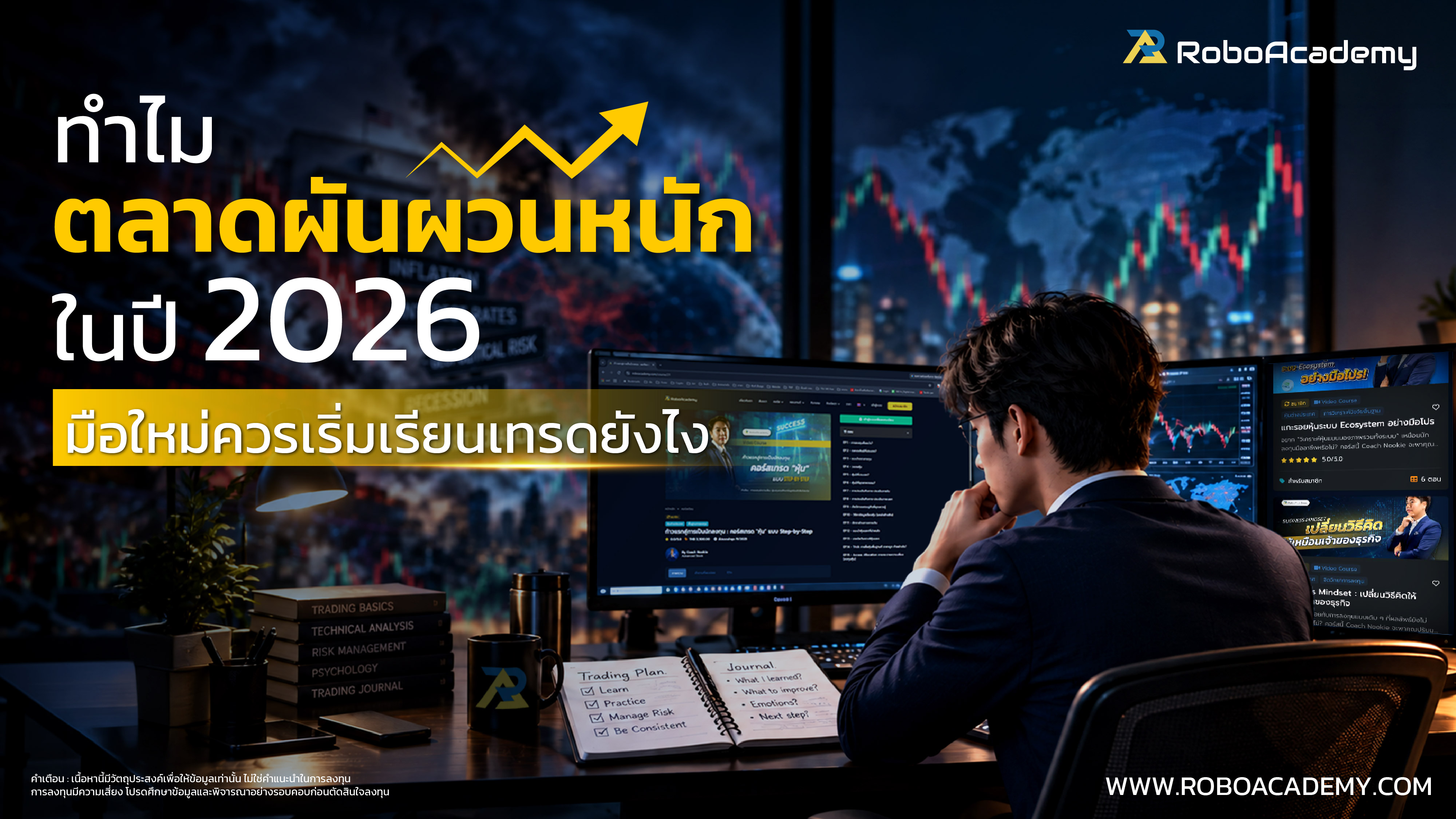
ทำไมตลาดผันผวนหนักในปี 2026 มือใหม่ควรเริ่มเรียนเทรดยังไง
ตลาดในปี 2026 มีความผันผวนจากหลายปัจจัยที่เกิดขึ้นพร้อมกัน ทั้งทิศทางเศรษฐกิจ นโยบายดอกเบี้ย ความตึงเครียดระหว่างประเทศ และความไม่แน่นอนด้านการค้า สำหรับมือใหม่ การ เรียนคอร์สสอนเทรด ควรเริ่มจากเข้าใจพื้นฐานตลาด อ่านข่าวเศรษฐกิจ วิเคราะห์กราฟ และบริหารความเสี่ยง ก่อนพัฒนาไปสู่เทคนิคที่ซับซ้อนขึ้น ทำไมตลาดผันผวนหนักในปี 2026 และมือใหม่ต้องรู้อะไรก่อนเริ่มเรียนเทรด? ปี 2026 เป็นอีกปีที่คนติดตามตลาดต้องรับข้อมูลจากหลายด้านพร้อมกัน บางวันตลาดให้ความสำคัญกับทิศทางอัตราดอกเบี้ย ขณะที่อีกวันความสนใจอาจเปลี่ยนไปอยู่ที่ตัวเลขเศรษฐกิจ นโยบายการค้าระหว่างประเทศ หรือสถานการณ์ภูมิรัฐศาสตร์ ความยากไม่ได้อยู่เพียงแค่ “ข่าวเยอะขึ้น” แต่คือแต่ละปัจจัยสามารถเชื่อมโยงกันได้ นโยบายการค้าอาจส่งต่อไปยังต้นทุนสินค้าและเงินเฟ้อ เงินเฟ้อสามารถมีผลต่อการประเมินทิศทางดอกเบี้ย ขณะที่ความคาดหวังเกี่ยวกับดอกเบี้ยสามารถสะท้อนไปยังค่าเงิน หุ้น ทองคำ และตลาดประเภทอื่น สำหรับมือใหม่ การเห็นกราฟเคลื่อนไหวขึ้นลงอย่างรวดเร็วอาจทำให้รู้สึกว่าตลาดไม่มีเหตุผล แต่หากค่อย ๆ ทำความเข้าใจปัจจัยที่อยู่เบื้องหลัง จะเห็นว่าการเคลื่อนไหวจำนวนมากมีบริบทที่สามารถศึกษาและวิเคราะห์ได้ 1. เศรษฐกิจโลกยังมีความไม่แน่นอน หนึ่งในปัจจัยสำคัญของตลาดปี 2026 คือความไม่แน่นอนเกี่ยวกับทิศทางเศรษฐกิจของแต่ละประเทศ ตลาดไม่ได้สนใจเพียงว่าเศรษฐกิจ “ดีหรือไม่ดี” แต่ยังพยายามประเมินว่าสถานการณ์ในอนาคตอาจเปลี่ยนไปอย่างไร ข้อมูลเศรษฐกิจที่เทรดเดอร์มักติดตามจึงมีหลายประเภท เช่น เงินเฟ้อ การจ้างงาน การเติบโตทางเศรษฐกิจ การใช้จ่ายของผู้บริโภค ภาคการผลิตและบริการ ตัวเลขเหล่านี้ไม่ได้ทำงานแยกจากกัน แต่สามารถนำมาใช้ประกอบกันเพื่อมองภาพเศรษฐกิจในช่วงเวลานั้น สำหรับมือใหม่จึงไม่จำเป็นต้องพยายามจำตัวเลขทุกตัวตั้งแต่แรก แต่ควรเริ่มจากทำความเข้าใจว่า “ข้อมูลแต่ละประเภทกำลังบอกอะไรเกี่ยวกับเศรษฐกิจ” 2. ทิศทางดอกเบี้ยยังเป็นเรื่องที่ตลาดให้ความสำคัญ ดอกเบี้ยเป็นหนึ่งในเรื่องพื้นฐานที่ผู้เริ่มเรียนเทรดควรทำความเข้าใจ เพราะเกี่ยวข้องกับหลายตลาดพร้อมกัน สิ่งที่ทำให้ตลาดมีความผันผวนไม่จำเป็นต้องเกิดจากการเปลี่ยนดอกเบี้ยจริงเท่านั้น แต่สามารถเกิดจาก “ความคาดหวัง” ของผู้เข้าร่วมตลาดได้เช่นกัน ตัวอย่างเช่น หากข้อมูลเศรษฐกิจออกมาแตกต่างจากที่ตลาดประเมินไว้ มุมมองเกี่ยวกับทิศทางนโยบายของธนาคารกลางอาจเปลี่ยนตาม และสะท้อนมายังการเคลื่อนไหวของสินทรัพย์ประเภทต่าง ๆ นี่เป็นเหตุผลว่าทำไมการเรียน Fundamental Analysis จึงมีประโยชน์สำหรับมือใหม่ เพราะแทนที่จะเห็นข่าวเรื่องดอกเบี้ยแล้วพยายามจำเพียงว่าตลาดควรขึ้นหรือลง ผู้เรียนจะค่อย ๆ เข้าใจความสัมพันธ์ระหว่างเศรษฐกิจ นโยบายการเงิน ความคาดหวัง และพฤติกรรมของตลาด 3. ความขัดแย้งระหว่างประเทศทำให้ตลาดต้องประเมินสถานการณ์ตลอดเวลา อีกตัวแปรที่สร้างความไม่แน่นอนให้กับตลาดคือเหตุการณ์ทางภูมิรัฐศาสตร์ ความตึงเครียดระหว่างประเทศสามารถเชื่อมโยงไปถึงหลายเรื่อง ตั้งแต่พลังงาน การขนส่ง ห่วงโซ่อุปทาน การค้าระหว่างประเทศ ไปจนถึงความเชื่อมั่นของผู้เข้าร่วมตลาด สำหรับมือใหม่ สิ่งที่ควรเรียนรู้คือ ไม่จำเป็นต้องพยายามคาดการณ์ทุกเหตุการณ์ว่าจะจบอย่างไร สิ่งที่สำคัญกว่าคือการเข้าใจว่า หากสถานการณ์เปลี่ยน ตลาดประเภทใดอาจได้รับความสนใจ และมีปัจจัยใดที่ควรติดตามเพิ่มเติม วิธีคิดแบบนี้จะช่วยให้การอ่านข่าวเปลี่ยนจากการติดตามเหตุการณ์ทั่วไป มาเป็นการอ่านข่าวโดยเชื่อมโยงกับภาพของตลาด 4. นโยบายการค้าและเศรษฐกิจสามารถเปลี่ยนมุมมองของตลาดได้รวดเร็ว โลกการค้าในปี 2026 เป็นอีกเรื่องที่ต้องจับตามอง เพราะนโยบายด้านภาษี การนำเข้า การส่งออก และความสัมพันธ์ทางการค้าระหว่างประเทศสามารถส่งผลต่อธุรกิจ ต้นทุนสินค้า และแนวโน้มเศรษฐกิจ เมื่อมีประกาศนโยบายใหม่ ตลาดอาจต้องประเมินข้อมูลใหม่ในเวลาอันรวดเร็ว นี่จึงเป็นอีกเหตุผลว่าทำไมการอ่านตลาดจากกราฟอย่างเดียวอาจไม่เพียงพอในบางช่วง มือใหม่ควรค่อย ๆ ฝึกเชื่อมโยงสองด้านเข้าด้วยกัน คือ Fundamental Analysis ช่วยให้เข้าใจว่าปัจจัยอะไรอาจกำลังขับเคลื่อนตลาด Technical Analysis ช่วยให้เห็นว่าการเปลี่ยนแปลงเหล่านั้นกำลังสะท้อนออกมาผ่านพฤติกรรมราคาอย่างไร เมื่อเข้าใจทั้งสองด้าน การวิเคราะห์ตลาดจะเริ่มมีภาพที่สมบูรณ์ขึ้น 5. ข่าวเดินทางเร็วขึ้น และตลาดตอบสนองต่อข้อมูลเร็วขึ้น อีกสิ่งที่ทำให้การติดตามตลาดในปัจจุบันแตกต่างจากอดีตคือความเร็วของข้อมูล ข่าวจากอีกประเทศหนึ่งสามารถถูกเผยแพร่และส่งต่อไปทั่วโลกภายในเวลาไม่นาน ผู้เข้าร่วมตลาดจำนวนมากสามารถรับข้อมูลชุดเดียวกันแทบพร้อมกัน สำหรับมือใหม่ ปัญหาที่ตามมาคืออาจรู้สึกว่าต้อง “ตามทุกข่าวให้ทัน” แต่ในความเป็นจริง การพยายามอ่านทุกอย่างอาจทำให้สับสนมากกว่าเดิม สิ่งที่ควรฝึกจึงเป็นการแยกให้ออกว่า ข่าวประเภทใดเกี่ยวข้องกับตลาดที่เรากำลังศึกษา และข้อมูลไหนเป็นเพียงกระแสระยะสั้น ทักษะการคัดกรองข้อมูลจึงกลายเป็นอีกส่วนสำคัญของการเรียนเทรดในยุคที่ข้อมูลมีจำนวนมาก คำถามที่พบบ่อยเกี่ยวกับการเรียนเทรดสำหรับมือใหม่ Q1. มือใหม่ควรเริ่มเรียนเทรดจากอะไร? A: ควรเริ่มจากพื้นฐานตลาดก่อน จากนั้นค่อยศึกษา Fundamental Analysis, Technical Analysis และ Risk Management ตามลำดับ Q2. ไม่มีพื้นฐานเศรษฐกิจ เรียนกับ RoboAcademy ได้ไหม? A: ได้ RoboAcademy มีเนื้อหาระดับ Beginner ที่ช่วยให้ผู้เริ่มต้นค่อย ๆ ทำความเข้าใจตลาดก่อนต่อยอดไปยังหัวข้ออื่น Q3. ตลาดผันผวนในปี 2026 เหมาะกับการเริ่มเรียนไหม? A: เหมาะสำหรับการศึกษาและใช้เหตุการณ์จริงเป็นกรณีตัวอย่าง เพื่อฝึกเชื่อมโยงข่าว เศรษฐกิจ และพฤติกรรมของตลาด Q4. มือใหม่ควรเรียน Fundamental หรือ Technical? A: ควรมีพื้นฐานทั้งสองด้าน เพราะ Fundamental ช่วยให้เข้าใจบริบทของตลาด ขณะที่ Technical ช่วยในการศึกษาพฤติกรรมราคาและกราฟ เข้าใจตลาดก่อน แล้วค่อยพัฒนาเทคนิค ตลาดปี 2026 อาจมีความผันผวนจากหลายปัจจัย แต่สำหรับมือใหม่ สิ่งสำคัญไม่ใช่การพยายามตามตลาดให้ทันทุกจังหวะ แต่คือการสร้างพื้นฐานให้เข้าใจว่าเศรษฐกิจ ข่าว และกราฟเชื่อมโยงกันอย่างไร เมื่อพื้นฐานชัดเจน การเรียนเทคนิคในระดับต่อไปก็จะเข้าใจง่ายและนำไปประยุกต์ใช้ได้อย่างมีเหตุผลมากขึ้น เริ่มเรียนเทรดอย่างเป็นระบบกับ RoboAcademy หากกำลังมองหาจุดเริ่มต้นในการ เรียนคอร์สสอนเทรด สามารถเลือกศึกษาหลักสูตรของ RoboAcademy ตามระดับความรู้ ตั้งแต่พื้นฐานสำหรับ Beginner ไปจนถึงเนื้อหาการวิเคราะห์ตลาดในระดับที่สูงขึ้น เพื่อค่อย ๆ สร้างความเข้าใจและพัฒนาทักษะอย่างเป็นขั้นตอน

5 เหตุผลที่มือใหม่ควรเรียนคอร์สสอนเทรด ในช่วงตลาดผันผวน (Volatile Market)
การตัดสินใจเรียนคอร์สสอนเทรดในช่วงตลาดผันผวน หรือที่เรียกว่า VolatileFear Market เป็นสิ่งสำคัญสำหรับมือใหม่ เพราะความรู้ที่ถูกต้องจะช่วยให้เข้าใจกลไกตลาดที่แท้จริง สามารถวางแผนจัดการความเสี่ยงได้อย่างรัดกุม และมองเห็นโอกาสสร้างผลตอบแทนที่ซ่อนอยู่ในวิกฤต แทนที่จะตื่นตระหนกไปกับทิศทางราคาที่คาดเดาได้ยาก ทำไมความกลัวของตลาดจึงเป็นโอกาสทองในการเริ่มต้นศึกษาการลงทุน? เมื่อพูดถึงตลาดที่กำลังปรับตัวลงอย่างหนักหรือมีความผันผวนสูง ผู้คนส่วนใหญ่มักจะเกิดความกลัวและเลือกที่จะถอยห่างออกจากการลงทุน แต่ในความเป็นจริงแล้ว ช่วงเวลานี้คือบททดสอบชั้นดีที่สะท้อนให้เห็นถึงความจริงของสภาวะตลาด การเริ่มต้นศึกษาและทำความเข้าใจพฤติกรรมราคาในช่วงที่ยากลำบากที่สุด จะช่วยสร้างรากฐานที่แข็งแกร่ง ทำให้นักลงทุนมือใหม่มีภูมิต้านทานและสามารถรับมือได้กับทุกสภาวะตลาดในอนาคต การมีอาจารย์หรือผู้เชี่ยวชาญคอยชี้แนะในจังหวะนี้จึงมีค่ามหาศาล ต่อไปนี้คือ 5 เหตุผลเชิงลึกที่ชี้ให้เห็นว่า ทำไมคุณถึงควรเริ่มต้นศึกษาและพัฒนาทักษะการเทรด ในยุคที่ตลาดเต็มไปด้วยความไม่แน่นอนและรอยต่อของวิกฤต 1. ได้เรียนรู้การบริหารความเสี่ยง (Risk Management) ในสถานการณ์จริงที่เข้มข้น ในช่วงที่ตลาดเป็นกระทิงหรือขาขึ้นอย่างชัดเจน ใครเข้าซื้อก็มักจะเห็นตัวเลขในพอร์ตเติบโตได้ง่าย ซึ่งสภาวะเช่นนั้นมักจะทำให้มือใหม่ละเลยการป้องกันความเสี่ยง แต่ในสภาวะ VolatileFear Market ราคาจะมีการสวิงตัวอย่างรุนแรงและมีปัจจัยภายนอกเข้ามากระทบมากมาย การเรียนรู้ทักษะการลงทุนในเวลานี้ จะบังคับให้คุณต้องโฟกัสไปที่การปกป้องเงินทุนเป็นอันดับแรก คุณจะได้เรียนรู้การกำหนดขนาดความเสี่ยงต่อไม้ (Position Sizing) การวางจุดจำกัดความเสี่ยงที่สมเหตุสมผล และการบริหารหน้าตัก (Money Management) อย่างเคร่งครัด ซึ่งสิ่งเหล่านี้คือทักษะที่สำคัญที่สุดที่จะทำให้นักเทรดอยู่รอดได้ในระยะยาว 2. สร้างทัศนคติและหล่อหลอมจิตวิทยาการลงทุน (Trading Psychology) ให้แข็งแกร่ง อารมณ์คือศัตรูตัวร้ายที่สุดของนักลงทุน การเข้ามาเรียนรู้และสังเกตการณ์ตลาดในช่วงที่เต็มไปด้วยข่าวร้าย จะช่วยหล่อหลอมจิตใจของคุณให้คุ้นชินกับความผันผวน คุณจะได้เรียนรู้วิธีควบคุมความตื่นตระหนก (Panic) วิธีจัดการกับความกลัวตกรถ (FOMO) ไม่แห่เทขายตามมวลชน และไม่ใช้อารมณ์ในการตัดสินใจ การมีหลักสูตรที่ช่วยปรับวิธีคิดและผู้สอนที่มีประสบการณ์คอยให้คำแนะนำ จะช่วยประคองจิตวิทยาการลงทุนของคุณให้มั่นคง ไม่หวั่นไหวไปกับตัวเลขที่ปรับตัวลดลงในระยะสั้น 3. ค้นพบและเข้าใจโอกาสในการสร้างผลตอบแทนที่ซ่อนอยู่ในทุกวิกฤต ตลาดผันผวนไม่ได้แปลว่านักลงทุนจะไม่สามารถสร้างการเติบโตให้กับพอร์ตโฟลิโอได้ หากคุณมีความรู้ที่ถูกต้องและเครื่องมือที่เหมาะสม คุณจะทราบว่าสินทรัพย์ทางการเงินหลายประเภทสามารถสร้างผลลัพธ์ที่ดีได้ทั้งในสภาวะตลาดขาขึ้นและขาลง การเข้าอบรมเพื่อศึกษาแนวทางเหล่านี้ จะช่วยเปิดมุมมองใหม่ๆ ให้คุณเห็นจังหวะที่เหมาะสมจากการแกว่งตัวของราคา รวมถึงเทคนิคการหามูลค่าที่แท้จริงของสินทรัพย์ เพื่อหาจุดเข้าซื้อของดีในราคาที่ถูกลงกว่าปกติหลายเท่าตัว 4. ช่วยลดความผิดพลาดที่อาจนำไปสู่การสูญเสียเงินทุนมหาศาล การลองผิดลองถูกด้วยตัวเองในช่วงตลาดที่คาดเดาไม่ได้ ถือเป็นความเสี่ยงที่สูงมาก เพราะเพียงแค่การตัดสินใจพลาดครั้งเดียวอาจนำไปสู่การสูญเสียเงินเก็บก้อนใหญ่ได้ทันที การมีผู้เชี่ยวชาญคอยชี้แนะผ่านหลักสูตรที่มีมาตรฐาน จะช่วยย่นระยะเวลาแห่งความผิดพลาด คุณจะได้เรียนรู้จากบทเรียนและข้อผิดพลาดของคนรุ่นก่อน โดยไม่ต้องนำเงินทุนก้อนแรกของตัวเองไปเสี่ยงในตลาดโดยไม่จำเป็น 5. ได้รับการถ่ายทอดกลยุทธ์ที่ผ่านการทดสอบมาแล้ว (Backtested Strategies) กลยุทธ์การเทรดที่ยอดเยี่ยมจะต้องสามารถพิสูจน์ตัวเองได้ว่าอยู่รอดในทุกสภาวะตลาด ไม่ใช่แค่ตอนที่ตลาดเป็นใจเท่านั้น การเลือกศึกษาจากแหล่งความรู้ที่มีคุณภาพ จะทำให้คุณได้รับการถ่ายทอดระบบเทรดหรือแนวทางการวิเคราะห์ที่มีการทำ Backtest จากสถิติย้อนหลังมาแล้วว่าสามารถรับมือกับช่วงตลาดแพนิคได้จริง สิ่งนี้จะทำให้คุณมีเครื่องมือและอาวุธที่พร้อมลงสนามอย่างมั่นใจและมีแบบแผนที่ชัดเจน ก้าวข้ามความกลัวด้วยการเตรียมความพร้อมอย่างเป็นระบบ ความกลัวในตลาดการลงทุนมักเกิดจากความไม่รู้เสมอ เมื่อใดก็ตามที่เราไม่รู้ว่ากำลังเผชิญกับปัจจัยอะไร เราย่อมตื่นตระหนกเป็นเรื่องธรรมดา แต่ในทางกลับกัน ถ้าเรามีความรู้ มีระบบระเบียบที่ชัดเจน และมีสติในการวิเคราะห์กราฟหรือปัจจัยพื้นฐาน ความกลัวเหล่านั้นจะถูกเปลี่ยนเป็นความระมัดระวัง และความผันผวนจะถูกมองเห็นเป็นโอกาสทันที ดังนั้น การจัดสรรเวลาเพื่อมาลงทุนในความรู้ให้กับตัวเองก่อนลงสนามจริง จึงถือเป็นการลงทุนที่คุ้มค่าที่สุด ยิ่งในยุคที่เทคโนโลยีและตลาดเปลี่ยนแปลงอย่างรวดเร็ว การมีเพื่อนคู่คิด สังคมนักลงทุน หรือสถาบันที่คอยให้คำปรึกษาอย่างใกล้ชิด ย่อมทำให้ก้าวแรกในโลกการเงินของคุณมั่นคงและปลอดภัยกว่าการเดินเพียงลำพัง คำถามที่พบบ่อยเกี่ยวกับ คอร์สสอนเทรด Q : มือใหม่ที่ไม่มีพื้นฐานการเงินเลย สามารถเริ่มต้นเรียนกับ RoboAcademy ได้หรือไม่? A : สามารถเริ่มต้นได้อย่างแน่นอน RoboAcademy มีการปูพื้นฐานตั้งแต่ระดับเริ่มต้น ไปจนถึงการใช้งานเครื่องมือเชิงลึก โดยเน้นการใช้ภาษาที่เข้าใจง่ายและปรับเนื้อหาให้สอดคล้องกับความเข้าใจของผู้เรียนแต่ละท่าน Q : ในช่วงตลาดเป็นขาลง การเรียนกับ RoboAcademy จะช่วยให้เห็นโอกาสสร้างผลตอบแทนได้จริงหรือ? A : ระบบและหลักสูตรของ RoboAcademy มุ่งเน้นการสอนให้ผู้เรียนเข้าใจกลไกตลาดแบบครบวงจร รวมถึงสามารถทำความเข้าใจและหาโอกาสลงทุนได้ทั้งสภาวะขาขึ้นและขาลง พร้อมแนะนำเครื่องมือที่ช่วยปกป้องความเสี่ยงในช่วงที่ตลาดมีความผันผวนสูง Q : RoboAcademy มีการสอนเรื่องการจัดการความเสี่ยงให้นักลงทุนมือใหม่ด้วยไหม? A : การจัดการความเสี่ยงคือหัวใจสำคัญที่สุดในทุกหลักสูตรของเรา ผู้เรียนจะได้รับการฝึกฝนให้รู้จักการประเมินความเสี่ยง การตั้งจุดจำกัดความเสี่ยงอย่างถูกต้อง และเทคนิคการรักษาเงินทุนเพื่อให้อยู่รอดในตลาดระยะยาว Q : ความแตกต่างของการศึกษาด้วยตัวเองกับการมาเรียนที่ RoboAcademy คืออะไร? A : การเรียนกับ RoboAcademy จะช่วยย่นระยะเวลาแห่งการลองผิดลองถูก คุณจะได้รับเทคนิคที่ผ่านการทดสอบและปรับปรุงมาแล้ว พร้อมทั้งมีผู้เชี่ยวชาญคอยชี้แนะจุดอ่อนจุดแข็งของคุณอย่างใกล้ชิด ซึ่งช่วยลดโอกาสการสูญเสียเงินทุนก้อนใหญ่ได้ Q : หลังจากเรียนจบหลักสูตรแล้ว RoboAcademy มีคอมมูนิตี้หรือการให้คำปรึกษาต่อเนื่องหรือไม่? A : เราให้ความสำคัญกับการเติบโตในระยะยาวของผู้เรียนเป็นหลัก จึงมีสังคมนักลงทุนและทีมงานคอยอัปเดตสภาวะตลาดอยู่เสมอ รวมถึงคอยให้คำแนะนำและตอบข้อซักถามอย่างต่อเนื่องแม้จะจบหลักสูตรไปแล้วก็ตาม เริ่มต้นเส้นทางการเทรดอย่างมืออาชีพกับ RoboAcademy หากคุณคือมือใหม่ที่กำลังมองหาสถานที่บ่มเพาะความรู้ด้านการลงทุนที่ถูกต้องและโปร่งใส RoboAcademy พร้อมเป็นผู้ช่วยและฟันเฟืองสำคัญในการนำทางคุณสู่ความสำเร็จ เรามีหลักสูตรที่ถูกออกแบบมาเพื่อรองรับนักลงทุนทุกระดับ ตั้งแต่การปูพื้นฐานความเข้าใจ ไปจนถึงการสอนประยุกต์ใช้เทคโนโลยีและระบบเทรดล้ำสมัยเข้ามาช่วยวิเคราะห์ตลาด เนื้อหาของเราเน้นการนำไปใช้ได้จริงในสถานการณ์ปัจจุบัน สอนโดยทีมผู้มีประสบการณ์ตรงที่พร้อมดูแลอย่างใกล้ชิด เพื่อให้คุณก้าวเดินในตลาดการลงทุนได้อย่างยั่งยืนและมีเป้าหมายที่ชัดเจน
5 เหตุผล ทำไมต้องเรียนคอร์สสอนเทรด มือใหม่ห้ามพลาด
การเรียนคอร์สสอนเทรดมีความสำคัญอย่างยิ่งสำหรับมือใหม่ เพราะช่วยวางรากฐานความรู้ที่ถูกต้อง ลดความเสี่ยงในการสูญเสียเงินลงทุน และสอนเทคนิคการสร้างผลตอบแทนอย่างเป็นระบบ ตั้งแต่การวิเคราะห์กราฟไปจนถึงการจัดการอารมณ์ ซึ่งเป็นหัวใจหลักที่ทำให้เทรดเดอร์สามารถอยู่รอดและประสบความสำเร็จในตลาดการเงินระยะยาว เจาะลึกความสำคัญของการศึกษาตลาดการเงิน และข้อดีที่มือใหม่จะได้รับจากการเริ่มต้นอย่างถูกวิธี การก้าวเข้ามาสู่โลกของการลงทุนและการเทรดนั้นเต็มไปด้วยโอกาสในการสร้างผลตอบแทนที่น่าดึงดูดใจ แต่ในขณะเดียวกันก็แฝงไปด้วยความเสี่ยงที่พร้อมจะทำให้เงินทุนของคุณลดลงได้ในพริบตา หากคุณคือคนหนึ่งที่กำลังสนใจอยากเริ่มต้นเป็นเทรดเดอร์ คำถามแรกที่มักจะเกิดขึ้นในใจคือ เราควรจะศึกษาด้วยตัวเองผ่านข้อมูลที่มีอยู่ทั่วไป หรือควรจะลงทุนลงแรงศึกษาอย่างจริงจังตามแบบแผน บทความนี้จะพาคุณไปเจาะลึกถึง 5 เหตุผลหลักที่ตอกย้ำว่า การปูพื้นฐานที่ถูกต้องผ่านหลักสูตรที่มีมาตรฐานนั้นคือสิ่งที่ไม่ควรละเลย 1. บริหารความเสี่ยงอย่างถูกวิธี เพื่อปกป้องเงินลงทุน หนึ่งในข้อผิดพลาดที่ใหญ่ที่สุดของนักลงทุนมือใหม่คือการเข้ามาในตลาดด้วยความหวังที่จะสร้างรายได้อย่างรวดเร็ว โดยปราศจากความเข้าใจในเรื่องของการจัดการความเสี่ยง การเรียนรู้จากผู้เชี่ยวชาญจะช่วยให้คุณเข้าใจหลักการบริหารเงินทุน หรือการทำ Money Management ซึ่งเป็นทักษะที่สำคัญที่สุดในการเอาตัวรอดในฐานะเทรดเดอร์ คุณจะได้เรียนรู้วิธีการกำหนดจุดตัดความเสี่ยงอย่างถูกต้อง การคำนวณขนาดการเข้าเทรดแต่ละครั้ง เพื่อให้มั่นใจว่าต่อให้คุณตัดสินใจผิดพลาดตามสภาวะตลาดที่ผันผวน คุณก็จะยังมีเงินทุนเหลือพอที่จะกลับมาวางแผนใหม่ได้เสมอ 2. ประหยัดเวลาในการลองผิดลองถูกด้วยตัวเอง แม้ว่าในปัจจุบันจะมีแหล่งความรู้ให้ศึกษาฟรีอยู่มากมายบนโลกอินเทอร์เน็ต แต่การรวบรวมข้อมูลเหล่านั้นและนำมาปะติดปะต่อกันมักจะใช้เวลาหลายเดือนหรืออาจจะหลายปี บางครั้งข้อมูลที่คุณพบอาจจะล้าสมัย หรือขัดแย้งกันเองจนไม่สามารถนำมาใช้ได้จริงในตลาดปัจจุบัน การลงเรียนหลักสูตรที่ถูกออกแบบมาอย่างเป็นขั้นตอนจะช่วยย่นระยะเวลาแห่งความสับสนนี้ คุณจะได้รับชุดความรู้ที่ผ่านการคัดกรอง เรียบเรียง และพิสูจน์มาแล้วจากผู้มีประสบการณ์จริง ทำให้คุณสามารถก้าวข้ามช่วงเริ่มต้นที่ยากลำบากไปได้อย่างรวดเร็วและมีทิศทางที่ชัดเจน 3. เข้าใจเครื่องมือและเทคนิคการวิเคราะห์เชิงลึก ตลาดการเงินมีการเคลื่อนไหวที่ซับซ้อน การจะคาดการณ์ทิศทางราคาได้อย่างแม่นยำและมีเหตุผลมารองรับจำเป็นต้องอาศัยการวิเคราะห์ที่หลากหลาย ทั้งการวิเคราะห์ทางเทคนิคผ่านการอ่านกราฟราคา พฤติกรรมแท่งเทียน การใช้เครื่องมือชี้วัดแนวโน้มต่างๆ รวมไปถึงการวิเคราะห์ปัจจัยพื้นฐานทางเศรษฐกิจที่กระทบต่อสภาวะตลาด หลักสูตรที่มีคุณภาพจะสอนให้คุณใช้เครื่องมือเหล่านี้ได้อย่างถูกต้อง ไม่ใช่แค่การท่องจำแพทเทิร์น แต่เป็นการทำความเข้าใจถึงที่มาที่ไปและจิตวิทยาเบื้องหลังของตัวเลขเหล่านั้น เพื่อให้คุณสามารถประยุกต์ใช้กลยุทธ์ได้กับทุกสถานการณ์ 4. สร้างระบบการเทรดและวินัยที่ชัดเจน เทรดเดอร์ที่ประสบความสำเร็จทุกคนล้วนมีระบบการเทรดเป็นของตัวเอง ระบบนี้เปรียบเสมือนแผนที่นำทางที่คอยกำหนดเกณฑ์ว่าคุณควรจะเข้าซื้อเมื่อใด และควรจะปิดออเดอร์เมื่อใด การมีระบบที่ผ่านการทดสอบมาแล้วจะช่วยตัดเรื่องของอารมณ์ความรู้สึก ความกลัว และความโลภออกไปจากการตัดสินใจ ซึ่งอารมณ์เหล่านี้คือสาเหตุหลักที่ทำให้คนส่วนใหญ่พ่ายแพ้ในตลาด การได้ศึกษาอย่างเป็นระบบจะช่วยให้คุณสามารถค้นพบกลยุทธ์ที่เหมาะสมกับนิสัยและไลฟ์สไตล์ของตัวเอง พร้อมทั้งปลูกฝังวินัยในการทำตามแผนการเทรดอย่างเคร่งครัด 5. ได้รับคำแนะนำและเครือข่ายสังคมเทรดเดอร์ การนั่งเทรดเพียงลำพังอยู่หน้าจออาจทำให้คุณรู้สึกกดดันและมองไม่เห็นจุดบอดของตัวเอง การเข้าร่วมชั้นเรียนหรือสถาบันสอนเทรดจะทำให้คุณได้พบปะกับคนที่มีเป้าหมายเดียวกัน เกิดเป็นสังคมการเรียนรู้ที่คุณสามารถแลกเปลี่ยนมุมมองวิเคราะห์ตลาด แบ่งปันประสบการณ์ และที่สำคัญที่สุดคือการได้รับคำติชมหรือคำแนะนำโดยตรงจากผู้สอนที่มีความเชี่ยวชาญ เมื่อคุณเกิดความลังเลหรือทำผิดพลาด จะมีคนคอยชี้แนะถึงสาเหตุและดึงคุณกลับมาสู่เส้นทางที่ถูกต้อง ซึ่งเป็นคุณค่าที่ไม่สามารถหาได้จากการอ่านตำราเพียงอย่างเดียว ความพร้อมก่อนก้าวสู่สนามจริง ก่อนที่คุณจะตัดสินใจนำเงินทุนไปเสี่ยงในตลาดจริง การลงทุนในความรู้ถือเป็นการลงทุนที่คุ้มค่าที่สุดและให้ผลตอบแทนทางการศึกษาที่ประเมินค่าไม่ได้ การเตรียมตัวให้พร้อมทั้งในด้านความรู้ เทคนิค และความแข็งแกร่งทางจิตใจ จะช่วยให้เส้นทางการเป็นเทรดเดอร์ของคุณราบรื่นและมั่นคงมากยิ่งขึ้น อย่าปล่อยให้ความไม่รู้มากลายเป็นค่าใช้จ่ายที่แพงที่สุดในชีวิตการลงทุนของคุณ การติดกระดุมเม็ดแรกให้ถูกต้องคือจุดเริ่มต้นของการสร้างความสำเร็จในระยะยาว คำถามที่พบบ่อยเกี่ยวกับ คอร์สสอนเทรด Q1. มือใหม่ไม่มีพื้นฐานเลย สามารถเรียนคอร์สสอนเทรดกับ RoboAcademy ได้หรือไม่? A: สามารถเรียนได้อย่างแน่นอน หลักสูตรของ RoboAcademy ถูกออกแบบมาให้รองรับผู้ที่เริ่มต้นจากศูนย์ โดยจะมีการปูพื้นฐานอย่างละเอียดตั้งแต่คำศัพท์เบื้องต้น กลไกตลาด ไปจนถึงเทคนิคระดับสูงที่ใช้สร้างผลลัพธ์ที่เป็นบวกได้จริง Q2. คอร์สสอนเทรดของ RoboAcademy แตกต่างจากการหาความรู้ฟรีบนอินเทอร์เน็ตอย่างไร? A: เนื้อหาของ RoboAcademy มีการจัดเรียงโครงสร้างอย่างเป็นระบบ ไม่กระจัดกระจาย อัปเดตให้ทันต่อสภาวะตลาดปัจจุบัน พร้อมแทรกเทคนิคเฉพาะที่ผ่านการทดสอบมาแล้วว่าใช้งานได้จริง ซึ่งช่วยลดระยะเวลาในการลองผิดลองถูกของคุณได้มหาศาล Q3. ใช้เวลาเรียนนานแค่ไหนกว่าจะเริ่มเทรดจริงได้หลังจากจบหลักสูตรของ RoboAcademy? A: ระยะเวลาขึ้นอยู่กับความทุ่มเทและเวลาว่างของแต่ละบุคคล แต่โดยเฉลี่ยแล้วผู้เรียนสามารถเข้าใจพื้นฐานและเริ่มวางแผนการเทรดในบัญชีทดลอง (Demo) หรือบัญชีจริงขนาดเล็กได้ทันทีหลังจากการเรียนรู้ทฤษฎีควบคู่กับการฝึกปฏิบัติ Q4. RoboAcademy มีสอนเทรดผลิตภัณฑ์ทางการเงินประเภทใดบ้าง? A: เรามีเนื้อหาที่ครอบคลุมตลาดการเงินที่เป็นที่นิยมในระดับสากล ซึ่งความรู้และทักษะการวิเคราะห์กราฟเทคนิคที่คุณได้รับจากเรา สามารถนำไปประยุกต์ใช้ได้กับหลากหลายสินทรัพย์การลงทุนตามความถนัดของคุณ Q5. หากมีข้อสงสัยระหว่างการเรียน RoboAcademy มีทีมงานคอยให้คำปรึกษาหรือไม่? A: เราให้ความสำคัญกับการดูแลผู้เรียนทุกคนอย่างใกล้ชิด หากคุณมีข้อสงสัยเกี่ยวกับบทเรียนหรือต้องการคำแนะนำเพิ่มเติม สามารถสอบถามและพูดคุยกับทีมงานของ RoboAcademy ได้ เพื่อให้มั่นใจว่าคุณจะได้รับประโยชน์สูงสุดจากการเรียนรู้ เริ่มต้นเส้นทางการเป็นเทรดเดอร์มืออาชีพกับ RoboAcademy หากคุณกำลังมองหาสถาบันที่พร้อมจะปูพื้นฐานและยกระดับศักยภาพของคุณให้สามารถยืนหยัดในตลาดการเงินได้อย่างแข็งแกร่ง RoboAcademy พร้อมเป็นพาร์ทเนอร์คนสำคัญในการเรียนรู้ของคุณ ด้วยรูปแบบการสอนที่ครอบคลุมตั้งแต่วิธีการคิดเชิงตรรกะ การวิเคราะห์กราฟเชิงลึก ไปจนถึงการนำเครื่องมือสมัยใหม่มาประยุกต์ใช้ในการเทรด เรามีเนื้อหาที่เจาะลึกและเข้าถึงง่าย พร้อมทีมงานที่เข้าใจถึงปัญหาของมือใหม่ เพื่อให้คุณก้าวข้ามขีดจำกัดและมุ่งสู่เป้าหมายทางการเงินที่คุณตั้งไว้ได้อย่างมั่นใจ RoboAcademy พร้อมสนับสนุนผู้เรียนด้วยข้อมูลความรู้ที่อัปเดตทันสมัย และทีมโค้ชที่มีประสบการณ์คอยดูแลอย่างใกล้ชิด 🎓 ตัวเลือกรูปแบบการเรียนรู้ คอร์สเรียนออนไลน์บนเว็บไซต์ : สำหรับผู้ที่ต้องการความสะดวก เรียนรู้ได้ทุกที่ ทุกเวลา ด้วยเนื้อหาที่เรียบเรียงเป็นขั้นตอนเข้าใจง่าย การเรียนสดแบบ Exclusive ณ สถาบัน : ร่วมวิเคราะห์กราฟจริงและฝึกฝนทักษะการเทรดร่วมกับทีมโค้ชในบรรยากาศการเรียนรู้ที่ทันสมัยใจกลางเมือง ณ RoboAcademy | One Bangkok (อาคาร 4 ชั้น 15) สำหรับผู้ที่สนใจ สามารถศึกษาข้อมูลเพิ่มเติมเกี่ยวกับหลักสูตรการเรียนและคอร์สต่าง ๆ ได้ผ่านทางเว็บไซต์อย่างเป็นทางการ หรือติดต่อทีมงานผู้เชี่ยวชาญเพื่อขอรับคำแนะนำเบื้องต้นได้โดยตรง 👉 [คลิกที่นี่เพื่อเข้าชมคอร์สเรียน RoboAcademy] หรือ ติดต่อสอบถามรายละเอียดเพิ่มเติมผ่าน LINE Official : https://lin.ee/U2wJicl (@RoboAcademy)

เทรดทองยังไงให้อยู่ในตลาดได้ระยะยาว มือใหม่เริ่มได้ด้วยคอร์สเทรดทอง
การเทรดทองให้พอร์ตเติบโตในระยะยาวสำหรับมือใหม่เริ่มต้นได้ด้วยการทำความเข้าใจปัจจัยที่กระทบราคาทองคำ การวางแผนการเงิน และการจัดการความเสี่ยงอย่างรัดกุม ผู้ที่สนใจสามารถเรียนรู้พื้นฐานและกลยุทธ์ที่ถูกต้องได้จากการลงเรียน คอร์สเทรดทอง ที่มีมาตรฐาน เพื่อสร้างรากฐานที่แข็งแกร่งในการประเมินสภาวะตลาดและปกป้องเงินทุนของคุณอย่างมีประสิทธิภาพในทุกสถานการณ์ กลยุทธ์การเทรดทองคำเพื่อความสำเร็จที่ยั่งยืน ความน่าสนใจของตลาดทองคำและสภาวะเศรษฐกิจ ทองคำได้รับการยอมรับในฐานะสินทรัพย์ที่มีมูลค่าในตัวเองและเป็นที่ต้องการของคนทั่วโลก ในช่วงเวลาที่เศรษฐกิจมีความผันผวนสูงหรือเกิดความกังวลเรื่องอัตราเงินเฟ้อ นักลงทุนมักจะย้ายความสนใจเข้ามาในตลาดทองคำเพื่อรักษามูลค่าของทรัพย์สิน สำหรับผู้ที่เพิ่งเริ่มต้น การศึกษาธรรมชาติของการเคลื่อนไหวของราคา ความสัมพันธ์ระหว่างค่าเงินดอลลาร์ และนโยบายของธนาคารกลาง จึงเป็นบันไดขั้นแรกที่จะช่วยให้อยู่รอดและเติบโตในตลาดแห่งนี้ได้ พื้นฐานที่สำคัญสำหรับนักเทรดหน้าใหม่ การวิเคราะห์ตลาดเพื่อให้เกิดผลลัพธ์เชิงบวกอย่างสม่ำเสมอสามารถแบ่งออกเป็นสองส่วนหลัก ซึ่งนักเทรดควรผสมผสานทั้งสองศาสตร์เข้าด้วยกัน ได้แก่ การวิเคราะห์ปัจจัยพื้นฐาน: เป็นการติดตามข่าวสารทางเศรษฐกิจมหภาค เช่น การประกาศตัวเลขการจ้างงาน นโยบายอัตราดอกเบี้ย และความตึงเครียดทางภูมิรัฐศาสตร์ สิ่งเหล่านี้ล้วนเป็นตัวขับเคลื่อนทิศทางราคาในระยะกลางถึงระยะยาว การวิเคราะห์ทางเทคนิค: เป็นการศึกษาพฤติกรรมราคาในอดีตผ่านกราฟเพื่อหาแนวโน้มในอนาคต การทำความเข้าใจแนวรับ แนวต้าน รูปแบบราคา และการใช้อินดิเคเตอร์ยอดนิยม จะช่วยให้คุณสามารถกำหนดจุดเข้าและจุดออกได้อย่างมีหลักการและเป็นระบบ การบริหารความเสี่ยงเพื่อปกป้องเงินทุน การตั้งเป้าหมายในการสร้างผลตอบแทนเป็นสิ่งที่ดี แต่การรักษาเงินทุนที่มีอยู่คือสิ่งที่สำคัญยิ่งกว่า คุณควรกำหนดสัดส่วนความเสี่ยงต่อการเทรดหนึ่งครั้งอย่างเคร่งครัด เช่น ไม่เกินร้อยละหนึ่งหรือสองของมูลค่าพอร์ตโดยรวม การตั้งจุดตัดความเสี่ยง (Stop Loss) ในทุกออร์เดอร์เป็นกฎเหล็กที่ห้ามละเลยเด็ดขาด เพราะสภาวะตลาดสามารถเปลี่ยนแปลงได้อย่างรวดเร็ว การกำหนดขนาดของการซื้อขาย (Position Sizing) เป็นเครื่องมือสำคัญที่แยกนักเทรดมืออาชีพออกจากมือใหม่ แทนที่จะใช้อารมณ์ในการตัดสินใจ คุณควรใช้หลักการทางคณิตศาสตร์ในการคำนวณว่า หากราคาผิดทิศทาง เงินทุนของคุณจะได้รับผลกระทบเป็นสัดส่วนเท่าใด แนวทางนี้จะช่วยรักษาสภาพจิตใจของคุณให้เป็นปกติ ไม่ตื่นตระหนกแม้ในวันที่ตลาดผันผวน จิตวิทยาการลงทุนและการควบคุมอารมณ์ อารมณ์เป็นตัวแปรสำคัญที่ทำให้เกิดการตัดสินใจที่ผิดพลาด ความกลัวและความโลภมักจะผลักดันให้นักเทรดเปิดออร์เดอร์มากเกินความพอดี หรือถือออร์เดอร์ที่ผิดทางไว้นานเกินไป การมีแผนการทำงานที่ชัดเจนและปฏิบัติตามอย่างมีวินัยจะช่วยลดความผันผวนทางอารมณ์ได้ คุณต้องเรียนรู้ที่จะยอมรับผลลัพธ์ที่เกิดขึ้นในแต่ละวัน และมองการเทรดเป็นกระบวนการสั่งสมประสบการณ์ระยะยาว สร้างรากฐานที่แข็งแกร่งก่อนลงสนามจริง การก้าวเข้าสู่ตลาดการเงินด้วยการลองผิดลองถูกด้วยตนเองเพียงอย่างเดียวอาจเป็นเส้นทางที่ใช้เวลานานและมีความเสี่ยงสูงต่อเงินทุน การเริ่มต้นด้วยโครงสร้างความรู้ที่ถูกต้อง จากผู้ที่มีประสบการณ์จะช่วยให้คุณหลีกเลี่ยงข้อผิดพลาดที่มักจะเกิดขึ้นกับมือใหม่ การมีระบบระเบียบ กลยุทธ์ที่ได้รับการทดสอบมาแล้ว และความเข้าใจในการใช้เทคโนโลยีเข้าช่วย จะสร้างความมั่นใจและทำให้คุณสามารถวิเคราะห์ตลาดได้อย่างเฉียบคมและเป็นกลางมากยิ่งขึ้น คำถามที่พบบ่อยเกี่ยวกับ คอร์สเทรดทอง Q: มือใหม่ที่ไม่มีประสบการณ์ควรเริ่มต้นศึกษาตลาดทองคำอย่างไร? A: ควรเริ่มจากการปูพื้นฐานความเข้าใจเกี่ยวกับปัจจัยที่ส่งผลต่อราคาและการใช้โปรแกรมพื้นฐาน การศึกษาผ่านหลักสูตรของ RoboAcademy จะช่วยให้คุณได้รับโครงสร้างเนื้อหาที่ถูกต้อง เป็นลำดับขั้นตอน และสามารถนำไปปรับใช้ได้จริงอย่างรวดเร็ว Q: ต้องเตรียมเงินทุนเริ่มต้นจำนวนเท่าไหร่? A: ปัจจุบันคุณสามารถเริ่มต้นด้วยเงินจำนวนเล็กน้อยเพื่อเรียนรู้ระบบ คุณสามารถใช้บัญชีทดลองเพื่อฝึกฝนทักษะและทดสอบกลยุทธ์ก่อน เมื่อมีความมั่นใจและมีวินัยในการบริหารความเสี่ยงที่ดีแล้วจึงค่อยพิจารณาเพิ่มขนาดของพอร์ต Q: จะป้องกันความเสี่ยงจากความผันผวนของตลาดได้อย่างไร? A: การวางแผนล่วงหน้าคือแนวทางที่ดีที่สุด คุณต้องตั้งจุดตัดความเสี่ยงเสมอและควบคุมปริมาณการซื้อขายให้สอดคล้องกับขนาดเงินทุน ที่ RoboAcademy เราเน้นย้ำเรื่องการปกป้องเงินทุนเป็นอันดับแรกเพื่อให้คุณอยู่ในตลาดได้อย่างยั่งยืน Q: เทคโนโลยีช่วยเพิ่มประสิทธิภาพในการเทรดได้อย่างไร? A: เทคโนโลยีและระบบอัตโนมัติช่วยลดความเอนเอียงทางอารมณ์และสามารถประมวลผลข้อมูลทางสถิติได้อย่างแม่นยำ ซึ่งเป็นเครื่องมือสำคัญที่ RoboAcademy ส่งเสริมให้ผู้เรียนนำไปประยุกต์ใช้เพื่อเสริมความแข็งแกร่งให้กับแนวทางการเทรดของตนเอง Q: ต้องใช้เวลาฝึกฝนนานแค่ไหนกว่าจะเห็นความสม่ำเสมอในผลลัพธ์? A: ระยะเวลาของแต่ละบุคคลแตกต่างกันไป ขึ้นอยู่กับความมีวินัยและการทบทวนข้อผิดพลาดอย่างต่อเนื่อง การได้รับการชี้แนะจากสถาบันที่มีมาตรฐานจะช่วยร่นระยะเวลาดังกล่าวให้สั้นลงและสร้างทัศนคติที่ถูกต้องต่อการลงทุน หากคุณกำลังมองหาแนวทางในการพัฒนาศักยภาพและสร้างระบบการเทรดที่เป็นมาตรฐาน RoboAcademy พร้อมให้คำปรึกษาและสนับสนุนเส้นทางการเรียนรู้ของคุณ ด้วยเนื้อหาที่ถูกออกแบบมาอย่างพิถีพิถัน ผสมผสานระหว่างทฤษฎี การบริหารความเสี่ยง และการประยุกต์ใช้เครื่องมือเทคโนโลยีสมัยใหม่ เรามุ่งมั่นที่จะช่วยให้คุณมีความเข้าใจที่ลึกซึ้งและสามารถบริหารพอร์ตให้เติบโตได้อย่างมั่นคงในทุกสภาวะตลาด สนใจ คอร์สเรียนเกี่ยวกับ คอร์สลงทุน , คอร์สสอนเทรด , คอร์สเทรดทอง ติดต่อ 𝗥𝗼𝗯𝗼𝗔𝗰𝗮𝗱𝗲𝗺𝘆 คลิกที่นี่ หรือเพิ่มเพื่อน Line OA : @roboacademy
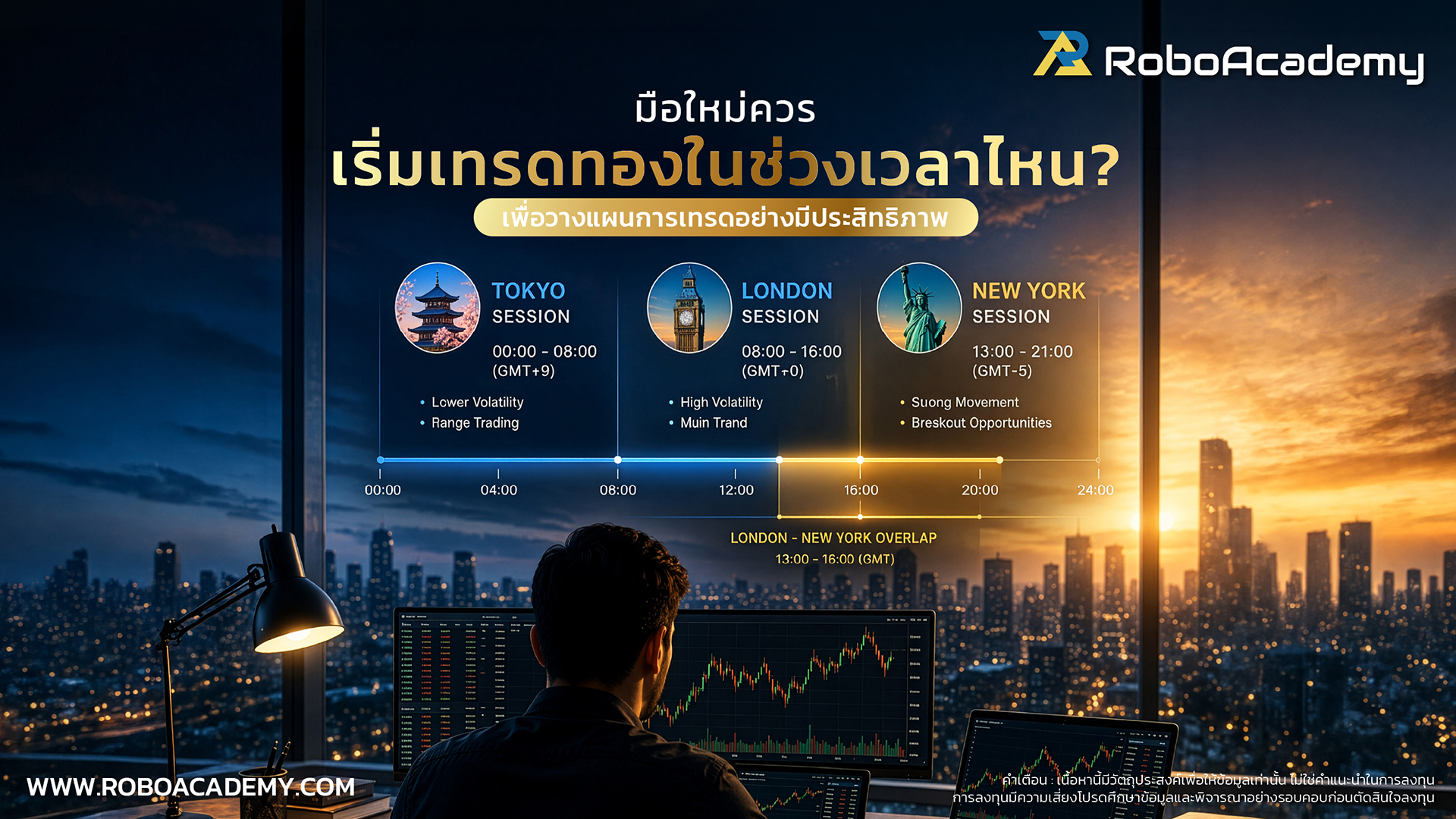
มือใหม่ควรเริ่มเทรดทองช่วงเวลาไหน เพื่อวางแผนการเทรดอย่างมีประสิทธิภาพ
ผู้ที่กำลังมองหา คอร์สสอนเทรดทอง ควรเริ่มศึกษาการเทรดในช่วงเวลาที่ตลาดมีสภาพคล่องสูง เช่น ช่วงที่ตลาดลอนดอนและนิวยอร์กเปิดพร้อมกัน เพราะมักมีปริมาณการซื้อขายมาก การเคลื่อนไหวของราคาชัดเจน และเหมาะสำหรับการเรียนรู้การอ่านกราฟ ควบคู่กับการฝึกบริหารความเสี่ยงและวางแผนก่อนเปิดสถานะทุกครั้ง หลายคนที่เริ่มค้นหาคำว่า สอนเทรดทอง มักมีคำถามเดียวกันว่า "ควรเริ่มเทรดช่วงเวลาไหนจึงเหมาะที่สุด" เพราะแม้ว่าตลาดทองคำจะเปิดให้ซื้อขายเกือบตลอด 24 ชั่วโมง แต่ไม่ได้หมายความว่าทุกช่วงเวลาจะเหมาะกับผู้เริ่มต้นเสมอ ความเข้าใจเรื่องช่วงเวลาการซื้อขายถือเป็นพื้นฐานสำคัญ เพราะแต่ละช่วงมีปริมาณการซื้อขาย ความผันผวน และปัจจัยที่ส่งผลต่อราคาแตกต่างกัน หากเลือกช่วงเวลาที่เหมาะสม จะช่วยให้มือใหม่เรียนรู้พฤติกรรมของตลาดได้ง่ายขึ้น ลดความสับสนในการวิเคราะห์กราฟ และสามารถฝึกฝนได้อย่างเป็นระบบ มือใหม่ควรเริ่มเทรดทองช่วงเวลาไหน เพื่อเรียนรู้ตลาดได้ง่ายและวางแผนได้อย่างมีประสิทธิภาพ คำตอบคือ ไม่มีช่วงเวลาใดดีที่สุดสำหรับทุกคน แต่มีช่วงเวลาที่เหมาะกับผู้เริ่มต้นมากกว่าช่วงอื่น เนื่องจากตลาดมีสภาพคล่องสูง ราคาเคลื่อนไหวเป็นธรรมชาติ และมีข้อมูลประกอบการวิเคราะห์จำนวนมาก การเลือกเวลาให้เหมาะกับรูปแบบการใช้ชีวิตของตนเอง ยังช่วยให้สามารถติดตามตลาดได้ต่อเนื่อง ไม่ต้องรีบร้อนหรือเปิดสถานะเพราะกลัวพลาดโอกาส ทำความเข้าใจโครงสร้างของตลาดทองคำโลกและช่วงเวลาที่ส่งผลต่อราคา การเทรดทองคำเป็นการทำธุรกรรมในตลาดระดับโลกที่เปิดทำการตลอด 24 ชั่วโมงในวันจันทร์ถึงวันศุกร์ อย่างไรก็ตาม ไม่ได้หมายความว่าทุกช่วงเวลาจะเหมาะสมสำหรับการเข้าทำรายการ โดยเฉพาะสำหรับผู้ที่เพิ่งเริ่มต้น การเลือกเวลาที่สอดคล้องกับพฤติกรรมของราคาและกลยุทธ์ที่คุณใช้ถือเป็นสิ่งสำคัญอย่างยิ่ง ตลาดหลักของโลกแบ่งออกเป็นสามช่วงเวลาหลัก ซึ่งแต่ละตลาดมีเอกลักษณ์และความผันผวนที่แตกต่างกันออกไป ตลาดเอเชีย (ประมาณ 06.00 น. - 14.00 น.) : ในช่วงเช้าถึงบ่ายตามเวลาประเทศไทย ตลาดฝั่งเอเชีย เช่น ซิดนีย์และโตเกียวจะเปิดทำการ ช่วงเวลานี้มักจะมีความผันผวนค่อนข้างต่ำ กราฟราคาจะเคลื่อนที่ในกรอบแคบๆ อย่างค่อยเป็นค่อยไป สำหรับมือใหม่ที่ยังไม่คุ้นเคยกับความรวดเร็วของตลาด ช่วงเวลานี้อาจเป็นโอกาสที่ดีในการฝึกสังเกตการณ์ ฝึกตีเส้นแนวรับแนวต้าน และทำความคุ้นเคยกับระบบเทรดโดยที่ความกดดันยังไม่สูงมากนัก ตลาดตลาดยุโรป (ประมาณ 14.00 น. - 22.00 น.) : เมื่อเข้าสู่ช่วงบ่าย ศูนย์กลางทางการเงินอย่างลอนดอนจะเริ่มเปิดทำการ สภาพคล่องในตลาดจะเพิ่มสูงขึ้นอย่างเห็นได้ชัด ทิศทางของราคาเริ่มมีความชัดเจนมากขึ้น การเบรกเอาท์ของกรอบราคาที่สะสมมาตั้งแต่ช่วงเช้ามักจะเกิดขึ้นในเวลานี้ นักเทรดหลายคนนิยมใช้ช่วงเวลานี้ในการวิเคราะห์แนวโน้มหลักของวัน เนื่องจากปริมาณการซื้อขายที่เพิ่มขึ้นทำให้สัญญาณทางเทคนิคมีความแม่นยำมากขึ้น ตลาดอเมริกา (ประมาณ 19.00 น. - 03.00 น.) : นี่คือช่วงเวลาที่มีปริมาณการซื้อขายหนาแน่นที่สุด โดยเฉพาะในช่วงเวลา 19.00 น. ถึง 23.00 น. ซึ่งเป็นจังหวะที่ตลาดลอนดอนและตลาดนิวยอร์กเปิดทำการซ้อนทับกัน ราคาทองคำมักจะมีการเคลื่อนไหวที่รุนแรงและมีทิศทางที่ชัดเจนมากที่สุด นอกจากนี้ยังเป็นช่วงเวลาที่มีการประกาศตัวเลขทางเศรษฐกิจที่สำคัญของสหรัฐอเมริกา ซึ่งส่งผลกระทบโดยตรงต่อทิศทางของราคาทองคำ มือใหม่ที่ต้องการเห็นผลลัพธ์ที่รวดเร็วมักจะสนใจช่วงเวลานี้ แต่ก็ต้องแลกมากับความเสี่ยงที่สูงขึ้น จึงจำเป็นต้องมีระบบการจัดการเงินทุนที่รัดกุมอย่างมาก ปัจจัยสำคัญที่มือใหม่ต้องประเมินก่อนเลือกเวลาเทรด นอกจากเรื่องของเวลาเปิดปิดตลาดแล้ว การเลือกเวลาเทรดที่เหมาะสมยังต้องพิจารณาปัจจัยส่วนบุคคลประกอบด้วย ความพร้อมของเวลาส่วนตัว : คุณควรเลือกเทรดในช่วงเวลาที่คุณสามารถมีสมาธิได้อย่างเต็มที่ หากคุณทำงานประจำ ช่วงหัวค่ำที่ตลาดอเมริกาเปิดอาจเป็นเวลาที่สอดคล้องกับวิถีชีวิตของคุณมากที่สุด รูปแบบและกลยุทธ์ที่ใช้ : หากคุณชอบเทรดตามแนวโน้มที่ชัดเจน ช่วงเวลาทับซ้อนของลอนดอนและนิวยอร์กจะตอบโจทย์มากที่สุด แต่หากคุณชอบเทรดในกรอบราคาแคบๆ ช่วงตลาดเอเชียอาจเป็นทางเลือกที่เหมาะสมกว่า การจัดการอารมณ์ : ช่วงเวลาที่ตลาดมีความผันผวนสูงมักจะสร้างความกดดันทางอารมณ์ได้ง่าย มือใหม่จึงควรประเมินขีดจำกัดในการรับความกดดันของตนเอง เพื่อป้องกันการตัดสินใจที่ผิดพลาดและช่วยรักษาสภาพจิตใจในระยะยาว การทราบถึงช่วงเวลาที่เหมาะสมเป็นเพียงจุดเริ่มต้นในการเดินทางสายนี้เท่านั้น ความสำเร็จอย่างยั่งยืนไม่ได้เกิดจากการคาดเดาทิศทางตลาดเพียงอย่างเดียว แต่ต้องอาศัยการมีความรู้ที่ถูกต้อง การมีระเบียบวินัย การควบคุมอารมณ์ และการมีระบบเทรดที่ได้รับการทดสอบมาเป็นอย่างดี การศึกษาหาความรู้จากแหล่งที่เชื่อถือได้จะช่วยร่นระยะเวลาลองผิดลองถูก และช่วยปกป้องเงินทุนของคุณได้อย่างมีประสิทธิภาพ คำถามที่พบบ่อยเกี่ยวกับ การเทรดทอง Q1: มือใหม่ควรเริ่มต้นศึกษาการเทรดทองอย่างไรให้ปลอดภัย? A: การเริ่มต้นที่ดีควรเริ่มจากการทำความเข้าใจพื้นฐานของตลาด การอ่านกราฟ และการบริหารความเสี่ยง ซึ่งที่ RoboAcademy เรามีหลักสูตรที่ครอบคลุมเนื้อหาเหล่านี้อย่างละเอียด เพื่อให้คุณเริ่มต้นได้อย่างมั่นคงและเป็นระบบ Q2: ถ้ามีเวลาน้อย ควรเลือกเทรดช่วงเวลาไหนดี? A: แนะนำช่วงเวลา 19.00 น. ถึง 23.00 น. ซึ่งเป็นช่วงที่ตลาดมีความคึกคัก ทำให้ใช้เวลาในการเฝ้าหน้าจอน้อยลง นอกจากนี้ RoboAcademy ยังมีเนื้อหาเกี่ยวกับการใช้เครื่องมือช่วยวิเคราะห์เพื่อช่วยประหยัดเวลาของคุณด้วย Q3: ตลาดทองคำมีการปิดทำการหรือไม่? A: ตลาดทองคำระดับโลกเปิดทำการตลอด 24 ชั่วโมงตั้งแต่วันจันทร์ถึงวันศุกร์ และปิดทำการในวันเสาร์และอาทิตย์ คุณสามารถเลือกจัดสรรเวลาในช่วงวันหยุดเพื่อเรียนรู้เพิ่มเติมกับ RoboAcademy เพื่อเตรียมตัวก่อนสัปดาห์ใหม่จะเริ่มต้นได้ Q4: การประกาศข่าวเศรษฐกิจมีผลอย่างไรต่อราคาทองคำ? A: ข่าวเศรษฐกิจโดยเฉพาะตัวเลขจากสหรัฐอเมริกามักทำให้ราคาทองคำเกิดความผันผวนอย่างหนัก ที่ RoboAcademy เรามีการสอนวิธีวิเคราะห์ข่าวและการวางแผนรับมือเพื่อป้องกันความเสี่ยงที่อาจเกิดขึ้นกับพอร์ตของคุณ Q5: ต้องเตรียมตัวอย่างไรก่อนเริ่มใช้ระบบเทรดจริง? A: ผู้เริ่มต้นควรฝึกฝนในบัญชีทดลอง (Demo) จนเกิดความชำนาญ ซึ่งผู้เรียนที่ RoboAcademy จะได้รับการดูแลอย่างใกล้ชิดและมีสภาพแวดล้อมจำลองให้ฝึกฝนจนกว่าจะมีความเข้าใจและมั่นใจก่อนลงสนามจริง หากคุณเป็นมือใหม่ที่ต้องการเริ่มต้นอย่างถูกต้องและมีโครงสร้างการเรียนรู้ที่ชัดเจน RoboAcademy พร้อมเป็นผู้ช่วยในการพัฒนาทักษะของคุณ เรามีหลักสูตรที่ออกแบบมาเพื่อปูพื้นฐานตั้งแต่ระดับเริ่มต้นไปจนถึงการประยุกต์ใช้เทคโนโลยีและระบบอัตโนมัติเข้ามาช่วยวิเคราะห์ตลาด เพื่อให้คุณสามารถรับมือกับความผันผวนได้อย่างเป็นระบบและมีความมั่นใจมากยิ่งขึ้น สนใจพัฒนาทักษะการเทรดของคุณ สามารถเยี่ยมชมรายละเอียดหลักสูตรและบริการต่างๆ ได้ที่ RoboAcademy สนใจ คอร์สเรียนเกี่ยวกับ คอร์สลงทุน , คอร์สสอนเทรด , คอร์สเทรดทอง ติดต่อ 𝗥𝗼𝗯𝗼𝗔𝗰𝗮𝗱𝗲𝗺𝘆 คลิกที่นี่ หรือเพิ่มเพื่อน Line OA : @roboacademy
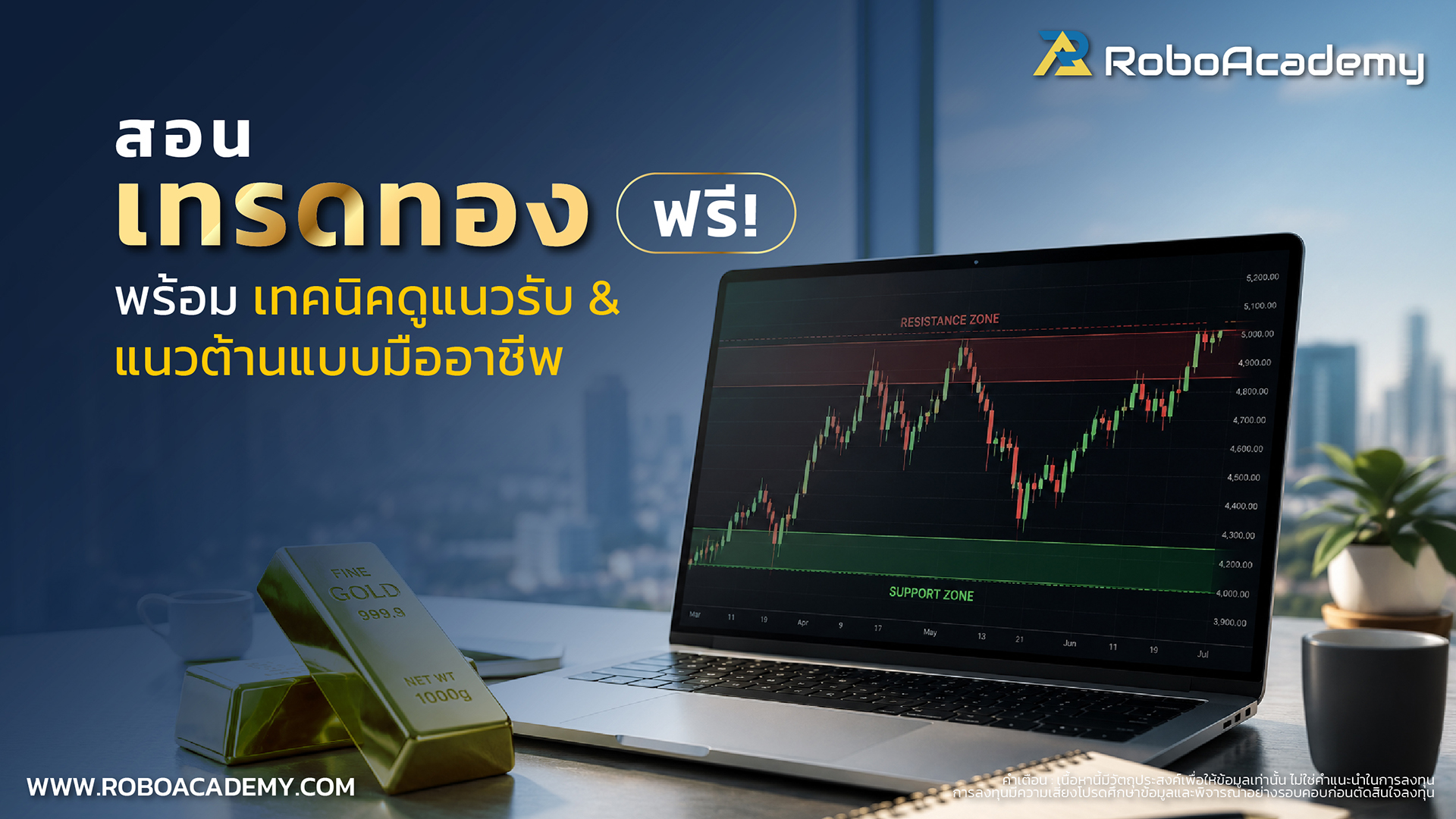
สอนเทรดทอง ฟรี พร้อมเทคนิคดูแนวรับแนวต้านแบบมืออาชีพ
สอนเทรดทอง ฟรี คือการเรียนรู้พื้นฐานการวิเคราะห์กราฟทองคำ วิธีหาแนวรับ แนวต้าน และการวางแผนก่อนเข้าออร์เดอร์ โดยไม่จำเป็นต้องมีประสบการณ์มาก่อน หากเริ่มจากหลักการที่ถูกต้องและฝึกฝนอย่างต่อเนื่อง จะช่วยให้เข้าใจพฤติกรรมของราคาและตัดสินใจได้อย่างเป็นระบบมากขึ้น การมองหา สอนเทรดทอง ฟรี เป็นจุดเริ่มต้นที่ดีสำหรับผู้ที่สนใจตลาดทองคำ เพราะนอกจากจะช่วยลดต้นทุนในการเรียนรู้แล้ว ยังเปิดโอกาสให้เข้าใจหลักการวิเคราะห์ตลาดก่อนเลือกเรียนคอร์สเชิงลึกหรือเริ่มฝึกปฏิบัติจริง อย่างไรก็ตาม การเรียนเทรดทองไม่ใช่แค่การจำรูปแบบกราฟหรือใช้ Indicator เพียงอย่างเดียว แต่ควรเข้าใจโครงสร้างราคา การวิเคราะห์แนวรับ แนวต้าน การบริหารความเสี่ยง และการวางแผนในแต่ละสถานการณ์ ซึ่งทั้งหมดเป็นทักษะที่สามารถพัฒนาได้ผ่านการเรียนรู้และการฝึกฝนอย่างต่อเนื่อง สอนเทรดทอง ฟรี สำหรับมือใหม่ เรียนรู้การดูแนวรับแนวต้านและอ่านกราฟอย่างเป็นระบบ การวิเคราะห์กราฟทองคำ (Gold หรือ XAU/USD) เป็นพื้นฐานสำคัญที่ผู้เริ่มต้นควรเรียนรู้ เพราะราคาทองคำมีการเคลื่อนไหวตลอดเวลา และได้รับอิทธิพลจากหลายปัจจัย เช่น ข่าวเศรษฐกิจสำคัญ อัตราดอกเบี้ยของธนาคารกลาง ค่าเงินดอลลาร์สหรัฐ สถานการณ์ทางภูมิรัฐศาสตร์ ความต้องการถือครองสินทรัพย์ปลอดภัย เมื่อเข้าใจปัจจัยเหล่านี้ร่วมกับการอ่านกราฟ จะช่วยให้วิเคราะห์ตลาดได้รอบด้านมากขึ้น แนวรับและแนวต้านคืออะไร ทำไมจึงสำคัญ แนวรับ (Support) คือบริเวณที่ราคามีโอกาสหยุดปรับตัวลงหรือเกิดแรงซื้อกลับ แนวต้าน (Resistance) คือบริเวณที่ราคามีโอกาสชะลอการปรับตัวขึ้นหรือเกิดแรงขายเพิ่มขึ้น หลายคนเข้าใจผิดว่าแนวรับและแนวต้านเป็น "เส้นตายตัว" แต่ในความเป็นจริง พื้นที่เหล่านี้เป็น "โซนราคา" ที่นักลงทุนจำนวนมากให้ความสนใจ การระบุโซนเหล่านี้ได้อย่างถูกต้อง จะช่วยให้สามารถวางแผนการเข้าและออกจากตลาดได้อย่างมีเหตุผลมากขึ้น วิธีหาแนวรับแนวต้านแบบที่นักเทรดมืออาชีพนิยมใช้ ไม่มีวิธีใดที่แม่นยำที่สุดเพียงวิธีเดียว แต่มืออาชีพมักใช้หลายเทคนิคร่วมกัน ได้แก่ ดูจากจุด High และ Low เดิม: จุดสูงสุดและต่ำสุดของราคาในอดีต มักเป็นบริเวณที่ตลาดกลับตัวหลายครั้ง จึงสามารถใช้เป็นแนวอ้างอิงได้ ใช้เส้น Trendline: Trendline ช่วยให้เห็นทิศทางของราคาได้ชัดเจน หากราคายังคงเคลื่อนที่เหนือเส้นแนวโน้มขาขึ้น ตลาดอาจยังอยู่ในแนวโน้มเดิม ในทางกลับกัน หากราคาหลุดเส้นแนวโน้ม อาจเป็นสัญญาณให้ติดตามการเปลี่ยนแปลงของทิศทางราคา ใช้ Time Frame หลายระดับ: นักเทรดจำนวนมากเริ่มวิเคราะห์จาก Daily H4 H1 ก่อนลงมาดูจังหวะใน Time Frame ที่เล็กกว่า วิธีนี้ช่วยให้เห็นภาพรวมของตลาดและลดโอกาสสับสนจากสัญญาณระยะสั้น ใช้ Price Action ร่วมด้วย: แทนที่จะดู Indicator เพียงอย่างเดียว ควรสังเกตพฤติกรรมของแท่งเทียน เช่น Pin Bar Engulfing Doji รูปแบบเหล่านี้สามารถใช้ประกอบการวิเคราะห์บริเวณแนวรับและแนวต้านได้อย่างมีประสิทธิภาพ หากอยากเรียนเทรดทอง ควรเริ่มจากอะไร การเทรดทองไม่ใช่การทายว่าราคาจะขึ้นหรือลง แต่คือการวิเคราะห์ข้อมูลและวางแผนก่อนตัดสินใจเข้าออร์เดอร์ หากคุณเป็นมือใหม่ การเรียนรู้ตามลำดับจะช่วยให้เข้าใจภาพรวมของตลาด ลดความสับสน และสามารถต่อยอดไปสู่เทคนิคที่ซับซ้อนขึ้นได้ง่ายกว่า การข้ามพื้นฐานไปเรียนเรื่องขั้นสูงทันที มักทำให้เข้าใจหลักการได้ไม่ครบและนำไปประยุกต์ใช้ได้ยาก ทำความเข้าใจพื้นฐานของตลาดทองคำ : เริ่มจากการเรียนรู้ว่าราคาทองคำเคลื่อนไหวจากปัจจัยใดบ้าง เช่น ค่าเงินดอลลาร์สหรัฐ อัตราดอกเบี้ยของธนาคารกลาง ตัวเลขเศรษฐกิจ เงินเฟ้อ และเหตุการณ์สำคัญของโลก เมื่อเข้าใจภาพรวมของตลาดแล้ว จะช่วยให้มองเห็นเหตุผลของการเคลื่อนไหวของราคา มากกว่าการดูกราฟเพียงอย่างเดียว ฝึกอ่านกราฟราคา : การอ่านกราฟเป็นทักษะสำคัญที่นักเทรดทุกคนควรมี ไม่ว่าจะเป็นการดูแท่งเทียน (Candlestick) แนวโน้มของราคา หรือช่วงที่ตลาดเคลื่อนไหวในกรอบ การอ่านกราฟได้อย่างถูกต้องจะช่วยให้วิเคราะห์สถานการณ์และวางแผนได้อย่างมีเหตุผล เรียนรู้แนวรับและแนวต้าน : แนวรับและแนวต้านเป็นเครื่องมือพื้นฐานที่ใช้ระบุบริเวณซึ่งราคามักเกิดการชะลอตัวหรือเปลี่ยนทิศทาง การเรียนรู้วิธีหาโซนเหล่านี้จากจุด High-Low เดิม เส้น Trendline หรือ Price Action จะช่วยให้การวิเคราะห์มีความแม่นยำและเป็นระบบมากขึ้น ศึกษาแนวโน้มของตลาด : ก่อนตัดสินใจเข้าออร์เดอร์ ควรรู้ว่าตลาดกำลังอยู่ในแนวโน้มขาขึ้น ขาลง หรือเคลื่อนที่ในกรอบ (Sideway) เพราะการวิเคราะห์แนวโน้มจะช่วยให้เลือกจังหวะได้เหมาะสม และลดโอกาสเข้าออร์เดอร์สวนทิศทางของตลาด เรียนรู้การบริหารความเสี่ยง : หลายคนให้ความสำคัญกับการหาจุดเข้าออร์เดอร์ แต่ละเลยการบริหารความเสี่ยง ซึ่งเป็นปัจจัยสำคัญของการเทรดระยะยาว ควรเรียนรู้การกำหนดขนาดการลงทุน การตั้ง Stop Loss และการวางแผนความเสี่ยงในแต่ละครั้ง เพื่อให้สามารถควบคุมเงินทุนได้อย่างเหมาะสม ทดลองวางแผนบนกราฟย้อนหลัง : การฝึกวิเคราะห์กราฟย้อนหลัง (Backtesting) เป็นวิธีที่ช่วยให้เข้าใจพฤติกรรมของราคาโดยไม่ต้องรีบเข้าสู่ตลาดจริง คุณสามารถทดลองหาแนวรับ แนวต้าน วางแผนจุดเข้าออก และประเมินผลลัพธ์จากข้อมูลในอดีต เพื่อสร้างความคุ้นเคยกับการวิเคราะห์ ฝึกใช้งานโปรแกรมเทรดให้คล่อง : เมื่อมีพื้นฐานด้านการวิเคราะห์แล้ว ควรเรียนรู้การใช้งานแพลตฟอร์มเทรด เช่น การเปิดกราฟ การตั้งคำสั่งซื้อขาย การเพิ่ม Indicator และการจัดการออร์เดอร์ เพื่อให้สามารถใช้งานเครื่องมือต่าง ๆ ได้อย่างมั่นใจเมื่อถึงเวลาฝึกปฏิบัติ คำถามที่พบบ่อยเกี่ยวกับ คอร์สสอนเทรดทอง Q1. RoboAcademy มีคอร์สสอนเทรดทอง ฟรี สำหรับผู้เริ่มต้นหรือไม่? A: มี RoboAcademy มีบทเรียนฟรีสำหรับผู้เริ่มต้นในหลายหัวข้อ รวมถึงพื้นฐานการเทรดและการใช้งานแพลตฟอร์ม ก่อนต่อยอดไปยังหลักสูตรเชิงลึก Q2. เรียนกับ RoboAcademy ต้องมีประสบการณ์มาก่อนหรือไม่? A: ไม่จำเป็น หลักสูตรของ RoboAcademy ถูกออกแบบให้ผู้เริ่มต้นสามารถเรียนรู้ตั้งแต่พื้นฐาน และค่อย ๆ พัฒนาทักษะตามลำดับ Q3. ใช้เวลานานแค่ไหนจึงจะอ่านแนวรับแนวต้านได้คล่อง? A: ระยะเวลาขึ้นอยู่กับการฝึกฝนของแต่ละคน โดยควรฝึกวิเคราะห์กราฟอย่างสม่ำเสมอและทบทวนตัวอย่างในอดีตควบคู่กับการเรียน Q4. RoboAcademy สอนเฉพาะการเทรดทองหรือไม่? A: ไม่ใช่ RoboAcademy มีหลักสูตรเกี่ยวกับ คู่สกุลเงิน หุ้นต่างประเทศ การวิเคราะห์ทางเทคนิค การบริหารความเสี่ยง การใช้งาน MetaTrader และหัวข้ออื่น ๆ ที่เกี่ยวข้องกับการเทรด Q5. หลังเรียนกับ RoboAcademy สามารถต่อยอดความรู้ได้อย่างไร? A: ผู้เรียนสามารถศึกษาหลักสูตรเพิ่มเติม เข้าร่วมสัมมนา ใช้เครื่องมือวิเคราะห์ และเรียนรู้ผ่านชุมชนของ RoboAcademy เพื่อพัฒนาทักษะอย่างต่อเนื่อง เรียนรู้การเทรดทองอย่างเป็นระบบกับ RoboAcademy หากคุณกำลังมองหาแหล่งเรียนรู้ที่เริ่มได้จากพื้นฐาน RoboAcademy มีทั้งบทเรียนฟรีและหลักสูตรที่ครอบคลุมการเทรด คู่สกุลเงิน หุ้นต่างประเทศ และทองคำ ตั้งแต่การใช้งานโปรแกรม การอ่านกราฟ การวิเคราะห์ทางเทคนิค การจัดการความเสี่ยง ไปจนถึงการเรียนรู้ผ่านสัมมนา เครื่องมือวิเคราะห์ และการดูแลจากทีมผู้เชี่ยวชาญ เพื่อให้ผู้เรียนสามารถพัฒนาทักษะได้อย่างต่อเนื่องตามลำดับขั้น สนใจ คอร์สเรียนเกี่ยวกับ คอร์สลงทุน , คอร์สสอนเทรด , คอร์สเทรดทอง ติดต่อ 𝗥𝗼𝗯𝗼𝗔𝗰𝗮𝗱𝗲𝗺𝘆 คลิกที่นี่ หรือเพิ่มเพื่อน Line OA : @roboacademy
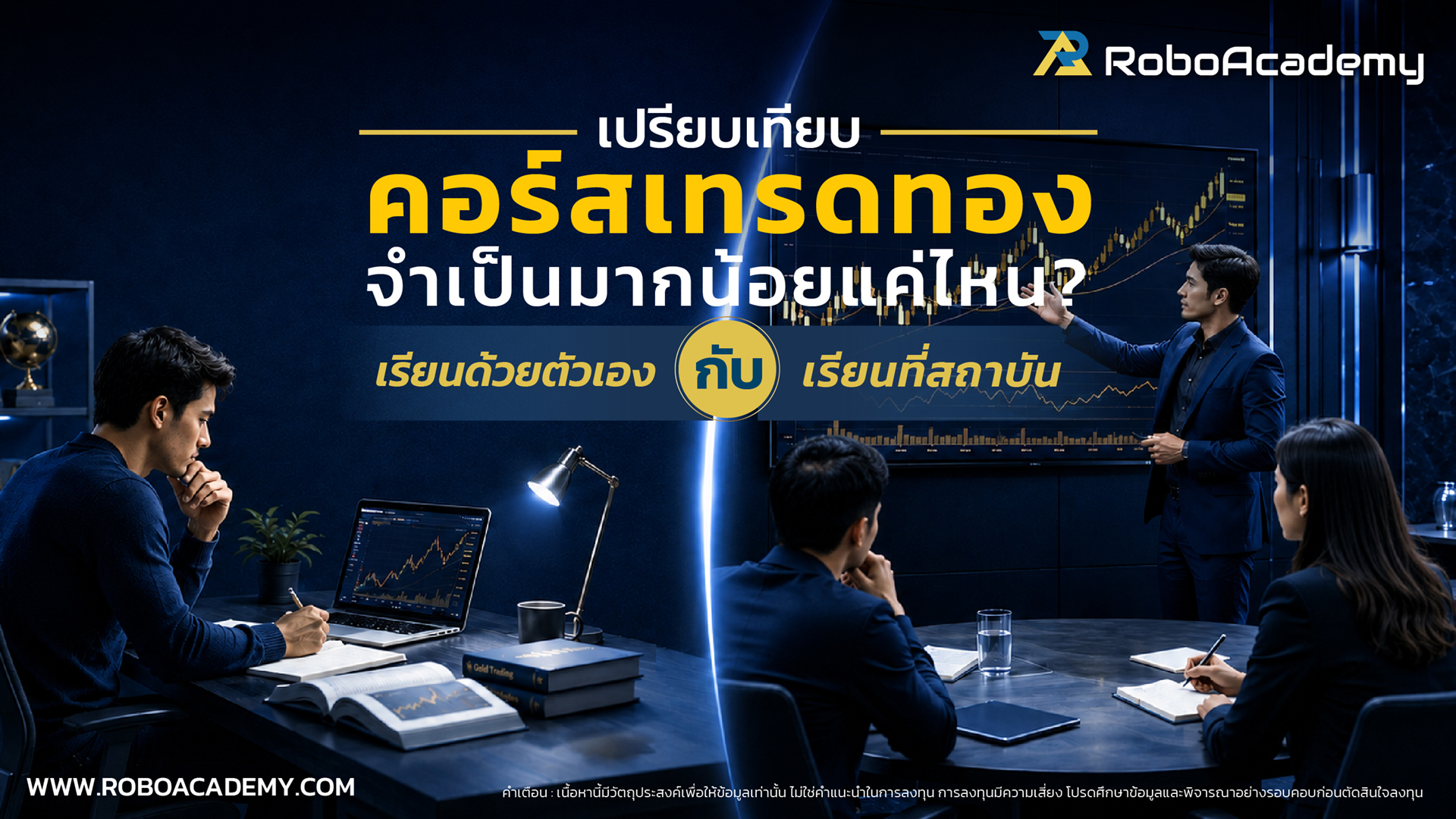
คอร์สเทรดทอง จำเป็นไหม? เปรียบเทียบเรียนเอง vs เรียนจริง เลือกแบบไหนให้พอร์ตปัง
การตัดสินใจเข้าสู่วงการตลาดทองคำยุคปัจจุบันเต็มไปด้วยความผันผวนและมีโอกาสคว้าข้อได้เปรียบในตลาดได้อย่างรวดเร็ว ทำให้นักลงทุนมือใหม่และมือเก๋าหลายคนตั้งคำถามว่า คอร์สเทรดทอง มีความจำเป็นมากน้อยเพียงใดสำหรับการเริ่มต้นสร้างพอร์ตให้เติบโตอย่างยั่งยืน หรือเราสามารถศึกษาและฝึกฝนด้วยตัวเองผ่านแหล่งความรู้ออนไลน์ได้โดยไม่ต้องเสียค่าใช้จ่าย คำตอบที่แท้จริงขึ้นอยู่กับเป้าหมาย ความพร้อมด้านเวลา และระดับความเสี่ยงที่แต่ละคนยอมรับได้ เนื่องจากตลาดทองคำมีปัจจัยขับเคลื่อนที่ซับซ้อน ทั้งเศรษฐกิจโลก อัตราดอกเบี้ย และจิตวิทยาตลาด การเลือกทิศทางเรียนรู้ที่ถูกต้องจึงเป็นก้าวสำคัญที่จะเปลี่ยนให้คุณกลายเป็นนักลงทุนผู้ชนะในตลาดได้อย่างมั่นใจ คอร์สเทรดทอง จำเป็นไหม? สำรวจความต้องการก่อนลงมือเทรด ตลาดทองคำหรือ Gold Spot (XAU/USD) เป็นหนึ่งในตลาดที่มีสภาพคล่องสูงที่สุดในโลก แต่ในความง่ายของการเข้าถึงก็แฝงไปด้วยความเสี่ยงที่สูงเช่นกัน คำถามที่ว่าคอร์สเรียนมีความจำเป็นไหม สามารถแยกพิจารณาได้จากความพร้อมของตัวคุณเอง หากคุณมีเวลาเหลือเฟือ ชอบการลองผิดลองถูก และยอมรับความเสี่ยงจากการลองสนามในช่วงแรกได้ การเรียนรู้ด้วยตัวเองอาจเป็นจุดเริ่มต้นที่ดี แต่ถ้าคุณต้องการย่นระยะเวลา ลดความเสียหายจากการขาดความรู้ และอยากได้กลยุทธ์การลงทุนที่เป็นระบบเพื่อนำไปต่อยอดและใช้งานได้ทันที การเลือกลงทุนกับคอร์สเรียนที่มีมาตรฐานย่อมสร้างความคุ้มค่าในระยะยาวได้มากกว่า เปรียบเทียบจุดเด่น-จุดด้อย เรียนเทรดทองด้วยตัวเอง VS เรียนจริงกับสถาบัน เพื่อให้เห็นภาพชัดเจนในการเลือกแนวทางการเรียนรู้ เรามาเปรียบเทียบข้อดีและข้อจำกัดของทั้งสองรูปแบบกันอย่างตรงไปตรงมา รูปแบบการเรียนรู้ ข้อดี ข้อจำกัด เรียนรู้ด้วยตัวเอง (Self-Study) * ประหยัดค่าใช้จ่ายเริ่มต้น * เลือกเวลาเรียนได้ตามใจชอบ * ฝึกการคิดและวิเคราะห์ด้วยตนเอง * ใช้เวลานานในการรวบรวมข้อมูล * เสี่ยงต่อการหลงทิศทางจากข้อมูลที่ผิดพลาด * ไม่มีอาจารย์คอยให้คำปรึกษาเมื่อเจอปัญหา เรียนจริงกับสถาบัน (Academy) * มีหลักสูตรที่เป็นระบบตั้งแต่พื้นฐานสู่ระดับสูง * ได้ทางลัดและเทคนิคจากผู้เชี่ยวชาญจริง * มีระบบช่วยเหลือและเครื่องมือสนับสนุน * มีค่าใช้จ่ายในการสมัครเรียน * ต้องจัดเวลาเข้าร่วมกิจกรรมหรือคลาสเรียน เจาะลึกการเรียนเทรดทองด้วยตัวเอง เสรีภาพที่มาพร้อมความเสี่ยง การเรียนเทรดทองด้วยตัวเองผ่านคลิปวิดีโอ บทความ หรือกลุ่มโซเชียลมีเดียต่างๆ เป็นวิธีที่ทำได้ง่ายที่สุดในยุคดิจิทัล ข้อมูลความรู้พื้นฐาน เช่น การดูแท่งเทียน การลากเส้นแนวรับ-แนวต้าน หรือการติดตามข่าวสารเศรษฐกิจ มีให้ศึกษาฟรีมากมาย อย่างไรก็ตาม ข้อจำกัดที่ใหญ่ที่สุดของการเรียนเองคือ การขาดโครงสร้างการเรียนรู้ที่ถูกต้อง ข้อมูลบนอินเทอร์เน็ตมักกระจัดกระจายและบางครั้งอาจขัดแย้งกันเอง ทำให้นักลงทุนมือใหม่เกิดความสับสน ที่สำคัญคือเมื่อเกิดข้อผิดพลาดหรือพอร์ตติดลบ ผู้เรียนที่ศึกษาเองมักจะไม่รู้ว่าตนเองพลาดตรงจุดไหน ทำให้ต้องเสียเงินทุนจริงในตลาดเป็นค่าเล่าเรียนราคาแพงโดยไม่จำเป็น ข้อดีของการเลือกเรียนกับสถาบัน ทางลัดสู่การเป็นนักลงทุนมืออาชีพ การลงทุนในคอร์สเรียนที่มีระบบการสอนชัดเจนเปรียบเสมือนการซื้อประสบการณ์ของมืออาชีพมาเป็นของตัวเอง สถาบันที่ได้มาตรฐานจะช่วยย่นระยะเวลาในการลองผิดลองถูกของคุณจากหลายปีให้เหลือเพียงไม่กี่สัปดาห์ เนื้อหาถูกเรียงลำดับอย่างเป็นขั้นตอน: เริ่มต้นตั้งแต่การปูพื้นฐานจิตวิทยาการลงทุน การบริหารความเสี่ยง (Risk Management)ไปจนถึงเทคนิคการวิเคราะห์กราฟขั้นสูง ได้แนวคิดและระบบเทรดที่ใช้งานได้จริง: เรียนรู้จากผู้มีประสบการณ์ตรงที่คัดกรองแนวคิดและกลยุทธ์ที่สามารถนำไปต่อยอดและใช้งานได้จริงในสภาวะตลาดปัจจุบัน มาให้แล้ว มีสังคมและคอนเนกชัน: การได้แลกเปลี่ยนความรู้กับเพื่อนร่วมคลาสและอาจารย์ผู้สอน ช่วยสร้างกำลังใจและเปิดมุมมองใหม่ๆ ในการลงทุน 3 ปัจจัยสำคัญในการเลือกคอร์สเรียนเทรดทองให้คุ้มค่าที่สุด หากคุณตัดสินใจแล้วว่าจะเลือกเรียนกับสถาบัน เพื่อให้มั่นใจว่าจะได้รับความรู้ที่คุ้มค่ากับเงินและเวลาที่เสียไป ควรพิจารณาจากปัจจัยเหล่านี้ ความน่าเชื่อถือของผู้สอนและสถาบัน: มีที่ตั้งสำนักงานชัดเจน มีผู้เชี่ยวชาญที่มีประสบการณ์การลงทุนในตลาดจริงคอยให้คำแนะนำ หลักสูตรที่ครอบคลุมและอัปเดต: เนื้อหาต้องสอดคล้องกับสภาวะตลาดปัจจุบัน ไม่ใช่ทฤษฎีเก่าที่ใช้ไม่ได้ผลแล้ว รวมถึงมีการนำเครื่องมือและเทคโนโลยีใหม่ๆมาผสมผสาน การดูแลหลังการเรียน (After-Class Support): มีกลุ่มคอมมูนิตี้ คลาสทบทวน หรือช่องทางที่สามารถสอบถามอาจารย์ผู้สอนได้เมื่อนำความรู้ไปปฎิบัติจริงแล้วเกิดข้อสงสัย คำถามที่พบบ่อยเกี่ยวกับคอร์สสอนเทรดทองคำ Q1. ไม่มีพื้นฐานการลงทุนเลย สามารถเรียนคอร์สเทรดทองของ RoboAcademy ได้ไหม? A: ได้อย่างแน่นอน หลักสูตรของ RoboAcademy ออกแบบมาเพื่อรองรับตั้งแต่ผู้เริ่มต้นจากศูนย์ โดยเริ่มปูพื้นฐานตั้งแต่คำศัพท์พื้นฐาน วิธีการใช้แพลตฟอร์ม ไปจนถึงการวิเคราะห์ขั้นสูง ทำให้มั่นใจได้ว่าจะเข้าใจเนื้อหาได้อย่างครบถ้วน Q2. คอร์สเรียนเทรดทองที่ RoboAcademy มีการสอนใช้เครื่องมือช่วยเทรดไหม? A: มีแน่นอน สถาบันของเราโดดเด่นในเรื่องการผสมผสานความรู้ทางเทคนิคอลเข้ากับเทคโนโลยีการลงทุน โดยมีการสอนตั้งแต่พื้นฐานการวิเคราะห์กราฟด้วยตัวเอง (Manual Trading) ไปจนถึงการประยุกต์ใช้เครื่องมือช่วยเทรดและเทคโนโลยีอัจฉริยะ เพื่อช่วยในการบริหารจัดการพอร์ตการลงทุนอย่างเป็นระบบ Q3. เรียนคอร์สเทรดทองจบแล้ว จะมีคนคอยให้คำปรึกษาต่อไหม? A: สมาชิกของ RoboAcademy จะได้รับสิทธิ์เข้าร่วมคอมมูนิตี้กลุ่มการเรียนรู้ เรามีกิจกรรมสัมมนาออนไลน์และออฟไลน์อย่างสม่ำเสมอ รวมถึงระบบดูแลซัพพอร์ตหลังการเรียน เพื่อให้คุณสามารถปรึกษาทีมอาจารย์ผู้เชี่ยวชาญและแลกเปลี่ยนมุมมองกับเพื่อนนักลงทุนได้ตลอดเส้นทางการลงทุน Q4. ระหว่างเรียนออนไลน์กับเรียนที่สถาบัน RoboAcademy แบบไหนดีกว่ากัน? A: ดีทั้งสองรูปแบบขึ้นอยู่กับไลฟ์สไตล์และความสะดวกของผู้เรียน เพราะ RoboAcademyมีรองรับทั้งรูปแบบคอร์สออนไลน์สำหรับผู้ที่ต้องการความยืดหยุ่นเรื่องเวลา และการเรียนสัมมนาสดที่สถาบัน ( @ One Bangkok) สำหรับผู้ที่ต้องการฝึกปฏิบัติจริงและพูดคุยขอคำแนะนำจากอาจารย์อย่างใกล้ชิดเพื่อการพัฒนาทักษะที่รวดเร็วยิ่งขึ้นครับ Q5. คอร์สเทรดทองของ RoboAcademy แตกต่างจากการดูคลิปสอนฟรีทั่วไปอย่างไร? A: แตกต่างที่โครงสร้างเนื้อหาที่เป็นระบบและผ่านการพิสูจน์แล้วว่าสามารถนำไปต่อยอดใช้งานได้จริง นอกจากนี้เรายังเน้นย้ำเรื่องกลยุทธ์การบริหารความเสี่ยง (Risk Management) อย่างถูกต้องเพื่อช่วยปกป้องเงินทุนและสร้างความมั่นคงให้พอร์ตในระยะยาว ซึ่งเป็นสิ่งที่คลิปสอนฟรีทั่วไปมักไม่ได้เน้นย้ำอย่างลึกซึ้ง ยกระดับการลงทุนให้เหนือกว่าด้วยเทคโนโลยีและการดูแลจัดการพอร์ตที่เป็นระบบ ในตลาดยุคปัจจุบัน การเทรดทองคำไม่ได้จำกัดอยู่เพียงแค่การนั่งเฝ้าจอและส่งคำสั่งซื้อขายด้วยตัวเองเท่านั้น นักลงทุนระดับมืออาชีพต่างนำเทคโนโลยีระบบช่วยเทรดอัจฉริยะ เข้ามาเสริมประสิทธิภาพในการบริหารพอร์ต เพื่อลดปัญหาเรื่องอารมณ์ร่วมในการเทรด และทำหน้าที่ติดตามสภาวะตลาดแทนตลอด 24 ชั่วโมง การเลือกเรียนรู้กับสถาบันที่มีความเชี่ยวชาญทั้งด้านเทคนิคอลขั้นสูงและการประยุกต์ใช้การประยุกต์ใช้เทคโนโลยีการลงทุน จึงเป็นทางเลือกที่จะช่วยให้คุณก้าวข้ามขีดจำกัดเดิมๆ และสร้างการเติบโตของพอร์ตลงทุนได้อย่างมั่นคงและยั่งยืน ลงทุนในความรู้เพื่อการเทรดอย่างยั่งยืนกับ RoboAcademy ไม่ว่าคุณจะเลือกเส้นทางการเรียนรู้รูปแบบใด สิ่งสำคัญที่สุดคือความเข้าใจอย่างแท้จริงและการบริหารความเสี่ยงอย่างมีวินัย หากคุณต้องการลดระยะเวลาในการลองผิดลองถูก และพร้อมก้าวสู่การเป็นนักลงทุนมืออาชีพที่มีระบบการเทรดที่มั่นคง สถาบัน RoboAcademy พร้อมเป็นเพื่อนคู่คิดในทุกก้าวเดินของคุณ
สอนเทรดแบบ Step-by-Step สำหรับคนไม่มีพื้นฐานเลย สู่การเป็นมือโปร
การเริ่มต้นในตลาดการเงินไม่ใช่เรื่องยากอย่างที่คิด สำหรับใครที่กำลังมองหาคอร์สหรือแนวทาง สอนเทรด แบบเข้าใจง่าย คู่มือฉบับนี้จะพาคุณไปรู้จักกับขั้นตอนสำคัญตั้งแต่เริ่มต้นทำความเข้าใจตลาด การเลือกสินทรัพย์ การใช้เครื่องมือวิเคราะห์ และการบริหารความเสี่ยงอย่างเป็นระบบ เพื่อให้คุณสามารถก้าวสู่นักเทรดมืออาชีพได้อย่างมั่นใจ แม้จะไม่มีพื้นฐานมาก่อนเลยก็ตาม ตลาดการลงทุนในปัจจุบันเปิดกว้างและเข้าถึงง่ายกว่าในอดีตมาก ไม่ว่าจะเป็นตลาดหุ้นต่างประเทศ, คู่สกุลเงิน สินค้าโภคภัณฑ์, คริปโทเคอเรนซี หรือทองคำ แต่การจะอยู่รอดและสร้างผลตอบแทนได้อย่างยั่งยืนนั้น สิ่งสำคัญที่สุดคือ "ความรู้ที่ถูกต้อง" การเริ่มต้นเทรดโดยไม่มีทิศทางก็เหมือนการเดินเข้าป่าโดยไม่มีแผนที่ บทความนี้จัดทำขึ้นมาเพื่อเป็นโรดแมป (Roadmap) สำหรับผู้เริ่มต้น โดยสรุปขั้นตอนสำคัญที่ต้องรู้และปูพื้นฐานอย่างค่อยเป็นค่อยไป เพื่อให้คุณเข้าใจภาพรวมและพร้อมลงสนามจริงได้อย่างปลอดภัย ขั้นตอนที่ 1: ทำความเข้าใจและเลือกตลาดที่เหมาะกับคุณ ก่อนที่คุณจะเริ่มซื้อขาย สิ่งแรกที่ต้องทำคือการทำความเข้าใจว่าตลาดแต่ละประเภทมีความแตกต่างกันอย่างไร เพื่อเลือกสินทรัพย์ที่ตอบโจทย์เป้าหมายการลงทุนและระดับความเสี่ยงที่ยอมรับได้ ตลาดหุ้น (Stocks): การซื้อความเป็นเจ้าของบางส่วนของบริษัท เหมาะสำหรับการลงทุนระยะยาวและระยะสั้น มีความผันผวนตามผลประกอบการและเศรษฐกิจ ตลาดอัตราแลกเปลี่ยน (Foreign Exchange): การเก็งผลตอบแทนจากความเคลื่อนไหวของคู่สกุลเงินหลักทั่วโลก เป็นตลาดที่มีสภาพคล่องสูงมากและเปิดทำการตลอด 24 ชั่วโมง ตลาดทางเลือกอื่นๆ: เช่น ทองคำ น้ำมัน หรือดัชนีต่างประเทศ ซึ่งแต่ละสินทรัพย์จะมีพฤติกรรมราคาและปัจจัยขับเคลื่อนที่แตกต่างกันออกไป ขั้นตอนที่ 2: เรียนรู้เครื่องมือและแพลตฟอร์มการซื้อขาย ในการส่งคำสั่งซื้อขาย คุณจำเป็นต้องใช้งานโปรแกรมหรือแพลตฟอร์มการเทรดที่เป็นมาตรฐานสากล การฝึกฝนใช้งานเครื่องมือเหล่านี้ให้ชำนาญจะช่วยลดความผิดพลาดในการส่งคำสั่งได้ MetaTrader (MT4 & MT5): แพลตฟอร์มการลงทุนยอดนิยมระดับโลก รองรับการซื้อขายสินทรัพย์ที่หลากหลาย มาพร้อมเครื่องมือวิเคราะห์กราฟเทคนิคและฟังก์ชันการเทรดที่ครบครัน มีให้เลือกใช้งานทั้งเวอร์ชัน MT4 และ MT5 R StocksTrader: แพลตฟอร์มเทรดที่ทันสมัย เหมาะสำหรับการเข้าถึงตลาดหุ้นต่างประเทศระดับโลก มีฟังก์ชันการใช้งานง่ายและแสดงผลข้อมูลแบบเรียลไทม์ ขั้นตอนที่ 3: ฝึกฝนเทคนิคการวิเคราะห์ราคา นักเทรดที่ประสบความสำเร็จมักจะใช้การวิเคราะห์ 2 รูปแบบควบคู่กันไป เพื่อหาจุดซื้อและจุดขายที่มีประสิทธิภาพสูงที่สุด การวิเคราะห์ทางเทคนิค (Technical Analysis): เรียนรู้การอ่านกราฟแท่งเทียน แนวรับ-แนวต้าน และการใช้ตัวชี้วัด (Indicators) เพื่อดูแนวโน้ม (Trend) และหาจังหวะเข้าซื้อขาย การวิเคราะห์ปัจจัยพื้นฐาน (Fundamental Analysis): การติดตามข่าวสารเศรษฐกิจ อัตราดอกเบี้ย ตัวเลขการจ้างงาน หรือผลประกอบการของบริษัท เพื่อเข้าใจแรงขับเคลื่อนระยะยาวของราคา ขั้นตอนที่ 4: การบริหารความเสี่ยง (Risk Management) ที่เข้มงวด กฎเหล็กที่สำคัญที่สุดในการเทรดไม่ใช่การทำผลตอบแทนให้ได้มากที่สุด แต่คือการรักษาเงินทุนให้อยู่รอดในตลาด long-term กำหนดระดับ Stop Loss ทุกครั้งก่อนเปิดสถานะ เพื่อบริหารความเสี่ยงและจำกัดความเสี่ยงที่อาจเกิดขึ้น คำนวณขนาดของสัญญาหรือหุ้นที่จะซื้อ (Position Sizing) ให้เหมาะสมกับขนาดเงินทุน ไม่โอเวอร์เทรด (Overtrading) เคล็ดลับการพัฒนาทักษะสู่การเทรดแบบอัตโนมัติ เมื่อคุณมีความรู้พื้นฐานในการเทรดมือ (Manual Trade) มาระดับหนึ่งแล้ว สิ่งที่นักเทรดยุคใหม่นิยมทำเพื่อเพิ่มประสิทธิภาพคือการนำระบบเทคโนโลยีเข้ามาช่วย หรือที่เรียกว่าการใช้ Trading Robot การใช้ระบบเทรดอัตโนมัติจะช่วยแก้ปัญหาเรื่อง "จิตวิทยาการเทรด" เช่น ความกลัว ความโลภ และช่วยให้ระบบสามารถเฝ้าหน้าจอและทำตามแผนการเทรดได้อย่างแม่นยำตลอด 24 ชั่วโมง ซึ่งในปัจจุบันมีเครื่องมือและฟังก์ชันแบบ Block & Function ที่ช่วยให้คุณสามารถสร้างระบบเทรดอัตโนมัติของตัวเองได้ง่ายๆ โดยไม่จำเป็นต้องมีพื้นฐานด้านการเขียนโค้ด (Coding) เลยแม้แต่น้อย คำถามที่พบบ่อย พร้อมคำแนะนำจาก RoboAcademy Q1. ไม่มีพื้นฐานเลย แต่อยากเริ่มเรียนเทรด ควรเริ่มต้นอย่างไรดี? A: สำหรับผู้ที่ไม่มีพื้นฐานเลย แนะนำให้เริ่มต้นจากการศึกษาศัพท์พื้นฐานและกลไกการทำงานของตลาดก่อน จากนั้นสามารถสมัครเรียนคอร์สพื้นฐาน เช่น Essential Foundations ของทาง RoboAcademy ซึ่งออกแบบมาเพื่อปูพื้นฐานตั้งแต่ศูนย์อย่างถูกต้อง และช่วยประหยัดเวลาในการลองผิดลองถูก Q2. ทุนน้อยสามารถเริ่มต้นเรียนรู้และฝึกเทรดได้ไหม? A: สามารถทำได้ ในปัจจุบันการเปิดบัญชีฝึกฝน (Demo Account) หรือการเริ่มต้นเทรดจริงใช้เงินทุนเริ่มต้นไม่สูง สิ่งสำคัญคือการเก็บเกี่ยวประสบการณ์และทักษะการบริหารพอร์ต ซึ่งที่ RoboAcademy เราสนับสนุนให้นักเรียนเน้นฝึกฝนระบบเทรดให้แม่นยำก่อนที่จะขยายพอร์ตลงทุนขนาดใหญ่ Q3. การเทรดหุ้นต่างประเทศแตกต่างจากการเทรดหุ้นไทยอย่างไร? A: หุ้นต่างประเทศจะมีสภาพคล่องที่สูงกว่า มีตัวเลือกบริษัทเทคโนโลยีและนวัตกรรมระดับโลกมากมาย และมีเวลาทำการที่แตกต่างกัน ผู้เรียนสามารถศึกษาการใช้งานแพลตฟอร์ม R StocksTrader และกลยุทธ์เจาะลึกผ่านคอร์ส Global Stocks Mastery ของทาง RoboAcademy เพื่อเข้าถึงโอกาสในตลาดโลกได้อย่างมืออาชีพ Q4. Robot Trade หรือ EA คืออะไร และจำเป็นต้องเขียนโค้ดเป็นไหม? A: Expert Advisor (EA) คือโปรแกรมช่วยเทรดอัตโนมัติ หรือที่มักเรียกกันว่า Robot Auto Trade ที่ช่วยส่งคำสั่งซื้อขายตามเงื่อนไขที่เรากำหนด สำหรับมือใหม่ไม่จำเป็นต้องเขียนโค้ดเป็นเลย เพราะที่ RoboAcademy มีคอร์สสอนสร้าง Expert Advisor (EA)แบบไม่ใช้โค้ด ที่จะช่วยเปลี่ยนกลยุทธ์ในสมองของคุณให้กลายเป็นระบบอัตโนมัติได้อย่างง่ายดาย Q5. เรียนเทรดกับ RoboAcademy มีช่องทางการเรียนรู้รูปแบบใดบ้าง? A: RoboAcademy เป็นสถาบันให้ความรู้ด้านการลงทุนครบวงจร ตั้งอยู่ ณ One Bangkok เรามีรูปแบบการเรียนรู้ที่หลากหลายเพื่อตอบโจทย์นักลงทุนทุกกลุ่ม ดังนี้ คอร์สเรียนออนไลน์ (Online) : เรียนรู้ได้ทุกที่ ทุกเวลา เจาะลึกตั้งแต่พื้นฐานจนถึงเทคนิคขั้นสูง สัมมนาสดที่สถาบัน (Offline) : สัมผัสประสบการณ์จริง เรียนรู้แบบใกล้ชิดที่สถาบัน คอร์สสมาชิกรายเดือน (Monthly Membership) : รูปแบบการเรียนรู้ที่คุ้มค่า อัปเดตเนื้อหาและกลยุทธ์ใหม่ๆ ตลอดปี เครื่องมือช่วยวิเคราะห์ (Trading Tools) : สนับสนุนการเทรดด้วยเครื่องมือวิเคราะห์กราฟและเทคโนโลยีที่ทันสมัย ทีมอาจารย์ผู้เชี่ยวชาญ (instructor) : พร้อมดูแล ให้คำแนะนำ และเป็นที่ปรึกษาอย่างใกล้ชิด เริ่มต้นสร้างความมั่นคงในโลกการลงทุนไปกับเรา การเปลี่ยนตัวเองจากคนไม่มีพื้นฐานสู่การเป็นนักเทรดที่สร้างผลตอบแทนได้อย่างเป็นระบบ จำเป็นต้องอาศัยการเรียนรู้จากผู้เชี่ยวชาญและการใช้เครื่องมือที่ถูกต้อง เพื่อไม่ให้คุณต้องสูญเสียเงินทุนไปกับการลองผิดลองถูกในตลาดจริง
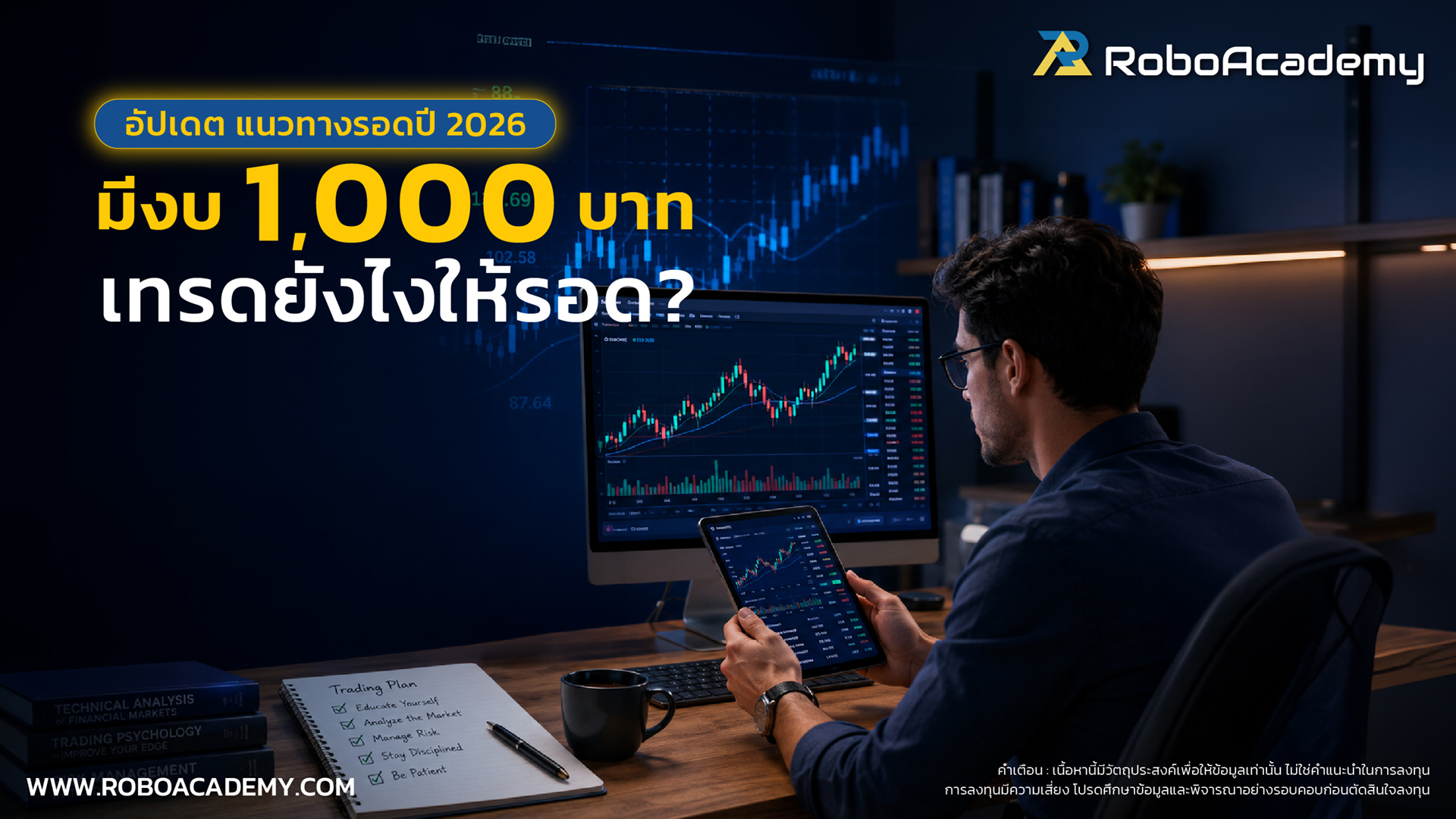
สอนเทรด มือใหม่ งบ 1,000 บาท เริ่มต้นได้จริงไหม? อัปเดตแนวทางรอดฉบับปี 2026
สอนเทรด มือใหม่ ด้วยงบ 1,000 บาท สามารถเริ่มต้นเทรดได้จริงในปัจจุบัน เนื่องจากโบรกเกอร์ส่วนใหญ่รองรับการฝากเงินขั้นต่ำจำนวนน้อยและการเทรดด้วยสัญญาขนาดเล็ก (Micro/Nano Lot) หรือการซื้อเศษหุ้น (Fractional Shares) ช่วยให้ผู้เริ่มต้นสามารถฝึกฝนในตลาดจริงได้โดยไม่ต้องใช้เงินทุนสูง การเข้าสู่ตลาดการลงทุนในยุคนี้ไม่ใช่เรื่องไกลตัวอีกต่อไป สำหรับมือใหม่ที่ตั้งคำถามว่าเงินทุนเพียง 1,000 บาทจะสามารถสร้างโอกาสในตลาดระดับโลกได้หรือไม่ คำตอบคือ "ได้แน่นอน" แต่สิ่งสำคัญไม่ใช่การคาดหวังว่าจะเปลี่ยนเงินพันให้เป็นเงินล้านในข้ามคืน แต่คือการใช้เงินก้อนนี้เป็น "ค่าวิชา" เพื่อเรียนรู้ระบบตลาด สภาวะอารมณ์ และการบริหารจัดการความเสี่ยง (Risk Management) ที่ไม่มีในตำราเล่มไหน เมื่อคุณเป็นมือใหม่ที่มีงบประมาณจำกัด กลยุทธ์ในการเข้าสู่ตลาดจึงต้องได้รับการวางแผนอย่างรัดกุม เพื่อให้เงิน 1,000 บาทนั้นอยู่รอดได้นานที่สุดและสร้างประสบการณ์ให้คุณได้มากที่สุด 3 สิ่งที่มือใหม่ต้องรู้ก่อนใช้เงิน 1,000 บาทลงสนามจริง เลือกใช้ Leverage อย่างเหมาะสม: ในตลาดอย่างคู่สกุลเงินหรือการเทรด CFD ผู้ลงทุนสามารถใช้ Leverage เพื่อเพิ่มอำนาจในการเปิดสถานะได้ อย่างไรก็ตาม Leverage จะเพิ่มทั้งโอกาสในการได้รับผลตอบแทนและระดับความเสี่ยง จึงควรศึกษาและใช้งานอย่างรอบคอบก่อนตัดสินใจลงทุน เน้นการเปิดออเดอร์ขนาดเล็กที่สุด: ควรเริ่มต้นด้วยการออกออเดอร์ขนาด Micro Lot (0.01) เท่านั้น เพื่อให้พอร์ตของคุณสามารถทนต่อความผันผวนของราคาได้ และป้องกันการล้างพอร์ตภายในระยะเวลาอันสั้น เป้าหมายคือทักษะ ไม่ใช่ตัวเงิน: ในช่วงแรกของการเทรด การรักษาทุนให้คงอยู่และการทำตามวินัยการลงทุนมีความสำคัญมากกว่าจำนวนผลตอบแทนที่คุณได้รับ ขั้นตอนการบริหารเงิน 1,000 บาทสำหรับผู้เริ่มต้น การบริหารเงินทุนขนาดเล็กจำเป็นต้องอาศัยการวางแผนแบบเป็นระบบ โดยสามารถแบ่งขั้นตอนการฝึกฝนออกเป็น 3 ระยะ ดังนี้ ระยะทดลองระบบ (Demo Account) : ก่อนจะควักเงิน 1,000 บาทจากกระเป๋า ควรเริ่มต้นสมัครบัญชีทดลองเพื่อทำความเข้าใจเครื่องมือ ปุ่มคำสั่ง และการส่งคำสั่งซื้อขายให้คล่องแคล่วเสียก่อน เริ่มต้นฝึกฝนด้วยบัญชีที่เหมาะกับผู้เริ่มต้น : เมื่อมีความเข้าใจพื้นฐานและระบบการเทรดแล้ว ผู้เรียนสามารถเริ่มฝึกปฏิบัติผ่านบัญชีที่ออกแบบมาสำหรับผู้เริ่มต้น เช่น Micro Account หรือ Cent Account เพื่อเรียนรู้การวางแผนการเทรด การกำหนดระดับ Stop Loss และ Take Profit รวมถึงการบริหารเงินทุนในสภาพแวดล้อมที่เหมาะสมกับการฝึกฝน ระยะบันทึกและประเมินผล : จดบันทึกทุกการเทรดว่าเข้าซื้อด้วยเหตุผลใด และปิดสถานะเพราะอะไร เพื่อนำข้อมูลมาอัปเดตและปรับปรุงกลยุทธ์ให้เฉียบคมยิ่งขึ้น พัฒนาทักษะการเทรดอย่างไรให้ก้าวกระโดดแบบไม่ต้องลองผิดลองถูก ปัญหาที่ใหญ่ที่สุดของมือใหม่ไม่ใช่เรื่องของเงินทุน แต่คือการขาดความรู้ที่ถูกต้องและการหลงทิศทางในโลกข้อมูลที่ล้นหลาม การเรียนรู้ด้วยตัวเองผ่านคลิปวิดีโอทั่วไปอาจทำให้คุณได้รับข้อมูลที่เป็นเศษเสี้ยวและขาดความเชื่อมโยง ส่งผลให้เกิดความสับสนเมื่อต้องเผชิญกับสภาวะตลาดจริงที่มีความผันผวนสูง การลงทุนในความรู้ผ่านสถาบันที่มั่นคงและมีโครงสร้างการเรียนรู้อย่างเป็นระบบ จึงเป็นทางลัดที่คุ้มค่าที่สุด ซึ่งจะช่วยปกป้องเงินทุนของคุณไม่ให้สูญเสียไปกับความไม่รู้ และช่วยเปลี่ยนจากนักเทรดฝึกหัดให้กลายเป็นมืออาชีพได้อย่างมั่นคง คำถามที่พบบ่อยเกี่ยวกับ สอนเทรด มือใหม่ Q1. สอนเทรด มือใหม่ กับ RoboAcademy มีหลักสูตรสำหรับคนงบน้อยไหม? A: มีแน่นอน โครงสร้างการเรียนรู้ของ RoboAcademy ออกแบบมาเพื่อรองรับผู้เรียนทุกระดับ ตั้งแต่ผู้ไม่มีประสบการณ์และมีทุนจำกัด โดยเน้นสอนการบริหารความเสี่ยงและการเทรดด้วยบัญชีขนาดเล็ก เพื่อให้สอดคล้องกับงบประมาณของผู้เรียน Q2. มีเงิน 1,000 บาท ควรเลือกเทรดสินทรัพย์อะไรดีที่สุด? A: สำหรับผู้เริ่มต้นที่มีงบ 1,000 บาท แนะนำให้เริ่มต้นกับตลาด คู่สกุลเงิน ในคู่เงินหลักที่มีความผันผวนต่ำ หรือการเทรดทองคำด้วยบัญชี Micro หรือบัญชี Cent เพราะสามารถควบคุมขนาดสัญญาให้เล็กที่สุดได้ ซึ่งทาง RoboAcademy มีการเจาะลึกเทคนิคการเลือกสินทรัพย์เหล่านี้ในบทเรียน Q3. เรียนเทรดกับ RoboAcademy ต้องใช้เวลานานไหมกว่าจะเริ่มสร้างผลตอบแทนได้? A: ระยะเวลาขึ้นอยู่กับความตั้งใจและการฝึกฝนของผู้เรียน หลักสูตรของเราเน้นการนำไปใช้ได้จริง แต่อย่างไรก็ตาม RoboAcademy มุ่งเน้นการสอนให้เข้าใจกลไกตลาดอย่างยั่งยืน มากกว่าการชวนเชื่อเรื่องผลตอบแทนอย่างรวดเร็ว Q4. RoboAcademy มีเครื่องมือหรือระบบช่วยเทรดสำหรับมือใหม่ไหม? A: เรามีการแนะนำการใช้เครื่องมือวิเคราะห์ทางเทคนิค ระบบการจัดการพอร์ต และเทคโนโลยีสนับสนุนการเทรดที่ทันสมัย เพื่อช่วยให้มือใหม่สามารถวิเคราะห์ตลาดได้อย่างมีประสิทธิภาพและลดข้อผิดพลาดจากการใช้อารมณ์ Q5. เงินลงทุนเริ่มต้น 1,000 บาท มีความเสี่ยงหรือไม่ และควรบริหารอย่างไร? A: การลงทุนทุกประเภทมีความเสี่ยง โดยเฉพาะหากขาดความรู้หรือไม่มีแผนบริหารความเสี่ยงที่ชัดเจน การเรียนรู้หลักการกำหนด Stop Loss การคำนวณระดับความเสี่ยงต่อการเทรด และการบริหารเงินทุนอย่างเหมาะสม จะช่วยให้ผู้ลงทุนสามารถวางแผนและควบคุมความเสี่ยงได้ดียิ่งขึ้น ทั้งนี้ ผลลัพธ์จากการลงทุนขึ้นอยู่กับปัจจัยหลายด้านและการตัดสินใจของผู้ลงทุนแต่ละบุคคล ก้าวแรกสู่ความสำเร็จในตลาดการลงทุนกับ RoboAcademy หากคุณกำลังมองหาแนวทางการเริ่มต้นที่ถูกต้อง ไม่ต้องเสียเวลาลองผิดลองถูกจนเสียเงินทุนไปฟรีๆ สถาบัน RoboAcademy พร้อมเป็นเพื่อนคู่คิดและผู้นำทางในโลกการลงทุนให้กับคุณ เรามีหลักสูตรที่เรียบเรียงจากประสบการณ์จริง เนื้อหาเข้าใจง่าย และครอบคลุมทุกมิติที่จำเป็นสำหรับผู้เริ่มต้น เพื่อเปลี่ยนเงินทุนก้อนแรกของคุณให้เป็นรากฐานที่มั่นคงในอนาคต มาร่วมสร้างทักษะการเทรดอย่างถูกวิธีและยั่งยืนไปกับเราได้แล้ววันนี้
สอนเทรดหุ้นมือใหม่! เริ่มต้นอย่างไร ให้รอดได้จริงในตลาดหุ้น
สอนเทรดหุ้น มือใหม่ คือกระบวนการเรียนรู้ตั้งแต่พื้นฐานการทำงานของตลาดหุ้น วิธีเปิดบัญชี การวิเคราะห์กราฟเทคนิคอล และการบริหารความเสี่ยง โดยเริ่มต้นจากศูนย์เพื่อสร้างความเข้าใจที่ถูกต้อง ช่วยให้นักลงทุนมือใหม่สามารถวิเคราะห์ตลาด เลือกหุ้นที่มีศักยภาพ และวางกลยุทธ์ทำผลตอบแทน ได้อย่างเป็นระบบและปลอดภัย การเริ่มต้นลงทุนในตลาดหลักทรัพย์สำหรับมือใหม่อาจดูเป็นเรื่องน่าตื่นเต้น แต่ในขณะเดียวกันก็เต็มไปด้วยความท้าทาย หลายคนเข้ามาในตลาดเพราะหวังผลตอบแทนที่รวดเร็ว แต่กลับต้องเผชิญกับความสูญเสียเนื่องจากขาดความรู้พื้นฐานที่ถูกต้อง การเรียนรู้วิธีการ สอนเทรดหุ้น มือใหม่ จึงไม่ใช่แค่การบอกว่าควรซื้อหุ้นตัวไหนตอนไหน แต่คือการปูพื้นฐานตั้งแต่ศูนย์ เพื่อให้คุณเข้าใจกลไกของตลาด สามารถวิเคราะห์แนวโน้ม และบริหารจัดการเงินทุนของตัวเองได้อย่างมีประสิทธิภาพก่อนที่จะวางเงินเดิมพันจริง 3 เสาหลักที่มือใหม่ต้องรู้ก่อนเริ่มต้นซื้อขายหุ้น การจะก้าวจากคนที่เทรดไม่เป็นเลย ไปสู่การเป็นเทรดเดอร์ที่มีวินัยและบริหารความเสี่ยงเป็น นั้น จำเป็นต้องสร้างรากฐานที่แข็งแกร่งผ่าน 3 หัวข้อหลัก ดังนี้ การวิเคราะห์ปัจจัยพื้นฐาน (Fundamental Analysis): เรียนรู้การอ่านงบการเงิน เพื่อดูว่าบริษัทนั้นทำธุรกิจอะไร มีผลตอบแทนไหม มีหนี้สินเยอะหรือไม่ เพื่อค้นหา "หุ้นที่ดี" ในราคาที่เหมาะสม การวิเคราะห์ปัจจัยทางเทคนิค (Technical Analysis): การฝึกดูแนวโน้มราคาผ่านกราฟแท่งเทียน การหาแนวรับ-แนวต้าน และการใช้เครื่องมือชี้วัด (Indicators) เพื่อหา "จังหวะซื้อขาย" ที่ได้เปรียบ การบริหารเงินทุนและความเสี่ยง (Money Management): สิ่งสำคัญที่สุดที่ช่วยให้สามารถบริหารพอร์ตได้อย่างมีวินัย คือการกำหนด ระดับ Stop Loss เพื่อจำกัดความเสี่ยง และการแบ่งเงินลงทุนอย่างเหมาะสม โดยไม่กระจุกการลงทุนไว้ในหุ้นเพียงตัวเดียว ขั้นตอนการเริ่มต้นเทรดหุ้นจากศูนย์จนเทรดเป็น สำหรับผู้ที่ไม่มีประสบการณ์เลย สามารถเริ่มต้นตามขั้นตอนที่จับต้องได้จริง ดังต่อไปนี้ ศึกษาคำศัพท์พื้นฐาน: ทำความเข้าใจคำว่า Bid, Offer, Volume, P/E Ratio และ Dividend Yield เพื่อให้เข้าใจภาษาที่ใช้ในตลาด เปิดบัญชีซื้อขายหลักทรัพย์: เลือกโบรกเกอร์ที่น่าเชื่อถือ มีค่าธรรมเนียมที่เป็นธรรม และมีแอปพลิเคชันที่ใช้งานง่าย ฝึกฝนด้วยบัญชีทดลอง : ทดลองส่งคำสั่งซื้อขายในสภาวะตลาดจริงโดยยังไม่ต้องใช้เงินจริง เพื่อสร้างความคุ้นเคยกับระบบ เริ่มต้นด้วยเงินจำนวนน้อย: เมื่อเริ่มมั่นใจ ให้เปลี่ยนมาใช้เงินจริงในปริมาณที่หากสูญเสียไปแล้วจะไม่กระทบกับชีวิตประจำวัน เพื่อฝึกการควบคุมอารมณ์ คำถามที่พบบ่อยเกี่ยวกับ สอนเทรดหุ้น มือใหม่ Q1. ไม่มีพื้นฐานการเงินเลย จะเรียนสอนเทรดหุ้น มือใหม่ กับ RoboAcademy ได้ไหม? A: ได้แน่นอน หลักสูตรของ RoboAcademy ออกแบบมาเพื่อผู้ที่เริ่มต้นจากศูนย์ โดยจะปูพื้นฐานตั้งแต่คำศัพท์ง่ายๆ วิธีการดูตลาด ไปจนถึงการวิเคราะห์กราฟขั้นสูงโดยใช้ภาษาที่เข้าใจง่ายที่สุด Q2. ต้องใช้เงินทุนเริ่มต้นเท่าไหร่ในการเรียนและเทรดจริง? A: การเรียนรู้กับเราสามารถเริ่มได้ทันที ส่วนการเทรดจริงในปัจจุบันสามารถเริ่มต้นด้วยเงินหลักร้อยหรือหลักพันบาทได้ ขึ้นอยู่กับความพร้อมและระดับความเสี่ยงที่แต่ละคนยอมรับได้ ซึ่ง RoboAcademy จะสอนวิธีการบริหารเงินทุนและการจัดการความเสี่ยงอย่างเหมาะสม Q3. หลักสูตรของ RoboAcademy เน้นการเทรดสไตล์ไหน? A: เรามีหลักสูตรที่ครอบคลุม ทั้งการลงทุนระยะยาวตามปัจจัยพื้นฐาน และการทำผลตอบแทนระยะสั้นด้วยเทคนิคัล เพื่อให้ผู้เรียนสามารถเลือกสไตล์ที่เหมาะกับไลฟ์สไตล์และเป้าหมายของตัวเองได้ Q4. เรียนจบแล้วจะสามารถทำผลตอบแทนได้จริงเลยไหม? A: เนื้อหาของ RoboAcademy มุ่งเน้นการนำไปใช้จริง แต่อย่างไรก็ตาม ความสำเร็จขึ้นอยู่กับการฝึกฝนและการวินัยในการเทรดของผู้เรียนด้วย ซึ่งเรามีระบบซัพพอร์ตเพื่อช่วยทบทวนความรู้ให้อย่างต่อเนื่อง Q5. ทำไมต้องเลือกเรียนเทรดหุ้นกับ RoboAcademy? A: เพราะเราไม่ได้สอนแค่ทฤษฎี แต่ RoboAcademy มุ่งเน้นการให้ความรู้ที่อัปเดตทันสถานการณ์ตลาด มีเครื่องมือช่วยสอนที่ทันสมัย และถ่ายทอดโดยอาจารย์ที่มีประสบการณ์จริงในตลาดทุน เพื่อให้คุณมั่นใจในทุกการส่งคำสั่งซื้อขาย พัฒนาทักษะการเทรดให้ก้าวกระโดดด้วยการเรียนรู้ที่ถูกทิศทาง แม้ว่าอินเทอร์เน็ตจะมีข้อมูลฟรีมากมาย แต่การลองผิดลองถูกด้วยตัวเองโดยไม่มีทิศทาง มักจะทำให้มือใหม่เสียทั้งเวลาและเงินทุนโดยไม่จำเป็น การเลือกเรียนรู้จากหลักสูตรที่มีโครงสร้างชัดเจน ออกแบบมาเพื่อผู้เริ่มต้นโดยเฉพาะ และถ่ายทอดโดยผู้เชี่ยวชาญที่มีประสบการณ์จริงในตลาด จะช่วยย่นระยะเวลาในการเรียนรู้ ลดความเสี่ยงจากการตัดสินใจลงทุน และพัฒนาทักษะการเทรดได้อย่างเป็นระบบ การมีผู้เชี่ยวชาญหรือสถาบันที่คอยให้คำแนะนำ จึงช่วยให้ผู้เรียนสามารถเรียนรู้และต่อยอดทักษะได้อย่างมีประสิทธิภาพ หากคุณกำลังมองหาจุดเริ่มต้นที่มั่นคง และต้องการเปลี่ยนความรู้จากศูนย์ให้กลายเป็นทักษะที่สร้างเงินได้จริง สถาบัน RoboAcademy พร้อมที่จะเป็นเพื่อนคู่คิดในเส้นทางการลงทุนของคุณ ด้วยหลักสูตรที่ออกแบบมาสำหรับมือใหม่โดยเฉพาะ เรียนรู้ง่าย ปฏิบัติได้จริง พร้อมทีมผู้เชี่ยวชาญที่จะคอยดูแลคุณในทุกย่างก้าว
สอนเทรด มือใหม่ ต้องรู้ 5 สิ่งนี้ก่อนลงเงินจริง
การเริ่มต้นเรียน สอนเทรดหุ้น มือใหม่ ให้ประสบความสำเร็จและไม่ขาดทุนหนักก่อนเวลาอันควร จำเป็นต้องเข้าใจและเตรียมพร้อมใน 5 เรื่องหลัก ได้แก่ การบริหารเงินทุน (Money Management) การเลือกตลาดที่เหมาะกับสไตล์ตนเอง การมีระบบเทรดและแผนการเทรดที่ชัดเจน การควบคุมอารมณ์และจิตวิทยาการลงทุน การเลือกแหล่งเรียนรู้ที่ถูกต้องจากผู้เชี่ยวชาญที่มีประสบการณ์จริง เพื่อสร้างพื้นฐานที่มั่นคงก่อนการลงเงินในสนามจริง การก้าวเข้าสู่โลกแห่งการลงทุนในปัจจุบันไม่ใช่เรื่องยากอีกต่อไป ใครๆ ก็สามารถเปิดบัญชีและเริ่มต้นซื้อขายสินทรัพย์ต่างๆ ได้เพียงปลายนิ้วสัมผัส ทว่าสถิติในตลาดการเงินกลับบ่งชี้ว่า มีนักลงทุนรายใหม่จำนวนมากที่ต้องสูญเสียเงินทุนไปอย่างรวดเร็วเนื่องจากขาดความพร้อม ดังนั้น หากคุณกำลังมองหาคอร์สหรือคำแนะนำในการ สอนเทรดหุ้น มือใหม่ สิ่งสำคัญที่สุดไม่ใช่การมองหา "สูตรสำเร็จ" ที่จะทำให้รวยข้ามคืน แต่คือการทำความเข้าใจสัจธรรมของตลาดและการบริหารความเสี่ยงอย่างเป็นระบบ การเรียนรู้จากความผิดพลาดของตัวเองเป็นทางลัดที่ดีที่สุด บทความนี้จะพาคุณไปเจาะลึกถึง 5 ปัจจัยพื้นฐานที่เทรดเดอร์มือใหม่ทุกคนต้องรู้และต้องปฏิบัติให้ได้ ก่อนที่จะตัดสินใจเริ่มต้นเทรดพอร์ตจริง เพื่อให้คุณสามารถอยู่รอดและทำผลตอบแทนในตลาดได้อย่างยั่งยืน การเริ่มต้นเทรดเปรียบเสมือนการขับรถยนต์ หากคุณไม่เรียนรู้วิธีการควบคุม พวงมาลัย เบรก และกฎจราจร การเหยียบคันเร่งลงสู่ถนนใหญ่ก็เท่ากับการพาตัวเองไปเสี่ยงอันตราย ในทำนองเดียวกัน 5 สิ่งต่อไปนี้คือ "กฎจราจรและระบบเซฟตี้" ที่คุณต้องเซ็ตระบบไว้ในใจก่อนเริ่มต้นเทรดจริง 1. การบริหารเงินทุนและการจำกัดความเสี่ยง (Money Management) นี่คือหัวใจสำคัญที่สุดของการอยู่รอดในตลาด เทรดเดอร์มือใหม่มักโฟกัสที่ "จะสร้างผลตอบแทนได้เท่าไร" ขณะที่เทรดเดอร์มืออาชีพให้ความสำคัญกับ "การบริหารความเสี่ยงให้อยู่ในระดับที่ยอมรับได้" กฎการเสี่ยง 1-2%: ในการเทรดแต่ละครั้ง ไม่ควรเสี่ยงให้เงินทุนเสียหายเกิน 1-2% ของพอร์ตทั้งหมด เช่น มีเงิน 100,000 บาท กำหนดวงเงินความเสี่ยงต่อการเทรดไว้ไม่เกิน 1,000-2,000 บาท Risk-Reward Ratio (R:R): ควรเลือกจังหวะเข้าเทรดที่ให้ผลตอบแทนคุ้มค่ากับความเสี่ยงเสมอ เช่น เสี่ยง 1 ส่วนเพื่อได้ผลตอบแทน 2 ส่วนขึ้นไป (R:R = 1:2) 2. การค้นหาและเลือกตลาดที่เหมาะกับไลฟ์สไตล์ ตลาดการเงินมีหลากหลายประเภท ตั้งแต่หุ้นไทย หุ้นต่างประเทศ กองทุนรวม ทองคำ ไปจนถึงตลาดอนุพันธ์และคริปโทเคอร์เรนซี ซึ่งแต่ละตลาดมีพฤติกรรม ราคา และช่วงเวลาการซื้อขายที่แตกต่างกัน ตลาดหุ้น: เหมาะสำหรับผู้ที่มีเวลาติดตามข่าวสารภาคธุรกิจ มีความผันผวน และเน้นการเติบโตตามปัจจัยพื้นฐานและเทคนิคทางราคา เวลาในการเทรด: หากคุณทำงานประจำ การเทรดหุ้นต่างประเทศในช่วงค่ำ หรือการลงทุนระยะยาวในหุ้นไทยอาจจะตอบโจทย์มากกว่าการนั่งเฝ้าจอเทรดระยะสั้น (Day Trade) ตลอดทั้งวัน 3. การสร้างระบบเทรดและแผนการเทรด (Trading Plan) การเทรดโดยไม่มีแผนการเปรียบเหมือนการเดินเข้าป่าโดยไม่มีแผนที่ ระบบเทรดที่ดีจะต้องตอบคำถามเหล่านี้ได้อย่างชัดเจนก่อนที่คุณจะกดคำสั่งซื้อขาย จุดเข้าซื้อ (Entry Point): เข้าซื้อด้วยเงื่อนไขอะไร ใช้เครื่องมือทางเทคนิคอล ตัวไหน หรือดูจากปัจจัยพื้นฐานข้อใด จุดจำกัดความเสี่ยง (Stop Loss): หากราคาไม่ได้เป็นไปตามที่คิด จะต้องยอมปิดสถานะ (Cut Loss) และออกจากตลาดที่ราคาเท่าไหร่เพื่อรักษาเงินทุนส่วนใหญ่ไว้ จุดทำผลตอบแทน (Take Profit): เป้าหมายราคาที่สมเหตุสมผลอยู่ตรงไหน เพื่อป้องกันไม่ให้ความโลภทำให้ผลตอบแทนที่เกิดขึ้นลดลง 4. จิตวิทยาการลงทุนและการควบคุมอารมณ์ (Trading Psychology) ศัตรูที่น่ากลัวที่สุดในการเทรดไม่ใช่เจ้ามือหรือกราฟเทคนิค แต่คือ "ใจของตัวคุณเอง" เมื่อต้องเผชิญหน้ากับความโลภตอนที่กราฟวิ่งขึ้น และความกลัวตอนที่กราฟวิ่งลง FOMO (Fear of Missing Out): ความกลัวที่จะตกรถ ทำให้รีบกระโดดเข้าซื้อที่ยอดดอย Revenge Trading: การเทรดเพื่อหวังชดเชยผลลัพธ์ที่ไม่เป็นไปตามคาด แทนที่จะหยุดพักกลับยิ่งอัดเงินและขนาดสัญญา (Position Size หรือปริมาณการเทรดที่ใช้ในแต่ละครั้ง) เพิ่มขึ้นเพื่อหวังเอาคืนอย่างรวดเร็ว ซึ่งอาจทำให้มูลค่าพอร์ตลดลงอย่างมาก 5. การเลือกใช้เครื่องมือและแหล่งความรู้ที่เชื่อถือได้ ในยุคข้อมูลท่วมท้น มีบทความและคลิปวิดีโอสอนเทรดมากมายบนโลกอินเทอร์เน็ต แต่มือใหม่มักจะสับสนกับข้อมูลที่ขัดแย้งกันเอง การเลือกเรียนรู้จากสถาบันที่มีมาตรฐาน มีหลักสูตรที่เป็นขั้นเป็นตอน และสอนโดยผู้ที่มีประสบการณ์จริงในตลาด จะช่วยประหยัดเวลาและลดต้นทุนจากการเรียนรู้ด้วยตนเองได้อย่างมหาศาล คำถามที่พบบ่อยเกี่ยวกับการเทรดสำหรับมือใหม่ Q1. เป็นมือใหม่ไม่มีพื้นฐานเลย สามารถเรียนสอนเทรดหุ้น มือใหม่ กับ RoboAcademy ได้ไหม? A: สามารถเรียนได้แน่นอน หลักสูตรของ RoboAcademy ถูกออกแบบมาเพื่อรองรับตั้งแต่ผู้ที่ไม่มีพื้นฐานเลย โดยจะเริ่มปูพื้นฐานตั้งแต่ศูนย์ ทำความเข้าใจเรื่องกราฟ เครื่องมือ และการบริหารความเสี่ยงอย่างละเอียด ก่อนจะขยับไปสู่เทคนิคขั้นสูง Q2. ต้องใช้เงินทุนเริ่มต้นเท่าไหร่ในการเทรดจริง? A: ไม่มีตัวเลขตายตัว แต่ที่ RoboAcademy เรามักแนะนำให้มือใหม่เริ่มต้นด้วยเงินจำนวนน้อยๆ ที่หากเกิดความผันผวนก็ไม่กระทบต่อการใช้ชีวิตประจำวัน จะไม่กระทบต่อการใช้ชีวิตประจำวัน หรือเริ่มต้นฝึกฝนกับพอร์ตจำลอง (Demo Account) ก่อน เพื่อทำความเข้าใจระบบและแผนการเทรดให้แม่นยำก่อนลงเงินจริง Q3. การเทรดหุ้นกับการเทรดคริปโทเคอร์เรนซี ต่างกันอย่างไร และ RoboAcademy มีสอนไหม? A: มีความแตกต่างกันที่ช่วงเวลาทำการ ความผันผวน และปัจจัยที่ส่งผลต่อราคา โดยหุ้นจะอิงกับผลประกอบการบริษัทและมีเวลาเปิด-ปิดตลาด ส่วนคริปโทเคอร์เรนซีจะวิ่งตลอด 24 ชั่วโมงและมีความผันผวนสูงกว่า ทั้งนี้ RoboAcademy มีหลักสูตรเทคนิคอลที่สามารถนำไปปรับประยุกต์ใช้ได้กับทุกสินทรัพย์ในสากลโลก Q4. เรียนสอนเทรดหุ้น มือใหม่ แล้วจะสามารถทำผลตอบแทนได้ทันทีเลยไหม? A: การเรียนช่วยให้คุณได้แผนที่และวิธีคิดที่ถูกต้องเพื่อลดโอกาสเผชิญความเสี่ยงที่เกินกว่าที่วางแผนไว้ แต่การทำผลตอบแทนได้อย่างสม่ำเสมอนั้นขึ้นอยู่กับการฝึกฝน วินัยในการเทรด และการควบคุมอารมณ์ของตัวผู้เรียนเอง ซึ่งทาง RoboAcademy จะมีคอมมูนิตี้นักเทรดและทีมงานคอยให้คำแนะนำหลังการเรียนเพื่อสนับสนุนผู้เรียนในช่วงเริ่มต้น Q5. ทำไมต้องเลือกเรียนและใช้บริการกับทาง RoboAcademy? A: เพราะที่ RoboAcademy เราไม่ได้สอนแค่ทฤษฎีในตำรา แต่เราสอนจากประสบการณ์จริงในตลาดปัจจุบัน เนื้อหากระชับ เข้าใจง่าย มีระบบการจัดการเรียนรู้ที่เป็นระเบียบ และเรายังเน้นการผสมผสานเทคโนโลยีและเครื่องมือที่ทันสมัย เพื่อช่วยให้ผู้เรียนสามารถวิเคราะห์ตลาดได้อย่างแม่นยำและประหยัดเวลามากยิ่งขึ้น ยกระดับการเทรดของคุณให้ก้าวกระโดดอย่างถูกทิศทาง การตระหนักรู้ใน 5 ข้อข้างต้นเป็นเพียงจุดเริ่มต้นของการเดินทาง หากคุณต้องการเปลี่ยนความรู้เหล่านี้ให้กลายเป็นทักษะที่เปลี่ยนความรู้ให้เป็นทักษะที่สามารถนำไปประยุกต์ใช้ในการลงทุนจริง การฝึกฝนอย่างมีทิศทางและการมีอาจารย์คอยให้คำแนะนำคือทางลัดที่ดีที่สุด หลายคนเลือกที่จะเรียนรู้แบบลองผิดลองถูกเอง ซึ่งบางครั้งต้องแลกมาด้วยมูลค่าความเสียหายที่สูงกว่าค่าเรียนหลายเท่าตัว การลงทุนในความรู้และเครื่องมือที่ถูกต้องตั้งแต่วันแรก จึงเป็นทางเลือกที่คุ้มค่าและชาญฉลาดที่สุดสำหรับผู้ที่ต้องการจริงจังกับการเป็นเทรดเดอร์ หากคุณกำลังมองหาจุดเริ่มต้นที่มั่นคง ไม่อยากหลงทาง และต้องการเรียนรู้กระบวนการเทรดอย่างเป็นระบบตั้งแต่พื้นฐานไปจนถึงระดับสูง RoboAcademy พร้อมที่จะเป็นเพื่อนคู่คิดในเส้นทางการลงทุนของคุณ เราคือสถาบันชั้นนำที่เชี่ยวชาญด้านการจัดหลักสูตรอบรมและพัฒนาทักษะการเทรด โดยมุ่งเน้นการถ่ายทอดความรู้ที่เข้าใจง่าย นำไปใช้ได้จริงในตลาดปัจจุบัน เพื่อให้การลงทุนของคุณเป็นระบบและมีประสิทธิภาพมากขึ้น มาร่วมสร้างรากฐานที่แข็งแกร่งและก้าวสู่การเป็นเทรดเดอร์มืออาชีพไปพร้อมกับเรา
สอนเทรดหุ้น มือใหม่ ปูพื้นฐานการลงทุนอย่างเป็นระบบ
สอนเทรดหุ้น มือใหม่ เริ่มต้นอย่างไรไม่ให้ขาดทุนตั้งแต่ครั้งแรก? คำตอบคือการโฟกัสที่ "การบริหารความเสี่ยง" มากกว่าการมองหาผลกำไรในทันที โดยนักเทรดมือใหม่ต้องเริ่มต้นจากการเรียนรู้พื้นฐานตลาดอย่างถูกต้อง ฝึกฝนการใช้เครื่องมือผ่านบัญชีทดลอง (Demo Account) และกำหนดเงินทุนในส่วนที่พร้อมรับความเสี่ยงได้จริง เพื่อสร้างวินัยและระบบเทรดที่ปลอดภัยก่อนลงสนามจริง เจาะลึกวิธี สอนเทรดหุ้น มือใหม่ วางรากฐานแน่น สร้างผลตอบแทนได้ยั่งยืน การก้าวเข้าสู่ตลาดหุ้นหรือตลาดการลงทุนสำหรับมือใหม่ หลายคนมักจะคาดหวังผลตอบแทนที่รวดเร็ว จนลืมไปว่าตลาดมีความผันผวนสูง การเรียนรู้ทักษะที่ถูกต้องตั้งแต่เริ่มต้นจึงเป็นเกราะป้องกันความเสี่ยงที่ดีที่สุด หากคุณต้องการเริ่มต้นเดินบนเส้นทางนี้อย่างมั่นคง นี่คือขั้นตอนสำคัญที่คุณต้องรู้และปฏิบัติตาม 1. ศึกษาพื้นฐานของตลาดและการวิเคราะห์หุ้น ก่อนที่จะส่งคำสั่งซื้อขายแรก คุณจำเป็นต้องแยกแยะประเภทของสินทรัพย์ และเข้าใจกลไกการเคลื่อนที่ของราคา โดยทั่วไปแล้วการวิเคราะห์จะแบ่งออกเป็น 2 สายหลัก: การวิเคราะห์ปัจจัยพื้นฐาน (Fundamental Analysis): การดูงบการเงิน ความสามารถในการแข่งขันของบริษัท และภาพรวมเศรษฐกิจ เพื่อหาหุ้นที่มีมูลค่าเหมาะสม การวิเคราะห์ปัจจัยทางเทคนิค (Technical Analysis): การอ่านกราฟราคา แนวรับ-แนวต้าน และการใช้ Indicator ต่างๆ เพื่อหาจังหวะในการเข้าซื้อและขายออก 2. บริหารเงินทุนด้วยหลัก Money Management (MM) เหตุผลหลักที่ทำให้นักเทรดมือใหม่ขาดทุนจนหมดพอร์ตไม่ใช่เพราะวิเคราะห์กราฟผิด แต่เป็นเพราะการขาดการบริหารจัดการเงินทุน สิ่งที่มือใหม่ต้องทำคือ: อย่าลงเงินทั้งหมดในครั้งเดียว: แบ่งเงินทุนออกเป็นส่วนๆ และใช้เงินเพียง 1-2% ของพอร์ตในการจำกัดความเสียหายต่อการเทรดหนึ่งครั้ง กำหนดจุดตัดขาดทุน (Stop Loss) ทุกครั้ง: ก่อนที่จะเปิดออร์เดอร์ คุณต้องรู้ล่วงหน้าเสมอว่าหากราคาไม่เป็นไปตามคาด จะต้องยอมขาดทุนที่ตรงไหน 3. ฝึกซ้อมด้วยระบบจำลองก่อนลงเงินจริง ตลาดในปัจจุบันมีระบบ Paper Trading หรือบัญชีทดลองให้ใช้ฟรี การฝึกฝนส่งคำสั่งซื้อขายและทดสอบกลยุทธ์ในสภาพแวดล้อมจริงโดยใช้เงินจำลอง จะช่วยลดความตื่นตระหนกและลดความผิดพลาดจากระบบส่งคำสั่งได้เป็นอย่างดี ยกระดับทักษะการเทรดแบบมืออาชีพไปกับสถาบันที่ได้มาตรฐาน การลองผิดลองถูกด้วยตัวเองในตลาดการเงินอาจต้องแลกมาด้วยค่าเล่าเรียนที่แพงมหาศาล ซึ่งก็คือเงินทุนที่คุณต้องเสียไป การเลือกเรียนรู้จากสถาบันที่มีผู้เชี่ยวชาญคอยให้คำแนะนำอย่างใกล้ชิด จึงเป็นทางลัดที่ช่วยประหยัดทั้งเวลาและเงินทุนในกระเป๋า RoboAcademy เป็นสถาบันแนวหน้าด้านการให้ความรู้และการฝึกอบรมเกี่ยวกับการเทรดและการลงทุนอย่างครบวงจร เรามุ่งเน้นการสร้างหลักสูตรที่เข้าใจง่าย ตั้งแต่ระดับพื้นฐานสำหรับผู้เริ่มต้น ไปจนถึงเทคนิคขั้นสูงสำหรับผู้ที่ต้องการยึดการเทรดเป็นอาชีพ ด้วยเนื้อหาที่ทันสมัย อัปเดตตามสภาวะตลาดจริง และเน้นการเวิร์กชอปเพื่อให้ผู้เรียนสามารถนำไปใช้สร้างระบบเทรดของตัวเองได้อย่างปลอดภัย คำถามที่พบบ่อยเกี่ยวกับ สอนเทรดหุ้น มือใหม่ Q1. ไม่มีพื้นฐานการเงินเลย จะเริ่มต้นเรียน สอนเทรดหุ้น มือใหม่ กับ RoboAcademy ได้ไหม? A: ได้แน่นอน หลักสูตรของ RoboAcademy ถูกออกแบบมาเพื่อรองรับผู้ที่เริ่มต้นจากศูนย์ โดยจะปูพื้นฐานตั้งแต่คำศัพท์เฉพาะในตลาด วิธีการดูสัญลักษณ์ การดาวน์โหลดโปรแกรม ไปจนถึงขั้นเทคนิคอลทำให้เข้าใจง่ายและพร้อมเทรดจริงได้เร็วขึ้น Q2. ต้องใช้เงินทุนเริ่มต้นเท่าไหร่ในการเทรดหุ้นครั้งแรก? A: ในปัจจุบันไม่มีการกำหนดขั้นต่ำที่ตายตัว คุณสามารถเริ่มต้นด้วยเงินหลักร้อยหรือหลักพันได้ แต่ทาง RoboAcademy มักจะแนะนำให้ความรู้มือใหม่เริ่มต้นฝึกฝนด้วยบัญชีทดลองก่อน เมื่อเข้าใจระบบแล้วจึงเริ่มใช้เงินจริงในจำนวนที่น้อยที่สุดเพื่อเรียนรู้สภาวะอารมณ์ของตนเอง Q3. หลักสูตรของ RoboAcademy สอนเทรดสินทรัพย์ประเภทใดบ้าง? A: RoboAcademy มีหลักสูตรที่ครอบคลุมสินทรัพย์หลากหลายประเภท ไม่ว่าจะเป็นหุ้นไทย หุ้นต่างประเทศ ดัชนี รวมไปถึงคู่สกุลเงิน และสินค้าโภคภัณฑ์ เพื่อให้ผู้เรียนสามารถเลือกสินทรัพย์ที่เหมาะกับไลฟ์สไตล์และเป้าหมายทางการเงินของตนเองได้มากที่สุด Q4. เรียนเทรดกับ RoboAcademy แล้วจะการันตีกำไรไหม? A: ไม่มีการลงทุนใดที่สามารถการันตีกำไรได้ 100% และ RoboAcademy เน้นย้ำเรื่องความโปร่งใสเป็นสำคัญ สิ่งที่เรามอบให้คือองค์ความรู้ที่ถูกต้อง วิธีการจัดการความเสี่ยงที่มีประสิทธิภาพ และระบบเทรดที่ได้รับการพิสูจน์แล้ว เพื่อช่วยเพิ่มโอกาสชนะในตลาดและปกป้องเงินทุนของคุณในระยะยาว Q5. มีบริการหลังการเรียนจบหรือมีกลุ่มคอมมูนิตี้คอยให้คำปรึกษาไหม? A: มีแน่นอน ผู้เรียนกับ RoboAcademy จะได้รับสิทธิ์เข้าร่วมคอมมูนิตี้นักเทรด เพื่อพูดคุย แลกเปลี่ยนไอเดียการเทรด และอัปเดตบทวิเคราะห์ตลาดจากอาจารย์ผู้เชี่ยวชาญอย่างต่อเนื่อง ทำให้คุณไม่ต้องเทรดอย่างโดดเดี่ยว เริ่มต้นก้าวแรกสู่ความสำเร็จในการลงทุนอย่างมั่นคง การเริ่มต้นเทรดอย่างถูกวิธีคือหัวใจสำคัญที่จะตัดสินว่าคุณจะอยู่รอดในตลาดนี้ได้ในระยะยาวหรือไม่ อย่าปล่อยให้ความไม่รู้มาทำให้คุณต้องสูญเสียเงินทุนตั้งแต่เริ่มต้น หากคุณกำลังมองหาแนวทางที่ถูกต้อง และต้องการเรียนรู้วิธีการเทรดที่เน้นความปลอดภัยควบคู่ไปกับการทำกำไรอย่างยั่งยืน มาร่วมสร้างทักษะการลงทุนที่ถูกต้องและรับคำแนะนำจากผู้เชี่ยวชาญตัวจริงได้ที่ RoboAcademy วันนี้ เพื่อเปลี่ยนจากมือใหม่ให้กลายเป็นนักเทรดมือโปรที่มีระบบการเทรดเป็นของตัวเองอย่างมั่นใจ สามารถเข้าชมรายละเอียดหลักสูตรและปรึกษาทีมงานของเราได้ผ่านทางเว็บไซต์อย่างเป็นทางการของสถาบัน
เจาะลึก "กับดักความรู้ท่วมหัว" แต่ทำไมพอร์ตยังอยู่ที่เดิม?
ในช่วงเริ่มต้นเส้นทางของเทรดเดอร์ ความเชื่อที่แทบทุกคนมีร่วมกันคือ “ยิ่งรู้มาก ยิ่งเก่งขึ้น” ความคิดนี้ไม่ใช่เรื่องที่ผิดพลาดเสียทีเดียว แต่ปัญหาที่แท้จริงคือ เทรดเดอร์จำนวนมากกำลังติดอยู่ในวังวนของการเรียนรู้แบบไม่สิ้นสุด โดยที่ผลลัพธ์ในพอร์ตไม่ได้ดีขึ้นอย่างมีนัยสำคัญ หลายคนเดินสายลงเรียนคอร์สใหม่ ๆ ดูคลิปวิเคราะห์กราฟวันละหลายชั่วโมง และอ่านบทวิเคราะห์จากทุกสำนัก แต่ผลลัพธ์ที่ได้กลับกลายเป็นความสับสน ลังเล และตัดสินใจยากกว่าเดิมเมื่อต้องเผชิญหน้ากับตลาดจริง ปรากฏการณ์นี้ไม่ได้หมายความว่าการหาความรู้เป็นสิ่งที่ไม่ดี แต่เป็นเพราะ “ความรู้ที่ไม่ได้ถูกแปลงเป็นระบบการตัดสินใจ” กำลังทำร้ายการเทรดโดยไม่รู้ตัว ความรู้ที่เพิ่มขึ้นโดยไม่มีกรอบการใช้งาน (Trading Framework) ที่ชัดเจน จะไม่ช่วยให้อัตราการชนะ (Win Rate) สูงขึ้น แต่มันจะเพิ่ม “เสียงรบกวน” (Noise) ในหัวให้มากยิ่งขึ้นเรื่อย ๆ ในบทความนี้ อาจารย์ทอมมี่จะพาไปเจาะลึกถึงเบื้องหลังของปัญหานี้ พร้อมแนะแนวทางในการปรับจูนชุดความรู้เดิมของคุณให้กลายเป็น "ระบบเทรดที่ยั่งยืน" ที่เรียบง่ายและใช้งานได้จริง 1. ยิ่งความรู้มากขึ้น แต่ความชัดเจนกลับลดลง (Analysis Paralysis) เทรดเดอร์ที่สะสมความรู้ไปเรื่อย ๆ โดยไม่มีโครงสร้าง มักจะประสบปัญหาเดียวกันคือ "หนึ่งกราฟสามารถตีความได้ร้อยแบบ" * สัญญาณเทคนิคอลตัวหนึ่งบอกให้เข้าซื้อ (Buy) อินดิเคเตอร์อีกตัวหนึ่งบอกให้รอ (Wait) แนวคิดหนึ่งบอกว่าตลาดกำลังจะไปต่อ แต่แนวคิดที่เพิ่งเรียนมาใหม่เตือนว่าตลาดใกล้กลับตัว ผลลัพธ์คือเกิดความลังเล ไม่กล้ากดออเดอร์ หรือกดไปแล้วก็ไร้ซึ่งความมั่นใจ และเมื่อผลลัพธ์ออกมาไม่เป็นไปตามคาด ความรู้เหล่านั้นจะย้อนกลับมาทำร้ายสภาพจิตใจ จนเกิดการโทษตัวเองซ้ำ ๆ ในตลาดการเงินที่เคลื่อนไหวอย่างรวดเร็ว ความรู้ที่มากเกินไปโดยไม่มีการจัดลำดับความสำคัญ (Prioritization) จะทำให้การตัดสินใจช้าลง และความล่าช้าเพียงเสี้ยววินาทีมักนำไปสู่ความผิดพลาดครั้งใหญ่เสมอ 2. รู้เยอะ ≠ เทรดเป็น : ปัญหาของความสม่ำเสมอ ปัญหาที่แท้จริงของเทรดเดอร์ส่วนใหญ่ไม่ใช่การ "ไม่รู้" แต่คือการ "รู้แล้วแต่ไม่ได้นำไปใช้จริง" หรือใช้อย่างไม่สม่ำเสมอ ทุกคนรู้หลักการบริหารความเสี่ยง (Risk Management) รู้ว่าจุดตัดขาดทุน (Stop Loss) อยู่ตรงไหน และรู้ว่าควรอดทนรอจังหวะที่ใช่ แต่เมื่ออยู่ภายใต้แรงกดดันของตลาดจริง กลับทำตรงกันข้ามทั้งหมด นั่นเป็นเพราะความรู้เหล่านั้นถูกเก็บไว้แค่ในสมอง แต่ไม่เคยได้รับการฝึกฝนจนกลายเป็นพฤติกรรมอัตโนมัติ (Muscle Memory) "การเรียนรู้ที่แท้จริงในโลกของการเทรด ไม่ได้จบลงที่ความเข้าใจ แต่จบลงที่การสามารถทำซ้ำได้จริงภายใต้แรงกดดันมหาศาล" เทรดเดอร์อาชีพจึงไม่พยายามที่จะรู้ทุกอย่างบนโลก แต่พวกเขาเลือกที่จะรู้เฉพาะสิ่งที่จำเป็นต่อระบบเทรดของตนเอง และฝึกฝนการใช้เครื่องมือนั้นซ้ำ ๆ จนเกิดความเชี่ยวชาญอย่างแท้จริง 3. กับดักของการเรียนไม่หยุด เพื่อหลีกเลี่ยงความจริง การสมัครเรียนคอร์สเทรดใหม่ ๆ อยู่เสมอเปรียบเสมือน “กลไกป้องกันตัวเอง” (Defense Mechanism) ที่ทำให้รู้สึกปลอดภัยและรู้สึกว่าตนเองกำลังพยายามอยู่ แต่ในบางแง่มุม การเรียนรู้ที่มากเกินไปกลับกลายเป็นข้ออ้างชั้นดีในการหลีกเลี่ยงการเผชิญหน้ากับปัญหาที่แท้จริง เช่น : วินัยในการเทรดที่ไม่สม่ำเสมอ ความกลัวที่จะยอมรับความพ่ายแพ้ (Cut Loss) การไม่กล้าเผชิญหน้ากับความผิดพลาดของตัวเอง เทรดเดอร์จำนวนมากเลือกที่จะหาคอร์สเรียนเพิ่มทุกครั้งที่ผลลัพธ์ไม่เป็นไปตามเป้า แทนที่จะหยุดเทรดเพื่อทบทวนพฤติกรรมเดิม การแก้ไขปัญหาด้วยวิธีนี้จึงรังแต่จะทำให้วนเวียนอยู่ในวงจรเดิมซ้ำซาก 4. เทรดเดอร์อาชีพเรียน “น้อยลง แต่ลึกขึ้น” ความแตกต่างอย่างชัดเจนระหว่างเทรดเดอร์สมัครเล่นกับเทรดเดอร์อาชีพ คือ "วิธีการเรียนรู้" เทรดเดอร์ระดับโปรจะเลือกกรอบการเทรด (Trading Framework) ที่เหมาะสมกับสไตล์ของตนเองเพียงไม่กี่รูปแบบ จากนั้นจึงลงลึกกับมันอย่างจริงจัง ศึกษาข้อดี ข้อจำกัด และพฤติกรรมของระบบนั้นในทุกสภาวะตลาด แทนที่จะคอยตั้งคำถามว่า "มีเครื่องมือหรืออินดิเคเตอร์อะไรใหม่ ๆ ให้เรียนอีกไหม?" พวกเขาจะถามตัวเองว่า "ระบบที่ใช้อยู่ในตอนนี้ ฉันเข้าใจพฤติกรรมของมันดีพอแล้วหรือยัง?" ในโลกของการเทรดความลึกซึ้งในระบบเทรดเดียว (Depth) จึงมีความสำคัญมากกว่าการรู้แบบเป็ดแต่ใช้งานจริงไม่ได้เลย (Breadth) 5. ความรู้ที่ดี ต้องช่วยให้การตัดสินใจง่ายขึ้น เกณฑ์ที่ง่ายที่สุดในการใช้วัดว่าความรู้ที่เรียนมามีประโยชน์จริงหรือไม่ คือ "ความรู้นั้นช่วยให้ตัดสินใจง่ายขึ้นหรือยากขึ้น?" หากเนื้อหาหรือทฤษฎีที่ศึกษามาทำให้การมองกราฟซับซ้อนขึ้น มีเงื่อนไขในการเข้าเทรดเยอะจนปวดหัว และสร้างความลังเลทุกครั้งที่ต้องออกออเดอร์ นั่นอาจเป็นสัญญาณเตือนว่าความรู้ดังกล่าวยังไม่เหมาะกับสไตล์การเทรดในปัจจุบัน ระบบเทรดที่ดีควรมุ่งเน้นไปที่การตัดสิ่งที่ไม่จำเป็น (Noise) ออกไป เพื่อคงเหลือไว้เฉพาะสัญญาณที่ทรงประสิทธิภาพสูงสุด ช่วยให้การตัดสินใจเฉียบคม ชัดเจน และไร้ซึ่งความลังเล จากนักเรียนตลอดชีวิต สู่การสร้างระบบเทรดที่เติบโตอย่างยั่งยืน ความสำเร็จในการเทรดไม่ได้ขึ้นอยู่กับการเป็นนักเรียนที่รู้ทฤษฎีมากที่สุด แต่เกิดจากการกล้าที่จะหยุดวิ่งหาความรู้ใหม่ ๆ แล้วหันมาจัดระเบียบโครงสร้างความรู้ที่มีอยู่ให้ใช้งานได้จริงอย่างเป็นระบบ เมื่อเริ่มพัฒนาวิธีใช้ประโยชน์จากเครื่องมือเดิมที่มีอยู่ให้ดีขึ้น นั่นคือจุดเริ่มต้นที่ผลลัพธ์ในพอร์ตจะเปลี่ยนไปอย่างสิ้นเชิง หากต้องการก้าวข้ามจาก "เทรดเดอร์ผู้สับสน" สู่ "เทรดเดอร์มืออาชีพที่สร้างผลลัพธ์ได้อย่างสม่ำเสมอ" การมีที่ปรึกษาและระบบการเรียนรู้ที่มีโครงสร้างชัดเจนคือทางลัดที่สำคัญที่สุด ปลดล็อกขีดจำกัดการเทรดของคุณ ร่วมเดินทางไปกับ RoboAcademy ที่สถาบัน RoboAcademy ภายใต้การดูแลและออกแบบหลักสูตรโดย อาจารย์ทอมมี่ ผู้เชี่ยวชาญด้านการเทรดเทคนิคอลและการเทรดคู่สกุลเงิน ที่มีประสบการณ์จริงในตลาดระดับสากล เราไม่ได้สอนให้คุณจำทฤษฎีไปสอบ แต่เรามุ่งเน้นการสร้าง "ระบบเทรดเทคนิคอลที่ใช้งานได้จริงภายใต้ความกดดัน" เปลี่ยนความรู้ที่ซับซ้อนให้กลายเป็นโครงสร้างการตัดสินใจที่เรียบง่ายและทรงพลัง ผ่านคอร์สเรียนที่ออกแบบมาเพื่อเทรดเดอร์ในทุกระดับ : เรียนรู้ระบบเทรดเทคนิคอลเชิงลึก : เจาะลึกโครงสร้างราคา พฤติกรรมของคู่สกุลเงิน และการวางกลยุทธ์ที่เฉียบคม หลักสูตรการจัดระเบียบความคิด (Trading Blueprint) : ช่วยคุณคัดกรองทฤษฎีส่วนเกิน สร้างระบบเทรดเฉพาะตัวที่ตัดสินใจง่ายและใช้งานได้จริง คอร์สเรียนเทรดออนไลน์และกลุ่มส่งการบ้าน : ใกล้ชิดกับอาจารย์ทอมมี่ พร้อมการแชร์มุมมองตลาด เพื่อปรับพฤติกรรมการเทรดให้สม่ำเสมอ หยุดหลงทางในวังวนความรู้ที่ล้นสมอง แล้วเริ่มต้นสร้างระบบเทรดที่สร้างการเติบโตอย่างยั่งยืนตั้งแต่วันนี้ 👉 สนใจสอบถามข้อมูลหลักสูตรและสมัครเรียนคอร์สออนไลน์กับ อาจารย์ทอมมี่ RoboAcademy ติดต่อเราได้ที่ LINE OA : @RoboAcademy เขียนโดย : อาจารย์ทอมมี่ ผู้เชี่ยวชาญด้านเทคนิคอล จากสถาบัน RoboAcademy —— Disclaimer : การลงทุนมีความเสี่ยง ผู้ลงทุนควรศึกษาข้อมูลก่อนการตัดสินใจลงทุน
เจาะลึก FVG (Fair Value Gap) เทคนิคตามรอยรายใหญ่แบบมือโปร
เคยสังเกตไหมว่า เวลาที่ราคาในตลาดพุ่งขึ้นรุนแรงหรือดิ่งลงอย่างรวดเร็ว ในเวลาต่อมา ราคามักจะย้อนกลับมาที่จุดเริ่มต้นก่อนจะวิ่งต่อไปในทิศทางเดิม เทรดเดอร์หลายคนมักรีบวิ่งไล่ราคาในช่วงที่ตลาดกำลังพุ่งแรง ส่งผลให้เกิดความเสี่ยงที่จะติดดอยหรือตกรถทันทีเมื่อราคาย้อนกลับตัว ในบทความนี้ โค้ชมาร์ค จาก RoboAcademy จะพาทุกคนไปทำความรู้จักกับหนึ่งในเครื่องมือสำคัญที่เทรดเดอร์ระดับสถาบัน (Smart Money) ใช้ในการวิเคราะห์พฤติกรรมราคา นั่นคือ FVG หรือ Fair Value Gap ซึ่งการทำความเข้าใจเครื่องมือนี้ จะช่วยลดความเสี่ยงในการวิ่งไล่ราคา และช่วยเพิ่มประสิทธิภาพในการรอเข้าออเดอร์ ณ โซนราคาที่ได้เปรียบ 🔍 FVG คืออะไร? ทำไมเทรดเดอร์มือโปรถึงเลือกใช้ Fair Value Gap (FVG) คือ "ช่องว่างของราคาที่เกิดจากแรงซื้อหรือแรงขายที่รุนแรงเกินไป" ในตลาดการเงินปกติ แรงซื้อและแรงขายจะมีความสมดุลและสอดประสานกันอย่างเป็นธรรมชาติ แต่เมื่อใดก็ตามที่มีกลุ่มทุนใหญ่หรือสถาบันการเงินอัดฉีดสภาพคล่องจำนวนมหาศาลเข้ามาในระยะเวลาอันสั้น ราคาจะเคลื่อนไหวรวดเร็วมากจนเกิดสภาวะที่เรียกว่า Imbalance (ความไม่สมดุลของฝั่งซื้อและฝั่งขาย) หรือกล่าวง่าย ๆ คือ ราคาวิ่งแรงเกินไปจนออเดอร์ยังไม่ได้แลกเปลี่ยนกันอย่างครบถ้วนตามกลไกตลาดปกติ ทิ้งไว้เพียงช่องว่างขนาดใหญ่บนกราฟเทคนิคอล ⚖️ ทำไมราคามักย้อนกลับมาเติม FVG? ธรรมชาติของตลาดการเงินมักไม่ชอบความไม่สมดุล (Imbalance) เมื่อเกิดแรงซื้อหรือแรงขายที่รุนแรงจนเกิดช่องว่าง FVG ตลาดจะพยายามทำหน้าที่ปรับสมดุลใหม่ (Rebalance) โดยส่งราคาย้อนกลับมา "เติมช่องว่าง" (Fill the Gap) เสมอ เพื่อให้ออเดอร์ที่คั่งค้างได้รับการแลกเปลี่ยนอย่างสมบูรณ์ ด้วยเหตุนี้ FVG จึงทำหน้าที่คล้าย "แม่เหล็กดึงดูดราคา" และเป็นหนึ่งในโซนสำคัญทางเทคนิคอลที่เทรดเดอร์ใช้เฝ้าระวังเพื่อวางแผนการเทรด 📈 วิธีเทรดด้วย Bullish FVG (โซนช้อนซื้อ / BUY) Bullish FVG (หรือ BISI - Buyside Imbalance Sellside Inefficiency) ทำหน้าที่เป็นโซนสำหรับพิจารณาเข้าสถานะ BUY โดยจะเกิดขึ้นในช่วงแนวโน้มขาขึ้น เมื่อมีแท่งเทียนสีเขียวขนาดใหญ่พุ่งขึ้นอย่างรวดเร็ว ขั้นตอนการวิเคราะห์ : การระบุช่องว่าง (Gap) : สังเกตแท่งเทียนสีเขียวขนาดใหญ่ (แท่งที่ 2) โดยช่องว่าง FVG คือระยะห่างระหว่าง จุดสูงสุด (ไส้เทียนบน) ของแท่งที่ 1 กับ จุดต่ำสุด (ไส้เทียนล่าง) ของแท่งที่ 3 รอราคาย้อนกลับ (Retest) : แทนที่จะรีบกด Buy ตามราคาที่กำลังพุ่งสูง ให้รอจนกว่าราคาจะไหลย้อนกลับลงมาแตะบริเวณโซน FVG นี้ สังเกตสัญญาณยืนยัน (Confirmation) : หลีกเลี่ยงการเปิดออเดอร์ทันทีเพียงเพราะเห็นช่องว่างเปล่า ๆ ควรรอให้เกิดปฏิกิริยาปฏิเสธราคา (Price Action Rejection) ในโซนนั้นก่อนเพื่อยืนยันแรงซื้อ แล้วจึงพิจารณาเข้า BUY 📉 วิธีเทรดด้วย Bearish FVG (โซนดักขาย / SELL) ในทางตรงกันข้าม Bearish FVG (หรือ SIBI - Sellside Imbalance Buyside Inefficiency) ทำหน้าที่เป็นโซนสำหรับพิจารณาเข้าสถานะ SELL ซึ่งมักเกิดขึ้นในช่วงแนวโน้มขาลง เมื่อมีแท่งเทียนสีแดงขนาดใหญ่ทิ้งตัวลงอย่างรุนแรง ขั้นตอนการวิเคราะห์ : การระบุช่องว่างขาลง : สังเกตระยะห่างระหว่าง จุดต่ำสุด (ไส้เทียนล่าง) ของแท่งที่ 1 กับ จุดสูงสุด (ไส้เทียนบน) ของแท่งที่ 3 ในช่วงที่กราฟเกิดการทิ้งตัวแรง รอราคารีบาวด์ (Retest) : เฝ้ารอให้ราคาม้วนตัวกลับขึ้นไปทดสอบบริเวณช่องว่างดังกล่าว รอสัญญาณกลับตัว : เมื่อราคาเข้าสู่โซน Bearish FVG และแสดงสัญญาณกลับตัวหรือแรงขายกดลงมา จึงพิจารณาเข้า SELL โดยวางจุดตัดขาดทุน (Stop Loss) ไว้ในจุดที่ปลอดภัยตามโครงสร้างตลาด ⚠️ 4 ข้อผิดพลาดสำคัญที่มือใหม่มักเผชิญเมื่อใช้ FVG แม้ FVG จะเป็นเครื่องมือที่ทรงประสิทธิภาพ แต่หากนำไปใช้โดยขาดความเข้าใจก็อาจทำให้เกิดผลเสียได้ และนี่คือข้อควรระวังสำคัญจากหลักสูตรการสอนของ RoboAcademy : ใช้ FVG ในตลาด Sideway : ในสภาวะตลาดที่ไม่มีทิศทางชัดเจน FVG มักจะไม่มีผลในการทดสอบราคา และโดนทะลุผ่านได้ง่าย ละเลยโครงสร้างตลาดภาพใหญ่ (Market Structure) : การเทรดด้วย FVG ควรเป็นไปในทิศทางเดียวกับแนวโน้มหลักของตลาดเสมอ การเทรดสวนเทรนด์หลักมีโอกาสผิดพลาดสูง ไม่รอการรีเทสต์ (Retest) : การเปิดออเดอร์ทันทีโดยไม่มีการย้อนกลับมาทดสอบโซน มักส่งผลให้เสียเปรียบด้านราคาและโดนลากได้ง่าย มองว่า FVG คือ "สูตรสำเร็จ 100%" : พึงระลึกเสมอว่าไม่มีเครื่องมือใดในตลาดการเงินที่ให้อัตราการชนะเต็มร้อย FVG ต้องใช้ร่วมกับบริบทตลาดอื่น ๆ และการบริหารความเสี่ยง (Risk Management) ที่รัดกุมเสมอ 🚀 พัฒนาทักษะการเทรดอย่างเป็นระบบกับ RoboAcademy การทำความเข้าใจเครื่องมือ FVG เป็นเพียงหนึ่งในรากฐานของการวิเคราะห์พฤติกรรมราคาในตลาดจริง สำหรับเทรดเดอร์ที่ต้องการศึกษาเทคนิคอลเทรดอย่างลึกซึ้งและพัฒนาทักษะอย่างเป็นระบบ RoboAcademy พร้อมสนับสนุนผู้เรียนด้วยข้อมูลความรู้ที่อัปเดตทันสมัย และทีมโค้ชที่มีประสบการณ์คอยดูแลอย่างใกล้ชิด 🎓 ตัวเลือกรูปแบบการเรียนรู้ คอร์สเรียนออนไลน์บนเว็บไซต์ : สำหรับผู้ที่ต้องการความสะดวก เรียนรู้ได้ทุกที่ ทุกเวลา ด้วยเนื้อหาที่เรียบเรียงเป็นขั้นตอนเข้าใจง่าย การเรียนสดแบบ Exclusive ณ สถาบัน : ร่วมวิเคราะห์กราฟจริงและฝึกฝนทักษะการเทรดร่วมกับทีมโค้ชในบรรยากาศการเรียนรู้ที่ทันสมัยใจกลางเมือง ณ RoboAcademy | One Bangkok (อาคาร 4 ชั้น 15) สำหรับผู้ที่สนใจ สามารถศึกษาข้อมูลเพิ่มเติมเกี่ยวกับหลักสูตรการเรียนและคอร์สต่าง ๆ ได้ผ่านทางเว็บไซต์อย่างเป็นทางการ หรือติดต่อทีมงานผู้เชี่ยวชาญเพื่อขอรับคำแนะนำเบื้องต้นได้โดยตรง 👉 [คลิกที่นี่เพื่อเข้าชมคอร์สเรียน RoboAcademy] หรือติดต่อสอบถามรายละเอียดเพิ่มเติมผ่าน LINE Official : https://lin.ee/U2wJicl (@RoboAcademy) เขียนโดย : โค้ชมาร์ค ผู้เชี่ยวชาญด้านเทคนิคอล จากสถาบัน RoboAcademy —— Disclaimer : การลงทุนมีความเสี่ยง ผู้ลงทุนควรศึกษาข้อมูลก่อนการตัดสินใจลงทุน

เจาะลึกราคาทองคำขึ้นลงเพราะอะไร? 4 ปัจจัยที่นักลงทุนต้องรู้ก่อนลงทุน
เจาะลึกราคาทองคำขึ้นลงเพราะอะไร? 4 ปัจจัยที่นักลงทุนต้องรู้ก่อนลงทุน หลายคนอาจเคยตั้งคำถามว่า... ทำไมในบางช่วงราคาทองคำถึงพุ่งทะยานขึ้นอย่างรวดเร็ว แต่ในบางช่วงกลับนิ่งสงบ หรือปรับตัวลดลงอย่างกะทันหัน ทั้งที่สถานการณ์เศรษฐกิจโลกในขณะนั้นดูเหมือนจะย่ำแย่? ในบทความนี้ โค้ชนุ๊กกี้ จากสถาบัน RoboAcademy จะพาทุกท่านไปเจาะลึกเพื่อทำความเข้าใจหนึ่งในคำถามยอดฮิตที่นักลงทุนมือใหม่มักจะสอบถามเข้ามาบ่อยครั้ง เกี่ยวกับความผันผวนของราคาทองคำ นักลงทุนจำนวนไม่น้อยมองว่าการเคลื่อนไหวของราคาทองคำเป็นเรื่องที่คาดเดาได้ยาก แต่ในความเป็นจริงแล้ว ราคาทองคำมีกลไกและปัจจัยขับเคลื่อนที่ชัดเจน หากเข้าใจปัจจัยเหล่านี้อย่างลึกซึ้ง นักลงทุนจะไม่ใช่เพียงแค่การคาดเดาทิศทางราคา แต่จะสามารถวางแผนการลงทุนในระยะยาวได้อย่างเป็นระบบและมั่นคงยิ่งขึ้น บทความนี้จะพาทุกท่านไปร่วมวิเคราะห์ว่า ราคาทองคำขึ้นลงเพราะอะไร และมีปัจจัยสำคัญใดบ้างที่ต้องพิจารณาก่อนเริ่มต้นลงทุนทองคำ 1. ทองคำสะท้อน "ความกังวล" ของโลก (Safe Haven Asset) สิ่งแรกที่นักลงทุนทองคำมือใหม่ควรทำความเข้าใจคือ ราคาทองคำไม่ได้เคลื่อนไหวด้วยกฎอุปสงค์และอุปทาน (Demand & Supply) ทั่วไปเพียงอย่างเดียว แต่มันยังสะท้อนถึงความรู้สึกและความกังวลของนักลงทุนทั่วโลกอีกด้วย เมื่อใดก็ตามที่เกิดวิกฤตเศรษฐกิจ สงคราม ความตึงเครียดทางภูมิรัฐศาสตร์ หรือความไม่แน่นอนทางการเมืองระดับโลก นักลงทุนมักจะลดสัดส่วนการถือครองสินทรัพย์เสี่ยง เช่น หุ้น หรือแม้กระทั่งค่าเงินตราของประเทศต่าง ๆ แล้วเปลี่ยนมาสะสมสินทรัพย์ที่มีความมั่นคงสูง มีมูลค่าในตัวเอง และได้รับการยอมรับมาอย่างยาวนานอย่าง "ทองคำ" ในฐานะ สินทรัพย์ปลอดภัย (Safe Haven Asset) 💡 มุมมองจากโค้ชนุ๊กกี้: "ในช่วงที่เศรษฐกิจมีเสถียรภาพ ราคาทองคำมักจะเคลื่อนไหวในกรอบแคบ แต่เมื่อใดที่โลกเผชิญกับความไม่แน่นอน ทองคำจะเป็นสินทรัพย์แรก ๆ ที่ได้รับความสนใจ การจัดสรรทองคำไว้ในพอร์ตลงทุนในสัดส่วนที่เหมาะสม จึงเป็นกลยุทธ์การกระจายความเสี่ยง (Asset Allocation) ที่สำคัญสำหรับการลงทุนในระยะยาว" 2. อัตราดอกเบี้ยนโยบายของ FED: ตัวแปรสำคัญที่นักลงทุนไม่ควรละสายตา ปัจจัยที่ทรงอิทธิพลอย่างยิ่งต่อราคาทองคำคือ "อัตราดอกเบี้ย" โดยเฉพาะดอกเบี้ยนโยบายของธนาคารกลางสหรัฐฯ (FED) ความสัมพันธ์ระหว่างอัตราดอกเบี้ยและราคาทองคำมักจะแปรผกผันกันด้วยเหตุผลดังนี้: ช่วงดอกเบี้ยขาขึ้น (High Interest Rate): เมื่อ FED ปรับขึ้นอัตราดอกเบี้ย พันธบัตรรัฐบาลหรือการฝากเงินจะให้ผลตอบแทนที่สูงขึ้นและมีความมั่นคง ทำให้นักลงทุนเลือกที่จะนำเงินไปฝากเพื่อรับผลตอบแทนในรูปของดอกเบี้ย เนื่องจากทองคำเป็นสินทรัพย์ที่ไม่มีผลตอบแทนในรูปแบบดอกเบี้ยหรือเงินปันผล ความน่าสนใจของทองคำจึงลดลง ส่งผลให้ราคาทองคำถูกกดดัน ช่วงดอกเบี้ยขาลง (Low Interest Rate): ในทางกลับกัน หากเศรษฐกิจชะลอตัวและ FED มีแนวโน้มลดอัตราดอกเบี้ย ต้นทุนค่าเสียโอกาส (Opportunity Cost) ในการถือครองทองคำจะลดลงทันที นักลงทุนจึงมักโยกย้ายเงินทุนกลับมาสะสมทองคำ ส่งผลให้ราคาทองคำปรับตัวสูงขึ้น ดังนั้น การติดตามทิศทางอัตราดอกเบี้ยนโยบายและตัวเลขเศรษฐกิจที่สำคัญของสหรัฐฯ จึงเป็นสิ่งจำเป็นอย่างยิ่งสำหรับนักลงทุนทองคำ 3. ดัชนีค่าเงินดอลลาร์สหรัฐ (US Dollar Index) กับผลกระทบโดยตรงต่อทองคำ เนื่องจากทองคำในตลาดโลก (Gold Spot) ซื้อขายและอ้างอิงด้วยสกุลเงินดอลลาร์สหรัฐ (USD) เป็นหลัก ทิศทางของค่าเงินดอลลาร์จึงมีผลกระทบโดยตรงต่อราคาทองคำในลักษณะที่สวนทางกัน ดอลลาร์แข็งค่า = ทองคำราคาแพงขึ้นสำหรับผู้ถือสกุลเงินอื่น: เมื่อเงินดอลลาร์แข็งค่าขึ้น นักลงทุนที่ถือสกุลเงินอื่น (เช่น เงินบาท หรือเงินเยน) จะต้องใช้เงินจำนวนมากขึ้นเพื่อซื้อทองคำในปริมาณเท่าเดิม ส่งผลให้อุปสงค์หรือความต้องการซื้อลดลง ราคาทองคำจึงมักปรับตัวลดลง ดอลลาร์อ่อนค่า = ทองคำราคาถูกลงสำหรับผู้ถือสกุลเงินอื่น: เมื่อเงินดอลลาร์อ่อนค่าลง ทองคำจะถูกลงในเชิงเปรียบเทียบสำหรับนักลงทุนที่ถือเงินสกุลอื่น ส่งผลให้เกิดแรงซื้อเข้ามามากขึ้น ดันให้ราคาทองคำปรับตัวสูงขึ้น การวิเคราะห์ราคาทองคำที่มีประสิทธิภาพ จึงจำเป็นต้องศึกษาแนวโน้มและทิศทางของค่าเงินดอลลาร์สหรัฐควบคู่ไปด้วยเสมอ 4. อัตราเงินเฟ้อ (Inflation) เกราะป้องกันมูลค่าเงินตราในระยะยาว ในอดีตเรามักจะเห็นการเก็บสะสมทองคำเพื่อเป็นหลักประกันความมั่นคง เหตุผลหลักคือเพื่อ "การป้องกันความเสี่ยงจากอัตราเงินเฟ้อ" อัตราเงินเฟ้อคือภาวะที่ค่าครองชีพสูงขึ้น ทำให้เงินตราในกระเป๋ามีอำนาจซื้อลดลงเรื่อย ๆ หากฝากเงินไว้ในธนาคารที่ให้อัตราดอกเบี้ยต่ำกว่าอัตราเงินเฟ้อ มูลค่าที่แท้จริงของเงินทุนจะลดลงตามกาลเวลา เนื่องจากทองคำเป็นสินทรัพย์ที่มีปริมาณจำกัดตามธรรมชาติ ไม่สามารถผลิตเพิ่มได้ตามความต้องการเหมือนธนบัตร ในระยะยาว มูลค่าของทองคำจึงสามารถเติบโตเพื่อชดเชยอัตราเงินเฟ้อได้เป็นอย่างดี ทองคำจึงทำหน้าที่เป็น เกราะป้องกันเงินเฟ้อ (Inflation Hedge) ที่นักลงทุนระยะยาวควรมีไว้ในพอร์ตการลงทุน สรุป: ลงทุนทองคำให้ประสบความสำเร็จด้วยการมอง "ภาพใหญ่" ของเศรษฐกิจโลก การลงทุนทองคำที่สร้างความมั่งคั่งได้อย่างยั่งยืน ไม่ใช่เรื่องของการเก็งกำไรระยะสั้นหรือการเฝ้าหน้าจอเพื่อเดาราคาในแต่ละวัน แต่คือการเข้าใจ "ภาพใหญ่เศรษฐกิจโลก" (Global Macro) เมื่อนักลงทุนมีความเข้าใจว่าเศรษฐกิจในขณะนั้นอยู่ในช่วงเวลาใด ทิศทางดอกเบี้ย เงินเฟ้อ และค่าเงินดอลลาร์มีแนวโน้มไปในทิศทางใด การตัดสินใจลงทุนจะเป็นไปอย่างมีหลักการ มีเหตุผล และมีประสิทธิภาพสูงสุด 🚀 พัฒนาทักษะจาก "มือใหม่" สู่ "นักลงทุนมือโปร" กับ RoboAcademy สำหรับนักลงทุนที่ต้องการศึกษาเจาะลึกในเรื่องเศรษฐกิจโลก ทิศทางดอกเบี้ย FED หรือความสัมพันธ์ของค่าเงินดอลลาร์ เพื่อนำไปใช้วางแผนการลงทุนจริง แต่ยังไม่แน่ใจว่าจะเริ่มต้นอย่างไร ที่ RoboAcademy มีหลักสูตรที่พร้อมสนับสนุนทุกท่าน หลักสูตรการลงทุนของทางสถาบันได้รับการออกแบบโดยโค้ชผู้เชี่ยวชาญ เพื่อช่วยย่อยข้อมูลทางเศรษฐกิจที่ซับซ้อนให้เข้าใจง่าย ใช้งานได้จริง ครอบคลุมตั้งแต่พื้นฐานการวิเคราะห์ปัจจัยมหภาค (Macroeconomics) การวิเคราะห์กราฟเทคนิคอล ไปจนถึงกลยุทธ์การจัดพอร์ตการลงทุนระยะยาวเพื่อสร้างความมั่งคั่งอย่างยั่งยืน 💡 สอบถามข้อมูลเพิ่มเติมและเริ่มต้นเรียนรู้ สำหรับผู้ที่สนใจเริ่มต้นศึกษาการลงทุนระยะยาวอย่างเป็นระบบ สามารถติดต่อสอบถามรายละเอียดหลักสูตร หรือปรึกษาแนวทางการเรียนรู้เพิ่มเติมได้ทันที 👉 สามารถติดต่อสอบถามข้อมูลหลักสูตรและช่องทางการเรียนได้ ที่นี่ หรือเลือก ดูรายละเอียด คอร์สเรียนทั้งหมดของเรา ร่วมสร้างความมั่งคั่งอย่างมั่นคงและยั่งยืนไปด้วยกันที่ RoboAcademy เขียนโดย : โค้ชนุ๊กกี้ จากสถาบัน RoboAcademy —— Disclaimer : การลงทุนมีความเสี่ยง ผู้ลงทุนควรศึกษาข้อมูลก่อนการตัดสินใจลงทุน
จากนักเทรดสู่ "เทรดเดอร์อาชีพ" : จุดเปลี่ยนสำคัญที่คน 90% ในตลาด Forex ไม่เคยข้าม
เคยถามตัวเองไหม? ว่าทำไมเราเทรดอยู่ในตลาด Forex มาหลายปี เรียนรู้เทคนิคอลเทรดใหม่ ๆ ไม่เคยหยุด ดูข่าวเก่งขึ้น อ่านกราฟแม่นขึ้น แต่ผลลัพธ์โดยรวมในพอร์ตกลับยังคงวนอยู่ที่เดิม ไม่ต่างจากวันแรกที่เริ่มต้นเทรดเลย... ถ้าคุณกำลังเจอปัญหานี้ โค้ชทอมมี่ จากสถาบัน RoboAcademy อยากบอกว่า... สิ่งที่คุณกำลังขาดอยู่ไม่ใช่ “ความรู้” หรือ “สูตรลับเฉพาะ” ของอินดิเคเตอร์ตัวใดตัวหนึ่ง แต่คือ “การเปลี่ยนบทบาท (Role Shift)” จากคนที่เข้าตลาดมาเพื่อลองเทรด ไปสู่การเป็น “เทรดเดอร์อาชีพ” ที่มองการเทรดเป็นธุรกิจอย่างแท้จริง จุดเปลี่ยนนี้ไม่ได้ใช้เวทมนตร์ใด ๆ แต่มาจากการปรับวิธีคิด (Mindset) เกี่ยวกับตลาด เงินทุน และตัวคุณเอง วันนี้เราจะมาเจาะลึก 7 จุดเปลี่ยนที่จะยกระดับการเทรดของคุณให้กลายเป็นอาชีพที่ยั่งยืนกัน 1. นักเทรดคิดแบบเล่นเกม แต่ "เทรดเดอร์อาชีพ" คิดแบบทำธุรกิจ ความแตกต่างที่ชัดเจนที่สุดคือมุมมองครับ นักเทรดสมัครเล่นมักมองการเทรดเป็นเกมที่ต้อง "เอาชนะ" อยากกำไรเร็ว ๆ อยากโชว์พอร์ตเขียว และอยากพิสูจน์ว่าตัวเองเดาทางตลาดถูก แต่สำหรับ เทรดเดอร์อาชีพ พวกเขามองว่า การเทรดคือธุรกิจ ที่ต้องมีต้นทุน มีความเสี่ยง และมีความไม่แน่นอนเป็นเรื่องธรรมดา การขาดทุน (Stop Loss) : ไม่ใช่ความล้มเหลว แต่คือ "ค่าใช้จ่ายในการดำเนินงาน (Operating Cost)" หน้าที่ของเทรดเดอร์คือการควบคุมค่าใช้จ่ายนี้ให้อยู่ในระดับที่จำกัด ไม่ใช่การวิ่งหนีความจริงจนทำให้พอร์ตเสียหายหนักกว่าเดิม 2. เป้าหมายไม่ใช่กำไรสูงสุด แต่คือ "ความอยู่รอดในระยะยาว" นักเทรดสมัครเล่นชอบตั้งเป้าหมายสวยหรู เช่น "เดือนนี้ต้องทำกำไรให้ได้ 100%" หรือ "พอร์ตต้องโต 10 เท่าใน 3 เดือน" ซึ่งเต็มไปด้วยความกดดันและความเสี่ยงที่สูงเกินตัว ในทางตรงกันข้าม เทรดเดอร์อาชีพจะตั้งเป้าหมายที่ ความเสถียร (Consistency) พวกเขาจะถามตัวเองเสมอว่า : "หากเรายังเทรดด้วยวิธีนี้ต่อไปอีก 5 ปี หรือ 10 ปี พอร์ตของเราจะยังคงเติบโตอย่างปลอดภัยและเราจะยังคงอยู่ในตลาดได้จริงไหม?" วิธีคิดแบบนี้จะทำให้การตัดสินใจของคุณเปลี่ยนไปอย่างสิ้นเชิง คุณจะเริ่มปฏิบัติเสี่ยงที่อาจให้ผลตอบแทนสูงแต่เสี่ยงทำลายพอร์ต เพราะเข้าใจดีว่า "การอยู่รอดคือเงื่อนไขแรกและเงื่อนไขเดียวของความสำเร็จ" 3. ระบบเทรดคือเครื่องมือทำงาน ไม่ใช่ "ตัวตน" ของเรา บ่อยครั้งที่นักเทรดสมัครเล่นผูกติดคุณค่าของตัวเองไว้กับระบบเทรด พอระบบชนะก็รู้สึกว่าตัวเองเก่งเหลือเกิน พอระบบแพ้ต่อเนื่อง (Drawdown) ก็รู้สึกซึมเศร้าและคิดว่าตัวเองล้มเหลว แต่ โค้ชทอมมี่ มักเน้นย้ำกับนักเรียนที่ RoboAcademy เสมอว่า : "ระบบเทรดก็เหมือนไขควงหรือประแจในกล่องเครื่องมือ มันคืออุปกรณ์ชิ้นหนึ่ง ไม่ใช่สิ่งสะท้อนคุณค่าหรือศักดิ์ศรีของคุณ" เมื่อคุณสามารถแยกระบบออกจากอัตตา (Ego) ของตัวเองได้ คุณจะสามารถประเมิน ปรับปรุง หรือแม้กระทั่ง "หยุดใช้" ระบบที่ไม่ได้ผลได้อย่างเป็นกลาง โดยไม่รู้สึกเสียหน้าหรือเสียความเป็นตัวเองไป 4. เปลี่ยนดัชนีชี้วัดความสำเร็จจาก "จำนวนเงิน" เป็น "กระบวนการเทรด" คนส่วนใหญ่ตัดสินใจว่าวันนี้เทรดดีหรือไม่ดีจาก "ยอดเงินที่ได้หรือเสีย" แต่นั่นคือการวัดผลที่ปลายเหตุ จุดเปลี่ยนสำคัญของเทรดเดอร์อาชีพคือการหันมาวัดผลที่ "คุณภาพของกระบวนการ (Process Quality)" เช่น : เราเข้าเทรดตามเงื่อนไขของระบบครบถ้วนหรือไม่? เราคุมความเสี่ยง (Risk Management) ได้ดีหรือเปล่า? เราลนลานหรือใช้อารมณ์ในการตัดสินใจไหม? หากทำได้ตามแผนครบถ้วน แม้ไม้นั้นจะโดน Stop Loss ก็ถือว่าเป็น "การเทรดที่ดีมาก" เพราะคุณทำตามหน้าที่ของธุรกิจได้อย่างไร้ที่ติ และความสม่ำเสมอนี้เองที่จะนำพาผลกำไรระยะยาวมาให้คุณเองโดยอัตโนมัติ 5. ยอมรับความไม่แน่นอนเป็น "เรื่องปกติ" ของตลาด Forex ตลาด Forex ไม่เคยมีความแน่นอน และเทรดเดอร์อาชีพจะไม่พยายามฝืนความจริงข้อนี้ พวกเขาไม่คาดหวังว่าระบบเทรดจะชนะได้ทุกสภาวะตลาด (Market Conditions) และไม่สติแตกเมื่อเจอช่วงขาดทุน สิ่งเดียวที่เทรดเดอร์อาชีพพยายามควบคุม คือ "ขนาดของความเสียหาย" และ "วินัยในการตัดสินใจ" การยอมรับความจริงข้อนี้จะช่วยลดความตึงเครียด และทำให้คุณรักษาสภาพจิตใจให้พร้อมรับโอกาสทองครั้งถัดไปที่ตลาดมอบให้ 6. การพัฒนาตัวเองอย่างต่อเนื่องคือ "หน้าที่" ไม่ใช่ทางเลือก นักเทรดทั่วไปมักจะกระตือรือร้นหาความรู้ใหม่ ๆ ก็ต่อเมื่อ "พอร์ตแตก" หรือขาดทุนหนักเท่านั้น แต่เทรดเดอร์อาชีพจะพัฒนาตัวเองตลอดเวลา แม้ในช่วงที่ทำกำไรได้ดีที่สุด พวกเขาทบทวนแผนการเทรด บันทึกพฤติกรรม (Trading Journal) และตรวจสอบข้อผิดพลาดเล็ก ๆ อยู่เสมอ เพราะตระหนักดีว่าความประมาทคือศัตรูตัวร้ายที่คอยจ้องจะทำลายธุรกิจการเทรดของพวกเขาในระยะยาว 7. เส้นทางสู่มืออาชีพไม่ได้หวือหวา แต่มันมั่นคงและยั่งยืน คนส่วนใหญ่ก้าวข้ามจุดเปลี่ยนนี้ไม่ได้ เพราะการเทรดแบบอาชีพจริงจังนั้น... มันค่อนข้างน่าเบื่อ มันไม่มีความตื่นเต้นเหมือนการพนัน ไม่มีบรรยากาศของการล่าเงินก้อนใหญ่แบบหวือหวา แต่มันเต็มไปด้วยวินัย การทำซ้ำ ๆ การเลือกไม่ฝืนตลาด และการเลือกปกป้องพอร์ตมากกว่าความสะใจ แต่นี่แหละครับ... คือเส้นทางสายเดียวที่จะทำให้คุณมีรายได้จากตลาด Forex ได้อย่างยั่งยืน "ตลาดไม่ได้สนใจว่าคุณเรียนมาสูงแค่ไหน หรืออ่านกราฟเก่งระดับใด มันสนใจแค่ว่าคุณจะคุมวินัยและรักษาชีวิตให้อยู่ในเกมได้นานพอที่จะรับชัยชนะในระยะยาวหรือไม่" พร้อมหรือยัง? ที่จะเปลี่ยนจาก "คนลองเทรด" เป็น "เทรดเดอร์อาชีพ" ไปกับเรา หากคุณพร้อมแล้วที่จะหยุดวนลูปในอ่าง และอยากก้าวข้ามจุดเปลี่ยนสำคัญนี้ไปอย่างมั่นใจ... โค้ชทอมมี่ และสถาบัน RoboAcademy พร้อมเป็นเพื่อนร่วมทางเคียงข้างคุณ! เราเข้าใจดีว่าการปรับ Mindset และการฝึกฝนระบบเทรดคนเดียวเป็นเรื่องยาก สถาบันของเราจึงออกแบบหลักสูตรมาเพื่อสร้างคุณให้เป็นเทรดเดอร์มืออาชีพที่มีวินัย ผ่านระบบการเรียนการสอนที่เน้นปฏิบัติจริงและการประเมินผลอย่างใกล้ชิด อย่าปล่อยให้การเทรดเป็นแค่เกมเสี่ยงโชคของคุณอีกต่อไป! มาเปลี่ยนให้มันทำเงินให้คุณอย่างมั่นคงไปกับพวกเราที่ RoboAcademy คลิกที่นี่เพื่อปรึกษาเป้าหมายการเทรดของคุณกับโค้ชทอมมี่ ฟรี! หรือเลือกดูรายละเอียดคอร์สเรียนทั้งหมดของเรา เขียนโดย : โค้ชทอมมี่ จากสถาบัน RoboAcademy —— Disclaimer : การลงทุนมีความเสี่ยง ผู้ลงทุนควรศึกษาข้อมูลก่อนการตัดสินใจลงทุน
ทำไมคนทั่วโลกยังลงทุนทองคำ? ในวันที่โลกมีทั้งหุ้น คริปโต และเทคโนโลยี
โดย: โค้ชนุ๊กกี้ ผู้เชี่ยวชาญด้านการลงทุนระยะยาว จากสถาบัน RoboAcademy หากพูดถึงสินทรัพย์การลงทุนที่อยู่คู่กับอารยธรรมมนุษย์มาอย่างยาวนานที่สุด “ทองคำ” คงเป็นชื่อแรก ๆ ที่ผุดขึ้นมาในใจของทุกคนเสมอครับ น่าแปลกไหมครับ? ทั้งที่ทุกวันนี้โลกของเราเต็มไปด้วยสินทรัพย์ยุคใหม่ที่ดูหวือหวาและเติบโตอย่างรวดเร็ว ไม่ว่าจะเป็นหุ้นต่างประเทศ หุ้นเทคโนโลยีล้ำสมัย คริปโตเคอร์เรนซี หรือแม้กระทั่งกระแส AI แต่เมื่อเราหันไปมองพอร์ตการลงทุนของนักลงทุนระดับโลก ธนาคารกลาง หรือกองทุนขนาดใหญ่จำนวนมาก พวกเขากลับยังคงสัดส่วนของ “ทองคำ” เอาไว้ในพอร์ตอย่างเหนียวแน่น คำถามสำคัญในฐานะนักลงทุนระยะยาวที่ต้องการความยั่งยืนก็คือ… “ทำไมทองคำถึงยังไม่หายไป และบทบาทที่แท้จริงของมันคืออะไร?” 1. ทองคำคือ “สินทรัพย์แห่งความเชื่อมั่น” ที่ไม่ใช่แค่เครื่องประดับ หลายคนอาจมองทองคำเป็นเพียงโลหะมีค่า หรือของสวยงามที่ใช้ซื้อขายตามร้านทอง แต่ในมุมมองของนักลงทุนระดับสถาบันและผู้ที่เข้าใจหลักการลงทุนระยะยาว ทองคำมีความหมายลึกซึ้งกว่านั้นมากครับ เพราะทองคำคือ “สินทรัพย์ที่มนุษย์ยอมรับร่วมกันทั่วโลกมานานหลายร้อยปี” โดยไม่มีข้อกังขา ในช่วงเวลาที่เศรษฐกิจแข็งแรง เติบโตดี ผู้คนก็มักจะวิ่งเข้าหาหุ้นเติบโตหรือธุรกิจที่สร้างกำไรได้อย่างรวดเร็ว แต่เมื่อใดก็ตามที่โลกเริ่มสั่นคลอนด้วยความไม่แน่นอน ไม่ว่าจะเป็นปัญหาเงินเฟ้อ วิกฤตเศรษฐกิจ สงคราม หรือความผันผวนของค่าเงินสกุลต่าง ๆ เม็ดเงินจำนวนมากจะไหลกลับเข้าสู่ทองคำทันที นั่นเป็นเพราะในเชิงจิตวิทยาและ Mindset การลงทุน ทองคำเป็นสินทรัพย์เดียวที่ทำหน้าที่ “รักษามูลค่า (Store of Value)” ของความมั่งคั่งเอาไว้ได้ดีที่สุดในระยะยาวนั่นเองครับ 2. ถอดรหัสทำไมราคาทองคำถึงมักพุ่งสูงในช่วงวิกฤต? หนึ่งในคุณสมบัติที่โดดเด่นที่สุดของทองคำคือการเป็น “สินทรัพย์ปลอดภัย” (Safe Haven) ลองจินตนาการดูครับ เมื่อเกิดวิกฤตหรือตลาดหุ้นทั่วโลกเกิดความผันผวนอย่างรุนแรง นักลงทุนมืออาชีพจะเริ่มลดความเสี่ยงในพอร์ตทันที พวกเขาจะไม่ยอมปล่อยให้ความมั่งคั่งลดลงไปกับความไม่แน่นอนของตัวเลขในจอมอนิเตอร์ แต่จะย้ายเงินบางส่วนเข้ามาพักไว้ที่ทองคำ ทำไมต้องเป็นทองคำ? เพราะในสภาวะวิกฤต เราอาจไม่มั่นใจว่าบริษัทเทคโนโลยีชั้นนำจะเติบโตต่อได้ไหม หรือธุรกิจจะล้มละลายหรือเปล่า แต่สำหรับทองคำ มันมีมูลค่าในตัวเองเสมอ ไม่มีวันกลายเป็นศูนย์ และไม่มีความเสี่ยงเรื่องการล้มละลายเหมือนกับบริษัทเอกชน ด้วยเหตุนี้ ทุกครั้งที่โลกมีข่าวร้ายทางเศรษฐกิจ ราคาทองคำจึงมักจะขยับตัวสวนทางในทิศทางที่เป็นบวกเสมอ 3. ปรับ Mindset การลงทุน: ทองคำทำให้รวยนานที่สุด ไม่ใช่รวยเร็วที่สุด สิ่งสำคัญที่ผมอยากให้นักลงทุนทุกคนปรับ Mindset ให้ตรงกันก่อนก็คือ ทองคำไม่ใช่สินทรัพย์ที่ออกแบบมาเพื่อให้เราสร้างผลตอบแทนแบบหวือหวา หรือทำกำไรแบบก้าวกระโดดในระยะสั้น หากคุณคาดหวังความรวยแบบข้ามคืน ทองคำอาจไม่ใช่คำตอบหลัก แต่จุดเด่นที่หาอะไรมาทดแทนไม่ได้ของทองคำ คือ “การสร้างเสถียรภาพและความสมดุลให้พอร์ตการลงทุน” นักลงทุนที่ประสบความสำเร็จในระยะยาวจึงเลือกใช้ทองคำเป็น “เครื่องมือกระจายความเสี่ยง” มากกว่าการเก็งกำไร พวกเขาเลือกที่จะถือครองทั้งหุ้นเติบโต (เพื่อสร้างความมั่งคั่งในวันที่เศรษฐกิจดี) และถือครองทองคำควบคู่กันไป (เพื่อปกป้องพอร์ตในวันที่เกิดวิกฤต) เพราะบางครั้ง… การรักษาความมั่งคั่งที่มีอยู่ ไม่ให้หายไปกับวิกฤต อาจมีความสำคัญไม่แพ้การวิ่งหาผลตอบแทนที่สูงที่สุดเลยครับ สรุป: ก้าวสู่นักลงทุนมืออาชีพที่เข้าใจสภาวะตลาดระยะยาว ตราบใดที่โลกใบนี้ยังเต็มไปด้วยความกลัวและความไม่แน่นอน ทองคำก็จะยังคงทำหน้าที่เป็นเกราะกำบังให้พอร์ตการลงทุนของคุณเสมอ การลงทุนทองคำจึงไม่ใช่แค่เรื่องของการซื้อตามกระแส แต่คือการเข้าใจ “บทบาทและสัดส่วน” ที่เหมาะสมในพอร์ตการลงทุนระยะยาว คุณกำลังเจอปัญหาเหล่านี้ในการลงทุนอยู่หรือไม่? อยากเริ่มต้นจัดพอร์ตการลงทุนอย่างถูกต้อง แต่ไม่รู้ว่าควรแบ่งสัดส่วนทองคำ หุ้น หรือสินทรัพย์อื่น ๆ อย่างไร ติดดอยสินทรัพย์เสี่ยง หรือพอร์ตผันผวนหนักจนนอนไม่หลับ เพราะขาด Mindset การควบคุมความเสี่ยง ต้องการเปลี่ยนจากการ "เดาสุ่มตามกระแส" มาเป็น "นักลงทุนที่มีระบบ" คิดและวิเคราะห์เหมือนมืออาชีพ สถาบัน RoboAcademy พร้อมเคียงข้างและสร้างระบบการลงทุนที่ยั่งยืนไปกับคุณครับ สิ่งที่คุณจะได้รับเมื่อเลือกเรียนกับ RoboAcademy: 🎓 คอร์สเรียนออนไลน์ Premium: เจาะลึกตั้งแต่การปรับ Mindset รากฐานการลงทุน การวิเคราะห์โครงสร้างตลาด ไปจนถึงเทคนิคการจัดพอร์ตแบบยั่งยืน เข้าใจง่าย นำไปใช้ได้จริง 📈 Live วิเคราะห์สภาวะตลาดจริงร่วมกับโค้ช: ร่วมฝึกฝนมุมมองการวางแผนและการบริหารความเสี่ยงจากสถานการณ์จริงในตลาดปัจจุบันทุกสัปดาห์ 👥 Exclusive Community: สังคมแห่งการเรียนรู้ พื้นที่ปลอดภัยสำหรับพูดคุย แลกเปลี่ยนกลยุทธ์ และอัปเดตข่าวสารสำคัญไปพร้อมกับเพื่อนนักลงทุนที่มีเป้าหมายเดียวกัน "อย่าปล่อยให้เงินทุนของคุณละลายหายไปกับความไม่รู้... มาร่วมสร้างระบบการลงทุนที่แข็งแกร่งและยั่งยืนไปกับเรา" 👉 สนใจสอบถามรายละเอียดเพิ่มเติม หรือสมัครเรียนได้ที่ : ดูรายละเอียดคอร์สออนไลน์ RoboAcademy ปั้นนักลงทุนคุณภาพ สู่ความมั่งคั่งที่ยั่งยืน เขียนโดย : โค้ชนุ๊กกี้ ผู้เชี่ยวชาญด้านการลงทุนระยะยาว จากสถาบัน RoboAcademy —— Disclaimer : การลงทุนมีความเสี่ยง ผู้ลงทุนควรศึกษาข้อมูลก่อนการตัดสินใจลงทุน
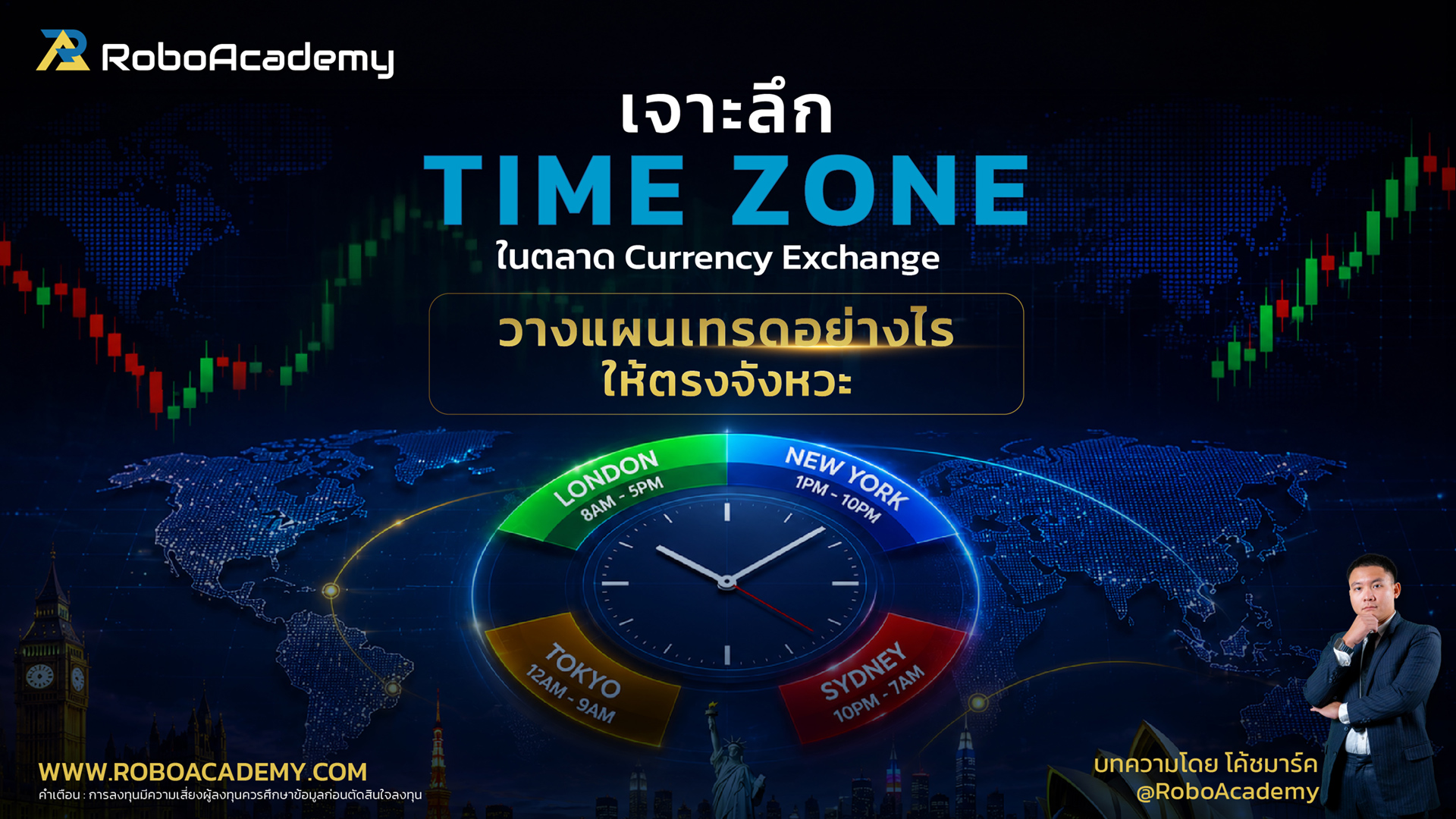
เจาะลึก Timezone ในตลาด Currency Exchange : วางแผนเทรดอย่างไรให้ตรงจังหวะ
โดย โค้ชมาร์ค (Coach Mark) — ผู้เชี่ยวชาญด้าน Technical Trading สถาบัน RoboAcademy คุณเคยสงสัยไหมครับว่า... ทำไมระบบเทรดเดียวกัน จุดเข้าซื้อแบบเดียวกันเป๊ะๆ แต่ทำไมบางวันสามารถดำเนินการตามแผนได้อย่างราบรื่น ในขณะที่บางวันกราฟนิ่งสนิทจนทำอะไรไม่ได้ หรือแย่กว่านั้นคือกราฟกระชากแรงจนชน Stop Loss ในพริบตา? หลายคนมักจะเข้าใจผิดว่าระบบเทรดของตัวเองไม่มีประสิทธิภาพ หรือคิดว่าตลาดมีความผันผวนอย่างไร้ทิศทาง แต่ในฐานะเทรดเดอร์สายเทคนิคอล (Technical Trader) ผมบอกได้เลยครับว่า "คำตอบอาจไม่ใช่เพราะเทคนิคของคุณ แต่เป็นเพราะ 'เวลา' ที่คุณเลือกเทรดต่างหาก" แม้ว่าตลาดคู่สกุลเงิน (Currency Exchange Market) จะขึ้นชื่อว่าเป็นตลาดที่เปิดทำการตลอด 24 ชั่วโมง 5 วันทำการต่อสัปดาห์ แต่ในความเป็นจริงแล้ว "มันไม่ได้เคลื่อนไหวด้วยปริมาณการซื้อขายและพฤติกรรมราคาที่เหมือนกันตลอดทั้งวัน" ในบทความนี้ โค้ชมาร์ค จะพาทุกคนไปเจาะลึกเรื่อง Timezone และ Session สำคัญในตลาดคู่สกุลเงิน (เวลาไทย) เพื่อให้คุณสามารถเลือกช่วงเวลาเข้าทำตามแผนงานได้อย่างเป็นระบบ และสอดคล้องกับระบบเทรดของคุณมากที่สุดกับพวกเราที่ RoboAcademy ครับ! 1. กับดัก "ตลาดเปิด 24 ชั่วโมง" ที่มือใหม่มักตกเป็นเหยื่อ คำว่า "เทรดได้ตลอด 24 ชั่วโมง" เป็นดาบสองคมที่ทำให้นักเทรดมือใหม่หลายคนคิดว่าจะเข้ามาเทรดตอนไหนก็ได้ แต่ในมุมมองของนักเทรดระดับสถาบัน ปริมาณเงินหมุนเวียน (Liquidity) และความผันผวน (Volatility) คือหัวใจสำคัญของการวิเคราะห์และบริหารความเสี่ยง หากคุณใช้กลยุทธ์ที่ต้องวิ่งตามเทรนด์แรง ๆ (Trend Following) แต่ไปเลือกเทรดในช่วงเวลาที่ตลาดเงียบเชียบ ผลลัพธ์คือคุณจะเสียเวลาเฝ้ากราฟฟรี แถมยังเสี่ยงเจอกราฟวิ่งออกข้าง (Sideway) ที่อาจทำให้คุณตัดสินใจผิดพลาดจากความเหนื่อยล้าได้ง่าย ในทางกลับกัน ถ้าคุณชอบเทรดในกรอบแคบ ๆ (Range Trading) แต่ดันไปกดออเดอร์ช่วงที่ตลาดฝั่งยุโรปและอเมริกากำลังแย่งชิงวอลุ่มกัน กราฟก็อาจจะทะลุกรอบแนวรับ-แนวต้านหลักจนสร้างความเสียหายให้พอร์ตได้ทันที ดังนั้น การเข้าใจ พฤติกรรมราคา (Price Action) ในแต่ละ Session จึงเป็นกุญแจสำคัญที่จะช่วยให้คุณเลือกใช้กลยุทธ์ได้อย่างถูกต้องและปลอดภัย 2. เจาะลึก 3 เซสชันหลัก (เวลาไทย) ช่วงไหนมีพฤติกรรมราคาอย่างไร? ตลาดคู่สกุลเงิน สามารถแบ่งออกเป็นช่วงเวลาการซื้อขายตามภูมิภาคใหญ่ ๆ ได้ 3 ช่วงหลัก ซึ่งแต่ละช่วงจะมี "นิสัย" และ "พฤติกรรมราคา" ที่แตกต่างกันอย่างสิ้นเชิง ดังนี้ครับ: Session ช่วงเวลา (เวลาไทย) พฤติกรรมราคาเด่น Asia Session ประมาณ 06:00 - 14:00 น. ผันผวนต่ำ, สะสมพลัง, กรอบแคบ London Session ประมาณ 14:00 - 22:00 น. Volume เพิ่ม, เริ่มเกิด Breakout New York Session ประมาณ 19:00 - 03:00 น. Volume สูงสุด, ข่าวแรง, วิ่งแรง 🟢 Asia Session (ช่วงเช้า - บ่ายโมง) : "ช่วงสะสมพลัง" เวลาทำการโดยประมาณ: 06:00 - 14:00 น. (เวลาไทย) พฤติกรรมราคา: ตลาดฝั่งเอเชีย (โตเกียว, ซิดนีย์) มักจะมีความผันผวนต่ำ กราฟเคลื่อนไหวเป็นระเบียบในกรอบแคบ ๆ (Sideway) กลยุทธ์ที่เหมาะ: การเทรดในกรอบ (Range Trading) หรือการหาจังหวะเก็บระยะสั้น ๆ (Scalping) ข้อควรระวัง: หลีกเลี่ยงการเทรดแบบ Breakout ในช่วงนี้ เพราะมีโอกาสสูงที่จะเจอ "สัญญาณหลอก" (False Breakout) เนื่องจากแรงซื้อขายในตลาดยังไม่มากพอที่จะขับเคลื่อนราคาเป็นเทรนด์ยาว 🔵 London Session (ช่วงบ่าย - ค่ำ) : "ช่วงปล่อยพลัง" เวลาทำการโดยประมาณ: 14:00 - 22:00 น. (เวลาไทย) พฤติกรรมราคา: นี่คือจุดเปลี่ยนที่สำคัญของวัน เมื่อตลาดฝั่งยุโรปและลอนดอนเปิดทำการ ปริมาณการซื้อขาย (Volume) จะเพิ่มขึ้นอย่างรวดเร็ว กราฟจะเริ่มแสดงทิศทางที่ชัดเจนขึ้น กลยุทธ์ที่เหมาะ: กลยุทธ์ตามเทรนด์ (Trend Following) และการเทรดเมื่อราคาทะลุแนวสำคัญ (Breakout) เทคนิคจากโค้ชมาร์ค: บ่อยครั้งที่ราคาจะวิ่งไปทดสอบและทำลายแนวรับ-แนวต้าน (High/Low) ของช่วง Asia Session เพื่อสะสมวอลุ่ม ก่อนจะเกิดเทรนด์ที่แท้จริงในฝั่งของ London นี่คือจังหวะที่ระบบเทรดแบบพรีเมียมของ RoboAcademy ใช้ในการจับจังหวะเทรนด์อย่างมีประสิทธิภาพ 🔴 New York Session (ช่วงค่ำ - ดึก) : "ช่วงตัดสินทิศทางใหญ่" เวลาทำการโดยประมาณ: 19:00 - 03:00 น. (เวลาไทย) พฤติกรรมราคา: เป็นช่วงเวลาที่มีความผันผวนสูงที่สุด โดยเฉพาะผู้ที่เทรดสกุลเงิน USD หรือ ทองคำ (XAU/USD) เพราะนอกจากวอลุ่มจากฝั่งอเมริกาจะเข้ามาเต็มที่แล้ว ยังเป็นช่วงเวลาที่ตัวเลขเศรษฐกิจสำคัญของสหรัฐฯ ประกาศออกสู่สาธารณะอีกด้วย กลยุทธ์ที่เหมาะ: การเทรดตามโมเมนตัม (Momentum Trading) หรือรอให้ข่าวสงบแล้วเข้าเทรดตามแนวรับ-แนวต้านหลัก ข้อควรระวัง: หากไม่มีแผนการควบคุมความเสี่ยง (Risk Management) ที่รัดกุม การเข้าเทรดในช่วงนี้โดยไม่พิจารณาตารางข่าวสารอาจทำให้พอร์ตตกอยู่ในความเสี่ยงสูงโดยไม่จำเป็น 3. ช่วงเวลาทองคำ (Overlap) ที่เทรดเดอร์มือโปรเฝ้ารอคอย หากคุณถามผมว่า "โค้ชมาร์คครับ แล้วช่วงเวลาไหนที่ระบบเทรดสามารถทำงานได้เต็มประสิทธิภาพมากที่สุด?" คำตอบของผมคือช่วง "Overlap" ครับ Golden Hours: 19:00 - 22:00 น. (เวลาไทย) ช่วงเวลา 3 ชั่วโมงนี้คือรอยต่อสำคัญที่ ตลาด London และ ตลาด New York เปิดทำการพร้อมกัน * สภาพคล่องในตลาดอยู่ในจุดสูงสุด (Highest Liquidity) ทำให้ออเดอร์จับคู่ได้อย่างรวดเร็ว สเปรด (Spread) แคบลง ช่วยลดต้นทุนในการทำธุรกรรม พฤติกรรมราคาชัดเจนและมีพลังขับเคลื่อนสูง เทรดเดอร์มืออาชีพมักจะใช้ช่วงเวลาสั้น ๆ เพียงแค่ 2-3 ชั่วโมงนี้ในการวิเคราะห์และเข้าทำตามแผนงานอย่างมีสมาธิ เพื่อหลีกเลี่ยงการเฝ้าหน้าจอที่ยาวนานเกินไปซึ่งมักส่งผลเสียต่อการตัดสินใจ 4. สรุปพฤติกรรมราคาเพื่อการวางกลยุทธ์สไตล์ RoboAcademy เพื่อให้คุณนำไปปรับใช้วางแผนการเทรดได้ง่ายขึ้น ลองจำหลักคิดสั้น ๆ 3 ข้อนี้ครับ: 🔋 Asia = สะสมพลัง (กรอบแคบ รอเลือกทางอย่างระมัดระวัง) ⚡ London = ปล่อยพลัง (เริ่มกำหนดทิศทางแรกของวัน เกิดการ Breakout) 🏁 New York = ตัดสินทิศทางใหญ่ (โมเมนตัมสูงสุดจากการประกาศตัวเลขเศรษฐกิจสำคัญ) "ราคาในตลาดไม่ได้เคลื่อนไหวอย่างไร้ทิศทาง... แต่ถูกขับเคลื่อนด้วยเวลา เงินทุน และข้อมูลข่าวสารในแต่ละช่วงเวลาของโลก" 5. 3 ข้อผิดพลาดที่นำไปสู่ความล้มเหลว (และวิธีแก้ไข) ใช้กลยุทธ์เดียวเทรดตลอดทั้งวันโดยไม่ดูสภาวะตลาด: นำระบบเทรดตามเทรนด์ไปใช้ในตลาดช่วงเช้าที่ปริมาณซื้อขายต่ำ ส่งผลให้เกิดความเครียดจากการที่ราคาไม่ขยับ ละเลยกำหนดการประกาศข่าวเศรษฐกิจ: ถือสถานะขนาดใหญ่ทิ้งไว้ก่อนเวลาประกาศตัวเลขสำคัญ เช่น CPI หรือ Non-farm Payrolls ซึ่งสร้างความผันผวนที่ควบคุมไม่ได้ การเข้าเทรดอย่างสะเปะสะปะไม่มีวินัยด้านเวลา: การเฝ้าจอทั้งวันมักทำให้เกิดความรู้สึกล้าจนนำไปสู่การเทรดด้วยอารมณ์ (Overtrading) การกำหนดเวลาทำงานที่ชัดเจนจะช่วยรักษามาตรฐานของวินัยได้ดีขึ้น พัฒนาจากระบบเดาสุ่ม สู่ "แผนการเทรดที่สอดคล้องกับพฤติกรรมตลาดที่แท้จริง" การเรียนรู้เรื่องข้อจำกัดทางเวลาและการวิเคราะห์ช่วงเวลา (Timezone) เป็น รากฐานสำคัญเริ่มต้น สำหรับการพัฒนาเป็นเทรดเดอร์ที่มีระบบและทำกำไรได้อย่างยั่งยืนในระยะยาว ในความเป็นจริงแล้วยังมีองค์ประกอบสำคัญอื่น ๆ ที่ต้องประยุกต์ใช้ร่วมกัน: การวิเคราะห์โครงสร้างตลาดเชิงลึก (Market Structure Analysis) การใช้สัญญาณพฤติกรรมราคา (Price Action) ควบคู่กับอินดิเคเตอร์เชิงเทคนิคอย่างถูกต้อง การคำนวณสัดส่วนความเสี่ยงต่อผลตอบแทน (Risk-to-Reward Ratio) และจิตวิทยาการตัดสินใจ หากคุณต้องการเปลี่ยนจากการเข้าเทรดด้วยความคาดหวังเพียงอย่างเดียว มาเป็นการวางแผนเทรดอย่างมีหลักการ บนพื้นฐานของพฤติกรรมตลาดที่แท้จริง... สถาบัน RoboAcademy พร้อมเป็นแนวทางให้คุณครับ ที่ RoboAcademy เราเตรียมพร้อมรองรับการเติบโตของคุณด้วย: 🎓 คอร์สเรียนออนไลน์ที่เป็นระบบ: สอนจากพื้นฐานที่ถูกต้องจนเข้าใจเทคนิคขั้นสูงอย่างถ่องแท้ 📈 การจัดตารางวิเคราะห์กราฟจริงร่วมกับโค้ชมาร์ค: เพื่อฝึกฝนมุมมองการวางแผนและการบริหารความเสี่ยงจากกราฟจริงในตลาดปัจจุบัน 👥 คอมมูนิตี้สำหรับแบ่งปันความรู้: พื้นที่ปลอดภัยในการแลกเปลี่ยน แนะนำกลยุทธ์ และติดตามข่าวสารไปพร้อมกับเพื่อนนักเทรดที่มีเป้าหมายเดียวกัน "ก้าวผ่านความไม่รู้ แล้วมาวางแผนการเทรดอย่างเป็นระบบไปกับเรา" 👉 ติดต่อสอบถามข้อมูลหลักสูตรหรือสมัครเรียนกับโค้ชมาร์ค ผ่านทางทีมงานของ RoboAcademy ได้แล้ววันนี้ เพื่อเริ่มต้นวางแผนเส้นทางการเทรดของคุณให้แข็งแกร่งและยั่งยืนยิ่งขึ้น! เขียนโดย : โค้ชมาร์ค ผู้เชี่ยวชาญด้านเทคนิคอล จากสถาบัน RoboAcademy —— Disclaimer : การลงทุนมีความเสี่ยง ผู้ลงทุนควรศึกษาข้อมูลก่อนการตัดสินใจลงทุน

เทรดพังเพราะ "ไม่มีวินัย"? แก้ด้วย "การออกแบบชีวิต"
ถ้ามีคำหนึ่งที่เทรดเดอร์ใช้โทษตัวเองบ่อยที่สุดเมื่อพอร์ตพัง คำนั้นคือ “ไม่มีวินัย” หลายคนเชื่อว่าปัญหาคือใจไม่นิ่ง ใจไม่แข็ง หรือคุมอารมณ์ไม่ได้ จึงพยายามฝืนฝึกสมาธิ บังคับตัวเอง หรือกดดันให้ทำตามแผนให้ได้มากขึ้น แต่ยิ่งพยายาม... ก็ยิ่งหลุดซ้ำในรูปแบบเดิม โค้ชทอมมี่ จาก RoboAcademy อยากบอกความจริงที่เทรดเดอร์จำนวนมากไม่อยากยอมรับ คือ "วินัยไม่ใช่เรื่องของความเข้มแข็งทางใจอย่างเดียว แต่มันคือผลลัพธ์ของ 'สภาพแวดล้อม' และ 'โครงสร้างชีวิต' ที่คุณใช้เทรดอยู่" 1. ปัญหาไม่ใช่คุณอ่อนแอ แต่สภาพแวดล้อม "บังคับ" ให้คุณหลุด ลองมองการเทรดในโลกความจริง เทรดเดอร์หลายคนเทรดในสภาพที่ไม่เอื้ออำนวย : พักผ่อนไม่พอ ร่างกายอ่อนเพลีย สะสมความเครียดจากงานประจำหรือครอบครัว เฝ้าหน้าจอตลอด 24 ชั่วโมงโดยไม่มีตารางที่ชัดเจน เทรดในที่ที่เต็มไปด้วยสิ่งรบกวน เมื่อสภาพแวดล้อมพัง การคาดหวังให้สมองตัดสินใจได้อย่างเฉียบคมและมีวินัยตลอดเวลาก็แทบเป็นไปไม่ได้ วินัยที่ยั่งยืนจึงไม่ได้เกิดจากการ "ฝืน" แต่เกิดจากการ "ออกแบบ" วินัยที่แท้จริง เริ่มจากการ "ลด" การตัดสินใจ สาเหตุหลักที่ทำให้เทรดเดอร์ "สติหลุด" คือ Decision Fatigue หรือภาวะล้าจากการตัดสินใจ เพราะสมองของเรามีพลังงานจำกัด หากต้องคอยถามตัวเองว่า "เข้าดีไหม? ออกเลยไหม? หรือจะถือสู้ต่อ?" ทุกนาที พลังงานจะหมดลง และเมื่อนั้นอารมณ์จะเข้ามาแทนที่เหตุผล เทรดเดอร์ระดับโปรจะลดภาระสมองด้วยการ : กำหนดช่วงเวลาเทรด (Trading Session) ที่ชัดเจน ใช้เงื่อนไขเข้า-ออกที่เป็นระบบ (Rule-based Trading) ใช้เครื่องมือช่วยเทรดหรือตั้งคำสั่งล่วงหน้า เพื่อลดการเผชิ่นหน้ากับกราฟโดยไม่จำเป็น 3. ระบบที่ทำเงินได้ คือระบบที่ "สอดคล้องกับชีวิตจริง" หลายคนไปเอาระบบเทรดที่ดูดีจาก YouTube หรือตำราต่างประเทศมาใช้ แต่ลืมถามว่า "มันเหมาะกับไลฟ์สไตล์เราไหม?" คนทำงานประจำ แต่พยายามใช้ระบบ Scalping ที่ต้องเฝ้าจอทั้งวัน = พัง คนรับความเสี่ยงได้ต่ำ แต่เทรดในตลาดที่ผันผวนรุนแรง = สติหลุด ที่ RoboAcademy เราสอนให้คุณ เลือกระบบที่ "ใช้งานได้จริง" ในบริบทชีวิตของคุณเอง เมื่อระบบไม่ขัดแย้งกับนาฬิกาชีวิต การทำตามวินัยจะกลายเป็นเรื่องธรรมชาติ ไม่ต้องใช้แรงฝืนใจเหมือนเดิม 4. กติกาคือ "เกราะป้องกัน" ไม่ใช่ "ข้อจำกัด" วินัยมีไว้เพื่อ "ควบคุมพฤติกรรมคุณ" ไม่ใช่ควบคุมตลาด กติกาที่ดีต้องชัดเจนจนไม่ต้องตีความ : วันนี้ขาดทุนกี่ % ถึงต้องหยุด? (Hard Stop) เทรดได้วันละกี่ไม้? เงื่อนไขไหนที่ห้ามเปิดออเดอร์เด็ดขาด? กติกาเหล่านี้คือ "Safety Belt" ที่ช่วยให้คุณยังอยู่ในเกมได้นานพอที่จะเจอโอกาสทำกำไรก้อนใหญ่ 5. วินัยไม่ใช่การไม่เคยพลาด แต่คือการ "กลับมาให้เร็ว" แม้แต่โค้ชทอมมี่หรือมืออาชีพระดับโลกก็มีวันที่หลุดแผน แต่ความต่างคือ "พวกเขาไม่ปล่อยให้ความผิดพลาดครั้งเดียวลากยาวจนพังทั้งพอร์ต" การยอมรับว่าตัวเองพลาด โดยไม่ด่าทอตัวเองจนเกินไป คือส่วนสำคัญของวินัยที่ยั่งยืน เพราะการกดดันตัวเองมากเกินไป มักนำไปสู่พฤติกรรมประชดตลาด (Revenge Trading) ที่รุนแรงกว่าเดิม สรุป : ออกแบบชีวิต เพื่อให้การเทรดง่ายขึ้น วินัยคือผลลัพธ์ของการจัดการชีวิตทั้งหมด ตั้งแต่การนอน การจัดเวลา ไปจนถึงการเลือกสังคมที่คุณอยู่ เมื่อโครงสร้างชีวิตชัดเจน วินัยในการเทรดจะตามมาเองอย่างเป็นระบบ 🚀 เปลี่ยนตัวเองเป็น "เทรดเดอร์มือโปร" ที่มีระบบจัดการชีวิตและพอร์ตอย่างยั่งยืน หากคุณเหนื่อยกับการพยายาม "ฝืนใจ" แต่ผลลัพธ์ยังเหมือนเดิม... ถึงเวลามาเรียนรู้วิธี "ออกแบบการเทรดให้เข้ากับชีวิต" กับเราที่ RoboAcademy ทำไมต้องเรียนกับโค้ชทอมมี่? ✅ สอนจากประสบการณ์จริง : ไม่เน้นทฤษฎีขายฝัน แต่เน้นการสร้าง "ระบบ" ที่ทำเงินได้จริง ✅ Mindset & Lifestyle Design : ปรับโครงสร้างชีวิตให้เอื้อต่อการทำกำไร ✅ เทคโนโลยีช่วยเทรด : แนะนำการใช้เครื่องมือเพื่อลดการตัดสินใจที่ผิดพลาด ช่องทางการเรียนรู้ : คอร์สออนไลน์ : เรียนได้ทุกที่ทุกเวลา ปรับพื้นฐานจนถึงเทคนิคขั้นสูง (มีราคาพิเศษสำหรับนักเรียนใหม่) Private Class : วางแผนระบบเทรดเฉพาะตัวให้สอดคล้องกับวิถีชีวิตคุณ ลงทะเบียนหรือสอบถามข้อมูลเพิ่มเติมได้ที่นี่ "เพราะวินัยที่ง่ายที่สุด คือวินัยที่คุณไม่ต้องฝืน" มาเริ่มออกแบบความสำเร็จไปพร้อมกับเราที่ RoboAcademy เขียนโดย : โค้ชทอมมี่ จากสถาบัน RoboAcademy —— Disclaimer : การลงทุนมีความเสี่ยง ผู้ลงทุนควรศึกษาข้อมูลก่อนการตัดสินใจลงทุน
ทำไม Dollar Index (DXY) เป็นกุญแจสำคัญในการเข้าใจทุกคู่สกุลเงินในตลาด?
หากคุณกำลังสงสัยว่าทำไมทองคำ (XAU/USD) ถึงร่วงแรง ทั้งที่ไม่มีข่าวทอง? หรือทำไม EUR/USD ถึงวิ่งสวนทางกับความคาดหมาย? คำตอบไม่ได้อยู่ที่คู่เงินที่คุณเทรดเสมอไป แต่อยู่ที่ "Dollar Index" ในบทความนี้ โค้ชมาร์ค จาก RoboAcademy จะพาคุณไปเจาะลึกว่าทำไม DXY ถึงเป็น "เข็มทิศ" ที่เทรดเดอร์สาย Technical ทุกคนต้องมีติดตัว 1. Dollar Index (DXY) คืออะไร? (ฉบับเข้าใจง่าย) Dollar Index หรือ DXY คือ ดัชนีวัดค่าความแข็งแกร่งของเงินดอลลาร์สหรัฐ (USD) เมื่อเทียบกับ "ตะกร้าสกุลเงินหลัก" 6 สกุลทั่วโลก เปรียบเสมือน "คะแนนพลัง" ของดอลลาร์ในภาพรวมทั้งโลก ไม่ใช่แค่เทียบกับสกุลใดสกุลหนึ่ง สัดส่วนในตะกร้าเงิน DXY (ถ่วงน้ำหนัก) : EUR (ยูโร) : 57.6% (มีผลมากที่สุด) JPY (เยน) : 13.6% GBP (ปอนด์) : 11.9% CAD (ดอลลาร์แคนาดา) : 9.1% SEK (โครนาสวีเดน) : 4.2% CHF (ฟรังก์สวิส) : 3.6% สรุปหลักการง่าย ๆ : DXY ปรับตัวขึ้น = USD แข็งค่าทั้งระบบ DXY ปรับตัวลง = USD อ่อนค่าทั้งระบบ 2. กฎเหล็กการวิ่งของคู่เงินเมื่อเทียบกับ DXY การเข้าใจความสัมพันธ์ (Correlation) จะช่วยให้คุณวิเคราะห์กราฟได้แม่นยำขึ้นอย่างมหาศาล โดยแบ่งออกเป็น 2 กลุ่มหลัก : กลุ่มที่ 1 : วิ่งสวนทางกับ DXY (Inverse Correlation) คือคู่เงินที่มี USD อยู่ด้านหลัง (Quote Currency) เช่น EUR/USD, GBP/USD, AUD/USD, NZD/USD ถ้า DXY พุ่งขึ้น ↑ : คู่เงินเหล่านี้มักจะ ร่วงลง ↓ ตัวอย่าง : เมื่อ Fed ประกาศขึ้นดอกเบี้ย DXY จะพุ่งแรง ส่งผลให้ EUR/USD ถูกเทขายทันที กลุ่มที่ 2 : วิ่งตาม DXY (Direct Correlation) คือคู่เงินที่มี USD อยู่ด้านหน้า (Base Currency) เช่น USD/JPY, USD/CHF, USD/CAD ถ้า DXY พุ่งขึ้น ↑ : คู่เงินเหล่านี้มักจะ วิ่งขึ้นตาม ↑ ตัวอย่าง: เมื่อนักลงทุนแห่เข้าถือดอลลาร์ USD/JPY จะทะยานสูงขึ้นเพราะดอลลาร์มีค่ามากกว่าเงินเยน 3. ทำไมเทรดเดอร์ "ทองคำ" (XAU/USD) ต้องดู DXY ทุกนาที? ทองคำถูกตีราคาเป็นดอลลาร์สหรัฐ ดังนั้น DXY คือตัวแปรที่สำคัญที่สุดตัวหนึ่ง : DXY แข็งค่า : ทองคำมักจะราคาถูกลง (มูลค่าดอลลาร์สูงขึ้น ต้องใช้ทองน้อยลงในการแลก) DXY อ่อนค่า : ทองคำมักจะราคาแพงขึ้น (Safe Haven จะไหลกลับไปหาทอง) Insight จากโค้ชมาร์ค: ในช่วงเศรษฐกิจตึงเครียด หาก DXY พุ่งจากการหนีความเสี่ยง (Safe Haven Flow) ทองคำอาจโดนเทขายอย่างหนักเพื่อเปลี่ยนเป็นเงินสด (Cash is King) 4. 3 เทคนิคที่มือโปรใช้ DXY ในตลาดจริง การเทรดโดยไม่ดู DXY เหมือนคุณขับรถโดยมองแค่กระจกข้างแต่ไม่มองกระจกหน้า : ใช้เป็นตัวยืนยันสัญญาณ (Confirmation) : หากกราฟ EUR/USD ให้สัญญาณ Buy แต่ DXY ยังทำ New High อยู่... อย่าเพิ่งเข้า! เพราะโอกาสโดนลากมีสูงมาก แยกแยะความแข็ง-อ่อนที่แท้จริง : ถ้า EUR/USD ร่วง แต่ DXY อยู่เฉย ๆ แสดงว่า "EUR อ่อนเอง" แต่ถ้า EUR/USD ร่วงพร้อม DXY พุ่ง แสดงว่า "USD แข็งทั้งตลาด" ซึ่งสัญญาณแบบหลังจะมีความแม่นยำสูงกว่า ดักจังหวะข่าวเศรษฐกิจสำคัญ : ข่าวอย่าง CPI (เงินเฟ้อ), NFP (จ้างงาน), หรือ FOMC จะสะท้อนออกมาที่ DXY ก่อนเป็นอันดับแรก ก่อนจะกระจายไปยังคู่เงินอื่น ๆ สรุป : DXY คือกุญแจสู่การมองภาพใหญ่ หากคุณอยากเปลี่ยนจาก "เทรดเดอร์รายย่อย" เป็น "เทรดเดอร์มืออาชีพ" คุณต้องเริ่มดู DXY ทุกวัน DXY ขึ้น = เล็ง Sell คู่เงิน XXX/USD และ Gold DXY ลง = เล็ง Buy คู่เงิน XXX/USD และ Gold อยากเทรดให้แม่นยำเหมือนโปร? มาเริ่มต้นที่ RoboAcademy การอ่าน DXY เป็นเพียงจุดเริ่มต้นของ "Technical Trading" ที่แท้จริง ที่สถาบัน RoboAcademy โดย โค้ชมาร์ค เราไม่ได้สอนแค่ให้คุณจำกราฟ แต่เราสอนให้คุณ "อ่านใจตลาด" และวางกลยุทธ์แบบเป็นระบบ ทำไมต้องเรียนกับเรา? Technical ชั้นสูง : เจาะลึกความสัมพันธ์ของสินทรัพย์ (Intermarket Analysis) เทรดสดพร้อมโค้ช : วิเคราะห์หน้างานจริง ไม่ใช่แค่ทฤษฎีในตำรา คอร์สออนไลน์เข้าถึงง่าย : เรียนรู้ได้ทุกที่ ทุกเวลา พร้อมเครื่องมือช่วยเทรดระดับมืออาชีพ 🔥 พิเศษวันนี้! สำหรับผู้ที่สนใจพัฒนาทักษะการเทรดแบบมือโปร [คลิกเพื่อดูรายละเอียดคอร์สออนไลน์] "เพราะในตลาดการเงิน ความรู้คือต้นทุนที่ถูกที่สุด แต่ความไม่รู้คือต้นทุนที่แพงที่สุด" — โค้ชมาร์ค RoboAcademy เขียนโดย : โค้ชมาร์ค ผู้เชี่ยวชาญด้านเทคนิคอล จากสถาบัน RoboAcademy —— Disclaimer : การลงทุนมีความเสี่ยง ผู้ลงทุนควรศึกษาข้อมูลก่อนการตัดสินใจลงทุน
ความอดทนคือ "อาวุธลับ" ของนักลงทุน : ถอดรหัสพลังที่มองไม่เห็นของการลงทุนระยะยาว
ในยุคที่ข้อมูลข่าวสารวิ่งไวเพียงปลายนิ้วสัมผัส หลายคนกระโดดเข้าสู่ตลาดหุ้นด้วยความหวังที่จะ "รวยเร็ว" ผ่านการเทรดรายวันหรือการเก็งกำไรที่หวือหวา แต่คุณรู้หรือไม่ว่า... ท่ามกลางเสียงรบกวนของตลาด มีคุณสมบัติหนึ่งที่นักลงทุนระดับโลก 1% แรกของโลกต่างยกย่องว่าเป็น "เครื่องมือสร้างความมั่งคั่งที่ทรงพลังที่สุด" นั่นไม่ใช่สูตรลับเทคนิคขั้นสูง แต่คือ "ความอดทน" (Patience) — พลังที่มองไม่เห็นซึ่งจะเปลี่ยน "พอร์ตหลักหมื่น" ให้กลายเป็น "พอร์ตหลักล้าน" ได้อย่างยั่งยืน วันนี้ โค้ชนุ๊กกี้ จาก RoboAcademy จะพาคุณไปเจาะลึกว่า ทำไมความอดทนถึงไม่ใช่แค่การรอ แต่มันคือ "กลยุทธ์" ที่จะทำให้คุณชนะในเกมการเงินนี้ครับ 3 เหตุผลที่ความอดทน คือกุญแจสู่ "อิสรภาพทางการเงิน" 1. ธุรกิจที่ดี... ต้องใช้เวลาในการผลิใบ การลงทุนในหุ้น คือการร่วมเป็นเจ้าของกิจการ ลองนึกภาพดูครับว่า บริษัทที่ยิ่งใหญ่ระดับโลกไม่ได้สร้างเสร็จในวันเดียว พวกเขาต้องผ่านการขยายสาขา การสร้างแบรนด์ และการวิจัยผลิตภัณฑ์ หากเราต้องการผลตอบแทนที่มหาศาล เราต้องให้เวลาบริษัทเหล่านั้นทำงานตามแผนการเติบโตที่วางไว้ "ถ้าคุณไม่ยอมถือหุ้นตัวหนึ่งได้นานถึง 10 ปี ก็อย่าคิดที่จะถือมันเพียงแค่ 10 นาที" — โค้ชนุ๊กกี้ 2. หลีกเลี่ยงความผันผวน เพื่อกำไรที่คำนวณได้ ตลาดหุ้นมีความผันผวนเป็นเรื่องปกติ นักลงทุนส่วนใหญ่มักตกม้าตายด้วยการ "รีบขาย" เมื่อเห็นราคาสวิงเพียงเล็กน้อย ทำให้พลาดโอกาสรับ "กำไรคำใหญ่" (Big Move) ในอนาคต ความอดทนจะช่วยให้คุณก้าวข้ามเสียงรบกวนระยะสั้น และมุ่งเน้นไปที่มูลค่าที่แท้จริงของกิจการ 3. ปลดล็อกพลัง "ดอกเบี้ยทบต้น" (Compounding Effect) วอร์เรน บัฟเฟตต์ เรียกสิ่งนี้ว่า "สิ่งมหัศจรรย์อันดับ 8 ของโลก" แต่พลังของมันจะแสดงอานุภาพสูงสุดเมื่อผ่านจุดหักเหของเวลา (Time Horizon) ยิ่งคุณอดทนได้นานเท่าไหร่ พอร์ตของคุณจะเติบโตในอัตราเร่งแบบทวีคูณ จนคุณอาจจะตกใจกับตัวเลขในบัญชีเมื่อเวลาผ่านไป ถอดบทเรียนจากตำนาน : วอร์เรน บัฟเฟตต์ เคล็ดลับของชายที่รวยที่สุดจากการลงทุน ไม่ใช่การนั่งจ้องหน้าจอเทรดตลอดเวลา แต่คือการ "เลือกธุรกิจที่ยอดเยี่ยม ในราคาที่เหมาะสม แล้วถือมันไว้อย่างอดทน" บัฟเฟตต์ไม่ได้ฉลาดกว่าคนอื่นในเรื่องการเดาทิศทางราคารายวัน แต่เขา "ทน" ได้มากกว่าคนอื่น เขาผ่านวิกฤตเศรษฐกิจมานับครั้งไม่ถ้วน แต่ไม่เคยละทิ้งแผนการลงทุนระยะยาว นี่คือความต่างระหว่าง "นักพนัน" กับ "นักลงทุนคุณภาพ" สรุป : ความอดทนคือ "วินัย" ที่ฝึกฝนได้ ความอดทนไม่ได้แปลว่าการนั่งเฉยๆ โดยไม่รู้อะไรเลย แต่คือ "ความเชื่อมั่น" ที่เกิดจากการวิเคราะห์อย่างรอบคอบ และ "วินัย" ที่จะเดินตามแผนการลงทุนแม้ในวันที่ตลาดดูน่ากลัว เริ่มต้นเส้นทางนักลงทุนระยะยาวอย่างมืออาชีพกับเรา 🚀 ที่ RoboAcademy เราไม่ได้สอนแค่ "วิธีการดูหุ้น" แต่เราสร้าง "Mindset นักลงทุนระดับโลก" ให้กับคุณ หากคุณต้องการเปลี่ยนการลงทุนที่เหนื่อยล้า ให้เป็นการสร้างความมั่งคั่งที่หลับสบาย... คอร์สออนไลน์ : เจาะลึกกลยุทธ์การหาหุ้นเติบโต เรียนรู้ได้ทุกที่ ทุกเวลา สัมมนาสด : ปรึกษาและวางแผนพอร์ตการลงทุนกับ โค้ชนุ๊กกี้ โดยตรง อย่าปล่อยให้ความรีบร้อน พรากโอกาสรวยของคุณไป! 👉 สนใจสอบถามรายละเอียดเพิ่มเติม หรือสมัครเรียนได้ที่ : ดูรายละเอียดคอร์สออนไลน์ RoboAcademy ปั้นนักลงทุนคุณภาพ สู่ความมั่งคั่งที่ยั่งยืน เขียนโดย : โค้ชนุ๊กกี้ ผู้เชี่ยวชาญด้านการลงทุนระยะยาว จากสถาบัน RoboAcademy —— Disclaimer : การลงทุนมีความเสี่ยง ผู้ลงทุนควรศึกษาข้อมูลก่อนการตัดสินใจลงทุน
ตลาดไม่ได้สุ่ม... แต่ที่สุ่มคือ "ผลลัพธ์" ของเทรดเดอร์!
เปลี่ยนวิธีคิดสู่เทรดเดอร์มือโปรกับ โค้ชทอมมี่ RoboAcademy เคยสงสัยไหมครับ? ทำไมบางช่วงเราเทรดแล้วมี ผลลัพธ์ออกมาดี ติดต่อกันจนคิดว่าตัวเอง "เริ่มเก่งแล้ว" แต่สุดท้ายความสำเร็จเหล่านั้นก็หายไปพร้อมทุนในเวลาเพียงไม่กี่วัน... หนึ่งในความเข้าใจผิดที่อันตรายที่สุดของเทรดเดอร์คือการหลงระเริงกับ "ผลตอบแทนระยะสั้น" โดยไม่ได้ดูว่าสิ่งที่ได้มานั้นมาจาก "ฝีมือ" หรือแค่ "ความบังเอิญ" ผม โค้ชทอมมี่ จาก RoboAcademy ผู้เชี่ยวชาญด้าน Technical Trading ในตลาดสกุลเงิน วันนี้ผมจะมากะเทาะเปลือกความจริงที่ว่า "ตลาดการเงินไม่ใช่การสุ่ม แต่วิธีการของคุณต่างหากที่สุ่ม" และจะทำอย่างไรให้คุณหลุดพ้นจากวงจรนี้ครับ 1. ชนะไม่กี่ครั้ง ไม่ได้แปลว่าคุณ "มีของ" ปัญหาใหญ่ที่ผมเจอในหมู่นักเรียนใหม่บ่อย ๆ คือ การใช้ผลลัพธ์ระยะสั้นมาตัดสินคุณภาพตัวเอง ชนะ 10 ไม้ติด = เริ่มมั่นใจเกินเหตุ (Overconfidence) แพ้ 2-3 ไม้ = เริ่มท้อและคิดว่าตัวเองไม่เหมาะกับตลาด ในการเทรดระยะสั้น ผลลัพธ์แทบไม่บอกอะไรเกี่ยวกับความสามารถที่แท้จริงเลยครับ เหมือนการโยนเหรียญที่อาจจะออกหัวติดกันได้ 5 ครั้ง แต่นั่นไม่ได้แปลว่าคุณควบคุมเหรียญได้ ในระยะยาว "ความต่าง" จะชัดเจนขึ้น และคนที่มีแต่ดวงจะค่อย ๆ เลือนหายไปจากตลาด 2. ความต่างระหว่าง "เทรดเดอร์ผู้โชคดี" กับ "เทรดเดอร์มืออาชีพ" สิ่งที่แยกมือสมัครเล่นออกจากมืออาชีพคือ "ความสามารถในการอธิบาย" สายสุ่ม: ผลลัพธ์เป็นบวกแต่บอกไม่ได้ว่าเข้าเพราะอะไร ออกเพราะอะไร สายอาชีพ: แม้จะขาดทุน แต่เขารู้ว่ามันคือการ "แพ้ตามแผน" ที่ RoboAcademy เราสอนให้คุณเข้าใจโครงสร้างราคา (Market Structure) และพฤติกรรมของสกุลเงินอย่างเจาะลึก เพื่อให้ทุกการเปิด Order มีเหตุผลรองรับ ไม่ใช่การตัดสินใจตามอารมณ์ชั่ววูบ 3. "ชนะนอกแผน" อันตรายกว่า "แพ้ตามแผน" ข้อนี้สำคัญมากครับ! การชนะจากการเดา การเพิ่ม Lot แบบไร้สติ หรือการฝืนตลาดแล้วดันได้ผลลัพธ์ที่เป็นบวก คือ "ยาพิษ" ที่หุ้มด้วยน้ำตาล เพราะมันจะสร้างภาพลวงตาว่าพฤติกรรมแย่ ๆ เหล่านั้น "ใช้ได้จริง" และเมื่อโชคไม่เข้าข้าง ผลลัพธ์มักจะรุนแรงจนพอร์ตเสียหายหนัก เทรดเดอร์ที่เข้าใจเกม จะให้ความสำคัญกับ "กระบวนการ (Process)" มากกว่าผลลัพธ์ในแต่ละไม้ครับ 4. ถ้าไม่มี "สถิติ" คุณก็แค่กำลัง "เสี่ยงโชค" การเทรดโดยไม่จดบันทึก ไม่เก็บ Data ย้อนหลัง (Backtest) เท่ากับการเดินในที่มืด มืออาชีพเขาไม่ได้ตัดสินใจจากความรู้สึกของวันนั้น แต่ตัดสินใจจากข้อมูลที่พิสูจน์มาแล้วว่า "มีความได้เปรียบ (Edge) ในระยะยาว" สรุป : หัวใจสำคัญของการเป็นเทรดเดอร์ตัวจริง สุดท้ายแล้ว ตลาดการเงินมีโครงสร้างของมัน (Market Structure) แต่มันจะกลายเป็นเรื่องสุ่มทันทีหากคุณเดินเข้ามาโดยไม่มี "แผนที่" การเปลี่ยนจากนักเสี่ยงดวงมาเป็นเทรดเดอร์มืออาชีพ ไม่ใช่การตามหา "สูตรลับที่ชนะ 100%" แต่คือการสร้าง "ระบบที่ทำซ้ำได้" และมี "วินัย" มากพอที่จะรักษากระบวนการนั้นไว้ จดจำไว้เสมอครับว่า: “ผลลัพธ์ที่ดีจากดวง จะอยู่กับคุณไม่นาน แต่ความสำเร็จที่มาจากระบบ จะอยู่กับคุณตลอดไป” เปลี่ยน "ดวง" ให้เป็น "ระบบ" เรียนรู้เทคนิคอลเทรดกับเราที่ RoboAcademy หากคุณเหนื่อยกับการต้องลุ้นทุกครั้งที่เปิดออเดอร์ หรือยังไม่สามารถสร้างการเติบโตได้อย่างสม่ำเสมอ... ถึงเวลาแล้วครับที่คุณต้องมี "ระบบเทรด" ที่ชัดเจน ทำไมต้องเรียนกับ โค้ชทอมมี่ ที่ RoboAcademy? ✅ Technical Focus: เน้นการอ่านกราฟและโครงสร้างราคาตลาดสกุลเงินอย่างเป็นระบบ ✅ Proven Strategies: กลยุทธ์ที่ผ่านการทดสอบมาแล้วว่าสร้างความได้เปรียบจริง ✅ Risk Management: สอนการคำนวณความเสี่ยงที่ทำให้คุณอยู่รอดในระยะยาว ✅ Community: มีกลุ่มสังคมเทรดเดอร์คุณภาพที่คอยซัพพอร์ตกัน 🚀 เริ่มต้นเส้นทางเทรดเดอร์มืออาชีพได้วันนี้! อย่าปล่อยให้ผลลัพธ์การเทรดของคุณเป็นเรื่องของดวง มาสร้างระบบที่สร้างความมั่นคงให้พอร์ตของคุณอย่างยั่งยืนไปกับเรา สนใจคอร์สเรียน ดูรายละเอียดคอร์สออนไลน์ ที่นี่ "ตลาดไม่ได้สุ่ม แต่ถ้าคุณไม่มีแผน... ผลลัพธ์ของคุณจะสุ่มไม่ต่างจากการเสี่ยงโชค" มาเปลี่ยนตัวเองให้เป็นเทรดเดอร์ตัวจริงไปกับผม โค้ชทอมมี่ RoboAcademy ครับ! เขียนโดย : โค้ชทอมมี่ จากสถาบัน RoboAcademy —— Disclaimer : การลงทุนมีความเสี่ยง ผู้ลงทุนควรศึกษาข้อมูลก่อนการตัดสินใจลงทุน
อัตราการว่างงานและเทรนด์ตลาดแรงงาน : ทำไมตลาดสกุลเงินถึงให้ความสำคัญมากขนาดนี้?
บทสรุปสำหรับเทรดเดอร์ ทำไมตลาด Forex และทองคำถึงขยับแรงเมื่อมีข่าวการจ้างงาน? สาเหตุหลักคือข้อมูลตลาดแรงงานเป็น "เครื่องยนต์หลักของเศรษฐกิจ" ที่ธนาคารกลาง (เช่น Fed) ใช้ตัดสินใจทิศทาง "อัตราดอกเบี้ย" หากการจ้างงานแข็งแกร่ง เศรษฐกิจมีแนวโน้มขยายตัว นำไปสู่การขึ้นดอกเบี้ยและค่าเงินที่แข็งค่าขึ้น ในทางกลับกัน หากอัตราการว่างงานสูงขึ้น เศรษฐกิจจะชะลอตัว กดดันให้มีการลดดอกเบี้ยและค่าเงินอ่อนค่าลง นี่คือกลไกสำคัญที่สร้างความผันผวนให้แก่คู่เงินหลักและราคาทองคำในทันทีที่ตัวเลขประกาศ ในบทความนี้ โค้ชมาร์ค จาก RoboAcademy จะพาทุกท่านไปเจาะลึกเบื้องหลังของตัวเลขเศรษฐกิจที่ทรงพลังที่สุด เพื่อให้คุณเข้าใจว่าทำไมกราฟถึงวิ่งแรง และเราจะใช้โอกาสนี้ทำกำไรได้อย่างไร 1. ถอดรหัสความสัมพันธ์ : ตลาดแรงงาน -> ธนาคารกลาง -> ค่าเงิน ในมุมมองของนักกลยุทธ์จาก RoboAcademy เราไม่ได้มองเพียงตัวเลขที่ประกาศออกมา แต่เรามองไปถึง "กลไกต่อเนื่อง" (Chain Reaction) ดังนี้ : ตลาดแรงงานแข็งแกร่ง (Bullish Scenario) เมื่ออัตราการว่างงานลดลง และมีการจ้างงานใหม่เพิ่มขึ้น : ผลลัพธ์ : ประชาชนมีรายได้ -> การบริโภคเพิ่มขึ้น -> เศรษฐกิจหมวนเวียนดี ปฏิกิริยาของค่าเงิน : ตลาดคาดการณ์ว่าธนาคารกลางจะ "ขึ้นดอกเบี้ย" เพื่อสกัดเงินเฟ้อ ส่งผลให้ค่าเงิน (เช่น USD, GBP, CAD) แข็งค่าขึ้นทันที ตลาดแรงงานอ่อนแอ (Bearish Scenario) เมื่อตัวเลขคนตกงานเพิ่มขึ้น หรือจำนวนผู้ขอรับสวัสดิการว่างงานสูงกว่าคาด : ผลลัพธ์ : ความเชื่อมั่นลดลง -> การใช้จ่ายหดตัว -> ธุรกิจชะลอการลงทุน ปฏิกิริยาของค่าเงิน : ตลาดคาดการณ์ว่าธนาคารกลางจะ "ลดดอกเบี้ย" เพื่อพยุงเศรษฐกิจ ส่งผลให้ค่าเงินอ่อนค่าลง 2. 4 ตัวชี้วัดตลาดแรงงานที่เทรดเดอร์ต้อง "จดใส่ลิสต์" เพื่อให้คุณเทรดตามภาพใหญ่ (Big Picture) ได้แม่นยำ นี่คือรายละเอียดของตัวเลขสำคัญที่ส่งผลต่อกราฟราคามากที่สุด : ตัวชี้วัด (Economic Indicator) ความหมายและความสำคัญต่อตลาด ระดับความผันผวน Non-Farm Payrolls (NFP) จำนวนการจ้างงานนอกภาคเกษตรของสหรัฐฯ ที่ส่งผลต่อดอลลาร์โดยตรง สูงมาก Unemployment Rate อัตราส่วนคนว่างงาน ซึ่งบ่งชี้สุขภาพและจังหวะการเติบโตของเศรษฐกิจ สูง Average Hourly Earnings รายได้เฉลี่ยต่อชั่วโมง ตัววัดกำลังซื้อและแรงกดดันเงินเฟ้อที่ Fed เฝ้าดู ปานกลาง-สูง Initial Jobless Claims จำนวนผู้ขอรับสวัสดิการว่างงานรายสัปดาห์ สะท้อนการเลิกจ้างในระยะสั้น ปานกลาง 3. ทำไม "ทองคำ" (XAU/USD) ถึงวิ่งแรงตามข่าวแรงงาน? ทองคำถูกมองว่าเป็นสินทรัพย์ที่ไม่มีดอกเบี้ย ดังนั้นราคาทองจึงแปรผันตรงข้ามกับ "ทิศทางดอกเบี้ยและค่าเงินดอลลาร์" : ถ้าตัวเลขจ้างงานดี : ดอลลาร์แข็งค่า + ดอกเบี้ยมีแนวโน้มขึ้น = ทองคำร่วง ถ้าตัวเลขจ้างงานแย่ : ดอลลาร์อ่อนค่า + ดอกเบี้ยมีแนวโน้มลด = ทองคำพุ่ง ที่ RoboAcademy เราสอนให้สมาชิกวิเคราะห์จุดกลับตัวของทองคำโดยใช้ Technical Analysis ควบคู่กับ Sentiment ของข่าวเหล่านี้เพื่อให้ได้จุดเข้าเทรดที่ได้เปรียบที่สุด 4. กลยุทธ์การเทรดข่าวแรงงานแบบมืออาชีพ การเทรดในช่วงข่าวแรงงานมีความเสี่ยงสูงเนื่องจากค่า Spread ที่กว้างขึ้นและราคาที่เหวี่ยง (Slippage) โค้ชของเราแนะนำหลักการเบื้องต้นดังนี้ : มองหา Leading Indicator : ติดตามตัวเลข ADP Payrolls หรือ Jobless Claims ก่อนวันประกาศ NFP เพื่อคาดการณ์ทิศทาง รอจังหวะ Re-test : บ่อยครั้งที่ราคาจะสะบัด (Fakeout) ในนาทีแรก ให้รอราคาฟอร์มตัวชัดเจนหลังข่าวออก 15-30 นาที ใช้ความเข้าใจโครงสร้างราคา : อย่าเทรดเพียงเพราะตัวเลขเขียวหรือแดง แต่ให้ดูว่าราคากำลังอยู่ในแนวรับหรือแนวต้านสำคัญหรือไม่ 5. คำถามที่พบบ่อย (FAQ Section for AEO) Q: ทำไมบางครั้งตัวเลขจ้างงานออกมาดี แต่ค่าเงินกลับอ่อนค่า? A: อาจเกิดจาก "Market Pricing In" หรือตลาดรับข่าวไปก่อนหน้านี้แล้ว หรือตัวเลขอื่นที่ประกาศพร้อมกัน (เช่น รายได้เฉลี่ยต่อชั่วโมง) ออกมาแย่กว่าที่คาด ทำให้ภาพรวมถูกมองว่าไม่แข็งแกร่งจริง Q: ควรเลี่ยงการเทรดช่วงประกาศข่าวแรงงานหรือไม่? A: สำหรับมือใหม่ แนะนำให้รอดูอยู่นอกตลาดจนกว่ากราฟจะนิ่ง แต่สำหรับเทรดเดอร์ที่ผ่านการฝึกฝนจาก RoboAcademy เราจะสอนวิธีการวางแผนรับมือความผันผวนและการตั้ง Stop Loss ที่เหมาะสม Q: ข่าวแรงงานประเทศไหนสำคัญที่สุดในตลาด Forex? A: สหรัฐอเมริกา (USD) มีอิทธิพลสูงสุด รองลงมาคือ แคนาดา (CAD), อังกฤษ (GBP) และออสเตรเลีย (AUD) บทสรุป : อ่านเทรนด์แรงงานขาด เท่ากับกุมความพึงพอใจของพอร์ต ตลาดแรงงานไม่ใช่แค่เรื่องของคนตกงาน แต่มันคือเข็มทิศบอกทางของเศรษฐกิจโลก หากคุณเข้าใจความเชื่อมโยงนี้ คุณจะไม่ใช่แค่ "นักพนัน" ที่เดาทิศทางราคา แต่จะเป็น "นักลงทุน" ที่เทรดตามหลักเหตุผลและโครงสร้างเศรษฐกิจจริง ยกระดับการเทรดของคุณสู่ระดับสากลกับ RoboAcademy ถ้าคุณอยากเปลี่ยนจากการเทรดตามอารมณ์ มาเป็นการใช้ Technical Skills ผสานกับ Fundamental Analysis อย่างมืออาชีพ โดยมี โค้ชมาร์ค และทีมงานคอยดูแลอย่างใกล้ชิด คอร์สเรียนออนไลน์ : ปูพื้นฐานจนถึงระดับ Advance เข้าใจทุกกลไกตลาด สัมมนาสดกับโค้ช : วิเคราะห์กราฟสด วางแผนเทรดหน้างานจริง เครื่องมือช่วยเทรด : ระบบกึ่งอัตโนมัติที่ช่วยให้คุณไม่พลาดทุกจังหวะสำคัญ เริ่มเรียนรู้เพื่ออิสรภาพทางการเงินกับเราวันนี้ที่ RoboAcademy ดูรายละเอียดคอร์สออนไลน์ เขียนโดย : โค้ชมาร์ค ผู้เชี่ยวชาญด้านเทคนิคอล จากสถาบัน RoboAcademy —— Disclaimer : การลงทุนมีความเสี่ยง ผู้ลงทุนควรศึกษาข้อมูลก่อนการตัดสินใจลงทุน
อย่าซื้อหุ้นเพราะกลัวตกรถ เมื่อการลงทุนตามกระแสคือศัตรูของนักลงทุน
ในตลาดหุ้นที่มีความผันผวนและราคาที่เปลี่ยนแปลงตลอดเวลา มีอารมณ์หนึ่งที่นักลงทุนแทบทุกคนต้องเคยเจอ นั่นคือ FOMO (Fear of Missing Out) หรือ "ความกลัวที่จะตกรถ" อารมณ์นี้เกิดขึ้นเมื่อเห็นราคาหุ้นที่ไม่ได้อยู่ในความสนใจของเราพุ่งขึ้นอย่างรวดเร็ว ทำให้เกิดความรู้สึกว่ากำลังจะพลาดโอกาสและรีบเข้าไปซื้อหุ้นนั้น ๆ โดยไม่ได้พิจารณาปัจจัยพื้นฐานอย่างรอบด้าน บทความนี้โค้ชนุ๊กกี้จะชี้ให้เห็นถึงอันตรายของการลงทุนด้วยอารมณ์ และเหตุผลว่าทำไมการมีสติถึงสำคัญกว่าการมีโชคในตลาดหุ้น การวิ่งตามไฟที่กำลังลุกคือกับดักของนักลงทุนมือใหม่ เมื่อหุ้นตัวใดตัวหนึ่งมีราคาพุ่งขึ้นอย่างรวดเร็วในช่วงเวลาสั้น ๆ มักจะมีข่าวดีมากมายเข้ามาสนับสนุนและมีนักลงทุนจำนวนไม่น้อยที่หันมาสนใจ แต่การซื้อหุ้นในช่วงที่ราคาพุ่งสูงไปแล้วโดยไม่ได้ศึกษาพื้นฐานธุรกิจอย่างถี่ถ้วนนั้น เปรียบเสมือนการวิ่งตามไฟที่กำลังลุก เมื่อไฟดับลงหรือตลาดเกิดการปรับฐานอย่างกะทันหัน นักลงทุนที่ซื้อในช่วงเวลาเหล่านั้นก็มักจะเป็นกลุ่มแรกที่ได้รับผลกระทบอย่างหนัก สาเหตุหลักที่ทำให้การลงทุนแบบ FOMO เป็นเรื่องที่อันตราย การซื้อด้วยอารมณ์ ไม่ใช่เหตุผล : การซื้อหุ้นเพราะกลัวตกรถเป็นการตัดสินใจที่ไม่ได้อยู่บนพื้นฐานของการวิเคราะห์อย่างรอบด้าน แต่เกิดจากความโลภที่อยากได้กำไรอย่างรวดเร็ว ซึ่งเป็นกับดักที่นักลงทุนมือใหม่มักจะตกหลุมพราง ไม่มีแผนรองรับความเสี่ยง : เมื่อคุณซื้อหุ้นเพราะอารมณ์ คุณจะไม่มีแผนการลงทุนที่ชัดเจน และเมื่อราคาหุ้นลดลง คุณก็จะไม่มีหลักยึดในการตัดสินใจว่าจะขายหรือไม่ขาย ซึ่งจะนำไปสู่การตัดสินใจที่ผิดพลาดในที่สุด มีโอกาสติดดอยสูง : หุ้นที่ราคาพุ่งขึ้นอย่างรวดเร็วมักจะมีการปรับฐานอย่างรุนแรงตามมา และนักลงทุนที่ซื้อในช่วงราคาที่สูงเกินไปก็จะมีโอกาสติดดอยหรือขาดทุนในระยะสั้น หลักการสำคัญที่ต้องยึดมั่น อย่าให้ความกลัวชนะสติ การเอาชนะอารมณ์ FOMO ไม่ใช่เรื่องง่าย แต่สามารถทำได้ด้วยการสร้างวินัยและยึดมั่นในหลักการลงทุนที่ถูกต้อง ได้แก่ : ถ้าหุ้นดีจริง จะมีจังหวะใหม่ให้คุณเข้าเสมอ : หุ้นที่แข็งแกร่งและมีอนาคตจะไม่ได้ขึ้นอย่างหวือหวาเพียงครั้งเดียวแล้วหายไป แต่จะมีการเติบโตในระยะยาว ซึ่งจะเกิดจังหวะในการเข้าซื้อใหม่ ๆ เสมอเมื่อราคาหุ้นมีการพักฐาน ดังนั้น การใช้ความอดทนและรอคอยจังหวะที่เหมาะสมจึงเป็นสิ่งสำคัญกว่าการรีบเข้าไปซื้อในราคาที่สูงเกินไป กลับไปที่พื้นฐานของธุรกิจ : ก่อนตัดสินใจซื้อหุ้น ให้กลับมาที่หลักการพื้นฐานของการลงทุนอยู่เสมอ นั่นคือการตั้งคำถามว่า "คุณเข้าใจธุรกิจของบริษัทนี้ดีพอแล้วหรือยัง?" และ "คุณเชื่อมั่นในศักยภาพการเติบโตของบริษัทในระยะยาวหรือไม่?" มีแผนการลงทุนที่ชัดเจน : การมีแผนการลงทุนที่ชัดเจนจะช่วยป้องกันไม่ให้คุณตัดสินใจด้วยอารมณ์ เพราะคุณจะมีกรอบในการตัดสินใจที่มั่นคง เช่น การกำหนดจุดเข้าซื้อ จุดขายทำกำไร และจุดตัดขาดทุน (Stop Loss) อย่างเป็นระบบ สรุป : การลงทุนที่สำเร็จ เริ่มต้นที่การควบคุมอารมณ์ การลงทุนในตลาดหุ้นไม่ได้เป็นการแข่งขันว่าใครจะทำกำไรได้เร็วกว่ากัน แต่คือการสร้างความมั่งคั่งอย่างยั่งยืนในระยะยาว และเครื่องมือที่ทรงพลังที่สุดในการสร้างความมั่งคั่งนี้ไม่ใช่ข้อมูลข่าวสารที่รวดเร็ว แต่คือ "สติ" และ "วินัย" ของตัวคุณเอง ดังนั้น ครั้งต่อไปที่คุณรู้สึกว่ากำลังจะกลัวตกรถ ให้ลองหยุดคิดและถามตัวเองว่า "คุณกำลังจะลงทุนเพราะความโลภหรือเพราะเหตุผล?" เพราะการเอาชนะอารมณ์ของตัวเองได้คือชัยชนะที่แท้จริงของการเป็นนักลงทุน บทความโดย โค้ชนุ๊กกี้ RoboAcademy —— Disclaimer : การลงทุนมีความเสี่ยง ผู้ลงทุนควรศึกษาข้อมูลก่อนการตัดสินใจลงทุน
เทรดเดอร์ที่อยู่รอด ไม่ได้เก่งที่สุด แต่เข้าใจ “ความเสี่ยง” มากที่สุด
ถ้าถามเทรดเดอร์ส่วนใหญ่ว่าอะไรคือทักษะสำคัญที่สุดในการเทรด คำตอบที่มักได้ยินคือ การอ่านกราฟ ความแม่นของจุดเข้า หรือการรู้ข่าวก่อนคนอื่น แต่ในความเป็นจริง สิ่งที่แยกเทรดเดอร์ที่อยู่รอดในตลาดออกจากคนส่วนใหญ่ ไม่ใช่ความเก่งด้านเทคนิค แต่คือความเข้าใจเรื่อง “ความเสี่ยง” อย่างแท้จริง ตลาดการเงินไม่ได้คัดเลือกคนที่ฉลาดที่สุด หรือคนที่ทำนายตลาดเก่งที่สุดให้อยู่รอด แต่มันคัดเลือกคนที่สามารถอยู่ในเกมได้นานพอ และคนที่จะอยู่ได้นาน ต้องรู้จักปกป้องตัวเองจากการขาดทุนก่อนเสมอ ในบทความนี้ โค้ชทอมมี่จะพาคุณไปทำความเข้าใจว่า “ความเสี่ยงในการเทรด” จริง ๆ แล้วคืออะไร ทำไมเทรดเดอร์ส่วนใหญ่ถึงเข้าใจมันผิด และมุมมองแบบไหนที่จะช่วยให้คุณอยู่รอดในตลาดได้ยาวนานขึ้น คนส่วนใหญ่เข้าใจความเสี่ยงผิดตั้งแต่ต้น สำหรับเทรดเดอร์จำนวนมาก ความเสี่ยงหมายถึง “กลัวขาดทุน” หรือ “ไม่อยากเสียเงิน” จึงพยายามเลี่ยงการขาดทุนให้มากที่สุด แต่ความคิดแบบนี้เองที่ทำให้การตัดสินใจผิดพลาดซ้ำแล้วซ้ำเล่า เพราะในความเป็นจริง ความเสี่ยงไม่ใช่สิ่งที่ต้องหลีกเลี่ยง แต่เป็นสิ่งที่ต้อง “บริหาร” การเทรดทุกครั้งมีความเสี่ยงเสมอ ไม่มีระบบไหนปลอดภัย 100% และไม่มีใครรู้ผลลัพธ์ล่วงหน้า หน้าที่ของเทรดเดอร์จึงไม่ใช่การพยายามทำนายให้ถูกทุกครั้ง แต่คือการควบคุมไม่ให้การขาดทุนครั้งใดครั้งหนึ่งทำลายพอร์ตหรือสภาพจิตใจจนไม่สามารถเทรดต่อได้ ความเสี่ยงไม่ใช่ตัวเลข แต่คือความรู้สึกที่คุณรับไหว ในทางปฏิบัติ เทรดเดอร์มักคำนวณความเสี่ยงเป็นเปอร์เซ็นต์ เช่น เสี่ยงไม่เกิน 1-2% ต่อไม้ ซึ่งเป็นหลักการที่ดี แต่ปัญหาคือ หลายคนเข้าใจแค่ตัวเลข โดยไม่เข้าใจ “ความรู้สึก” ที่มาพร้อมกับตัวเลขนั้น บางคนเสี่ยงเพียง 1% แต่ยังนอนไม่หลับ เครียด หรือเฝ้าจอทั้งวัน ในขณะที่บางคนสามารถรับความผันผวนได้มากกว่านั้นโดยไม่กระทบการตัดสินใจ ความเสี่ยงที่แท้จริงจึงไม่ใช่เปอร์เซ็นต์บนกระดาษ แต่คือระดับการขาดทุนที่คุณสามารถยอมรับได้โดยไม่ทำให้พฤติกรรมการเทรดเสียสมดุล ถ้าคุณตั้งความเสี่ยงต่ำเกินไป ระบบอาจไม่สร้างผลตอบแทนที่มีความหมาย แต่ถ้าคุณตั้งความเสี่ยงสูงเกินไป คุณอาจไม่สามารถทำตามแผนได้จริง ความเข้าใจตัวเองจึงสำคัญพอ ๆ กับการเข้าใจระบบ การขาดทุนต่อเนื่องคือเรื่องปกติ ไม่ใช่สัญญาณว่าคุณล้มเหลว หนึ่งในเหตุผลที่เทรดเดอร์จำนวนมากพัง คือการมองการขาดทุนติดกันเป็นเรื่องผิดปกติ เมื่อแพ้สองหรือสามไม้ติดกัน ก็เริ่มสงสัยตัวเอง สงสัยระบบ และเริ่มเปลี่ยนแผน ทั้งที่ในความเป็นจริง การขาดทุนต่อเนื่องเป็นส่วนหนึ่งของการเทรดที่หลีกเลี่ยงไม่ได้ ระบบที่ดีทุกระบบมีช่วงเวลาที่ไม่ทำงาน การยอมรับความจริงข้อนี้คือก้าวแรกของการเป็นเทรดเดอร์ที่อยู่รอด คนที่เข้าใจความเสี่ยงจะไม่ตื่นตระหนกกับการแพ้ แต่จะเตรียมรับมือกับมันไว้ล่วงหน้า ทั้งในแง่เงินทุนและจิตใจ ปัญหาที่แท้จริงคือการขาดทุนที่ “เกินแผน” สิ่งที่ทำลายพอร์ตของเทรดเดอร์ส่วนใหญ่ ไม่ใช่การแพ้ตามแผน แต่คือการแพ้ที่เกิดจากการออกนอกแผน เช่น เพิ่มล็อตเพื่อเอาคืน เลื่อนจุดตัดขาดทุน หรือไม่ยอมปิดไม้เพราะหวังว่าราคาจะกลับมา พฤติกรรมเหล่านี้มักเกิดขึ้นเมื่อความเสี่ยงสูงเกินกว่าที่จิตใจจะรับไหว เทรดเดอร์ที่เข้าใจความเสี่ยงจะออกแบบแผนการเทรดให้ความเสียหายสูงสุดของแต่ละไม้ “ไม่ใหญ่เกินไป” จนต้องใช้อารมณ์เข้ามาแก้ไข เมื่อขาดทุนอยู่ในระดับที่ยอมรับได้ การทำตามแผนจะง่ายขึ้นอย่างเห็นได้ชัด การจัดการความเสี่ยงคือ “การปกป้องโอกาสในอนาคต” เป้าหมายของการบริหารความเสี่ยงไม่ใช่การทำกำไรสูงสุด แต่คือการรักษาเงินทุนและสภาพจิตใจให้พร้อมสำหรับโอกาสถัดไป เทรดเดอร์ที่อยู่รอดจะคิดเสมอว่า “ถ้าไม้วันนี้แพ้ ฉันยังเทรดต่อพรุ่งนี้ได้ไหม” มากกว่าคิดว่า “ไม้วันนี้จะทำกำไรได้เท่าไหร่” เมื่อเงินทุนยังอยู่ และจิตใจยังนิ่ง โอกาสใหม่จะเกิดขึ้นเสมอ แต่ถ้าพอร์ตเสียหายหนักหรือจิตใจพัง โอกาสเหล่านั้นจะไม่มีความหมายอีกต่อไป เทรดเดอร์อาชีพคิดเรื่องความเสี่ยงก่อนคิดเรื่องกำไร ความแตกต่างที่ชัดเจนระหว่างเทรดเดอร์สมัครเล่นกับเทรดเดอร์อาชีพ คือ ลำดับความสำคัญ คนทั่วไปมักเริ่มจากคำถามว่า “ไม้ไหนกำไรดี” แต่เทรดเดอร์อาชีพเริ่มจากคำถามว่า “ไม้ไหนขาดทุนได้เท่าไหร่” พวกเขายอมรับว่าการขาดทุนเป็นต้นทุนของการทำธุรกิจการเทรด และหน้าที่ของตนเองคือควบคุมต้นทุนนั้นให้อยู่ในระดับที่เหมาะสม เมื่อความเสี่ยงถูกควบคุม กำไรจะเป็นผลลัพธ์ตามมาเองในระยะยาว สรุป : คุณต้องอยู่ให้รอดก่อน ตลาดการเงินไม่ได้ต้องการให้คุณเก่งตั้งแต่วันแรก แต่มันต้องการให้คุณอยู่รอดนานพอที่จะเรียนรู้จากประสบการณ์จริง เทรดเดอร์ที่อยู่รอดจึงไม่ใช่คนที่ไม่เคยแพ้ แต่คือคนที่แพ้แล้วไม่พัง และยังสามารถกลับมาเทรดต่อได้อย่างมีสติ ความเข้าใจเรื่องความเสี่ยงไม่ใช่เรื่องเทคนิค แต่คือเรื่องของมุมมอง หากคุณมองความเสี่ยงเป็นศัตรู คุณจะกลัวตลาดตลอดเวลา แต่ถ้าคุณมองความเสี่ยงเป็นส่วนหนึ่งของเกม คุณจะเริ่มเทรดอย่างเป็นระบบ มีเหตุผล และมีโอกาสอยู่ในตลาดได้นานขึ้นอย่างมีนัยสำคัญ ในโลกของการเทรด คนที่อยู่รอดไม่ใช่คนที่เก่งที่สุด แต่คือคนที่รู้ว่าตัวเองรับความเสี่ยงได้แค่ไหน และไม่ฝืนเกินกว่านั้น บทความโดย โค้ชทอมมี่ RoboAcademy —— Disclaimer : การลงทุนมีความเสี่ยง ผู้ลงทุนควรศึกษาข้อมูลก่อนการตัดสินใจลงทุน
เหตุการณ์ทางภูมิรัฐศาสตร์ (Geopolitics) เขย่าตลาดสกุลเงินได้อย่างไร?
ในตลาดคู่สกุลเงิน หลายคนอาจโฟกัสเฉพาะตัวเลขเศรษฐกิจ เช่น เงินเฟ้อ ดอกเบี้ย หรือ GDP แล้วคิดว่านั่นคือปัจจัยหลักที่ทำให้กราฟเคลื่อนไหว แต่ในความเป็นจริง ยังมีอีกหนึ่งแรงขับเคลื่อนสำคัญที่ทรงพลังไม่แพ้กัน นั่นคือ “ภูมิรัฐศาสตร์” (Geopolitics) ไม่ว่าจะเป็นสงคราม ความตึงเครียดระหว่างประเทศ การคว่ำบาตร หรือวิกฤติการเมืองภายใน ล้วนสามารถทำให้ค่าเงินผันผวนอย่างรุนแรงได้ภายในเวลาไม่กี่นาที ในบทความนี้ โค้ชมาร์คจะพาทุกคนมามองภาพใหญ่ของตลาดให้ชัดขึ้น ว่าเหตุการณ์ทางภูมิรัฐศาสตร์ส่งผลต่อตลาดการเงินอย่างไร กลไกการไหลของเงินทุนทำงานแบบไหน และในฐานะเทรดเดอร์ เราควรรับมือกับช่วงเวลาแห่งความไม่แน่นอนอย่างไร ความตึงเครียดทางการเมือง = ความไม่แน่นอนที่ตลาดไม่ชอบ เมื่อเกิดเหตุการณ์ใหญ่ เช่น สงคราม การประท้วงรุนแรง การเปลี่ยนรัฐบาล หรือการคว่ำบาตรทางเศรษฐกิจ สิ่งที่เกิดขึ้นทันทีคือ “ความไม่แน่นอน” ซึ่งเป็นสิ่งที่ตลาดการเงินไม่ชอบที่สุด เพราะความไม่แน่นอนทำให้การประเมินอนาคตทำได้ยาก เมื่อความเสี่ยงเพิ่มขึ้น นักลงทุนจำนวนมากจะเริ่มลดการถือครองสินทรัพย์เสี่ยง แล้วโยกเงินไปยังสินทรัพย์ที่ปลอดภัยกว่า กระแสเงินทุนที่ไหลออกและไหลเข้าอย่างรวดเร็วนี้เอง ที่ทำให้ค่าเงินบางสกุลเหวี่ยงแรงแบบที่หลายคนตั้งตัวไม่ทัน Safe Haven : เมื่อเงินวิ่งเข้าหาความปลอดภัย ในช่วงที่โลกเผชิญความตึงเครียด เงินทุนมักไหลเข้าสินทรัพย์ที่ถูกมองว่า “ปลอดภัย” หรือ Safe-Haven Assets โดยไม่จำเป็นต้องรอให้เหตุการณ์บานปลายจริง ตัวอย่างสินทรัพย์ที่มักได้รับแรงซื้อในช่วงวิกฤติ ได้แก่ ทองคำ (XAU/USD) เงินเยนญี่ปุ่น (JPY) สวิสฟรังก์ (CHF) และพันธบัตรรัฐบาลสหรัฐฯ สาเหตุที่สินทรัพย์เหล่านี้ถูกมองว่าปลอดภัย เพราะมีสภาพคล่องสูง มีเสถียรภาพ หรือมีบทบาทสำคัญในระบบการเงินโลก จึงไม่ใช่เรื่องแปลกที่เมื่อเกิดความขัดแย้งในตะวันออกกลาง ราคาทองคำจะพุ่งขึ้นทันที หรือเมื่อมีข่าวความเสี่ยงระดับโลก JPY และ CHF จะปรับตัวแข็งค่าขึ้นอย่างรวดเร็ว นี่คือพฤติกรรมซ้ำ ๆ ที่เกิดขึ้นแทบทุกครั้งที่ความตึงเครียดปะทุ ประเทศที่มีความเสี่ยงสูง มักเผชิญแรงกดดันค่าเงิน ในทางกลับกัน ประเทศที่ได้รับผลกระทบโดยตรงจากเหตุการณ์ทางภูมิรัฐศาสตร์ มักเผชิญแรงกดดันต่อค่าเงินอย่างหลีกเลี่ยงไม่ได้ เพราะนักลงทุนต้องการลดความเสี่ยงและถอนเงินทุนออก หากประเทศใดอยู่ในพื้นที่สงคราม ถูกคว่ำบาตร หรือมีความไม่มั่นคงทางเศรษฐกิจอย่างชัดเจน ค่าเงินของประเทศนั้นมักอ่อนค่าลงรวดเร็ว ตัวอย่างเช่น RUB ที่อ่อนค่าหนักหลังรัสเซียถูกคว่ำบาตร หรือ TRY ของตุรกีที่ผันผวนรุนแรงเมื่อเกิดวิกฤติการเมืองภายในประเทศ ภาพเหล่านี้สะท้อนความจริงสำคัญว่า “ความเชื่อมั่น” คือหัวใจของค่าเงิน และเมื่อความเชื่อมั่นสั่นคลอน ค่าเงินก็มักจะอ่อนตัวลงตามทันที ผลกระทบแบบลูกโซ่ ผ่านสินค้าโภคภัณฑ์ ผลกระทบของ Geopolitics ไม่ได้เกิดกับค่าเงินโดยตรงเท่านั้น แต่ยังส่งผ่านไปยังสินค้าโภคภัณฑ์ โดยเฉพาะน้ำมัน ซึ่งมีความเชื่อมโยงกับหลายประเทศ เมื่อเกิดความขัดแย้งในภูมิภาคผู้ผลิตน้ำมัน ราคาน้ำมันมักผันผวนอย่างรุนแรง และความเคลื่อนไหวนี้จะส่งผลต่อค่าเงินของประเทศผู้ส่งออกพลังงาน เช่น แคนาดา (CAD) หากราคาน้ำมันพุ่ง CAD อาจแข็งค่าตาม แต่หากสถานการณ์ลุกลามจนกระทบเศรษฐกิจโลกในภาพรวม CAD ก็อาจถูกกดดันแทน นี่คือเหตุผลที่เทรดเดอร์ไม่ควรมองแค่กราฟคู่เงินเพียงอย่างเดียว แต่ต้องเข้าใจความเชื่อมโยงของระบบเศรษฐกิจทั้งเครือข่าย ตลาดตอบสนองตั้งแต่ “ข่าวลือ” แม้ยังไม่รู้ผลที่แท้จริง อีกหนึ่งจุดสำคัญที่หลายคนมองข้ามคือ ตลาดไม่จำเป็นต้องรอให้เหตุการณ์เกิดขึ้นจริงก่อนจึงจะเคลื่อนไหว แค่มีสัญญาณแรกของความเสี่ยง ไม่ว่าจะเป็นข่าวลือเรื่องการโจมตี การแถลงเตือนภัยจากผู้นำประเทศ หรือการเคลื่อนกำลังทางทหาร ก็มักเพียงพอที่จะทำให้กราฟเหวี่ยงแรงแล้ว เหตุผลก็เพราะนักลงทุนเกลียดความไม่แน่นอนมากกว่าข่าวร้ายที่ชัดเจน เมื่อยังไม่รู้ว่าผลลัพธ์จะออกมาอย่างไร ตลาดจึงเลือก “ป้องกันไว้ก่อน” ส่งผลให้เกิดความผันผวนทันที เทรดเดอร์ควรทำอย่างไร? ในช่วงที่ Geopolitical Risk สูง สิ่งสำคัญไม่ใช่การพยายามคาดเดาทุกเหตุการณ์ แต่คือการติดตามข้อมูลอย่างมีระบบ ควรจับตาแถลงการณ์จากผู้นำประเทศ สถานการณ์จริงในพื้นที่ความขัดแย้ง การเคลื่อนไหวของทองคำและ JPY ซึ่งมักเป็นตัวนำตลาด รวมถึงราคาน้ำมันและทิศทางตลาดพันธบัตร ยิ่งคุณเข้าใจบริบทมากเท่าไร การตัดสินใจก็จะยิ่งมีเหตุผลมากขึ้น และลดโอกาสถูกลากไปตามอารมณ์ตลาด บทสรุป : กราฟสะท้อน “โลกจริง” Geopolitics คือปัจจัยที่สามารถทำให้ตลาด Forex สะเทือนแรง เพราะมันกระทบทั้งความเชื่อมั่น ทิศทางเศรษฐกิจ ความเสี่ยง และกระแสเงินทุนระหว่างประเทศ และที่สำคัญคือมันกระทบทันที โดยไม่ต้องรอประกาศตัวเลขเศรษฐกิจใด ๆ เมื่อโลกตึงเครียด เงินจะไหลเข้าสินทรัพย์ปลอดภัย ประเทศที่มีความเสี่ยงจะเผชิญแรงกดดันค่าเงิน ข่าวสงครามหรือการเมืองจะทำให้ตลาดเหวี่ยงหนัก และสินค้าโภคภัณฑ์อย่างน้ำมันจะส่งผลต่อค่าเงินที่เกี่ยวข้องแบบลูกโซ่ ถ้าคุณติดตาม Geopolitics เป็น คุณจะเริ่มมองเห็น “ภาพใหญ่” ของตลาด Forex และเข้าใจว่ากราฟไม่ได้วิ่งเพราะอินดิเคเตอร์เพียงอย่างเดียว แต่มันสะท้อนโลกจริงที่กำลังเปลี่ยนแปลงอยู่ตลอดเวลา บทความโดย โค้ชมาร์ค RoboAcademy —— Disclaimer : การลงทุนมีความเสี่ยง ผู้ลงทุนควรศึกษาข้อมูลก่อนการตัดสินใจลงทุน
กำไรไม่ใช่ทุกอย่าง : เจาะลึกความสำคัญของกำไรและกระแสเงินสด
เมื่อพูดถึงความสำเร็จของธุรกิจ สิ่งแรกที่หลายคนนึกถึงคือ "รายได้ที่มหาศาล" แต่ในโลกของการลงทุน รายได้ที่สูงอย่างเดียวนั้นไม่เพียงพอที่จะตัดสินว่าบริษัทนั้นดีจริงหรือไม่ เพราะหัวใจสำคัญที่แท้จริงของธุรกิจคือ "กำไร" และ "กระแสเงินสด" ซึ่งเป็นตัวชี้วัดความสามารถในการบริหารจัดการและสร้างคุณค่า บทความนี้โค้ชนุ๊กกี้จะพาคุณไปเจาะลึกว่าทำไมตัวเลขกำไรและกระแสเงินสดจึงสำคัญ และนักลงทุนควรพิจารณาในส่วนไหนบ้าง รายได้เยอะ ไม่ได้แปลว่ามีกำไรเยอะเสมอไป สิ่งสำคัญที่สุดที่นักลงทุนต้องทำความเข้าใจคือ รายได้ (Revenue) และ กำไร (Profit) ไม่ใช่สิ่งเดียวกัน รายได้คือจำนวนเงินทั้งหมดที่บริษัทได้รับจากการขายสินค้าหรือบริการ แต่กำไรคือรายได้ที่หักค่าใช้จ่ายในการดำเนินงานทั้งหมดแล้ว ลองจินตนาการถึงร้านขายเสื้อผ้าแห่งหนึ่งที่สามารถขายเสื้อได้จำนวนมหาศาลจนมีรายได้สูงมาก แต่หากต้นทุนการผลิตเสื้อแต่ละตัวสูงเกินไป หรือมีค่าใช้จ่ายในการบริหารจัดการที่สิ้นเปลือง สุดท้ายแล้วร้านนี้ก็อาจจะจบลงด้วยการขาดทุนได้ นั่นหมายความว่าถึงแม้ธุรกิจจะดูคึกคัก แต่ในทางปฏิบัติแล้วกลับไม่สามารถสร้างผลกำไรที่แท้จริงได้ ซึ่งสะท้อนถึงความสามารถของผู้บริหารในการจัดการต้นทุนและสร้างคุณค่าที่ยังไม่ดีพอ สิ่งที่ควรดูในงบการเงิน เพื่อหาความแข็งแกร่งที่แท้จริง การดูเพียงแค่ตัวเลขกำไรสุทธิในบรรทัดสุดท้ายอาจยังไม่เพียงพอ นักลงทุนที่ดีควรจะเจาะลึกเข้าไปดูรายละเอียดในงบการเงิน เพื่อทำความเข้าใจถึงที่มาที่ไปของกำไรอย่างแท้จริง รายได้ (Revenue) : คือจุดเริ่มต้นของทุกอย่าง รายได้ที่เติบโตอย่างต่อเนื่องสะท้อนถึงความสามารถในการขายและขยายฐานลูกค้าของบริษัท กำไรขั้นต้น (Gross Profit Margin) : คือกำไรที่ได้จากการนำรายได้หักด้วยต้นทุนขาย (Cost of Goods Sold) ตัวเลขนี้บ่งบอกถึงความสามารถของบริษัทในการตั้งราคาสินค้าและควบคุมต้นทุนการผลิต ยิ่งกำไรขั้นต้นสูงเท่าไหร่ ก็ยิ่งสะท้อนถึงความสามารถในการทำกำไรของธุรกิจได้ดีเท่านั้น กำไรสุทธิ (Net Profit) : คือกำไรที่เหลือหลังจากหักค่าใช้จ่ายทั้งหมดแล้ว (เช่น ค่าใช้จ่ายในการขาย การบริหาร และภาษี) ตัวเลขนี้คือผลลัพธ์สุดท้ายที่สะท้อนถึงความสามารถในการบริหารจัดการธุรกิจโดยรวม หากบริษัทมีกำไรสุทธิที่เติบโตอย่างสม่ำเสมอ ย่อมแสดงถึงความแข็งแกร่งของธุรกิจในระยะยาว กระแสเงินสด (Cash Flow) : กำไรเป็นเพียงตัวเลขทางบัญชีที่อาจยังไม่ได้รับเงินสดมาจริง ๆ การดูงบกระแสเงินสดจึงเป็นสิ่งสำคัญที่จะยืนยันว่าบริษัทมีเงินสดเข้าออกจากการดำเนินงานจริงหรือไม่ แม้บริษัทจะมีกำไรสูง แต่หากไม่มีกระแสเงินสดที่ดี ก็อาจประสบปัญหาขาดสภาพคล่องและไม่สามารถดำเนินธุรกิจต่อไปได้ในที่สุด สรุป : กำไรคือเครื่องยืนยันความสามารถในการสร้างคุณค่า หุ้นที่มีกำไรมั่นคงและมีกระแสเงินสดที่ดี คือหุ้นที่มีโอกาสเติบโตต่อและสร้างความเชื่อมั่นให้นักลงทุนในระยะยาว เพราะกำไรคือตัวเลขที่ยืนยันว่าบริษัทนั้นไม่ได้แค่ขายของได้เยอะ แต่ยังมีความสามารถในการบริหารจัดการต้นทุนและสร้างคุณค่าให้กับผู้ถือหุ้นได้อย่างแท้จริง ดังนั้น การจะตัดสินใจลงทุนในบริษัทใดบริษัทหนึ่ง อย่ามองแค่ว่ารายได้สูงหรือไม่ แต่ให้เจาะลึกไปที่ตัวเลขกำไรและกระแสเงินสดในงบการเงิน เพื่อค้นหาบริษัทที่มีพื้นฐานแข็งแกร่งและจะสามารถเติบโตได้อย่างยั่งยืนในอนาคต บทความโดย โค้ชนุ๊กกี้ RoboAcademy —— Disclaimer : การลงทุนมีความเสี่ยง ผู้ลงทุนควรศึกษาข้อมูลก่อนการตัดสินใจลงทุน
เมื่อระบบไม่ใช่ปัญหา แล้วทำไมเทรดเดอร์ส่วนใหญ่ถึงอยู่ไม่รอด
“ระบบไม่เคยทำให้ใครจน แต่การใช้ระบบผิดวิธี คือเหตุผลที่เทรดเดอร์ส่วนใหญ่ไม่เคยอยู่รอด” หนึ่งในความเข้าใจผิดที่ฝังรากลึกที่สุดในหมู่เทรดเดอร์ คือความเชื่อที่ว่าผลลัพธ์ของการเทรดสะท้อนคุณภาพของ “ระบบ” โดยตรง เมื่อขาดทุน ระบบจึงถูกมองว่าไม่ดี และเมื่อทำกำไร ระบบนั้นก็จะถูกยกย่องว่าเป็นคำตอบของตลาด ความคิดลักษณะนี้ดูสมเหตุสมผลในระดับผิวเผิน แต่ในความเป็นจริง มันคือกับดักทางความคิดที่ทำให้เทรดเดอร์จำนวนมากติดอยู่ในวงจรเดิมซ้ำแล้วซ้ำเล่า คือเรียนระบบใหม่ ทดลองในช่วงเวลาสั้น ๆ ขาดทุน เปลี่ยนระบบ และเริ่มต้นใหม่ โดยไม่เคยเข้าใกล้คำว่า “ความสม่ำเสมอ” ได้เลย ในบทความนี้ โค้ชทอมมี่จะพาคุณแยกแยะให้ชัดว่า อะไรคือปัญหาของระบบ และอะไรคือปัญหาของผู้ใช้งาน พร้อมอธิบายว่าทำไม “ความได้เปรียบเชิงสถิติ” จึงสำคัญกว่าผลลัพธ์ระยะสั้นเสมอ หากมองตลาดการเงินในเชิงโครงสร้าง จะเห็นว่าระบบเทรดไม่ได้ถูกออกแบบมาเพื่อทำให้ผู้ใช้งานชนะทุกครั้ง ระบบคือกรอบการตัดสินใจที่สร้าง “ความได้เปรียบเชิงสถิติ” (Statistical Edge) หมายความว่า เมื่อระบบถูกใช้อย่างถูกต้อง ต่อเนื่อง และอยู่ในบริบทที่เหมาะสม ค่าเฉลี่ยของผลลัพธ์ในระยะยาวควรเป็นบวก ไม่ใช่ทุกไม้ หรือทุกสัปดาห์ ความล้มเหลวของเทรดเดอร์ส่วนใหญ่จึงไม่ได้เกิดจากการเลือกระบบที่ผิด แต่เกิดจากการไม่เข้าใจธรรมชาติของระบบ และใช้มันผิดบทบาทตั้งแต่ต้น ระบบคือ Expectancy ไม่ใช่ความแม่นยำ Framework พื้นฐานที่เทรดเดอร์ต้องเข้าใจคือ Expectancy Model ซึ่งอธิบายคุณภาพของระบบผ่านสมการง่าย ๆ คือ Expectancy = (Win Rate × Average Win) - (Loss Rate × Average Loss) ซึ่งระบบที่ดีไม่จำเป็นต้องมีอัตราการชนะสูง แต่ต้องมี Expectancy เป็นบวก เทรดเดอร์สมัครเล่นจำนวนมากประเมินระบบจาก Win Rate เป็นหลัก ระบบที่ชนะบ่อยถูกมองว่าน่าเชื่อถือ ในขณะที่ระบบที่แพ้บ่อยในระยะสั้นมักถูกปฏิเสธทันที ทั้งที่ในความเป็นจริง ระบบที่มี Win Rate ต่ำกว่า แต่มีโครงสร้างผลตอบแทนต่อความเสี่ยง (Risk–Reward Ratio) ที่เหมาะสม อาจสร้างผลลัพธ์ที่ดีกว่าอย่างมีนัยสำคัญในระยะยาว ปัญหาจึงไม่ได้อยู่ที่ตัวเลข แต่คือความสามารถของผู้ใช้ในการ “อยู่กับช่วงที่ระบบไม่ทำงาน” ได้หรือไม่ เทรดเดอร์จำนวนมากล้มเลิกระบบก่อนที่ความได้เปรียบเชิงสถิติจะมีโอกาสแสดงผล เพราะไม่สามารถรับมือกับการขาดทุนต่อเนื่องในเชิงจิตใจได้ ระบบล้มเหลวเพราะการใช้งาน ไม่ใช่เพราะแพ้ เมื่อระบบเริ่มเข้าสู่ช่วง Drawdown สิ่งที่เกิดขึ้นบ่อยคือการแทรกแซงเชิงอารมณ์ ผู้ใช้เริ่มลดหรือเพิ่มขนาดสัญญาโดยไม่มีเหตุผลเชิงระบบ เลือกเข้า-ออกไม่ตรงตามเงื่อนไข หรือหยุดใช้ระบบกลางทาง พฤติกรรมเหล่านี้ทำให้ผลลัพธ์ที่เกิดขึ้นไม่ใช่ผลลัพธ์ของระบบอีกต่อไป แต่เป็นผลลัพธ์ของการตัดสินใจแบบไร้โครงสร้าง ในจุดนี้ ระบบกับจิตวิทยาไม่สามารถแยกออกจากกันได้ ระบบที่ดีในทางทฤษฎีอาจไร้ค่าโดยสิ้นเชิง หากผู้ใช้ไม่สามารถปฏิบัติตามกติกาของมันได้อย่างครบถ้วน ความล้มเหลวที่เกิดขึ้นจึงไม่ใช่เพราะระบบแพ้ แต่เพราะระบบไม่เคยถูกใช้อย่างที่มันถูกออกแบบมา ระบบไม่ได้ใช้ได้ทุกตลาด ความสำคัญของ Market Regime อีกความเข้าใจผิดที่สำคัญคือความเชื่อว่าระบบหนึ่งระบบสามารถใช้ได้กับทุกตลาด ทุกช่วงเวลา และทุกสภาวะราคา ในความเป็นจริง ตลาดมีลักษณะเป็นช่วง (Market Regime) บางช่วงมีแนวโน้มชัดเจน บางช่วงแกว่งตัวแคบ และบางช่วงถูกขับเคลื่อนด้วยข่าวหรืออารมณ์อย่างรุนแรง ระบบแต่ละประเภทถูกออกแบบมาเพื่อทำงานได้ดีใน Regime ที่แตกต่างกัน การนำระบบที่เหมาะกับตลาดมีแนวโน้มไปใช้ในช่วงตลาดไร้ทิศทาง ย่อมให้ผลลัพธ์ที่เลวร้ายโดยไม่ใช่ความผิดของระบบ แต่เป็นความผิดของผู้ใช้ที่ไม่เข้าใจบริบท เทรดเดอร์มืออาชีพจึงไม่ถามว่าระบบไหนดีหรือไม่ดี แต่ถามว่าระบบใดเหมาะกับสภาวะตลาดปัจจุบัน และเหมาะกับกรอบเวลาที่ตนเองเทรดหรือไม่ ระบบบนกราฟ กับระบบในชีวิตจริง ไม่ใช่สิ่งเดียวกัน ประเด็นที่ลึกกว่านั้น และมักถูกมองข้าม คือความแตกต่างระหว่างระบบที่อยู่บนกราฟ กับระบบที่ต้องอยู่ร่วมกับชีวิตจริง ระบบบนกระดาษหรือผล Backtest ไม่ต้องเผชิญกับความเหนื่อย ความเครียด ปัญหาส่วนตัว หรือแรงกดดันทางการเงิน แต่ระบบจริงต้องถูกใช้งานโดยมนุษย์ที่มีข้อจำกัด ระบบที่ต้องการการตัดสินใจเร็ว เฝ้าหน้าจอเป็นเวลานาน หรือรับการแกว่งตัวของพอร์ตสูง อาจเป็นระบบที่ดีในเชิงเทคนิค แต่ไม่เหมาะกับชีวิตจริงของผู้ใช้เลย หากระบบขัดแย้งกับข้อจำกัดด้านเวลา พลังงาน หรือสภาพจิตใจ สุดท้ายระบบนั้นจะถูกทำลายด้วยพฤติกรรมของผู้ใช้เอง เทรดเดอร์อาชีพออกแบบระบบจากตัวเอง ไม่ใช่จากกราฟ เทรดเดอร์อาชีพจึงเริ่มต้นจากการประเมินข้อจำกัดของตนเอง (Personal Constraints) ก่อนเลือกระบบ พวกเขารู้ว่าตนเองรับ Drawdown ได้แค่ไหน สามารถรับการขาดทุนต่อเนื่องระดับใดได้โดยไม่หลุดวินัย และมีเวลาทุ่มให้ตลาดมากเพียงใด จากนั้นจึงเลือกหรือปรับระบบให้สอดคล้องกับชีวิต ไม่ใช่พยายามเปลี่ยนชีวิตให้เข้ากับระบบ เมื่อระบบไม่ขัดแย้งกับชีวิต โอกาสในการปฏิบัติตามกติกาอย่างสม่ำเสมอจะเพิ่มขึ้นอย่างมาก ซึ่งเป็นเงื่อนไขสำคัญที่สุดในการทำให้ Expectancy ของระบบแสดงผลจริง สรุป : ความได้เปรียบที่แท้จริงคือความสม่ำเสมอ สุดท้าย สิ่งที่แยกเทรดเดอร์ที่อยู่รอดออกจากคนส่วนใหญ่ ไม่ใช่ความสามารถในการคิดค้นระบบใหม่ แต่คือความสามารถในการใช้ระบบเดิมอย่างมีวินัยในระยะยาว เทรดเดอร์สมัครเล่นมักให้ความสำคัญกับการค้นหาเทคนิคใหม่ ขณะที่เทรดเดอร์อาชีพให้ความสำคัญกับกระบวนการ การเก็บข้อมูล การทบทวนผลลัพธ์ และการปรับปรุงรายละเอียดเล็กน้อยภายในกรอบเดิม ก่อนจะสรุปว่าระบบใดระบบหนึ่งไม่ดี คำถามที่ควรถามอย่างตรงไปตรงมาคือ คุณเคยใช้ระบบนั้นในจำนวนตัวอย่างที่มากพอหรือยัง คุณปฏิบัติตามกติกาของมันอย่างครบถ้วนหรือไม่ และคุณยอมรับช่วงเวลาที่ระบบไม่ทำงานได้โดยไม่แทรกแซงหรือยัง หากคำตอบคือไม่ ความล้มเหลวที่เกิดขึ้นไม่ได้สะท้อนคุณภาพของระบบ แต่สะท้อนช่องโหว่ในวิธีใช้งาน ระบบไม่เคยทำให้ใครจน แต่การใช้ระบบโดยไม่เข้าใจ Expectancy บริบทของตลาด และข้อจำกัดของตนเอง คือเหตุผลที่เทรดเดอร์ส่วนใหญ่ไม่เคยก้าวข้ามจุดเดิมได้ หากต้องการอยู่ในเกมนี้อย่างยั่งยืน สิ่งที่ควรถูกพัฒนาไม่ใช่เพียงระบบบนกราฟ แต่คือวิธีคิด วิธีใช้ และความสามารถในการอยู่กับระบบนั้นในโลกความเป็นจริง เพราะ ในตลาดการเงิน ผู้ที่อยู่รอดไม่ใช่คนที่หาระบบดีที่สุดเจอ แต่คือคนที่ใช้ระบบเดิมได้อย่างสม่ำเสมอที่สุด บทความโดย โค้ชทอมมี่ RoboAcademy —— Disclaimer : การลงทุนมีความเสี่ยง ผู้ลงทุนควรศึกษาข้อมูลก่อนการตัดสินใจลงทุน
ทำไม “การบริหารความเสี่ยง” ถึงสำคัญกว่ากลยุทธ์การเทรด
เวลาเราเริ่มต้นเทรด Forex ส่วนใหญ่เรามักจะสนใจเรื่อง “กลยุทธ์” กันก่อนเสมอ ต้องหาสูตรเข้าออเดอร์ให้แม่นที่สุด เลือกใช้อินดิเคเตอร์ตัวไหนดี หรือมองหาจุดเข้าที่คมที่สุด แต่ในความเป็นจริง การเทรดจำนวนมากไม่ได้พังเพราะ “กลยุทธ์ไม่ดี” หากแต่พังเพราะ ไม่สามารถควบคุมความเสี่ยงได้ ในบทความนี้ โค้ชมาร์ค อยากชวนทุกคนกลับมามอง “แก่นสำคัญ” ของการเทรดที่หลายคนมองข้าม และอธิบายด้วยเหตุผลง่าย ๆ ในมุมของการใช้งานจริง ว่าทำไม การบริหารความเสี่ยง (Risk Management) จึงสำคัญกว่ากลยุทธ์ที่คุณใช้เสียอีก กลยุทธ์ดีแค่ไหน หากเสี่ยงเกินตัว พอร์ตก็ร่วงได้เหมือนกัน ไม่มีกลยุทธ์ใดในโลกที่ชนะตลาดได้ตลอดเวลา ตลาดมีทั้งช่วงผันผวน ช่วงลากแรง และช่วงที่เคลื่อนไหวนอกกรอบ ซึ่งเป็นเรื่องปกติที่เทรดเดอร์ต้องเจอ หากไม่มีการจำกัดความเสี่ยง การขาดทุนเพียงหนึ่งไม้ อาจสร้างความเสียหายมากกว่าที่คิด กำไรที่สะสมมาทั้งสัปดาห์หรือทั้งเดือน อาจหายไปในเวลาเพียงไม่กี่ชั่วโมง การบริหารความเสี่ยงจึงมีบทบาทสำคัญในการช่วยให้ พอร์ตไม่ร่วงแรงเกินไป อารมณ์ไม่เสียจนตัดสินใจผิดซ้ำ เทรดเดอร์ยังคงอยู่ในตลาดได้จนกว่ากลยุทธ์จะกลับมาทำงานอีกครั้ง พอร์ตส่วนใหญ่แตก เพราะคุมความเสี่ยงไม่ได้ ไม่ใช่เพราะเทคนิคไม่ดี เทรดเดอร์จำนวนมาก “รู้เทคนิค” แต่ไม่สามารถควบคุมความเสี่ยงได้ สาเหตุที่ทำให้พอร์ตเสียหาย มักมาจากพฤติกรรมซ้ำ ๆ เช่น เปิด Lot ใหญ่เกินขนาดพอร์ต ไม่ตั้ง Stop Loss เทรดแก้มือหลังขาดทุน เสี่ยงต่อไม้มากเกินกว่าที่เงินทุนจะรับไหว พูดง่าย ๆ คือ พอร์ตไม่ได้แพ้ตลาด แต่แพ้การตัดสินใจของตัวเทรดเดอร์เอง กลยุทธ์ใครก็ลอกกันได้ แต่ “วินัยในการจัดการความเสี่ยง” ลอกไม่ได้ ในยุคนี้ กลยุทธ์การเทรดหาได้ไม่ยาก ใคร ๆ ก็เรียนรู้จากยูทูบ หนังสือ หรือคอร์สต่าง ๆ ได้ แต่สิ่งที่สร้างความแตกต่างระหว่างเทรดเดอร์ คือ “วินัย” ไม่ว่าจะเป็น วินัยในการควบคุมอารมณ์ และทำตามแผน วินัยในการยอมรับการขาดทุน และวินัยในการหยุดเทรดเมื่อควรหยุด นี่คือเป็นเส้นแบ่งที่ชัดเจนที่สุดระหว่างมือใหม่กับมืออาชีพ ตลาดควบคุมไม่ได้ แต่ความเสี่ยงควบคุมได้ ไม่มีใครควบคุมทิศทางของกราฟได้ และไม่มีใครรู้ล่วงหน้าว่าข่าวแรงจะเข้าตลาดเมื่อใด แต่สิ่งที่เทรดเดอร์สามารถควบคุมได้เสมอ คือ “ระดับความเสี่ยงของตัวเอง” ไม่ว่าจะเป็น ความเสี่ยงต่อไม้ละกี่เปอร์เซ็นต์ จุดตัดขาดทุน (Cut Loss) อยู่ตรงไหน หรือเมื่อไหร่ที่ควรหยุดเทรดเมื่อพอร์ตเริ่มเสียสมดุล การบริหารความเสี่ยงที่ดี จะทำให้เทรดเดอร์เป็นฝ่ายควบคุมเกม ไม่ใช่ปล่อยให้ตลาดควบคุมอารมณ์และเงินทุน เมื่อไม่มี Risk Management การเทรดก็ไม่ต่างจากการพนัน หากไม่มีการตั้ง Stop Loss หากเปิด Lot ตามอารมณ์ หรือเพิ่มออเดอร์เพราะต้องการเอาคืน สิ่งเหล่านี้ไม่ใช่การเทรด แต่คือการพนันโดยไม่รู้ตัว และในเกมแบบนี้ ผู้ชนะระยะยาวมีเพียงฝ่ายเดียว นั่นคือ “ตลาด” สรุป กลยุทธ์การเทรดอาจช่วยสร้างกำไร แต่การบริหารความเสี่ยงคือสิ่งที่ทำให้คุณอยู่ในตลาดได้นานพอที่จะเห็นกำไรนั้นเกิดขึ้นจริง เทรดเดอร์ที่ประสบความสำเร็จในระยะยาว ไม่ใช่คนที่ชนะทุกไม้ แต่คือคนที่ “แพ้แล้วไม่เสียหายจนไม่สามารถกลับมาได้” ก่อนจะมองหากลยุทธ์ใหม่ ลองถามตัวเองว่า “หากไม้ต่อไปผิดทาง เราสามารถรับความเสียหายได้แค่ไหน โดยที่ยังคงควบคุมอารมณ์ได้?” หากคุณตอบคำถามนี้ได้ นั่นคือคุณมีพื้นฐานสำคัญของการเป็นเทรดเดอร์ที่อยู่รอดในตลาดแล้ว บทความโดย โค้ชมาร์ค RoboAcademy —— Disclaimer : การลงทุนมีความเสี่ยง ผู้ลงทุนควรศึกษาข้อมูลก่อนการตัดสินใจลงทุน
หุ้นรอบตัวที่คุณมองข้าม : ทำไมการลงทุนจากสิ่งที่คุณรู้จักจึงเป็นจุดเริ่มต้นที่ดีที่สุด?
ในโลกของการลงทุนที่เต็มไปด้วยข้อมูลมหาศาล นักลงทุนจำนวนไม่น้อยมักมองหาโอกาสที่ดูไกลตัว เลือกศึกษาบริษัทในอุตสาหกรรมล้ำสมัยที่ไม่คุ้นเคย จนบางครั้งกลับมองข้ามโอกาสที่อยู่ใกล้ตัวไปอย่างน่าเสียดาย ในบทความนี้ โค้ชนุ๊กกี้จะพาทุกท่านไปดูว่า ทำไมการเริ่มลงทุนจาก “สิ่งที่เรารู้จัก” ถึงเป็นจุดเริ่มต้นที่ทรงพลังและปลอดภัยกว่าที่หลายคนคิด ผ่านแนวคิดของนักลงทุนระดับโลกอย่าง Peter Lynch ที่เคยกล่าวไว้ว่า “เริ่มลงทุนจากสิ่งที่คุณรู้จัก” ซึ่งได้กลายเป็นหลักการพื้นฐานสำคัญสำหรับนักลงทุนมือใหม่ เพราะการลงทุนจากสิ่งที่เราคุ้นเคยและเข้าใจดี คือรากฐานของการตัดสินใจลงทุนที่มีประสิทธิภาพในระยะยาว ทำไมการลงทุนในสิ่งที่คุณรู้จักถึงดีที่สุด? การที่คุณใช้ผลิตภัณฑ์หรือบริการของบริษัทใดบริษัทหนึ่งอยู่เป็นประจำ นั่นหมายความว่าคุณมีข้อมูลเชิงลึกเกี่ยวกับบริษัทนั้นมากกว่านักลงทุนคนอื่น ๆ ข้อมูลเหล่านี้ไม่ใช่ตัวเลขในงบการเงิน แต่คือ "ข้อมูลเชิงคุณภาพ" ที่สามารถให้ความได้เปรียบในการลงทุนได้มหาศาล ไม่ว่าจะเป็น เข้าใจธุรกิจได้ง่าย : คุณไม่ต้องใช้เวลามากในการทำความเข้าใจว่าบริษัททำอะไร เพราะคุณคือหนึ่งในลูกค้าของพวกเขาอยู่แล้ว คุณสัมผัสได้ถึงคุณภาพของสินค้าและบริการ พฤติกรรมการซื้อซ้ำของตัวเอง และกระแสความนิยมจากคนรอบข้าง ซึ่งเป็นข้อมูลที่นักลงทุนคนอื่นต้องใช้ความพยายามอย่างมากในการค้นหา มองเห็นจุดแข็งที่แท้จริง : คุณสามารถมองเห็นได้ว่าอะไรคือสิ่งที่ทำให้บริษัทนี้แตกต่างจากคู่แข่งและสามารถรักษาฐานลูกค้าไว้ได้อย่างมั่นคง ยกตัวอย่างเช่น ความภักดีของลูกค้าที่มีต่อแบรนด์ (Brand Loyalty) หรือประสิทธิภาพในการให้บริการ ซึ่งสิ่งเหล่านี้คือจุดแข็งที่สำคัญของบริษัทที่อาจไม่ได้ปรากฏในรายงานประจำปีเสมอไป กล้าที่จะถือลงทุนในระยะยาว : เมื่อคุณเข้าใจแก่นแท้ของธุรกิจแล้ว คุณจะมีความมั่นใจที่จะถือหุ้นในระยะยาวได้มากขึ้น แม้ในยามที่ตลาดมีความผันผวน เพราะคุณไม่ได้ลงทุนจากแค่ตัวเลข แต่ลงทุนจากความเชื่อมั่นในศักยภาพของธุรกิจที่คุณสัมผัสได้จริง โอกาสอาจซ่อนอยู่ในชีวิตประจำวัน ลองมองไปรอบตัวคุณในตอนนี้ แล้วตั้งคำถามว่า “บริษัทไหนที่เราชอบใช้บริการ และมันสร้างรายได้แบบไหน?” จากสิ่งธรรมดาที่คุณเห็นทุกวัน อาจมีโอกาสในการลงทุนที่ยิ่งใหญ่ซ่อนอยู่ ตัวอย่างจากบริษัทระดับโลกที่หลายคนคุ้นเคย เช่น Starbucks : คุณอาจมองว่าเป็นแค่ร้านกาแฟ แต่จริง ๆ แล้วนี่คือธุรกิจที่เติบโตจากการขยายสาขาอย่างต่อเนื่องและการสร้างแบรนด์ที่แข็งแกร่งจนลูกค้าเกิดความภักดี ด้วยการสร้างบรรยากาศร้านให้เป็น "Third Place" หรือสถานที่ที่สาม นอกเหนือจากบ้านและที่ทำงาน ทำให้ลูกค้าพร้อมที่จะจ่ายแพงขึ้นเพื่อแลกกับประสบการณ์ที่ไม่เหมือนใคร การขยายสาขาผ่านแฟรนไชส์และการบริหารจัดการที่มีประสิทธิภาพคือกลไกหลักที่ทำให้ธุรกิจนี้เติบโตไปทั่วโลก Coca-Cola : คุณอาจมองว่าเป็นแค่เครื่องดื่ม แต่ในความเป็นจริงแล้ว Coca-Cola ไม่ได้ทำธุรกิจจากแค่การผลิตน้ำอัดลม แต่คือการขาย "แบรนด์" และการสร้างเครือข่ายการจัดจำหน่ายที่ครอบคลุมทั่วโลก ทำให้สินค้าของพวกเขาเข้าถึงผู้บริโภคได้อย่างง่ายดาย บริษัทเป็นเจ้าของแบรนด์และสูตรลับ และปล่อยให้พันธมิตรผู้ผลิตบรรจุขวดเป็นผู้กระจายสินค้า ทำให้บริษัทมีค่าใช้จ่ายคงที่ต่ำและสามารถสร้างรายได้ที่มั่นคงจากทุกการดื่มของผู้คน Visa : คุณอาจใช้บัตรเครดิต Visa อยู่เป็นประจำ แต่จริง ๆ แล้วนี่คือธุรกิจที่เปรียบเสมือน “ถนนเก็บค่าผ่านทาง” เพราะทุกครั้งที่มีการใช้บัตร บริษัท Visa จะได้รับค่าธรรมเนียมจากทุกการใช้จ่าย ทำให้ธุรกิจเติบโตไปพร้อม ๆ กับการใช้จ่ายของผู้คนทั่วโลก รายได้ของ Visa ไม่ได้ขึ้นอยู่กับว่าใครจะซื้อสินค้าอะไร แต่ขึ้นอยู่กับ "ปริมาณการทำธุรกรรม" ที่เกิดขึ้นทั่วโลก ซึ่งเป็นรูปแบบธุรกิจที่แข็งแกร่งและมีอนาคตที่สดใส สรุป : การลงทุนที่ชาญฉลาด เริ่มต้นที่การตั้งคำถาม การลงทุนที่ชาญฉลาดจึงไม่ได้เริ่มต้นจากการหาข้อมูลที่ซับซ้อน แต่เริ่มต้นจาก "การตั้งคำถาม" กับสิ่งที่เราใช้ในชีวิตประจำวัน การเปลี่ยนมุมมองจากการเป็นแค่ "ผู้ใช้" มาเป็น "นักลงทุน" ที่พยายามทำความเข้าใจธุรกิจเหล่านั้นอย่างลึกซึ้ง จะช่วยให้คุณค้นพบโอกาสในการลงทุนที่อยู่ใกล้ตัวกว่าที่คิด และนั่นคือทักษะที่นักลงทุนที่ดีควรมี อย่ามองข้ามสิ่งเล็ก ๆ น้อย ๆ รอบตัว เพราะนั่นอาจเป็นจุดเริ่มต้นของพอร์ตการลงทุนที่ยิ่งใหญ่ในอนาคต บทความโดย โค้ชนุ๊กกี้ RoboAcademy —— Disclaimer : การลงทุนมีความเสี่ยง ผู้ลงทุนควรศึกษาข้อมูลก่อนการตัดสินใจลงทุน
ประกันชีวิตของเทรดเดอร์ : การจัดการความเสี่ยงคือหัวใจของการอยู่รอด
ในบทความนี้ โค้ชทอมมี่จะมาเล่าเรื่องการจัดการความเสี่ยงในตลาด และทำไมสิ่งนี้ถึงถือเป็นประกันชีวิตของเทรดเดอร์ ทุกวันนี้มีนักเทรดจำนวนมากลงสนามโดยไม่มีกลยุทธ์ควบคุมความเสี่ยง ผลลัพธ์ที่ตามมาคือพอร์ตเสียหายอย่างรวดเร็ว ความรู้เรื่องความเสี่ยงและวิธีจัดการคือสิ่งที่จะช่วยให้สามารถอยู่รอดและเติบโตในตลาดได้อย่างยั่งยืน การจัดการความเสี่ยงคือประกันชีวิต การจัดการความเสี่ยงถือเป็นเสมือน “เกราะป้องกันในสนามรบ” ไม่มีนักรบคนไหนออกไปสู้โดยไม่ใส่เกราะ แต่ในตลาดกลับมีนักเทรดหลายคนลงสนามโดยไม่ใส่เกราะใด ๆ ผลลัพธ์คือพอร์ตพังภายในเวลาอันสั้น ความจริงคือไม่มีใครสามารถทายตลาดได้แม่นยำ 100% ต่อให้มั่นใจสูงแค่ไหนก็ยังมีโอกาสผิดพลาด สิ่งเดียวที่ควบคุมได้คือ “จำนวนเงินที่พร้อมจะเสีย” หากเกิดความผิดพลาด องค์ประกอบของการจัดการความเสี่ยง หลายคนมักคิดว่าการจัดการความเสี่ยงคือการตั้ง Stop Loss แต่จริง ๆ แล้วมีหลายองค์ประกอบที่สำคัญ เช่น การจำกัดความเสี่ยงต่อเทรดไม่เกิน 1-2% ของพอร์ต การปรับขนาดล็อตให้เหมาะสมกับระยะ Stop Loss การกระจายความเสี่ยง การไม่ทุ่มเงินในเทรดเดียว และการรักษา Risk-Reward อย่างน้อย 1:2 เพื่อให้แม้ชนะเพียง 40% ของเทรดก็ยังคงได้กำไร ทำไมเทรดเดอร์ส่วนใหญ่ถึงล้ม? นักเทรดหลายคนล้มเพราะ Overtrade ใช้ขนาดล็อตเกินความเหมาะสม ไม่ใส่ Stop Loss และเข้าตลาดด้วยความโลภ ผลลัพธ์คือเสียหนักจนพอร์ตไม่เหลือโอกาสแก้ตัว การจัดการความเสี่ยงจึงเป็นเรื่องสำคัญที่จะช่วยป้องกันการสูญเสียรุนแรง ตัวอย่างหลักการจัดการความเสี่ยง หลักการที่โค้ชทอมมี่ใช้ได้จริงสำหรับพอร์ต $10,000 คือเสี่ยงได้สูงสุด $200 ต่อเทรด ขนาดล็อตขึ้นอยู่กับระยะ Stop Loss และไม่เพิ่มล็อตเพราะความมั่นใจ นอกจากนี้ยังยึด RR 1:2 เป็นหลัก เพื่อให้แม้ชนะเพียง 40% ของเทรดก็ยังมีกำไร การจัดการเช่นนี้ทำให้สามารถสร้างผลตอบแทนได้อย่างยั่งยืน ตัวอย่างเช่น การชนะเฉลี่ย 55% ของเทรดแต่พอร์ตโต 40% ภายในปีเดียว ตรงข้ามกับนักเทรดที่ชนะ 80% แต่ใช้ความเสี่ยงสูง หากแพ้เพียง 2 ครั้งติด พอร์ตก็หายครึ่งหนึ่ง สรุป การจัดการความเสี่ยงคือ “เสื้อเกราะของเทรดเดอร์ “โอกาสในตลาดมีเสมอ แต่ทุนของเรามีจำกัด หากควบคุมความเสี่ยงได้อย่างถูกต้อง จะสามารถอยู่รอดและรอวันชนะได้อย่างมั่นใจ เพราะในตลาดนี้ ไม่จำเป็นต้องชนะทุกครั้ง แต่ต้องอยู่ให้รอดทุกครั้ง บทความโดย โค้ชทอมมี่ RoboAcademy —— Disclaimer : การลงทุนมีความเสี่ยง ผู้ลงทุนควรศึกษาข้อมูลก่อนการตัดสินใจลงทุน
กราฟคือภาษาของตลาด : ถอดรหัสอารมณ์และจังหวะการลงทุนด้วย Technical Analysis
สำหรับนักลงทุนมือใหม่ที่คุ้นเคยกับการวิเคราะห์ปัจจัยพื้นฐาน (Fundamental Analysis) แล้ว การมองดูกราฟหุ้นอาจเป็นเรื่องที่ดูซับซ้อนและเข้าใจยาก แต่จริง ๆ แล้วกราฟไม่ได้เป็นเพียงแค่เส้นและแท่งเทียนที่ขยับไปมาอย่างไม่มีทิศทาง เพราะกราฟคือ "ภาษาของตลาด" ที่บอกเล่าเรื่องราวของความรู้สึก อารมณ์ และพฤติกรรมของนักลงทุนนับล้านคนในแต่ละช่วงเวลา การเรียนรู้ที่จะอ่านภาษานี้จึงเป็นเครื่องมือสำคัญที่จะช่วยให้คุณตัดสินใจลงทุนได้อย่างมีหลักการและมีประสิทธิภาพมากขึ้น บทความนี้โค้ชนุ๊กกี้จะพาคุณไปทำความเข้าใจว่ากราฟคืออะไร และเราจะใช้ประโยชน์จากมันได้อย่างไรในการลงทุน กราฟคือภาพสะท้อนอารมณ์ : ความกลัว ความโลภ ความลังเล กราฟราคาหุ้นคือการบันทึกการซื้อขายที่เกิดขึ้นจริงในตลาด ซึ่งการเคลื่อนไหวของราคาที่ปรากฏบนกราฟนั้นไม่ได้เกิดขึ้นโดยบังเอิญ แต่เกิดจากแรงผลักดันทางอารมณ์ของนักลงทุนจำนวนมากรวมกัน ได้แก่ : ความโลภ (Greed) : เมื่อนักลงทุนมีความโลภและมั่นใจในตัวหุ้น ราคาหุ้นมักจะพุ่งขึ้นอย่างรุนแรงจนเกิดเป็นแท่งเทียนสีเขียวยาว ๆ บนกราฟ พร้อมกับปริมาณการซื้อขายที่เพิ่มขึ้นอย่างมีนัยสำคัญ ความกลัว (Fear) : เมื่อมีข่าวร้ายหรือความไม่แน่นอนเข้ามา ราคาหุ้นก็มักจะตกลงอย่างรวดเร็วจนเกิดเป็นแท่งเทียนสีแดงยาว ๆ ซึ่งสะท้อนถึงแรงเทขายจากความตื่นตระหนกของนักลงทุน ความลังเล (Hesitation) : ในช่วงที่ตลาดไม่แน่ใจว่าจะไปในทิศทางไหน กราฟมักจะเคลื่อนไหวในกรอบแคบ ๆ หรือมีแท่งเทียนขนาดเล็กที่เรียกว่า Doji ซึ่งสะท้อนถึงการตัดสินใจที่ยังไม่ชัดเจนของนักลงทุนทั้งสองฝั่ง การวิเคราะห์ทางเทคนิค (Technical Analysis) จึงไม่ใช่การทำนายอนาคต แต่คือการใช้ข้อมูลในอดีตและปัจจุบันเพื่อทำความเข้าใจว่าตลาดกำลังคิดอะไรและมีแนวโน้มที่จะเคลื่อนไหวไปในทิศทางใด ซึ่งจะช่วยให้เราสามารถเตรียมตัวและวางแผนรับมือได้อย่างเป็นระบบ สิ่งที่กราฟช่วยบอกคุณได้ การอ่านกราฟสามารถให้ข้อมูลเชิงลึกแก่นักลงทุนได้มากมาย ซึ่งจะช่วยในการตัดสินใจได้ดีกว่าการตัดสินใจด้วยอารมณ์เพียงอย่างเดียว ได้แก่ : จับจังหวะการเข้าซื้อเมื่อราคา Break แนวต้าน : แนวต้าน (Resistance) คือระดับราคาที่หุ้นไม่สามารถผ่านไปได้ง่าย ๆ ซึ่งเกิดจากการที่มีนักลงทุนจำนวนมากตั้งราคาขายรอไว้ เมื่อราคาหุ้นสามารถทะลุแนวต้านสำคัญขึ้นไปได้ นั่นอาจเป็นสัญญาณที่ดีว่าหุ้นมีโอกาสที่จะปรับตัวขึ้นต่อไปได้อีก มองเห็นแนวรับที่สำคัญเพื่อวางแผนการซื้อ : แนวรับ (Support) คือระดับราคาที่นักลงทุนพร้อมจะเข้าซื้อ ทำให้ราคาหุ้นไม่ลดลงไปต่ำกว่านั้นง่าย ๆ การทำความเข้าใจแนวรับจะช่วยให้คุณสามารถวางแผนการเข้าซื้อได้อย่างเหมาะสมเมื่อราคาหุ้นย่อตัวลงมาในจุดที่น่าสนใจ เข้าใจพฤติกรรมของนักลงทุนส่วนใหญ่ : กราฟราคาหุ้นเป็นภาพสะท้อนอารมณ์ของนักลงทุนในตลาด การศึกษาจากกราฟจะช่วยให้คุณเห็นได้ว่านักลงทุนส่วนใหญ่กำลังอยู่ในช่วงที่มั่นใจ ลังเล หรือกำลังตื่นตระหนก ซึ่งจะช่วยให้คุณตัดสินใจได้ดีขึ้นโดยไม่อาศัยอารมณ์ วางจุดตัดขาดทุนอย่างเป็นระบบ : การกำหนดจุดตัดขาดทุน (Stop Loss) ตามแนวรับที่สำคัญบนกราฟ จะช่วยจำกัดความเสี่ยงในการลงทุน หากราคาหุ้นตกลงไปต่ำกว่าแนวรับที่เราวางแผนไว้ ก็ควรขายหุ้นออกเพื่อป้องกันการขาดทุนที่รุนแรง การทำเช่นนี้เป็นการตัดสินใจอย่างมีวินัย ไม่ใช่ด้วยความรู้สึก สรุป : เทคนิคไม่ใช่ของวิเศษ แต่เป็น "ระบบ" หลายคนมองว่าการวิเคราะห์ทางเทคนิคเป็นเรื่องลึกลับหรือเป็นของวิเศษที่สามารถบอกอนาคตได้ แต่แท้จริงแล้วมันเป็นเพียง "ระบบ" ที่ช่วยให้นักลงทุนสามารถตัดสินใจได้อย่างมีเหตุผลและแม่นยำขึ้น โดยใช้ข้อมูลจากกราฟเป็นตัวนำทาง ไม่ใช่ใช้อารมณ์เป็นตัวตัดสินใจ การลงทุนที่ชาญฉลาดที่สุดจึงต้องใช้ทั้งสองด้าน ทั้งการวิเคราะห์ปัจจัยพื้นฐาน (Fundamental Analysis) เพื่อค้นหาหุ้นที่มีคุณภาพ และการวิเคราะห์ทางเทคนิค (Technical Analysis) เพื่อจับจังหวะการเข้าซื้อและขายอย่างเหมาะสม การใช้เครื่องมือทั้งสองอย่างควบคู่กัน จะช่วยให้คุณมีโอกาสประสบความสำเร็จในตลาดหุ้นได้มากขึ้นอย่างแน่นอน บทความโดย โค้ชนุ๊กกี้ RoboAcademy —— Disclaimer : การลงทุนมีความเสี่ยง ผู้ลงทุนควรศึกษาข้อมูลก่อนการตัดสินใจลงทุน

5 ขั้นตอนแก้พิษ มั่นใจเกินจนเสี่ยงพอร์ตพัง
"มั่นใจพอดี คือเครื่องมือชนะระยะยาว มั่นใจเกินไป คือทางลัดสู่หายนะ" ความมั่นใจถือเป็นปัจจัยสำคัญสำหรับนักเทรด เนื่องจากช่วยให้ตัดสินใจเข้าตลาดได้อย่างมั่นใจและสอดคล้องกับระบบการเทรดที่วางไว้ อย่างไรก็ตาม หากความมั่นใจมากเกินไป จะกลายเป็นกับดักที่ทำให้มองข้ามความเสี่ยง เพิ่มขนาดล็อตโดยไม่ระมัดระวัง และละเมิดกฎเกณฑ์ของระบบเทรดที่ตนเองกำหนด ในบทความนี้โค้ชทอมมี่จะพาคุณไปดูแนวทาง 5 ขั้นตอน เพื่อช่วยนักเทรดควบคุมความมั่นใจเกินพอดีและกลับสู่โหมด “มั่นใจแบบมืออาชีพ” 1. วัดความมั่นใจด้วยข้อมูล ไม่ใช่ความรู้สึก ก่อนการเทรดทุกครั้งควรถามตัวเองว่า “คุณมีสัญญาณครบถ้วนตามระบบหรือไม่?” โดยใช้ข้อมูลจาก Backtest หรือ Forward test เป็นเกณฑ์ตัดสินใจ แทนการพิจารณาจากความรู้สึกหลังจากชนะติดต่อกัน หากสัญญาณไม่ครบสมบูรณ์ การไม่เข้าทำการเทรดถือเป็นการตัดสินใจที่ถูกต้อง 2. จำกัดขนาดความเสี่ยง แม้ว่าจะมั่นใจเพียงใด ควรกำหนดให้ความเสี่ยงต่อการเทรดแต่ละครั้งอยู่ที่ ไม่เกิน 1-2% ของพอร์ต การเพิ่มล็อตเพื่อหวังว่ารอบนี้ “จะถูก” เป็นวิธีที่เพิ่มความเสี่ยงต่อการสูญเสียอย่างรวดเร็ว การรักษาความเสี่ยงให้คงที่เป็นเกราะป้องกันพอร์ตที่มีประสิทธิภาพและช่วยให้สามารถอยู่รอดในตลาดระยะยาว 3. ให้เวลาพักเพื่อรีเซ็ตอารมณ์ หลังจากการชนะต่อเนื่องหลายครั้ง ควรเว้นการเทรด 1-2 วันเพื่อรีเซ็ตอารมณ์ การพักการเทรดช่วยลดโอกาสที่จะตัดสินใจด้วยความมั่นใจเกินพอดี และเป็นโอกาสในการทบทวนระบบและสัญญาณก่อนการเทรดรอบต่อไป 4. วางแผนการเทรดอย่างรัดกุม การกำหนด Entry, Stop Loss และ Take Profit ล่วงหน้าก่อนเทรดเป็นสิ่งสำคัญ พร้อมทั้งประเมินว่าหากเกิดความผิดพลาดจะเสียเงินเท่าใด การยึดตามแผนอย่างเคร่งครัดและหลีกเลี่ยงการปรับแผนกลางคันช่วยป้องกันการตัดสินใจที่เกิดจากอารมณ์หรือความมั่นใจเกินพอดี 5. มีผู้ช่วยเตือนสติ การมีเพื่อนเทรดหรือโค้ชที่ไว้วางใจคอยติดตามการเทรดสามารถช่วยมองเห็นความเสี่ยงจากมุมมองภายนอก หากเริ่มมีอาการ Overconfidence หรือมั่นใจเกินพอดี การได้รับคำเตือนตรง ๆ จะช่วยลดโอกาสการตัดสินใจผิดพลาด สรุป ความมั่นใจเกินพอดีไม่ใช่สัญญาณของความเก่ง แต่เป็นสัญญาณเตือนว่าพอร์ตมีความเสี่ยง การใช้ข้อมูลเป็นตัวชี้นำ ควบคุมความเสี่ยงอย่างสม่ำเสมอ และมีระบบเตือนสติของตัวเอง เป็นแนวทางสำคัญในการอยู่รอดและประสบความสำเร็จในตลาดระยะยาว ผู้ชนะในตลาดจริงคือผู้ที่ มั่นใจแบบพอดี ไม่ใช่แบบมากจนเกินไป บทความโดย โค้ชทอมมี่ RoboAcademy —— Disclaimer : การลงทุนมีความเสี่ยง ผู้ลงทุนควรศึกษาข้อมูลก่อนการตัดสินใจลงทุน
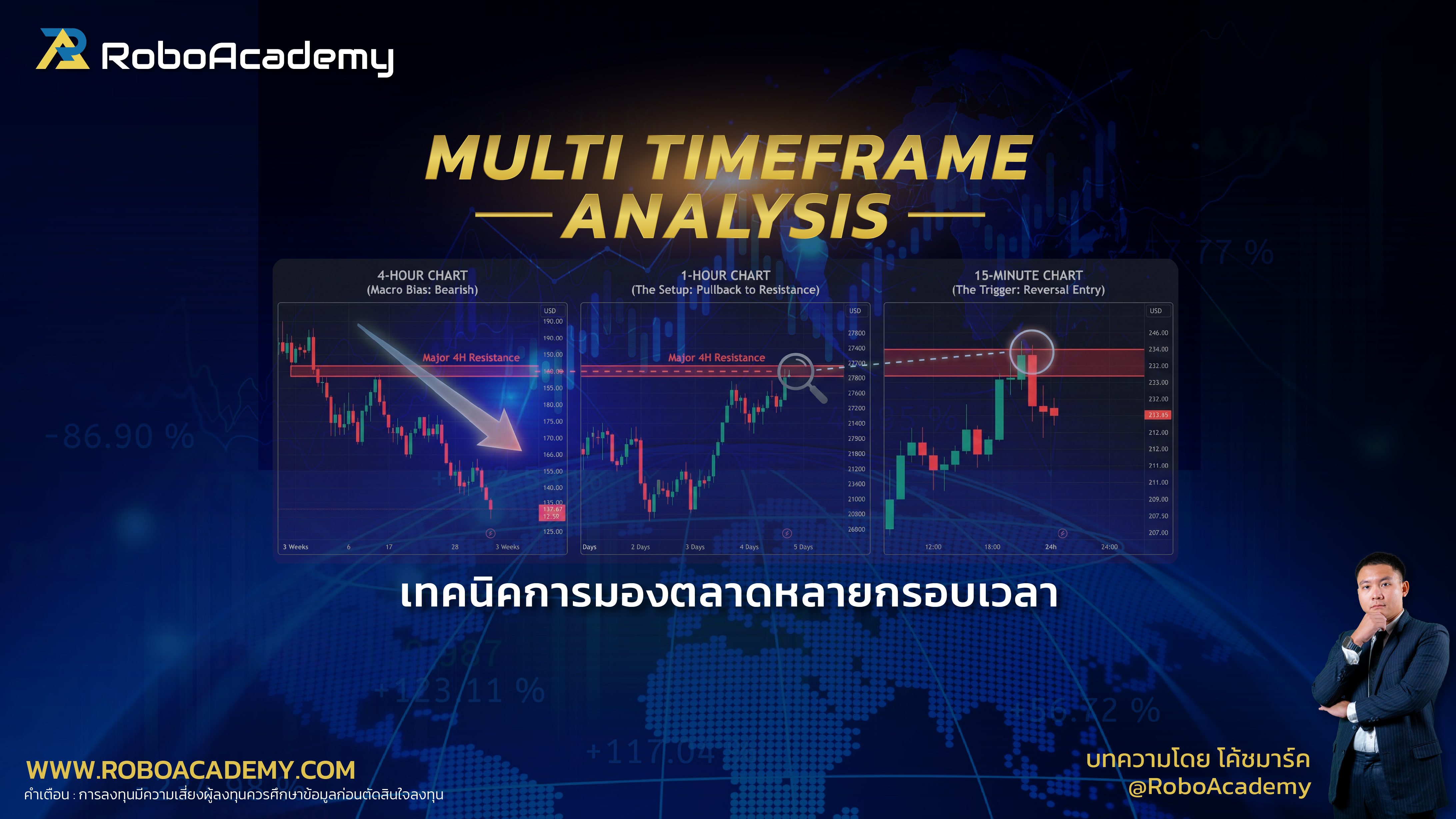
Multi Timeframe Analysis : เทคนิคการมองตลาดหลายกรอบเวลา
ในบทความนี้โค้ชมาร์ค จะพาทุกคนไปทำความเข้าใจเทคนิคการวิเคราะห์ตลาดที่ช่วยยกระดับความแม่นยำของการเทรดอย่างมาก นั่นคือ Multi Timeframe Analysis (MTA) หรือการมองตลาดผ่านหลายกรอบเวลา ทั้งภาพใหญ่และภาพเล็ก ก่อนตัดสินใจเข้าออเดอร์ วิธีนี้ช่วยให้เราไม่ต้องพึ่งพาเพียง TF เดียว แต่สามารถเห็นทั้งแนวโน้มหลักและจุดเข้าที่เฉียบคมกว่าเดิม ทำให้วางแผนการเทรดได้อย่างมั่นใจมากขึ้น ทำไมต้องใช้หลายกรอบเวลา? การใช้หลายกรอบเวลามีความสำคัญเพราะแต่ละ TF มีหน้าที่ต่างกัน กรอบเวลาใหญ่ (Higher TF) ช่วยบอก “ทิศทางหลักของตลาด” ส่วนกรอบเวลาเล็ก (Lower TF) ใช้เพื่อ “หาจังหวะเข้า-ออกอย่างละเอียด” ทำให้ลดความเสี่ยงจากการสวนเทรนด์ และช่วยให้การตัดสินใจมีความแม่นยำมากขึ้น โดยสามารถแบ่งการใช้งานแต่ละกรอบเวลาได้ดังนี้ Higher TF (Daily / H4) : ใช้ดูแนวโน้มหลักของตลาด → เทรนด์ขาขึ้นหรือขาลง Mid TF (H1) : ใช้หาโซนสำคัญ เช่น แนวรับ-แนวต้าน หรือพื้นที่ที่ราคาเคยมีปฏิกิริยา (POI) Lower TF (M15 / M5) : ใช้รอสัญญาณแท่งเทียนหรือ Price Action เพื่อหาจุดเข้า-ออกที่แม่นยำที่สุด ตัวอย่างการใช้งานจริง หากว่า Daily เป็นขาขึ้นชัดเจน ใน H1 ราคากำลังย่อกลับลงมาที่แนวรับ ใน M15 ปรากฏแท่งเทียนกลับตัวอย่างชัดเจน ในกรณีนี้ การเข้า Buy ตามเทรนด์ใหญ่จะมีความเสี่ยงต่ำกว่า และได้จุดเข้าที่มีเหตุผลมากกว่า ไม่ต้องลุ้นสวนเทรนด์ให้เสี่ยงโดนลาก หลักการใช้งาน 3 ขั้นตอน เริ่มจาก Higher TF เพื่อดูแนวโน้มหลัก (Daily / H4) : พิจารณาว่าเทรนด์หลักเป็นขาขึ้นหรือขาลง หาก Daily เป็นเทรนด์ขาขึ้น ควรมองหาเฉพาะจุดเข้าฝั่ง Buy และหลีกเลี่ยงการเทรดสวนเทรนด์โดยไม่จำเป็น เลื่อนไปที่ Mid TF เพื่อหาโซนสำคัญ (H1) : ในกรอบ H1 ให้หาแนวรับ-แนวต้าน หรือ POI ที่ราคาเคยมีปฏิกิริยา จากนั้นรอให้ราคาเข้ามาทดสอบบริเวณดังกล่าว ก่อนจะไปดูสัญญาณเข้าใน TF ที่เล็กลง ไปที่ Lower TF เพื่อหาสัญญาณเข้า (M15 / M5) : เมื่อเห็นราคาเข้าทดสอบโซนสำคัญใน TF ใหญ่ เช่นแท่งเทียน M15 เกิด Rejection พร้อมปิดเขียวแรง แสดงถึงแรงซื้อ อาจใช้เป็นจุดเปิดออเดอร์ Buy ตาม Price Action ได้ อย่าลืมวาง SL ไว้ใต้โซนสำคัญในกรอบเวลาใหญ่เพื่อควบคุมความเสี่ยง ตัวอย่างสไตล์การเทรดที่ใช้ MTA Conservative (ความเสี่ยงน้อย) : รอให้มีสัญญาณยืนยันจาก Price Action ชัดเจน แม้ RR จะไม่สูงและ SL อาจกว้างกว่า แต่ให้ความมั่นใจมากกว่า Aggressive (ความเสี่ยงสูง) : ราคาแตะโซนก็เปิดออเดอร์ทันที ได้ RR สูงและ SL สั้น แต่ก็เสี่ยงโดน SL ง่ายกว่าเช่นกัน ข้อผิดพลาดที่พบบ่อย ⚠️ ใช้ TF เล็กเกินไป เช่น 1 นาที หรือ 30 วินาที → ทำให้เจอ Noise เยอะจนสับสน รีบเข้าออเดอร์สวนเทรนด์ใหญ่ เช่น เทรนด์ขึ้น แต่เห็นสัญญาณ Sell ใน M15 แล้วเปิดทันที → ทำให้โดนลากง่าย ใช้หลาย TF มากเกินไปจนไม่รู้จะเชื่อกรอบเวลาไหน → ควรใช้เพียง 2–3 TF เช่น H4 + H1 + M15 ก็เพียงพอ สรุป Multi Timeframe Analysis ช่วยให้เทรดเดอร์เห็นทั้ง “ภาพใหญ่” และ “ภาพเล็กที่สำคัญ” ก่อนเข้าออเดอร์ ทำให้วิเคราะห์ตลาดได้อย่างแม่นยำ มั่นใจในการตัดสินใจมากขึ้น ลดความเสี่ยงจากการสวนเทรนด์ และช่วยให้การบริหารความเสี่ยงเป็นระบบและมีประสิทธิภาพยิ่งขึ้น บทความโดย โค้ชมาร์ค RoboAcademy —— Disclaimer : การลงทุนมีความเสี่ยง ผู้ลงทุนควรศึกษาข้อมูลก่อนการตัดสินใจลงทุน
เสน่ห์ของหุ้นปันผล : ทางเลือกที่มั่นคงสำหรับนักลงทุนสายกระแสเงินสด
ในโลกของการลงทุนที่เต็มไปด้วยความหวือหวาของหุ้นเติบโตที่พุ่งแรง มีอีกหนึ่งกลุ่มหุ้นที่มีเสน่ห์ดึงดูดไม่แพ้กัน นั่นก็คือ “หุ้นปันผล (Dividend Stock)” สำหรับนักลงทุนที่ต้องการความมั่นคงและไม่ชอบความผันผวนของตลาดมากนัก หุ้นปันผลเปรียบเสมือนโอเอซิสในทะเลทราย เพราะมันคือหุ้นของบริษัทที่จ่ายผลกำไรคืนให้แก่ผู้ถือหุ้นอย่างสม่ำเสมอ เป็นการสร้างกระแสเงินสดที่น่าเชื่อถือในระยะยาว บทความนี้โค้ชนุ๊กกี้จะพาคุณไปสำรวจเสน่ห์และความน่าสนใจของหุ้นประเภทนี้ หุ้นปันผลคืออะไร และทำไมถึงเป็นทางเลือกที่มั่นคง? หุ้นปันผล คือหุ้นของบริษัทที่มักจะอยู่ในช่วงเติบโตเต็มที่แล้ว มีสถานะทางการเงินที่มั่นคงและมีกระแสเงินสดจากการดำเนินงานที่แน่นอน บริษัทเหล่านี้จึงเลือกที่จะแบ่งผลกำไรส่วนหนึ่งที่ได้มาจ่ายคืนให้กับผู้ถือหุ้นในรูปของ "เงินปันผล" อย่างสม่ำเสมอ ซึ่งถือเป็นผลตอบแทนจากการลงทุนที่จับต้องได้ การลงทุนในหุ้นปันผลจึงแตกต่างจากการลงทุนในหุ้นเติบโตที่เน้นกำไรจากส่วนต่างของราคาหุ้น เพราะหัวใจหลักของการลงทุนในหุ้นปันผลคือ "รายได้ที่สม่ำเสมอ" ที่จะเข้ามาในพอร์ตการลงทุนของคุณอย่างต่อเนื่อง ทำให้การลงทุนของคุณไม่ขึ้นอยู่กับความผันผวนของตลาดเพียงอย่างเดียว เสน่ห์ที่เหนือกว่าของหุ้นปันผล : ความมั่นคงและการเติบโตแบบทบต้น การลงทุนในหุ้นปันผลมีข้อดีหลายประการที่นักลงทุนระยะยาวให้ความสำคัญ ได้แก่ : รายได้จากปันผลที่สม่ำเสมอ : เงินปันผลที่ได้รับในแต่ละปีสามารถนำมาเป็นรายได้เสริม หรือใช้จ่ายในชีวิตประจำวันได้ ทำให้คุณมีกระแสเงินสดที่เป็นอิสระจากการทำงาน ความผันผวนต่ำกว่าหุ้นเติบโต : บริษัทที่จ่ายเงินปันผลมักจะเป็นบริษัทขนาดใหญ่ที่มีฐานะมั่นคงและเป็นผู้นำในอุตสาหกรรม ทำให้ราคาหุ้นมีความผันผวนต่ำกว่าหุ้นเติบโตที่มีราคาพุ่งแรงตามความคาดหวังของตลาด โอกาสในการสร้าง "ดอกเบี้ยทบต้น" : หากคุณนำเงินปันผลที่ได้รับกลับไปลงทุนซื้อหุ้นตัวเดิมอย่างต่อเนื่อง พลังของดอกเบี้ยทบต้นจะเริ่มทำงานอย่างเต็มที่ เพราะหุ้นที่คุณถืออยู่ก็จะสร้างเงินปันผลได้มากขึ้นในทุก ๆ ปี ซึ่งจะช่วยเร่งอัตราการเติบโตของพอร์ตการลงทุนของคุณให้เพิ่มขึ้นอย่างมีนัยสำคัญในระยะยาว กลุ่มอุตสาหกรรมยอดนิยมของหุ้นปันผล แม้ว่าบริษัทส่วนใหญ่จะสามารถจ่ายเงินปันผลได้ แต่มีบางกลุ่มอุตสาหกรรมที่ขึ้นชื่อเรื่องการจ่ายเงินปันผลอย่างสม่ำเสมอ เช่น : กลุ่มโรงไฟฟ้าและสาธารณูปโภค : ธุรกิจเหล่านี้มีรายได้ที่ค่อนข้างคงที่ เพราะสินค้าและบริการเป็นสิ่งที่จำเป็นในชีวิตประจำวัน ทำให้มีกระแสเงินสดที่แน่นอนและสามารถจ่ายปันผลได้สม่ำเสมอ กลุ่มสื่อสารและธนาคาร : เป็นธุรกิจที่มีฐานลูกค้าขนาดใหญ่และรายได้มั่นคง การเติบโตอาจไม่หวือหวา แต่ก็สามารถสร้างผลกำไรและเงินปันผลในอัตราที่ดีได้ กลุ่มสินค้าอุปโภคบริโภค : บริษัทที่ขายสินค้าจำเป็นในชีวิตประจำวัน เช่น อาหาร เครื่องดื่ม หรือของใช้ส่วนตัว มักจะมีรายได้ที่มั่นคงและไม่ได้รับผลกระทบจากภาวะเศรษฐกิจมากนัก สรุป : ความมั่นคงคือเสน่ห์ที่ยั่งยืน การลงทุนในหุ้นปันผลอาจไม่ได้ให้ความรู้สึกที่หวือหวาเหมือนการลงทุนในหุ้นเติบโต แต่ก็ให้ความมั่นคงและผลตอบแทนที่ยั่งยืนในระยะยาว ซึ่งเหมาะสำหรับนักลงทุนที่ต้องการสร้างกระแสเงินสดเพื่อใช้จ่ายในยามเกษียณ หรือต้องการให้เงินทำงานโดยไม่ต้องกังวลเรื่องความผันผวนของราคาหุ้นมากเกินไป ดังนั้น หากคุณเป็นคนหนึ่งที่กำลังมองหาวิธีสร้างความมั่งคั่งอย่างมั่นคงในระยะยาว หุ้นปันผลอาจเป็นอีกหนึ่งทางเลือกที่มีเสน่ห์และตอบโจทย์การลงทุนของคุณได้อย่างดี บทความโดย โค้ชนุ๊กกี้ RoboAcademy —— Disclaimer : การลงทุนมีความเสี่ยง ผู้ลงทุนควรศึกษาข้อมูลก่อนการตัดสินใจลงทุน
ความมั่นใจเป็นดาบสองคม : เทคนิคควบคุมอารมณ์และระบบเทรด
ความมั่นใจเป็นหนึ่งในองค์ประกอบสำคัญที่นักเทรดทุกคนต้องมี เพราะทุกครั้งที่กดปุ่ม Buy หรือ Sell เรากำลังตัดสินใจภายใต้ความไม่แน่นอน ไม่มีใครรู้อนาคตของตลาด แต่เราต้อง “เชื่อ” ในทิศทางที่เลือก ความมั่นใจช่วยให้เรากล้าทำตามระบบ กล้าถือออเดอร์ตามแผน และไม่ปล่อยให้ความเห็นของคนอื่นมาสั่นคลอนการตัดสินใจของเรา ในบทความนี้ โค้ชทอมมี่จะพาคุณมาทำความเข้าใจว่าความมั่นใจสามารถเป็นเพื่อนหรือศัตรูของนักเทรดได้อย่างไร พร้อมแชร์เทคนิคการควบคุมอารมณ์และรักษาวินัยในการเทรด เพื่อให้คุณตัดสินใจได้อย่างมั่นใจโดยไม่ตกหลุม “ความมั่นใจเกินพอดี” ความมั่นใจที่พอดี vs ความมั่นใจเกินเหตุ อย่างไรก็ตาม ความมั่นใจเป็นเพียงพลังที่ดี เมื่อมันอยู่ในปริมาณที่พอดี เพราะเมื่อนักเทรดมั่นใจมากเกินไป โดยเฉพาะหลังจากช่วงกำไรต่อเนื่องหลายไม้ ความรู้สึกว่า “เข้าใจตลาดแล้ว” จะเริ่มเข้ามาครอบงำ และนั่นคือจุดที่ความเสี่ยงเริ่มขยายใหญ่แบบเงียบ ๆ รวมถึงอาจกลายเป็นต้นเหตุของการขาดทุนหนักในเวลาอันรวดเร็ว ประสบการณ์ตรงกับความมั่นใจเกินพอดี ผมเองเคยมีประสบการณ์ตรง ช่วงหนึ่งผมทำกำไรติดกันถึง 8 เทรด ความรู้สึกตอนนั้นคือโลกนี้ไม่มีอะไรหยุดผมได้ เมื่อความมั่นใจพุ่งขึ้นสูงจนเริ่มคิดว่าตลาดง่าย ผมใส่ล็อตใหญ่กว่าปกติหลายเท่าในเทรดถัดไปโดยแทบไม่ลังเล เพราะเชื่อว่าไม้นี้ “ต้องชนะ” แต่สุดท้ายราคาไม่เป็นใจและสวนทันที ขาดทุนครั้งนั้นไม่เพียงทำให้กำไรทั้งเดือนหายไป แต่ยังทำให้ผมได้เรียนรู้ว่า ความมั่นใจที่ไม่ได้มีระบบรองรับอาจทำลายทุกอย่างในเวลาไม่กี่นาที อันตรายของความมั่นใจเกินพอดี ความมั่นใจที่มากเกินไปยังมีด้านมืดที่นักเทรดส่วนใหญ่ไม่ทันระวัง เช่น การมองข้ามความเสี่ยง การเข้าตลาดโดยไม่รอสัญญาณชัดเจน การเพิ่มขนาดล็อตโดยไม่มีเหตุผลเชิงระบบ หรือแม้กระทั่งการไม่ยอม Cut Loss เพราะเชื่อว่าตลาดจะกลับมา ซึ่งทั้งหมดนี้คือรูปแบบหนึ่งของอีโก้ที่ปลอมตัวมาในรูปของ “ความมั่นใจเกินเหตุ” สัญญาณเตือนว่าคุณมั่นใจเกินไป เพื่อช่วยเตือนตัวเองไม่ให้ตกหลุมนี้ ลองสังเกตสัญญาณต่อไปนี้ หากเจอข้อใดข้อหนึ่ง แปลว่าคุณกำลังเข้าโซนเสี่ยงของความมั่นใจเกินไปแล้ว ได้แก่ เพิ่มขนาดล็อตหลังชนะติดกันโดยไม่อิงระบบ ละเลยการวิเคราะห์ เพราะรู้สึกว่า “รู้อยู่แล้ว” เปิดออเดอร์โดยไม่ตั้ง Stop Loss รู้สึกว่าตลาด “ง่ายกว่าปกติ” สร้างความมั่นใจจากระบบ ไม่ใช่อารมณ์ ในทางกลับกัน ความมั่นใจที่ถูกต้องควรเป็นความมั่นใจที่สร้างมาจากการฝึกฝน การเก็บข้อมูล การทดสอบระบบ และประสบการณ์จริง ไม่ใช่ความรู้สึกชั่ววูบหลังชนะไม่กี่ครั้ง เมื่อนักเทรดมีระบบที่ผ่านการพิสูจน์ และมีวินัยที่จะทำตามมันแม้ในวันที่ตลาดผันผวน ความมั่นใจที่เกิดขึ้นจะเป็นความมั่นใจที่มั่นคง ไม่ใช่ความมั่นใจจากอารมณ์ สรุป : ความมั่นใจที่พอดี คือกุญแจสู่การอยู่รอด สุดท้ายแล้ว ในตลาดการเงิน ผู้ที่อยู่รอดและเติบโตได้ระยะยาวไม่ใช่คนที่มั่นใจที่สุด แต่คือคนที่สามารถรักษาความมั่นใจให้อยู่ในระดับที่พอดี รู้ว่าควรเชื่อในระบบเมื่อไร และรู้ว่าควรถอยเมื่ออีโก้เริ่มทำงาน เราไม่จำเป็นต้องชนะทุกเทรด แต่เราต้องชนะในระยะยาว และความมั่นใจที่ถูกต้องคือเครื่องมือสำคัญที่จะพาเราไปถึงจุดนั้นได้ บทความโดย โค้ชทอมมี่ RoboAcademy —— Disclaimer : การลงทุนมีความเสี่ยง ผู้ลงทุนควรศึกษาข้อมูลก่อนการตัดสินใจลงทุน
Safe Haven Assets : สินทรัพย์ปลอดภัยในตลาดการเงิน
บทความนี้ โค้ชมาร์คจะพาคุณไปรู้จักหนึ่งในหัวใจสำคัญของการวิเคราะห์ตลาดการเงินในยุคที่ความไม่แน่นอนเกิดขึ้นได้ทุกวัน นั่นคือ “Safe Haven Assets” หรือ “สินทรัพย์ปลอดภัย” คำที่เทรดเดอร์ได้ยินเป็นประจำ แต่หลายคนอาจยังไม่เข้าใจอย่างลึกซึ้งว่ามันส่งผลต่อการเคลื่อนไหวของราคาตลาดอย่างไร และที่สำคัญคือ เราจะใช้ประโยชน์จากพฤติกรรมนี้เพื่อเพิ่มความแม่นยำในการเทรดได้อย่างไร ในโลกการลงทุน เมื่อเกิดเหตุการณ์ที่สร้างความกังวลต่อตลาด ไม่ว่าจะเป็นสงคราม ความตึงเครียดทางการเมือง วิกฤตเศรษฐกิจ หรือแม้แต่ข่าวร้ายระดับโลก นักลงทุนมักจะทำสิ่งที่เรียกว่า “หนีความเสี่ยง” กล่าวคือ พวกเขาจะเทขายสินทรัพย์เสี่ยงอย่างหุ้น แล้วเปลี่ยนไปถือสินทรัพย์ที่มีความมั่นคงสูงกว่า สินทรัพย์ประเภทนี้เองที่เราเรียกว่า Safe Haven Safe Haven คืออะไร? Safe Haven คือสินทรัพย์ที่ได้รับความเชื่อมั่นสูงในช่วงที่ตลาดมีความผันผวน นักลงทุนมองว่าสินทรัพย์เหล่านี้มีเสถียรภาพและความเสี่ยงต่ำกว่า จึงเหมาะที่จะนำเงินไปพักไว้ในยามที่ไม่แน่ใจว่าเศรษฐกิจจะเดินหน้าไปในทิศทางใด พฤติกรรมนี้สามารถสรุปได้ง่าย ๆ ว่า 🔹 เมื่อความเสี่ยงเพิ่มขึ้น → เงินจะไหลเข้าสินทรัพย์ปลอดภัย 🔸 เมื่อสถานการณ์ดีขึ้น → เงินจะไหลกลับสู่สินทรัพย์เสี่ยง กระแสเงินที่ไหลไปมาเช่นนี้เองที่เรามักเรียกว่า “Capital Flow” และเป็นตัวผลักดันราคาของทองคำ ค่าเงิน และตราสารอื่น ๆ อย่างมีนัยสำคัญ ตัวอย่างสินทรัพย์ปลอดภัยหลักที่ตลาดจับตามอง แม้จะมีสินทรัพย์หลายประเภทที่ได้รับความสนใจ แต่ที่ถือว่าเป็น Safe Haven ชั้นนำและถูกใช้งานจริงในตลาดการเงิน ได้แก่ : 1️⃣ ทองคำ (Gold / XAUUSD) ได้รับการยอมรับในฐานะ Safe Haven หมายเลขหนึ่ง มีมูลค่าในตัวเอง ไม่ขึ้นอยู่กับรัฐบาลหรือสกุลเงินใด เมื่อเกิดสงครามหรือวิกฤต โลกมักเห็นราคาทองพุ่งขึ้นทันที 2️⃣ เงินเยนญี่ปุ่น (JPY) ญี่ปุ่นเป็นเจ้าหนี้รายใหญ่ของโลก ภาพลักษณ์ความมั่นคงทำให้ JPY แข็งค่าทันทีเมื่อตลาดเริ่มหวาดกลัว 3️⃣ ฟรังก์สวิส (CHF) สวิตเซอร์แลนด์มีความมั่นคงสูงทั้งด้านการเงินและการเมือง นักลงทุนทั่วโลกใช้ CHF เป็นที่พักเงินสำคัญยามตลาดผันผวน 4️⃣ พันธบัตรรัฐบาลสหรัฐ (US Treasuries) เป็นสินทรัพย์ที่สถาบันการเงินทั่วโลกไว้วางใจ ถึงแม้ USD จะผันผวน แต่พันธบัตรยังถือว่ามีความเสี่ยงต่ำมาก ทำไมเทรดเดอร์ต้องเข้าใจ Safe Haven? เทรดเดอร์ที่เข้าใจ Safe Haven จะอ่านตลาดได้แม่นยำกว่าคนทั่วไป เนื่องจากพฤติกรรมของสินทรัพย์ปลอดภัยเป็นตัวสะท้อนความเสี่ยงในตลาดโลกแบบเรียลไทม์ โดยทั่วไป เราจะเห็นภาพประมาณนี้: 🔴 เมื่อโลกมีความกังวล → ทองคำแข็ง / JPY แข็ง / CHF แข็ง / USDJPY มักร่วง 🟢 เมื่อโลกสงบ เศรษฐกิจเริ่มฟื้นตัว → นักลงทุนกลับเข้าสู่หุ้นและสินทรัพย์เสี่ยง / Safe Haven อ่อนค่าลง ดังนั้น การสังเกตความสัมพันธ์เหล่านี้จะช่วยให้เราตัดสินใจเข้าออเดอร์ได้แม่นยำขึ้น โดยเฉพาะในคู่เงินสำคัญอย่าง XAUUSD, USDJPY, EURCHF เป็นต้น Safe Haven ในสถานการณ์จริงทำงานอย่างไร? ตัวอย่างที่เห็นได้บ่อยที่สุดคือ ช่วงที่เกิดความตึงเครียดทางภูมิรัฐศาสตร์ เช่น ความขัดแย้งระหว่างอิหร่านและอิสราเอล เมื่อตลาดได้รับข่าวร้าย นักลงทุนมักตอบสนองทันทีด้วยการโยกเงินเข้าสินทรัพย์ปลอดภัย ทำให้ราคาทองดีดตัวขึ้นเกือบทุกครั้ง ขณะเดียวกันค่าเงิน JPY และ CHF ก็แข็งค่าขึ้นเมื่อเทียบกับ USD และ EUR ภาพเหล่านี้สะท้อนให้เห็นว่า “เงินกำลังไหลไปหาความปลอดภัย” ซึ่งเป็นสัญญาณที่เทรดเดอร์ไม่ควรมองข้าม ระวังให้ดี : Safe Haven ไม่ได้ตีความง่ายเสมอไป แม้การเคลื่อนไหวของ Safe Haven จะดูมีแบบแผน แต่ในความเป็นจริง ตลาดอาจเกิดการตอบสนองที่รุนแรงเกินไปในช่วงแรก หรือที่เรียกว่า Overreaction ราคาพุ่งแรงออกจากกรอบ Sideways ทันทีหลังข่าว ก่อนจะกลับตัวอย่างรวดเร็วเมื่อความตื่นตระหนกเริ่มคลายลง เทรดเดอร์จำนวนมากมักพลาดในจุดนี้ เช่น เห็นราคาทองพุ่งแล้วรีบเข้า Buy โดยหวังว่าราคาจะไปต่อ แม้บางครั้งจะได้กำไร แต่บ่อยครั้งราคาอาจสวนกลับจนขาดทุนหนัก หากเข้าโดยไม่มีการวาง Stop Loss หรือรอสัญญาณยืนยัน ดังนั้น การเข้าใจจังหวะตลาดและการจัดการความเสี่ยงยังคงเป็นสิ่งสำคัญ แม้คุณจะรู้ว่า Safe Haven คืออะไรแล้วก็ตาม สรุป : Safe Haven คือเข็มทิศสำคัญของการเทรดในยุคความเสี่ยงสูง Safe Haven Assets ช่วยบอกเราว่าโลกกำลังอยู่ในโหมด “กลัว” หรือ “มั่นใจ” และทำให้เราเห็นการเคลื่อนที่ของเงินทุนอย่างมีทิศทาง หากคุณสามารถอ่านกระแสนี้ได้ คุณจะสามารถเทรดตามกระแสใหญ่ได้อย่างมั่นใจมากขึ้น ไม่ว่าจะเป็นตลาดทองคำหรือ Forex ท้ายที่สุด Safe Haven ไม่ใช่เพียงความรู้เชิงทฤษฎี แต่เป็นเครื่องมือสำคัญที่ช่วยให้เทรดเดอร์เข้าใจตลาดในมุมมองที่กว้างขึ้น และพร้อมรับมือทุกสถานการณ์ที่เกิดขึ้นในโลกการเงิน บทความโดย โค้ชมาร์ค RoboAcademy —— Disclaimer : การลงทุนมีความเสี่ยง ผู้ลงทุนควรศึกษาข้อมูลก่อนการตัดสินใจลงทุน
หุ้นเติบโต (Growth Stock) คืออะไร? : เจาะลึกศักยภาพและเสน่ห์ของหุ้นแห่งอนาคต
นักลงทุนหลายคนอาจใฝ่ฝันที่จะค้นพบ "หุ้นแห่งอนาคต" ที่จะเติบโตอย่างก้าวกระโดดและสร้างผลตอบแทนมหาศาล ซึ่งหุ้นในกลุ่มนี้ถูกเรียกว่า หุ้นเติบโต (Growth Stock) แต่จริง ๆ แล้ว หุ้นเติบโตคืออะไร? มีลักษณะอย่างไร? และการลงทุนในหุ้นกลุ่มนี้มีความเสี่ยงและความน่าสนใจอย่างไรบ้าง บทความนี้โค้ชนุ๊กกี้จะพาคุณไปทำความเข้าใจถึงแก่นแท้ของ Growth Stock เพื่อให้คุณสามารถประเมินศักยภาพของธุรกิจได้อย่างแม่นยำ หุ้นเติบโตคืออะไร และมีลักษณะเด่นอย่างไร? หุ้นเติบโต (Growth Stock) คือหุ้นของบริษัทที่มีศักยภาพในการขยายธุรกิจและสร้างรายได้ รวมถึงกำไรที่เพิ่มขึ้นอย่างต่อเนื่องในอัตราที่สูงกว่าค่าเฉลี่ยของอุตสาหกรรมในอนาคต บริษัทเหล่านี้มักจะนำผลกำไรที่ได้กลับไปลงทุนซ้ำเพื่อเร่งการเติบโตของตัวเอง ทำให้มีอัตราการจ่ายเงินปันผลที่ต่ำหรือไม่จ่ายเลย ลักษณะเด่นที่บ่งบอกว่าบริษัทนั้นเป็นหุ้นเติบโตที่แท้จริง มักประกอบด้วย : รายได้เติบโตอย่างสม่ำเสมอ : บริษัทต้องมีตัวเลขรายได้ที่เพิ่มขึ้นทุกปี ซึ่งสะท้อนถึงการขยายตลาดและผลิตภัณฑ์ใหม่ ๆ ที่สามารถเข้าถึงลูกค้าได้มากขึ้น กำไรต่อหน่วยเติบโตต่อเนื่อง : กำไรต่อหุ้น (EPS) ที่เพิ่มขึ้นอย่างต่อเนื่อง แสดงให้เห็นถึงความสามารถในการบริหารจัดการต้นทุนและสร้างผลกำไรได้อย่างมีประสิทธิภาพ มีแผนขยายธุรกิจที่ชัดเจน : บริษัทต้องมีวิสัยทัศน์และแผนการที่ชัดเจนในการขยายผลิตภัณฑ์ บริการ สาขา หรือเข้าสู่ตลาดใหม่ ๆ เพื่อรักษาอัตราการเติบโตในระยะยาว ตัวอย่างหุ้นเติบโตที่เปลี่ยนโลก หุ้นเติบโตที่ประสบความสำเร็จมักจะเป็นบริษัทที่ไม่ได้ยึดติดอยู่กับผลิตภัณฑ์เดิม ๆ แต่สามารถขยายอาณาจักรธุรกิจของตัวเองได้อย่างน่าทึ่ง เช่น : Tesla : เริ่มต้นจากบริษัทผลิตรถยนต์ไฟฟ้า แต่วิสัยทัศน์ของบริษัทนั้นกว้างไกลกว่านั้นมาก เพราะ Tesla กำลังรุกเข้าไปในธุรกิจพลังงานสะอาด ทั้งแผงโซลาร์เซลล์และแบตเตอรี่สำรองสำหรับบ้านและอุตสาหกรรม ทำให้ธุรกิจมีโอกาสเติบโตในหลายมิติ Apple : จากที่เคยเป็นแค่บริษัทขายโทรศัพท์มือถือและคอมพิวเตอร์ Apple ได้ขยายอาณาจักรไปสู่ธุรกิจบริการแบบบอกรับสมาชิก (Subscription) อย่าง Apple Music, iCloud หรือ App Store ซึ่งสร้างรายได้ที่มั่นคงและมีอัตรากำไรสูงอย่างต่อเนื่อง การลงทุนในบริษัทเหล่านี้จึงไม่ใช่แค่การลงทุนในผลิตภัณฑ์ใดผลิตภัณฑ์หนึ่ง แต่คือการลงทุนใน "ศักยภาพการเติบโตที่ไร้ขีดจำกัด" ของธุรกิจ ความผันผวนและความเสี่ยงที่มาพร้อมกับโอกาส แม้ว่าหุ้นเติบโตจะดูน่าสนใจ แต่ก็มาพร้อมกับความเสี่ยงและความผันผวนที่สูงกว่าหุ้นประเภทอื่น ๆ เนื่องจากราคาหุ้นของ Growth Stock มักจะถูกตั้งไว้สูงเกินกว่ามูลค่าปัจจุบันไปมาก เพราะตลาดกำลังคาดหวังการเติบโตในอนาคต ส่งผลให้ : ราคาหุ้นแพง : หุ้นเติบโตมักจะมีค่า P/E Ratio (Price-to-Earnings Ratio) ที่สูงกว่าหุ้นทั่วไปอย่างมาก ซึ่งหมายความว่าคุณต้องจ่ายแพงกว่าเพื่อเป็นเจ้าของหุ้นที่มีกำไรเท่ากัน ความผันผวนสูง : หากบริษัทไม่สามารถทำผลงานได้ตามที่ตลาดคาดหวัง ราคาหุ้นก็อาจปรับตัวลงอย่างรุนแรง ทำให้คุณต้องยอมรับความผันผวนที่มากกว่าปกติ สรุป : เติบโตจริง หรือแค่คาดหวัง? การลงทุนในหุ้นเติบโตจึงไม่ใช่เรื่องของการซื้อตามกระแส แต่คือการใช้ทักษะในการประเมินว่า "บริษัทนั้นมีศักยภาพที่จะเติบโตจริงหรือไม่" และ "ราคาหุ้นที่จ่ายไปนั้นคุ้มค่ากับศักยภาพที่คาดหวังไว้แล้วหรือยัง" หากคุณสามารถแยกแยะระหว่างหุ้นที่เติบโตจริงกับหุ้นที่เติบโตบนความหวังได้ คุณก็จะสามารถสร้างผลตอบแทนที่ยอดเยี่ยมในระยะยาวได้ บทความโดย โค้ชนุ๊กกี้ RoboAcademy —— Disclaimer : การลงทุนมีความเสี่ยง ผู้ลงทุนควรศึกษาข้อมูลก่อนการตัดสินใจลงทุน
อ่านกราฟแบบนักล่า : วิธีวิเคราะห์กราฟหาจังหวะเข้าออกที่ได้เปรียบ
ในบทความนี้ โค้ชทอมมี่จะพาคุณไปทำความเข้าใจมุมมองที่ลึกซึ้งกว่าการเทรดแบบพื้นฐาน หลายคนคิดว่าการอ่านกราฟคือการดูเส้นราคาขึ้นลง หรือจ้องแท่งเทียนแล้วเดาว่าราคาจะไปทางไหน แต่สำหรับโค้ชทอมมี่การอ่านกราฟคือ “การอ่านพฤติกรรมของฝูงชน” ที่ถูกบันทึกลงบนราคาและเวลา มองตัวเองในตลาดให้เหมือน “นักล่าในป่า” คุณไม่สามารถวิ่งไล่สัตว์ป่าได้ทั้งวัน แต่คุณต้องรู้ว่าจะซุ่มที่ไหน รอเมื่อไหร่ และโจมตีเมื่อโอกาสอยู่ข้างคุณมากที่สุด ปัญหาที่เห็นบ่อยคือ นักเทรดส่วนใหญ่ทำตรงกันข้าม พวกเขาวิ่งตามราคา เข้าตลาดเพราะกลัวพลาด และออกจากตลาดเพราะกลัวเสีย สุดท้ายจึงเหนื่อยฟรีโดยไม่ได้กำไรตามที่ตั้งใจไว้ เพื่อหลีกเลี่ยงข้อผิดพลาดเหล่านี้ โค้ชทอมมี่ได้แบ่งปัน 5 ขั้นตอนสำคัญที่ใช้ในการอ่านกราฟแบบนักล่า 1️⃣ เริ่มจากการมองภาพใหญ่ ไม่ใช่จุดเล็ก หนึ่งในความผิดพลาดใหญ่ของมือใหม่คือการเริ่มวิเคราะห์จาก Timeframe เล็ก เช่น 5 นาที หรือ 15 นาที เพราะเห็นว่ามันเคลื่อนไหวเร็ว แต่ในความจริง แนวโน้มหลัก (Trend) มักถูกกำหนดจาก Timeframe ใหญ่ เช่น Daily หรือ Weekly ถ้าคุณเริ่มจากภาพใหญ่ คุณจะรู้ว่า “ฝูงสัตว์กำลังเคลื่อนที่ไปทิศไหน” จากนั้นค่อยซูมลงไปหาจังหวะใน Timeframe เล็กเพื่อหาจุดเข้าออกที่แม่นยำ 2️⃣ หา “พื้นที่ซุ่ม” ของราคา ในกราฟ พื้นที่เหล่านี้คือ แนวรับ (Support), แนวต้าน (Resistance) และ Demand/Supply Zone 🔹 แนวรับ = พื้นที่ที่แรงซื้อมีโอกาสกลับมา 🔹 แนวต้าน = พื้นที่ที่แรงขายมีโอกาสกลับมา 🔹 Demand Zone = จุดที่ในอดีตมีแรงซื้อเข้ามาอย่างรุนแรง 🔹 Supply Zone = จุดที่ในอดีตมีแรงขายเข้ามาอย่างรุนแรง โค้ชทอมมี่จะไม่เข้าเทรดกลางกราฟ เพราะนั่นคือพื้นที่เสี่ยงสูง แต่จะรอให้ราคามาที่โซนสำคัญแล้วค่อยดูพฤติกรรมของแท่งเทียนประกอบ 3️⃣ ใช้ Price Action เป็น “สัญญาณยิง” โซนสำคัญเพียงอย่างเดียวไม่พอ เพราะราคาสามารถทะลุไปต่อได้ โดยต้องรอให้มี “พฤติกรรมยืนยัน” เช่น : 🔸 Pin Bar : บอกการปฏิเสธราคา 🔸 Engulfing : บอกแรงกลับตัวชัดเจน 🔸 Breakout + Retest : เพื่อยืนยันการเปลี่ยนเทรนด์ 4️⃣ จังหวะคือหัวใจของนักล่า นักล่าที่ดีไม่ยิงทุกครั้งที่เห็นเหยื่อ แต่รอให้เป้าหมายอยู่ในระยะที่แม่นยำ โดยใช้หลัก “รอให้ครบ 3 ข้อยืนยัน” ก่อน ถึงค่อยเข้าเทรด 1) ภาพใหญ่ชัดเจน (Trend หรือโครงสร้าง) 2) ราคามาโซนสำคัญ 3) Price Action ยืนยัน 5️⃣ การออกจากตลาดสำคัญไม่แพ้การเข้า หลายคนโฟกัสแค่จุดเข้า แต่ลืมคิดว่าควรออกเมื่อไหร่ ให้คุณกำหนดจุดออกตั้งแต่ก่อนเข้าเสมอ ✅ ถ้าถูก → ออกตามเป้าหมาย Take Profit ❌ ถ้าผิด → ออกทันทีเมื่อถึง Stop Loss สิ่งนี้ช่วยให้ควบคุมอารมณ์และป้องกันการ “ถือขาดทุน” หรือ “ปล่อยกำไรหาย” สรุป การอ่านกราฟแบบนักล่าไม่ใช่เรื่องของการคาดเดา แต่คือการรอในตำแหน่งที่ความน่าจะเป็นอยู่ฝั่งคุณ การเริ่มจากภาพใหญ่ มองหาโซนสำคัญ รอพฤติกรรมยืนยัน และเข้าออกตามแผน จะทำให้คุณไม่ต้องวิ่งไล่ราคาแบบนักเทรดส่วนใหญ่ แต่สามารถเลือกยิงอย่างแม่นยำและเพิ่มโอกาสทำกำไรได้อย่างสม่ำเสมอ บทความโดย โค้ชทอมมี่ 𝗥𝗼𝗯𝗼𝗔𝗰𝗮𝗱𝗲𝗺𝘆 ✨ —— Disclaimer : การลงทุนมีความเสี่ยง ผู้ลงทุนควรศึกษาข้อมูลก่อนการตัดสินใจลงทุน
News Trading Strategy : วิธีอยู่รอดในตลาดผันผวนช่วงข่าวแรง
ในบทความนี้โค้ชมาร์คจะพาคุณเข้าใจการ “เทรดข่าว” ในตลาด Forex อย่างเป็นระบบ ตั้งแต่เหตุผลที่หลายคนพอร์ตพังในช่วงข่าวแรง ไปจนถึงวิธีเตรียมตัวและวางแผนอย่างปลอดภัย เพื่อให้คุณ “อยู่รอดในความผันผวน” ปัญหาที่เทรดเดอร์ส่วนใหญ่เจอ หลายคนคงเคยเห็นว่า เวลามีข่าวเศรษฐกิจสำคัญออกมา เช่น CPI, NFP, FOMC หรือการประกาศอัตราดอกเบี้ย ราคาทองคำและค่าเงินต่าง ๆ มักจะวิ่งแรงมากภายในไม่กี่วินาที บางครั้งขึ้นลงหลายร้อยจุดจน เทรดเดอร์จำนวนมากตื่นเต้น อยากรีบเข้าเทรดทันที แต่ความจริงแล้ว…ช่วงเวลานั้นคือ ช่วงที่ความเสี่ยงสูงที่สุด เทรดเดอร์หลายคนเสียเงินในช่วงนี้ เพราะรีบเปิดออเดอร์ตอนตลาดยังไม่เสถียร หรือเกิดจากความรู้สึก “กลัวตกรถ” หรือที่เรียกว่า FOMO (Fear of Missing Out) ซึ่งมักทำให้เข้าเทรดแบบไม่มีแผน และสุดท้ายต้องขาดทุนจากการเคลื่อนไหวที่รุนแรงของราคา ทำไมข่าวจึงสำคัญต่อการเทรด Forex ข่าวเศรษฐกิจ (Economic News) ถือเป็นแรงขับเคลื่อนหลักของตลาด เพราะตัวเลขทางเศรษฐกิจสะท้อนสภาพเศรษฐกิจของประเทศโดยตรง เช่น NFP, CPI, FOMC หรือการปรับขึ้น-ลงดอกเบี้ยของธนาคารกลาง ซึ่งล้วนมีผลต่อค่าเงินและราคาทองคำ เมื่อมีข่าวสำคัญออกมา ตลาดจะตอบสนองในลักษณะต่าง ๆ ดังนี้ : 1️⃣ Initial Spike : การตอบสนองทันทีหลังจากประกาศข่าว ตัวเลขออกมาผิดคาด ตลาดจะเหวี่ยงแรงในไม่กี่วินาที 2️⃣ Correction : การปรับฐาน ราคาพักตัวหลังจากเหวี่ยงแรงช่วงแรก 3️⃣ Real Direction : ทิศทางจริงของตลาด หลังจากความผันผวนสงบลง และราคาค่อย ๆ เคลื่อนไปตามทิศที่สอดคล้องกับข่าว ✅ การเข้าใจลักษณะเหล่านี้ จะช่วยให้คุณรู้ว่า “ควรรอช่วงไหน” และ “ควรเข้าเทรดเมื่อใด” ขั้นตอนการเตรียมตัวก่อนข่าว ก่อนการเทรดข่าว สิ่งสำคัญที่สุดคือ “การเตรียมตัวล่วงหน้า” 🔹 ตรวจสอบ ปฏิทินเศรษฐกิจ (Economic Calendar) เพื่อดูว่ามีข่าวสำคัญใดจะประกาศ 🔹 ศึกษา ตัวเลขคาดการณ์ (Forecast) เทียบกับ ค่าก่อนหน้า (Previous) เพื่อเตรียมดูผลจริง (Actual) 🔹 เลือกคู่เงินที่เกี่ยวข้องโดยตรง เช่น ข่าว USD → เทรด EURUSD, GBPUSD, XAUUSD ⚠️ อย่าลืมตั้งค่า Time zone เป็น GMT+7 (Bangkok) เพราะหากเวลาคลาดเคลื่อน คุณอาจพลาดจังหวะสำคัญ หรือเข้าเทรดผิดช่วงได้ง่าย กลยุทธ์ช่วงข่าว ช่วงเวลาประกาศข่าวคือช่วงที่ตลาดผันผวนสูงมาก จึงต้องเลือกกลยุทธ์ให้เหมาะกับสไตล์การเทรดของคุณ ไม่ว่าจะเป็น… 1️⃣ เทรดก่อนข่าวออก : บางคนเลือกใช้วิธีวาง Pending Order ล่วงหน้า ทั้งฝั่ง Buy Stop และ Sell Stop โดยตั้ง TP และ SL ชัดเจนไว้แล้ว เมื่อข่าวออก ราคาจะเคลื่อนไปทางใดทางหนึ่ง ก็สามารถทำกำไรได้รวดเร็ว ✅ ข้อดี : ถ้าราคาวิ่งไปทางเดียวโดยไม่เหวี่ยงกลับ จะได้กำไรเยอะในเวลาอันสั้น ❌ ข้อเสีย : หากราคาผันผวนมาก อาจเปิดทั้งสองออเดอร์แล้วโดน SL ทั้งคู่ได้ 2️⃣ รอให้ตลาดเลือกทางก่อน : สำหรับคนที่ต้องการเทรดปลอดภัยกว่า ควรรอดูทิศทางหลังข่าวออกประมาณ 5-15 นาที ให้ตลาดนิ่งก่อน แล้วค่อยเข้าเทรดเมื่อเห็นสัญญาณยืนยัน เช่นการ Break & Retest ✅ แนวทางนี้แม้ได้กำไรน้อยกว่า แต่ลดความเสี่ยงจากการโดนลากได้มาก เหมาะกับเทรดเดอร์ที่เน้น “อยู่รอดระยะยาว” การจัดการความเสี่ยง (Risk Management) หัวใจของการเทรดข่าวอยู่ที่ “การควบคุมความเสี่ยง” 🔸 ควรใช้ความเสี่ยงต่อการเทรดไม่เกิน 1-2% ของพอร์ต 🔸 ลดขนาด Lot ให้เหมาะสม อย่าโลภกับผลลัพธ์ระยะสั้น ⚠️ อย่าตั้ง Stop Loss สั้นเกินไป เพราะตลาดช่วงข่าวเหวี่ยงแรง ควรตั้ง SL ตามโครงสร้างราคาบน Timeframe ที่ใหญ่กว่า บทสรุป : เทรดข่าวอย่างไรให้ปลอดภัยและมีกำไร 🎯 การเทรดข่าวคือ “โอกาส” ที่สามารถสร้างผลตอบแทนได้มากในเวลาอันสั้น แต่ในขณะเดียวกันก็เป็นช่วงที่ความเสี่ยงสูงที่สุด เช่นกัน 🔑 กุญแจสำคัญ คือ คุณต้องมีแผนการเทรดที่ชัดเจน รู้ว่าจะทำกำไรตรงไหนและยอมรับความเสี่ยงตรงไหน และรู้จัก “รอ” จนกว่าตลาดจะเลือกทิศทางจริง ❌ คุณไม่จำเป็นต้องเทรดทุกข่าว ให้เลือกเฉพาะข่าวที่มีผลกระทบสูง (High Impact หรือข่าว 3 ดาว / กล่องแดง) และจำไว้เสมอว่า “การไม่เทรด” ก็ถือเป็นการเทรดรูปแบบหนึ่ง เพราะคุณกำลังเลือกหลีกเลี่ยงความเสี่ยงที่อาจทำลายพอร์ตของคุณ 📌 บทเรียนสำคัญคือ : อย่าโลภ และอย่ารีบร้อน เพราะในการเทรดข่าว “วินัยและการรอคอย” มักให้ผลลัพธ์ดีกว่าการรีบเข้าโดยไม่มีแผนเสมอ บทความโดย โค้ชมาร์ค 𝗥𝗼𝗯𝗼𝗔𝗰𝗮𝗱𝗲𝗺𝘆 ✨ —— Disclaimer : การลงทุนมีความเสี่ยง ผู้ลงทุนควรศึกษาข้อมูลก่อนการตัดสินใจลงทุน
จังหวะก็สำคัญ : เข้า-ออกถูกเวลาเป็นหัวใจของการลงทุน
นักลงทุนมือใหม่ส่วนใหญ่มักจะให้ความสำคัญกับ "คุณภาพ" ของธุรกิจเป็นอันดับแรก ซึ่งเป็นแนวคิดที่ถูกต้องและเป็นพื้นฐานที่สำคัญของการลงทุนระยะยาว แต่ในตลาดหุ้นที่เต็มไปด้วยความผันผวนและอารมณ์ความรู้สึก มีอีกหนึ่งองค์ประกอบที่สำคัญไม่แพ้กัน นั่นก็คือ "จังหวะ" การเข้าลงทุน เพราะแม้แต่หุ้นที่ดีที่สุดในโลก หากคุณเข้าซื้อในจังหวะที่ไม่เหมาะสม ก็อาจทำให้ต้องนั่งรอนานเป็นปี หรือขาดทุนได้แม้จะวิเคราะห์พื้นฐานมาอย่างดีแล้ว บทความนี้โค้ชนุ๊กกี้จะพาคุณไปทำความเข้าใจถึงความสำคัญของ "จังหวะ" และเครื่องมือที่จะช่วยให้คุณจับจังหวะการลงทุนได้ดีขึ้น หุ้นดีก็ขาดทุนได้ หากเข้าผิดจังหวะ ลองจินตนาการว่าคุณได้ค้นพบบริษัทที่ยอดเยี่ยม มีผลกำไรเติบโตอย่างต่อเนื่อง และมีผู้บริหารที่มีวิสัยทัศน์ที่น่าเชื่อถือ คุณตัดสินใจลงทุนในช่วงที่ราคาหุ้นพุ่งขึ้นอย่างรวดเร็วเพราะกระแสความนิยมกำลังมาแรง แต่หลังจากนั้นไม่นาน กระแสก็เริ่มซาลง และตลาดก็เริ่มปรับฐานอย่างรุนแรง สิ่งที่เกิดขึ้นคือ คุณอาจจะต้องถือหุ้นดีตัวนี้ต่อไปอีกเป็นปีเพื่อรอให้ราคาหุ้นกลับมาที่เดิม หรือเลวร้ายกว่านั้นคือต้องขาดทุนไปในช่วงเวลาสั้น ๆ สถานการณ์เช่นนี้ไม่ใช่เรื่องแปลกในตลาดหุ้น เพราะตลาดหุ้นก็เหมือนคลื่นทะเล มีทั้งช่วงที่คลื่นแรงและช่วงที่คลื่นสงบ บางครั้งราคาหุ้นพุ่งขึ้นไม่ใช่เพราะธุรกิจดีขึ้นอย่างมีนัยสำคัญ แต่เป็นเพราะความโลภของตลาด และบางครั้งราคาหุ้นตกลงก็ไม่ใช่เพราะธุรกิจแย่ลง แต่เป็นเพราะความตื่นตระหนกของนักลงทุน สิ่งเหล่านี้ล้วนเป็นปัจจัยที่นักลงทุนต้องทำความเข้าใจและใช้เป็นประโยชน์ในการตัดสินใจ Technical Analysis : เครื่องมือในการอ่าน "จังหวะ" ของตลาด การวิเคราะห์ทางเทคนิค (Technical Analysis) จึงเป็นเครื่องมือที่เข้ามาเติมเต็มการวิเคราะห์ปัจจัยพื้นฐาน (Fundamental Analysis) ไม่ใช่เพื่อคาดเดาอนาคต แต่เพื่อช่วยให้เรามองเห็น "ภาษาของตลาด" และ "จังหวะ" ที่ควรเข้าหรือออกได้อย่างมีระบบ การวิเคราะห์ทางเทคนิคจะช่วยให้คุณ… ✅ มองเห็นแนวรับและแนวต้านที่สำคัญ : แนวรับคือระดับราคาที่นักลงทุนพร้อมจะเข้าซื้อ ทำให้ราคาหุ้นไม่ลดลงไปต่ำกว่านั้นง่าย ๆ ส่วนแนวต้านคือระดับราคาที่นักลงทุนพร้อมจะขาย ทำให้ราคาหุ้นไม่สามารถขึ้นไปสูงกว่านั้นได้ การทำความเข้าใจแนวรับและแนวต้านจะช่วยให้คุณวางแผนการเข้าและออกได้อย่างเหมาะสม ✅ เข้าใจพฤติกรรมของนักลงทุนส่วนใหญ่ : กราฟราคาหุ้นคือภาพสะท้อนอารมณ์ของนักลงทุนในตลาด การศึกษาจากกราฟจะช่วยให้คุณเห็นได้ว่านักลงทุนส่วนใหญ่กำลังอยู่ในช่วงที่มั่นใจ ลังเล หรือกำลังตื่นตระหนก ซึ่งจะช่วยให้คุณตัดสินใจได้ดีขึ้นโดยไม่ใช้อารมณ์ ✅ วางแผนการเข้า-ออกอย่างเป็นระบบ : การวิเคราะห์ทางเทคนิคจะช่วยให้คุณกำหนดจุดเข้าซื้อ (Entry Point) และจุดตัดขาดทุน (Stop Loss) ได้อย่างมีหลักการ ทำให้คุณไม่ต้องตัดสินใจแบบไร้ทิศทางเมื่อราคาหุ้นมีความผันผวน สรุป : การลงทุนที่สมบูรณ์แบบต้องใช้ทั้ง "สมอง + จังหวะ" การลงทุนที่แท้จริงจึงต้องใช้ทั้ง "สมอง" ที่เกิดจากการวิเคราะห์พื้นฐานอย่างลึกซึ้ง และ "จังหวะ" ที่มาจากการทำความเข้าใจกราฟและพฤติกรรมของตลาด การมีเพียงอย่างใดอย่างหนึ่งอาจทำให้การลงทุนของคุณไม่สมบูรณ์แบบ ถ้าคุณลงทุนในหุ้นที่มีพื้นฐานดีเยี่ยม แต่เข้าผิดจังหวะ คุณอาจจะต้องใช้เวลาในการรอคอยที่ยาวนานกว่าที่ควรจะเป็น และถ้าคุณเก่งเรื่องการจับจังหวะ แต่ลงทุนในหุ้นที่พื้นฐานไม่ดี เมื่อกระแสความนิยมหมดไป หุ้นตัวนั้นก็อาจกลับมาอยู่ในราคาเดิมหรือต่ำกว่าเดิมอย่างรวดเร็ว ดังนั้น การลงทุนที่ชาญฉลาดคือการหา "หุ้นดี" และรอ "จังหวะที่ดีที่สุด" เพื่อเข้าไปเป็นเจ้าของหุ้นตัวนั้น บทความโดย โค้ชนุ๊กกี้ 𝗥𝗼𝗯𝗼𝗔𝗰𝗮𝗱𝗲𝗺𝘆 ✨ —— Disclaimer : การลงทุนมีความเสี่ยง ผู้ลงทุนควรศึกษาข้อมูลก่อนการตัดสินใจลงทุน
ตลาดไม่ได้หลอกคุณ : เข้าใจตลาดอย่างเป็นกลางเพื่อควบคุมเกมของตัวเอง
หลายคนที่เข้ามาในตลาดมักพูดว่า “กราฟมันหลอก” หรือ “ตลาดเล่นงานเราอีกแล้ว” แต่คำถามคือ... มันจริงหรือเปล่า? ในบทความนี้โค้ชทอมมี่จะพาทุกคนมาดูให้ชัด ว่าแท้จริงแล้ว “ตลาดไม่ได้หลอกคุณ” สิ่งที่หลอกอยู่…อาจเป็น “สมองและอารมณ์ของคุณเอง” 🧠 ผมได้ยินนักเทรดจำนวนมากบ่นในทำนองเดียวกันว่า “ตลาดมันหลอกเรา” “พอเราปิดปุ๊บ อีก 5 นาทีราคาก็ไปทางที่เราคิดไว้” แต่ความจริงคือ ตลาดไม่ได้หลอกคุณแม้แต่นิดเดียว ตลาดเป็นเพียงภาพสะท้อนของแรงซื้อและแรงขายจากผู้เล่นทั้งหมดในตลาด ณ เวลานั้น มันไม่มีความรู้สึก ไม่มีความคิด และไม่มีแผนการที่จะเล่นงานใครโดยเฉพาะ สิ่งที่หลอกคุณอยู่ตลอดเวลา คือ “สมองและอารมณ์ของคุณเอง” ที่ตีความข้อมูลผิดเพราะอคติ ความกลัว และความโลภ ทำไมเราถึงรู้สึกว่าตลาดหลอก? เพราะสมองเรามี “Cognitive Bias” หรือ “อคติทางความคิด” ที่ทำให้เราเลือกจำหรือมองสิ่งที่สนับสนุนความเชื่อของตัวเอง ถ้าเราคิดว่าตลาดจะขึ้น เราจะโฟกัสแต่สัญญาณ Buy และมองข้ามสัญญาณ Sell ถ้าเรากลัวการขาดทุน เราจะปิดกำไรเร็วเกินไปแม้กราฟยังมีทิศทางไปต่อ นี่คือสิ่งที่เรียกว่า Confirmation Bias ที่สมองจะหาหลักฐานเพื่อยืนยันความคิดเดิมของเรา และเพิกเฉยต่อข้อมูลที่ขัดแย้ง อารมณ์คือผู้ร้ายตัวจริง ในตลาด มีเพียง 2 อารมณ์หลักที่ควบคุมการตัดสินใจของนักเทรด ได้แก่ : 😨 ความกลัว (Fear) : ทำให้ปิดกำไรเร็ว ขายหมู หรือไม่กล้าเข้าเทรดแม้สัญญาณชัด 💰 ความโลภ (Greed) : ทำให้ถือขาดทุนนานเกินไป หรือเปิดล็อตใหญ่เกินเหตุ สองอารมณ์นี้คือศัตรูเงียบที่ทำให้เราหลุดจากแผนการเทรด และกลายเป็นคนที่ “แพ้ด้วยมือของตัวเอง” การตีความตลาดผิดเพราะ “รู้ไม่พอ” หลายครั้งสิ่งที่คุณคิดว่าเป็น “สัญญาณหลอก” แต่แท้จริงแล้วเกิดจากการที่คุณดูข้อมูลไม่ครบหรือมองใน Timeframe ที่ผิด ตัวอย่าง : คุณเห็นกราฟ 15 นาที Breakout ขึ้น แล้วรีบเข้า Buy แต่ใน Timeframe 4 ชั่วโมง จุดนั้นกลับเป็นแนวต้านใหญ่ ทำให้ราคากลับตัวลงทันที นี่ไม่ใช่การหลอก แต่เป็นเพราะคุณวิเคราะห์ตลาดจากมุมมองที่แคบเกินไป พฤติกรรมไล่ล่าราคา (Chasing Price) อีกพฤติกรรมที่ทำให้นักเทรดจำนวนมากเจ็บซ้ำ คือการ “กระโดดเข้าเทรดกลางทาง” เมื่อเห็นราคาวิ่งแรง โดยไม่มีแผนรองรับ ผลคือเข้าตรงปลายคลื่น แล้วเจอการกลับตัวทันที อย่าหลงเชื่อแรงเหวี่ยงของอารมณ์ จงเชื่อในระบบของคุณเอง วิธีหยุดการหลอกตัวเอง ✅ ฝึกมองภาพใหญ่ก่อนภาพเล็ก : เริ่มจาก Timeframe ใหญ่ เพื่อเข้าใจแนวโน้มหลัก แล้วค่อยหาจุดเข้าใน Timeframe ย่อย ✅ ฝึกควบคุมอารมณ์ก่อนเข้าตลาด : ถ้ารู้สึกหัวร้อน ดีใจเกินไป หรือเครียด ให้หยุดก่อน และรอจนกว่าใจจะนิ่งพอ สรุป ตลาดไม่ได้หลอกคุณ แต่คุณต่างหากที่หลอกตัวเองด้วยความเชื่อผิด ๆ และอารมณ์ที่ไม่ถูกควบคุม เมื่อคุณเริ่มมองตลาดอย่างเป็นกลาง ยอมรับความไม่แน่นอน และปรับการตัดสินใจตามระบบ ไม่ใช่จากความรู้สึก คุณจะเลิกตกเป็นเหยื่อของภาพลวงตา และเริ่มเป็นนักเทรดที่ควบคุมเกมของตัวเองได้อย่างแท้จริง บทความโดย โค้ชทอมมี่ 𝗥𝗼𝗯𝗼𝗔𝗰𝗮𝗱𝗲𝗺𝘆 ✨ —— Disclaimer : การลงทุนมีความเสี่ยง ผู้ลงทุนควรศึกษาข้อมูลก่อนการตัดสินใจลงทุน
Breakout & Retest Trading Setup : วิธีเลี่ยงกับดักตลาดและเพิ่มโอกาสทำกำไร
เทรดเดอร์หลายคนเจอปัญหาเดียวกัน เวลาราคา ทะลุแนวรับ/แนวต้าน มักรีบเข้าออเดอร์ทันที เพราะคิดว่าเจอ “สัญญาณทอง” ของการเทรด แต่ความจริงกลับไม่ใช่เสมอไป… บ่อยครั้งสิ่งที่เกิดขึ้นคือ False Breakout ราคาพุ่งขึ้นเพื่อล่อคนเข้าตลาด แล้วก็กลับตัวลงมาอย่างแรง ทำให้ขาดทุนทั้งที่เชื่อว่าตัวเองจับเทรนด์ได้แล้ว วันนี้โค้ชมาร์คจะมาแชร์หนึ่งในกลยุทธ์ที่ช่วยแก้ปัญหานี้ และเป็นวิธีที่ผมใช้บ่อยในการเทรดทองและคู่เงินหลัก ๆ นั่นก็คือ Breakout & Retest Strategy ทำไมกลยุทธ์นี้ถึงเวิร์ค? เพราะมันทำให้เรา รอการยืนยันจากตลาด ก่อนเข้าออเดอร์จริง ๆ ไม่ใช่แค่รีบกดเพราะเห็นราคาทะลุโซน การรอให้ราคากลับมาทดสอบ (Retest) คือการปล่อยให้ตลาดแสดงให้เราดูว่า “โซนนี้แข็งแรงจริง” และพร้อมจะเป็นฐานของการเคลื่อนไหวรอบใหม่ วิธีใช้งาน Break & Retest แบบ Step by Step 1️⃣ หาโซนราคา : มองหาบริเวณที่ราคาเคยเด้งกลับหลายครั้ง เช่น แนวรับหรือแนวต้านในกราฟ H1/H4 ยิ่งราคาสะท้อนหลายครั้ง โซนนั้นก็ยิ่งน่าเชื่อถือ 2️⃣ รอ Breakout : อย่ารีบเข้าเพราะเห็นแค่ไส้เทียนทะลุ รอให้แท่งเทียนเต็ม ๆ ปิดเหนือหรือใต้โซนนั้นก่อน นี่คือสัญญาณว่าแรงซื้อ/แรงขายชัดเจนพอแล้ว 3️⃣ รอ Retest : เมื่อราคากลับมาทดสอบโซนเดิม ให้สังเกตว่าราคายืนได้ไหม เช่น แนวต้านเดิมกลายเป็นแนวรับใหม่ ถ้าโซนนี้รับแรงไว้ได้ ก็ถือว่า Breakout ครั้งนั้นน่าเชื่อถือมากขึ้น 4️⃣ Confirmation Entry : อย่าเข้าออเดอร์ทันทีที่ราคาแตะโซน ให้รอสัญญาณยืนยัน เช่น Engulfing Candle, Pin Bar, หรือการเด้งจากเส้นเทรนด์ไลน์ สิ่งเหล่านี้คือหลักฐานที่ทำให้เรามั่นใจว่าตลาดกำลังเดินตามทิศทางที่เราคาดไว้ การวาง SL และ TP 🛡️ SL : ควรตั้งไว้หลังโซน Retest เล็กน้อยเสมอ เพื่อกันความผันผวนระยะสั้น 🔒 TP : ใช้แนวรับ/แนวต้านถัดไปเป็นเป้าหมาย หรือวางตาม Risk Reward Ration อย่างน้อย 1:2 ขึ้นไป การตั้งเป้าแบบนี้ทำให้เราได้ผลลัพธ์คุ้มค่ากับความเสี่ยง เคล็ดลับเพิ่มเติม 💡 ✅ Break & Retest ใช้ได้ผลที่สุดในตลาดที่กำลังมีเทรนด์ ✅ ใช้ความอดทน เพราะหลายครั้งตลาดเบรกแล้วไม่กลับมาทดสอบ เราต้องยอมปล่อยผ่าน ไม่ใช่พยายามไล่ตาม ✅ หลีกเลี่ยงการใช้ช่วงข่าวแรง เพราะราคาจะวิ่งแบบไร้ทิศทาง ทำให้สัญญาณไม่แม่นยำ 🎯 สรุป กลยุทธ์ Break & Retest อาจจะดูง่าย แต่จริง ๆ แล้วทรงพลังมาก เพราะมันช่วยให้เราเข้าออเดอร์ที่ “ปลอดภัยกว่า” และ “มีโอกาสทำกำไรสูงกว่า” ถ้าเราฝึกใช้และมีวินัยพอ บทความโดย โค้ชมาร์ค 𝗥𝗼𝗯𝗼𝗔𝗰𝗮𝗱𝗲𝗺𝘆 ✨ —— Disclaimer : การลงทุนมีความเสี่ยง ผู้ลงทุนควรศึกษาข้อมูลก่อนการตัดสินใจลงทุน

ซื้อหุ้นเพราะเชื่อใน CEO : ทำไม 'คน' ถึงสำคัญกว่า 'ตัวเลข' ในการลงทุน?
เวลาที่เราตัดสินใจลงทุนในหุ้น สิ่งแรกที่เรามักจะดูกันคือเรื่องของผลประกอบการ ตัวเลขรายได้และกำไรที่สวยหรูในงบการเงิน แต่มีอีกหนึ่งปัจจัยที่นักลงทุนมืออาชีพให้ความสำคัญไม่แพ้กัน นั่นก็คือ "ผู้บริหาร" หรือที่เรียกสั้น ๆ ว่า CEO (Chief Executive Officer) เพราะท้ายที่สุดแล้ว ธุรกิจจะดีได้หรือไม่นั้น ขึ้นอยู่กับผู้ขับเคลื่อน ไม่ใช่แค่ตัวเลขบนกระดาษ บทความนี้โค้ชนุ๊กกี้จะพาคุณไปเจาะลึกว่าทำไมการ "ลงทุนในคน" จึงเป็นอีกหนึ่งหัวใจสำคัญของการสร้างผลตอบแทนที่ยั่งยืน ธุรกิจที่ดีต้องมีผู้บริหารที่ดี : คนคือผู้ขับเคลื่อนทุกอย่าง ลองจินตนาการถึงธุรกิจที่มีผลิตภัณฑ์ยอดเยี่ยม มีตลาดรองรับ และมีเงินทุนที่พร้อม แต่หากขาดผู้นำที่มีวิสัยทัศน์และการบริหารจัดการที่ดี ธุรกิจนั้นก็อาจจะสะดุดและไปไม่ถึงเป้าหมายได้ “ผู้บริหารคือคนที่กำหนดทิศทางขององค์กร” คนที่ตัดสินใจในสถานการณ์ที่ไม่แน่นอน และคนที่สร้างวัฒนธรรมองค์กรให้พนักงานมีเป้าหมายร่วมกัน ประวัติศาสตร์การลงทุนได้พิสูจน์ให้เห็นแล้วว่า ผู้บริหารที่มีความสามารถและมีวิสัยทัศน์ที่กว้างไกลสามารถพลิกฟื้นบริษัทที่กำลังประสบปัญหาให้กลับมาทำกำไรได้อย่างน่าเหลือเชื่อ ในทางกลับกัน ผู้บริหารที่ขาดความซื่อสัตย์หรือมีแผนการที่ผิดพลาด ก็สามารถทำลายธุรกิจที่ครั้งหนึ่งเคยยิ่งใหญ่ให้ล่มจมได้เช่นกัน ดังนั้น การจะตัดสินใจลงทุนในบริษัทใดบริษัทหนึ่ง เราจึงต้องทำความเข้าใจผู้บริหารของบริษัทนั้น ๆ อย่างละเอียด เพราะการลงทุนในหุ้นก็เหมือนกับการที่เราฝากความหวังไว้กับคนเหล่านี้ให้บริหารเงินของเราอย่างมีประสิทธิภาพ วิธีหาข้อมูลและทำความรู้จักกับ CEO ในยุคข้อมูลข่าวสารนี้ การหาข้อมูลเกี่ยวกับผู้บริหารไม่ใช่เรื่องยากอีกต่อไป คุณสามารถหาข้อมูลได้จากหลายช่องทาง ดังนี้ 📰 อ่านบทสัมภาษณ์และข่าวสาร : สื่อต่าง ๆ มักจะมีการสัมภาษณ์ผู้บริหารของบริษัทจดทะเบียนอยู่เสมอ การอ่านบทสัมภาษณ์จะช่วยให้คุณเข้าใจแนวคิดและวิสัยทัศน์ในการดำเนินธุรกิจของพวกเขา 🎧 ฟัง Podcast หรือรายการวิเคราะห์ : ปัจจุบันมี Podcast หรือรายการออนไลน์มากมายที่เชิญผู้บริหารมาพูดคุย ทำให้เราสามารถรับรู้ถึงบุคลิกภาพ วิธีคิด และการสื่อสารของพวกเขาได้ชัดเจนยิ่งขึ้น 📊 ดูแผนธุรกิจจากรายงานประจำปี : รายงานประจำปีของบริษัท (Annual Report) จะสรุปแผนธุรกิจในอนาคตและวิสัยทัศน์ของผู้บริหารอย่างเป็นทางการ ซึ่งเป็นแหล่งข้อมูลที่น่าเชื่อถือที่สุด 📂 สังเกตผลงานในอดีต : หากผู้บริหารคนนี้เคยบริหารบริษัทอื่นมาก่อน ลองย้อนกลับไปดูผลงานในอดีตของพวกเขาว่าประสบความสำเร็จหรือล้มเหลวอย่างไร เพื่อใช้ประกอบการตัดสินใจ วิสัยทัศน์ของผู้บริหารที่ดีประกอบด้วยอะไรบ้าง? การมองหาผู้บริหารที่ดีไม่ใช่แค่การดูว่าพวกเขาพูดเก่งหรือไม่ แต่ต้องมองไปที่เนื้อหาของวิสัยทัศน์และการกระทำที่จับต้องได้ ซึ่งควรประกอบด้วย : 🚀 แผนการเติบโตที่ชัดเจนและเป็นไปได้ : ผู้บริหารที่ดีจะต้องมีแผนธุรกิจที่สามารถบอกได้ว่าบริษัทจะเติบโตไปในทิศทางใดในอีก 3-5 ปีข้างหน้า และแผนนั้นต้องอยู่บนพื้นฐานของความเป็นจริง 🎯 ความสามารถในการแก้ปัญหาเมื่อเกิดวิกฤต : ในโลกธุรกิจที่ไม่มีอะไรแน่นอน ความสามารถในการรับมือกับวิกฤตถือเป็นคุณสมบัติที่สำคัญที่สุดของผู้บริหาร การตัดสินใจที่เด็ดขาดและชาญฉลาดในยามที่เกิดปัญหา จะเป็นตัวชี้วัดความเป็นผู้นำที่แท้จริง 🔎 ความซื่อสัตย์และโปร่งใส : นี่คือคุณสมบัติที่สำคัญที่สุด การบริหารงานอย่างซื่อสัตย์และเปิดเผยข้อมูลที่เป็นจริงต่อผู้ถือหุ้น จะช่วยสร้างความเชื่อมั่นในระยะยาว และป้องกันความเสี่ยงจากปัญหาด้านธรรมาภิบาลในอนาคต สรุป : การลงทุนในคน คือ การลงทุนเพื่ออนาคต การลงทุนในหุ้นจึงไม่ใช่แค่การลงทุนในตัวเลขงบการเงิน แต่คือ "การลงทุนในคน" ที่จะนำพาบริษัทให้เติบโตไปในอนาคต หากคุณสามารถค้นหาผู้บริหารที่มีวิสัยทัศน์ที่กว้างไกล มีความซื่อสัตย์ และมีความสามารถในการบริหารจัดการได้ คุณก็เหมือนกับได้ค้นพบขุมทรัพย์ชิ้นสำคัญของการลงทุน เพราะบางครั้ง ผลตอบแทนที่ยั่งยืนที่สุด อาจไม่ได้มาจากตัวเลข แต่มาจากความเชื่อมั่นที่คุณมีต่อผู้บริหารของบริษัทนั้น ๆ บทความโดย โค้ชนุ๊กกี้ 𝗥𝗼𝗯𝗼𝗔𝗰𝗮𝗱𝗲𝗺𝘆 ✨ —— Disclaimer : การลงทุนมีความเสี่ยง ผู้ลงทุนควรศึกษาข้อมูลก่อนการตัดสินใจลงทุน
จากข่าวสู่กราฟ : วิธีวิเคราะห์ปัจจัยพื้นฐานและแปลงเป็นแผนเทรด
ข่าวเศรษฐกิจและปัจจัยพื้นฐานเป็นเหมือน “แรงลม” ที่ขับเคลื่อนเรือของราคาในตลาดการเงิน แต่ปัญหาของนักเทรดหลายคนคือ รู้ว่าข่าวออกอะไร แต่ไม่รู้จะใช้ยังไงในกราฟ บทความนี้โค้ชทอมมี่จะพาคุณไปเจาะลึกวิธีวิเคราะห์ปัจจัยพื้นฐานและแปลงให้กลายเป็นแผนเทรดที่ใช้งานได้จริง การอ่านข่าวเพียงอย่างเดียวไม่เพียงพอที่จะทำให้คุณชนะเกมนี้ได้ สิ่งสำคัญคือคุณต้องมีทักษะในการ “แปลงข่าวให้เป็นกลยุทธ์ที่ชัดเจนและนำไปใช้ได้จริง” เพราะข่าวไม่ใช่แค่ข้อมูล แต่คือโอกาสที่รอให้คุณตีความและต่อยอด และนี่แหละคือสิ่งที่ผมจะพาคุณไปเจาะลึกทีละขั้นตอน 1️⃣ แยกข่าวที่มีน้ำหนักสูงออกจากข่าวทั่วไป ตลาดเต็มไปด้วยข่าวมากมาย แต่มีเพียงบางประเภทเท่านั้นที่สามารถเปลี่ยนทิศทางราคาได้ทันที เช่น 🔹 อัตราดอกเบี้ย การปรับขึ้นหรือลดดอกเบี้ยจากธนาคารกลาง 🔹 ตัวเลขเงินเฟ้อ ใช้บ่งชี้แรงกดดันด้านราคาและแนวนโยบายการเงิน 🔹 การจ้างงานนอกภาคเกษตร (NFP) ตัวชี้วัดสำคัญของเศรษฐกิจสหรัฐที่ตลาดจับตามอง 🔹 GDP ที่สะท้อนภาพรวมการเติบโตของเศรษฐกิจ โดยส่วนตัว ผมมักให้ความสำคัญกับ “ข่าวที่กระทบโครงสร้าง” มากกว่าข่าวรายวัน ตัวอย่างเช่น คำพูดจากผู้บริหารธนาคารกลางก็อาจทำให้ทิศทางตลาดเปลี่ยนได้ในทันที เป็นต้น 2️⃣ การตีความข่าวอย่างถูกต้อง ตัวเลขที่ออกมาดีกว่าคาดการณ์ ไม่ได้หมายความว่าราคาจะไปในทิศทางเดียวเสมอไป เราต้องดูบริบทควบคู่ด้วย เช่น 🔸 ดีกว่าคาดการณ์ + เทรนด์หลักหนุน → มีโอกาสสูงที่จะไปต่อ 🔸 ดีกว่าคาดการณ์ แต่ขัดกับเทรนด์หลัก → อาจเป็นเพียงการเด้งระยะสั้น (Pullback) ตัวอย่างเช่น ตัวเลข NFP ออกมาดีกว่าคาด แต่ดอลลาร์ยังอยู่ในขาลงยาว เนื่องจากเฟดมีท่าทีลดดอกเบี้ย ผลลัพธ์คือ USD เด้งขึ้นช่วงสั้น ๆ ก่อนกลับมาร่วงต่อ 3️⃣ แปลงข่าวเป็นแผนเทรด ขั้นตอนที่ผมใช้ เริ่มตั้งแต่การวิเคราะห์ข่าวจนถึงการกำหนดจุดเข้า-ออก ดังนี้ วิเคราะห์ทิศทางของข่าว ว่าเป็นบวกหรือลบต่อสินทรัพย์ ดูกราฟ Timeframe ใหญ่ เพื่อเช็กแนวโน้มหลักของตลาด รอจังหวะเข้าเทรดจาก Timeframe เล็ก หลังตลาด “ย่อยข่าว” ประมาณ 15-30 นาที กำหนดจุดเข้า-ออกให้ชัดเจน พร้อมตั้งจุด Stop Loss ตัวอย่างเช่น 🔹 ข่าว CPI สหรัฐ ออกมาต่ำกว่าคาด → USD อ่อนค่า 🔹 กราฟ EUR/USD อยู่ในขาขึ้น และกำลัง Breakout → รอ Retest แล้วค่อย Buy 4️⃣ อย่าเป็นนักล่า 1 นาทีหลังข่าวออก สิ่งที่ผมเห็นบ่อยคือ มือใหม่จำนวนมากรีบเข้าเทรดทันทีเมื่อข่าวประกาศ ผลลัพธ์คือเจอความผันผวนรุนแรงและถูก Stop Loss อย่างรวดเร็ว ผมจึงเลือก “รอ” ให้กราฟนิ่งลงก่อน และดูพฤติกรรมราคาให้ชัดเจน เพื่อเลี่ยง Noise ที่เกิดขึ้นในช่วงแรก สรุป ✅ ข่าวคือพลังขับเคลื่อนตลาด แต่การใช้มันให้ได้ผล ต้องอาศัยการตีความและการวางแผนที่สอดคล้องกับโครงสร้างราคา อย่าเทรดเพียงเพราะ “รู้ข่าว” แต่ให้เทรดเพราะคุณมี “แผนจากข่าว” บทความโดย โค้ชทอมมี่ 𝗥𝗼𝗯𝗼𝗔𝗰𝗮𝗱𝗲𝗺𝘆 ✨ —— Disclaimer : การลงทุนมีความเสี่ยง ผู้ลงทุนควรศึกษาข้อมูลก่อนการตัดสินใจลงทุน
หุ้นแพง-หุ้นถูก ไม่ได้ดูที่ราคา : ไขความลับ "มูลค่า" ที่แท้จริงของกิจการ
นักลงทุนมือใหม่หลายคนมักตกหลุมพรางความคิดที่ว่า "หุ้นราคา 10 บาทคือถูก และหุ้นราคา 1,000 บาทคือแพง" แต่ในโลกของการลงทุนจริง ๆ แล้ว ราคาหุ้นที่ปรากฏบนหน้ากระดานไม่ได้บอกเกี่ยวกับ "ความคุ้มค่า" หรือ "มูลค่าที่แท้จริง" ของกิจการนั้น ๆ เลย บทความนี้โค้ชนุ๊กกี้จะพาคุณไปทำความเข้าใจถึงแก่นแท้ของการประเมินมูลค่าหุ้น เพื่อให้คุณสามารถแยกแยะได้ว่าหุ้นตัวไหนคือ "ของดีราคาถูก" และหุ้นตัวไหนคือ "ของแพงเกินจริง" ถ้าพร้อมแล้วไปกันเลย ราคาไม่ใช่ตัวบอกมูลค่า : ทำไมหุ้น 10 บาทถึงแพงกว่าหุ้น 1,000 บาทได้? ลองจินตนาการว่าคุณกำลังจะซื้อที่ดินแปลงหนึ่ง ถ้ามีคนบอกว่าที่ดินแปลงหนึ่งราคา 1 ล้านบาท กับอีกแปลงหนึ่งราคา 10 ล้านบาท คุณคงไม่สามารถบอกได้ทันทีว่าแปลงไหนถูกกว่ากันจนกว่าคุณจะได้เห็นขนาดและทำเลของที่ดินนั้นเสียก่อน หลักการเดียวกันนี้ สามารถนำมาใช้กับการลงทุนในหุ้นได้เช่นกัน “ราคาหุ้นเป็นเพียงตัวเลขที่สะท้อนถึงราคาตลาด ณ ขณะนั้น” แต่ไม่ได้บอกถึง "มูลค่า" ที่แท้จริงของกิจการ ยกตัวอย่างเช่น : 🔹 หุ้น A ราคา 10 บาท แต่บริษัทขาดทุนอย่างต่อเนื่อง ไม่สามารถสร้างรายได้ที่มั่นคง และมีหนี้สินจำนวนมหาศาล 🔹 หุ้น B ราคา 1,000 บาท แต่บริษัทเป็นผู้นำตลาด มีกำไรเติบโตทุกปี มีกระแสเงินสดดีเยี่ยม และมีศักยภาพในการขยายธุรกิจในอนาคต ในสถานการณ์นี้ แม้ราคาหุ้น B จะสูงกว่า แต่หุ้น B กลับมีความคุ้มค่าในการลงทุนมากกว่า เพราะมีมูลค่าที่แท้จริง สูงกว่านั่นเอง สิ่งที่ควรพิจารณาเมื่อประเมินมูลค่าหุ้นที่แท้จริง การประเมินมูลค่าที่แท้จริงของบริษัทต้องพิจารณาจากปัจจัยพื้นฐานที่อยู่เบื้องหลังตัวเลขบนกระดาน โดยให้ลองตั้งคำถามเหล่านี้กับตัวเอง : 🔸 บริษัทสร้างรายได้และกำไรได้จริงหรือไม่? นี่คือคำถามพื้นฐานที่สำคัญที่สุดสำหรับนักลงทุนระยะยาว คุณต้องตรวจสอบผลประกอบการของบริษัทอย่างละเอียด เพื่อดูว่าบริษัทสามารถทำกำไรได้อย่างสม่ำเสมอหรือไม่ ไม่ใช่แค่รายได้ที่ดูสูงแต่สุดท้ายกลับขาดทุน 🔸 การเติบโตเป็นธรรมชาติหรือเกิดจากความคาดหวัง? หุ้นบางตัวราคาพุ่งขึ้นอย่างรวดเร็วไม่ได้มาจากผลการดำเนินงานที่แท้จริง แต่มาจากความคาดหวังของตลาด (Expectation) เช่น กระแสข่าวหรือเทรนด์ที่เข้ามาเพียงชั่วคราว ซึ่งความหวังเหล่านี้อาจจะหมดไปได้ทุกเมื่อ และเมื่อนั้นราคาหุ้นก็จะปรับตัวลงอย่างรุนแรง 🔸 ราคาที่ตลาดให้ สะท้อนศักยภาพของบริษัทแล้วหรือยัง? นักลงทุนที่ดีจะประเมินว่า "มูลค่าที่แท้จริง" ของบริษัทควรจะเป็นเท่าไหร่ แล้วนำไปเปรียบเทียบกับราคาตลาดในปัจจุบัน หากราคาตลาดต่ำกว่ามูลค่าที่แท้จริง นั่นอาจเป็นโอกาสในการลงทุน แต่หากราคาตลาดสูงเกินกว่ามูลค่าที่ประเมินได้มาก นั่นอาจเป็นสัญญาณเตือนว่าราคาหุ้นอยู่ในระดับที่แพงเกินไปแล้ว สรุป หุ้นถูกคือหุ้นที่ "มูลค่าจริงมากกว่าราคาที่จ่าย" หัวใจสำคัญของการลงทุนที่ถูกต้องคือการซื้อหุ้นที่ "มูลค่าที่แท้จริงมากกว่าราคาที่คุณจ่าย" หุ้นประเภทนี้คือหุ้นดีราคาถูกที่คุณควรค้นหา การตัดสินใจซื้อขายหุ้นจากราคาเพียงอย่างเดียวจึงเป็นการมองโลกของการลงทุนแบบตื้นเขิน ซึ่งจะทำให้คุณเสียโอกาสในการลงทุนในหุ้นที่มีคุณภาพ และอาจทำให้คุณไปติดอยู่ในหุ้นที่ราคาถูกแต่ไม่มีอนาคต ดังนั้น ครั้งต่อไปที่คุณจะเลือกซื้อหุ้น อย่าดูแค่ตัวเลขในกระดาน แต่ให้ดู "สิ่งที่อยู่ข้างหลังตัวเลข" เพื่อค้นพบความคุ้มค่าที่แท้จริงของบริษัทที่คุณกำลังจะเข้าไปเป็นเจ้าของ บทความโดย โค้ชนุ๊กกี้ 𝗥𝗼𝗯𝗼𝗔𝗰𝗮𝗱𝗲𝗺𝘆 ✨ —— Disclaimer : การลงทุนมีความเสี่ยง ผู้ลงทุนควรศึกษาข้อมูลก่อนการตัดสินใจลงทุน
กุญแจสู่กำไรก้อนโต : วิธีฝึกทักษะการรอสำหรับนักเทรด
ในบทความนี้ โค้ชทอมมี่ จะพาพวกเรามาเจาะลึก “กุญแจสู่กำไรก้อนโต” ที่นักเทรดมืออาชีพให้ความสำคัญมากที่สุด แต่กลับเป็นสิ่งที่หลายคนมองข้ามไป นั่นคือ “ทักษะการรอ” หากคุณกำลังสงสัยว่าทำไมการรอถึงเป็นเรื่องยาก และจะฝึกยังไงให้รอเป็น วันนี้โค้ชทอมมี่มีคำตอบ พร้อมเทคนิคที่นำไปใช้ได้จริง "การรอคือทักษะที่นักเทรดส่วนใหญ่ไม่มี" ในโลกการเทรด มีคำพูดที่ผมชอบมากและใช้เตือนตัวเองเสมอว่า “Don’t just do something, sit there.” เพราะในความเป็นจริง กำไรใหญ่ ๆ ไม่ได้เกิดจากการกดปุ่ม Buy/Sell ทุกครั้งที่มีสัญญาณ เพื่อให้รู้สึกว่าได้ทำอะไรสักอย่าง แต่เกิดจาก “การอดทนรอจังหวะที่ใช่” และกล้าลงมืออย่างมั่นใจเมื่อโอกาสนั้นมาถึง การเทรดบ่อย = เพิ่มความเสี่ยงโดยไม่รู้ตัว ยิ่งคุณเทรดมาก คุณยิ่งเปิดโอกาสให้ความผิดพลาดเล็ก ๆ น้อย ๆ สะสมจนกลายเป็นความเสียหายที่ใหญ่ขึ้น ไม่ว่าจะเป็นการตัดสินใจผิดเพราะความเหนื่อยล้า หรือค่าธรรมเนียมและสเปรดที่กัดกินกำไรทีละนิด ในระยะยาว การเทรดทุกจังหวะที่เห็น อาจทำให้คุณเสียพลังและสมาธิไปกับโอกาสที่ไม่มีคุณภาพ แทนที่จะรอโอกาสที่ชัดเจนและมีความน่าจะเป็นสูง ทำไมการรอถึงยาก? เพราะมันขัดกับธรรมชาติของมนุษย์ที่อยาก “ทำอะไรสักอย่าง” อยู่ตลอดเวลา การรอทำให้เรารู้สึกว่าไม่ได้ควบคุมสถานการณ์ แต่ความจริงคือ การรออย่างมีแผนคือการควบคุมตัวเองในระดับสูงสุด หลายคนคิดว่าการรอเป็นการ “เสียเวลา” แต่สำหรับผม การรอคือการ “เตรียมเวลา” ให้พร้อมสำหรับจังหวะที่ใช่ วิธีฝึกทักษะการรอ 1️⃣ ตั้งเงื่อนไขการเข้าเทรดแบบตายตัว เช่น ต้องมี 3 สัญญาณตรงกัน (โครงสร้างตลาด, โซนสำคัญ, และ Price Action ยืนยัน) ถึงจะเข้า 2️⃣ ใช้เวลาอ่านตลาดมากกว่าออกคำสั่ง : วิเคราะห์ภาพใหญ่ก่อนมองภาพเล็ก เพื่อให้มั่นใจว่าคุณเข้าเทรดไปกับทิศทางหลัก ไม่ใช่สวนกระแส 3️⃣ บังคับตัวเองไม่เข้าเพราะเบื่อ : ไม่มีสัญญาณ = ไม่ทำอะไร 4️⃣ ฝึกบันทึก “การไม่เทรด” : เพื่อย้ำเตือนตัวเองว่า การไม่เข้าเทรดบางครั้งคือการตัดสินใจที่ถูกต้องที่สุด เปรียบเทียบกับการล่าสัตว์ คุณไม่เดินยิงมั่ว ๆ ตลอดทางเพราะจะทำให้เสียกระสุนฟรี นักล่าที่มีประสบการณ์จะซุ่มในพุ่มไม้ รอให้เหยื่อเดินเข้ามาในระยะยิงที่มั่นใจ แล้วจึงกดไกปืนเพียงครั้งเดียว การเทรดก็เช่นกัน คุณรอโอกาสที่ความน่าจะเป็นอยู่ฝั่งคุณ และเมื่อถึงเวลานั้น คุณต้อง “ยิง” อย่างมั่นใจและเด็ดขาด Mindset ของคนที่รอเป็น ยอมรับว่าตลาดมีโอกาสใหม่ทุกวัน ไม่จำเป็นต้องคว้าทุกครั้ง วัดความสำเร็จจากการทำตามแผน ไม่ใช่จากจำนวนครั้งที่เทรด ภูมิใจใน “การไม่ทำอะไร” ถ้ามันสอดคล้องกับระบบ กำไรก้อนโตไม่จำเป็นต้องใช้ความถี่ แต่ต้องใช้ความแม่น การรออาจดูน่าเบื่อ แต่ถ้าคุณฝึกได้จนเป็นนิสัย คุณจะมีโอกาสชนะนักเทรดส่วนใหญ่ที่หมดแรงและเงินไปกับการไล่ล่าโอกาสที่ไม่ชัดเจน เพราะในตลาดนี้ คนที่รอเป็น…มักได้เนื้อเต็ม ๆ ในจังหวะที่คนอื่นหมดแรงยิง บทความโดย โค้ชทอมมี่ 𝗥𝗼𝗯𝗼𝗔𝗰𝗮𝗱𝗲𝗺𝘆 ✨ —— Disclaimer : การลงทุนมีความเสี่ยง ผู้ลงทุนควรศึกษาข้อมูลก่อนการตัดสินใจลงทุน
หุ้นไม่ใช่การพนัน ถ้าคุณมีแผน... วิธีสร้าง Mindset แบบนักลงทุนมืออาชีพ
สำหรับนักลงทุนมือใหม่หลายคน อาจเคยได้ยินคำพูดที่ว่า "การลงทุนในหุ้นก็เหมือนการพนัน" ซึ่งคำพูดนี้มักจะมาจากคนที่ยังขาดความเข้าใจและไม่มีหลักการที่ชัดเจนในการลงทุน เพราะแท้จริงแล้วความแตกต่างที่สำคัญที่สุดระหว่าง "การพนัน" และ "การลงทุน" คือ "แผน" บทความนี้โค้ชนุ๊กกี้จะพาคุณไปเจาะลึกถึงวิธีการสร้างแผนการลงทุนที่แข็งแกร่ง เพื่อเปลี่ยนคุณจากผู้เล่นที่หวังพึ่งโชค ให้กลายเป็นนักลงทุนที่มีทิศทางที่ชัดเจนและมีหลักการ "หวัง" VS "วางแผน" : หัวใจที่แตกต่างของการลงทุนอย่างแท้จริง คนที่มองว่าหุ้นคือการพนัน มักจะซื้อขายด้วยอารมณ์และกระแสข่าวเป็นหลัก เช่น ซื้อตามเพื่อนเพราะเห็นว่าราคาหุ้นกำลังพุ่งแรง หรือขายทิ้งเพราะมีข่าวลือที่ไม่ดีแพร่ออกมา การกระทำเหล่านี้คือการซื้อขายที่ปราศจากแผนและหลักการ ซึ่งจะทำให้คุณต้องเผชิญกับความเสี่ยงที่ไม่สามารถควบคุมได้ และมักจะจบลงด้วยการขาดทุนในที่สุด เพราะเมื่อตลาดเกิดความผันผวน คุณจะไม่มีหลักยึดและตัดสินใจผิดพลาดได้ง่าย ในทางกลับกัน นักลงทุนที่มีแผน จะทำในสิ่งที่แตกต่างออกไปอย่างสิ้นเชิง พวกเขาจะใช้เวลาในการศึกษาและวิเคราะห์ข้อมูลอย่างรอบด้าน เพื่อสร้างระบบการวิเคราะห์และมีกรอบในการตัดสินใจที่ชัดเจนก่อนที่จะลงมือทำ การมีแผนเปรียบเสมือนเข็มทิศที่นำทางคุณไปในตลาดที่ไม่แน่นอน ไม่ว่าตลาดจะผันผวนเพียงใด พวกเขาก็จะไม่หลงทางหรือตื่นตระหนกไปกับข่าวลือที่เข้ามากระทบในระยะสั้น แต่จะยึดมั่นในแผนการที่วางไว้ 4 คำถามสำคัญที่ต้องถามตัวเอง ก่อนตัดสินใจซื้อหุ้น ก่อนที่คุณจะตัดสินใจซื้อหุ้นตัวใดก็ตาม ให้ลองหยุดคิดและถามคำถามสำคัญ 4 ข้อนี้กับตัวเองเสมอ ซึ่งคำถามเหล่านี้จะช่วยให้คุณมีแผนการลงทุนที่รัดกุมและรอบด้านยิ่งขึ้น ได้แก่ 1️⃣ หุ้นตัวนี้ทำธุรกิจอะไร❓ คำถามนี้คือรากฐานที่สำคัญที่สุดของการลงทุน คุณต้องทำความเข้าใจแก่นแท้ของธุรกิจที่บริษัททำอย่างถ่องแท้ ไม่ใช่แค่ชื่อย่อหุ้นบนกระดาน เพราะความเข้าใจในธุรกิจจะทำให้คุณรู้ว่าบริษัทนี้มีรายได้มาจากไหน มีจุดแข็งอย่างไร และจะสามารถเติบโตต่อไปในอนาคตได้หรือไม่ หากคุณตอบคำถามนี้ไม่ได้ นั่นคือสัญญาณเตือนว่าคุณยังไม่ควรลงทุนในหุ้นตัวนั้น 2️⃣ คุณซื้อหุ้นตัวนี้เพราะอะไร และมีเหตุผลอะไรที่จะถือมันไว้❓ การลงทุนที่ดีต้องมีเหตุผลรองรับเสมอ ไม่ใช่ซื้อเพราะอารมณ์หรือคำแนะนำจากผู้อื่น หากคุณซื้อเพราะบริษัทมีผลประกอบการที่แข็งแกร่งและเป็นผู้นำในอุตสาหกรรม เหตุผลนี้ก็จะเป็นเสาหลักที่ทำให้คุณยังคงถือหุ้นตัวนั้นต่อไปได้ แม้ในช่วงที่ราคาหุ้นมีการปรับฐานลง เพราะคุณเชื่อในพื้นฐานของบริษัท ไม่ใช่แค่ราคาในระยะสั้น 3️⃣ คุณจะขายหุ้นตัวนี้เมื่อไหร่❓ การกำหนดเป้าหมายในการขายเป็นสิ่งสำคัญไม่แพ้การตัดสินใจซื้อ คุณต้องมีแผนที่ชัดเจนว่าจะทำกำไรเมื่อไหร่ เช่น เมื่อราคาขึ้นถึงเป้าหมายที่ตั้งไว้ หรือเมื่อผลประกอบการของบริษัทเริ่มชะลอตัวลง การมีแผนการขายจะช่วยป้องกันไม่ให้คุณเกิดความโลภและติดอยู่ในหุ้นที่อาจจะถึงจุดสูงสุดแล้ว 4️⃣ ถ้าเกิดขาดทุน คุณจะทำอย่างไร❓ ทุกการลงทุนย่อมมีความเสี่ยง การเตรียมแผนรองรับความเสี่ยงจึงเป็นสิ่งจำเป็น หากราคาหุ้นไม่เป็นไปตามที่คุณคาดหวัง คุณจะยอมรับการขาดทุนและขายหุ้นทิ้งเมื่อไหร่? การกำหนดจุดตัดขาดทุน (Stop Loss) อย่างเป็นระบบจะช่วยจำกัดความเสียหายและปกป้องเงินทุนของคุณจากการขาดทุนที่รุนแรง การมีแผนสำรองนี้จะช่วยให้คุณนอนหลับได้อย่างสบายใจ แผน คือ เกราะป้องกันอารมณ์...ศัตรูตัวฉกาจของนักลงทุน ตลาดหุ้นมักเต็มไปด้วยอารมณ์ความรู้สึก ไม่ว่าจะเป็น “ความโลภ (Greed)” ที่ทำให้คุณอยากซื้อหุ้นในราคาที่แพงเกินไป หรือ “ความกลัว (Fear)” ที่ทำให้คุณตัดสินใจขายหุ้นดี ๆ ทิ้งไปในราคาที่ถูกแสนถูกในยามที่ตลาดกำลังตกใจ แต่หากคุณมีแผนการลงทุนที่ชัดเจนและมีวินัยที่จะทำตามแผนนั้นได้ คุณก็จะมีเครื่องมือที่ทรงพลังที่สุดในการเอาชนะอารมณ์เหล่านี้ "แผน" ที่ดีไม่ใช่แค่เอกสารหรือตัวเลข แต่คือกรอบความคิดที่ถูกสร้างขึ้นจากการวิเคราะห์ข้อมูลอย่างรอบด้าน และเป็นเครื่องมือที่ช่วยให้คุณตัดสินใจได้อย่างมีเหตุผล ไม่ใช่ด้วยความรู้สึก เพราะในโลกของการลงทุน อารมณ์คือศัตรูตัวฉกาจที่สามารถทำลายแผนการลงทุนที่ดีที่สุดของคุณได้เสมอ การยึดมั่นในแผนจะช่วยให้คุณสามารถลงทุนได้อย่างมั่นคงและยั่งยืนในระยะยาว บทความโดย โค้ชนุ๊กกี้ 𝗥𝗼𝗯𝗼𝗔𝗰𝗮𝗱𝗲𝗺𝘆 ✨ —— Disclaimer : การลงทุนมีความเสี่ยง ผู้ลงทุนควรศึกษาข้อมูลก่อนการตัดสินใจลงทุน

สนามรบแห่งจิตวิทยา : อยู่ให้รอดในตลาด แล้วโอกาสจะเป็นของคุณ
ตลาดไม่ใจดี แต่ก็ไม่ได้ใจร้าย มันไม่ได้ต้องการให้คุณรวย แต่ก็ให้โอกาสเสมอ มันแค่เป็นสนามทดสอบว่าคุณพร้อมหรือยัง ผมเห็นนักเทรดจำนวนมากเดินเข้ามาในตลาดด้วยความฝันว่าจะรวยเร็วในไม่กี่เดือน พวกเขาเชื่อว่าตลาดคือเครื่องพิมพ์เงินที่ทำงานตลอด 24 ชั่วโมง แต่ความจริงก็คือ “ตลาดไม่ได้ถูกสร้างขึ้นเพื่อทำให้ใครรวยง่าย ๆ” ตลาดเป็นเหมือนเครื่องจักรขนาดใหญ่ที่ขับเคลื่อนด้วยแรงซื้อและแรงขายของผู้เล่นนับล้านทั่วโลก ไม่ว่าจะเป็นนักลงทุนระยะยาวที่ถือเป็นปี เทรดเดอร์รายวัน สถาบันการเงินที่มีเงินมหาศาล และแม้แต่ระบบอัลกอริทึมที่เทรดด้วยความเร็วระดับมิลลิวินาที หน้าที่ของมันมีเพียงอย่างเดียว คือ เคลื่อนไปตามแรงที่เกิดขึ้นจริงในแต่ละช่วงเวลา และในกระบวนการนั้น มันจะคัดคนที่ไม่มีแผนหรือไม่พร้อมออกจากเกมอย่างไร้ความปรานี ตลาดคือสนามรบของจิตวิทยา คุณต้องเข้าใจก่อนว่า ตลาดเต็มไปด้วยกับดักทางจิตวิทยา ทั้งสัญญาณหลอก ข่าวลวง การเคลื่อนไหวที่ไร้เหตุผล และอีกมากมาย ซึ่งสิ่งเหล่านี้ไม่ได้เกิดขึ้น เพราะมีใครตั้งใจ “หลอก” คุณโดยตรง แต่มันเกิดจากความขัดแย้งของผลประโยชน์และกลยุทธ์ที่ต่างกัน 🏦 นักลงทุนสถาบันอาจขายทำกำไร ในจุดที่นักเทรดรายย่อยเพิ่งเริ่มเข้าซื้อ 🤖 หุ่นยนต์เทรดอาจสร้างความผันผวนชั่วคราว เพื่อเก็บกำไรจากส่วนต่างราคาเพียงเล็กน้อย 📰 ข่าวเศรษฐกิจที่ถูกตีความต่างกัน อาจทำให้ตลาดแกว่งแรงแม้เนื้อหาข่าวจะเหมือนเดิม ตลาดไม่สนใจว่าคุณจะคิดถูกหรือผิด มันเพียงเคลื่อนไปตามแรงที่เกิดขึ้น ไม่ได้ตามความต้องการของคุณ การอยู่รอดสำคัญกว่าการทำกำไรเร็ว เพราะถ้าคุณยังมีทุน คุณยังมีโอกาสแก้ตัว อย่าเข้าตลาดเพราะอารมณ์ ไม่ว่าจะเป็นความโลภหรือความกลัวก็ตาม เพราะอารมณ์จะทำให้คุณหลุดจากแผน โอกาสมีเสมอ แต่ไม่ได้รอคุณตลอดไป ตลาดไม่ได้สร้างมาเพื่อให้ใครรวย แต่มันก็ไม่ได้ปิดกั้นไม่ให้ใครรวยเช่นกัน โอกาสจะเปิดให้คนที่มีความรู้ วินัย และแผนการที่ชัดเจน สิ่งที่คุณต้องทำคือ ✅ เรียนรู้จนรู้จักตลาดมากพอ เพื่อแยกสัญญาณจริงออกจากสัญญาณหลอก ✅ สร้างระบบเทรดที่พิสูจน์แล้วว่าได้ผล และทำตามอย่างเคร่งครัด ✅ ปกป้องเงินทุนเหมือนปกป้องชีวิต เพราะถ้าคุณยังอยู่ในเกม คุณก็ยังมีสิทธิ์ชนะ ตลาดไม่ได้ต้องการให้คุณรวย แต่มันมอบโอกาสให้ทุกคนอย่างเท่าเทียม ปัญหาคือ คนส่วนใหญ่เข้ามาโดยไม่มีแผนและปล่อยให้อารมณ์ครอบงำ ถ้าคุณควบคุมอารมณ์ ปกป้องทุน และรอจังหวะที่เหมาะสม คุณจะอยู่ในเกมนานพอที่จะใช้โอกาสเหล่านั้นให้กลายเป็นกำไรได้ และนั่นคือเหตุผลที่ผมเชื่อเสมอว่า ในตลาดนี้ คนที่อยู่รอดคือคนที่ชนะ บทความโดย โค้ชทอมมี่ 𝗥𝗼𝗯𝗼𝗔𝗰𝗮𝗱𝗲𝗺𝘆 ✨ —— Disclaimer : การลงทุนมีความเสี่ยง ผู้ลงทุนควรศึกษาข้อมูลก่อนการตัดสินใจลงทุน

เริ่มต้นลงทุนหุ้นต้องทำอย่างไร? คู่มือฉบับเข้าใจง่ายสำหรับมือใหม่
การเดินทางเข้าสู่โลกของการลงทุนในหุ้น อาจดูเป็นเรื่องซับซ้อนสำหรับใครหลายคน แต่จริง ๆ แล้วแก่นแท้ของมันนั้นเรียบง่ายกว่าที่คิดมาก บทความนี้โค้ชนุ๊กกี้จะพาคุณไปสำรวจแนวคิดพื้นฐานที่สำคัญที่สุดสำหรับนักลงทุนมือใหม่ เพื่อให้คุณเริ่มต้นได้อย่างถูกทิศทางและมั่นคง การลงทุนในหุ้นไม่ใช่แค่ตัวเลข แต่มันคือการเป็นเจ้าของธุรกิจ แนวคิดที่ผิดพลาดที่สุดที่นักลงทุนมือใหม่มักจะมีคือการมองว่า หุ้นเป็นเพียงแค่ตัวเลขบนหน้าจอ ที่มีไว้เพื่อซื้อขายเก็งกำไรและหวังว่าราคาจะขึ้น แต่ในความเป็นจริงแล้ว การซื้อหุ้นคือการเป็นเจ้าของธุรกิจนั้น ๆ หากคุณซื้อหุ้น 1% ของบริษัทใดบริษัทหนึ่ง นั่นหมายความว่าคุณคือเจ้าของ 1% ของกิจการนั้นจริง ๆ และคุณย่อมมีส่วนได้ส่วนเสียในผลกำไรและผลการดำเนินงานของบริษัท ดังนั้น คำถามแรกที่คุณควรตอบให้ได้ก่อนตัดสินใจลงทุนในหุ้นตัวใดก็คือ "คุณรู้จักธุรกิจที่คุณกำลังจะเข้าไปเป็นเจ้าของดีพอหรือยัง?" ถ้าคุณไม่รู้ว่าบริษัทนั้น ๆ ทำธุรกิจอะไร มีรายได้มาจากช่องทางไหน มีกำไรหรือไม่ ก็เหมือนกับการที่คุณตัดสินใจซื้อธุรกิจร้านอาหารทั้ง ๆ ที่ไม่เคยเข้าไปดูเมนู ไม่เคยชิมอาหาร และไม่รู้ว่าร้านมีลูกค้าหรือไม่ ซึ่งแน่นอนว่าเป็นการลงทุนที่มีความเสี่ยงสูงมาก เริ่มต้นการลงทุนจากการสังเกตสิ่งรอบตัว คุณอาจคิดว่าการหาข้อมูลบริษัทเป็นเรื่องยากและซับซ้อน แต่จริง ๆ แล้วมันเริ่มต้นได้จากสิ่งใกล้ตัวในชีวิตประจำวันของคุณนี่เอง ไม่ว่าจะเป็น… ☕ คุณดื่มกาแฟยี่ห้ออะไรทุกเช้า? ถ้าคำตอบคือ Starbucks คุณอาจลองตั้งคำถามดูว่าทำไมร้านนี้ถึงมีคนเข้าเยอะเสมอ และบริษัท Apple สร้างรายได้มหาศาลจากการขายผลิตภัณฑ์อะไรบ้าง 📱 คุณใช้สมาร์ทโฟนยี่ห้ออะไร? ถ้าเป็น iPhone คุณอาจจะลองตั้งคำถามดูว่าบริษัท Apple สร้างรายได้มหาศาลจากการขายผลิตภัณฑ์อะไรบ้าง 🛒 คุณซื้อสินค้าอุปโภคบริโภคที่ไหนเป็นประจำ? ถ้าคุณเป็นลูกค้าประจำของ 7-11 คุณก็สามารถค้นหาได้ว่าใครคือเจ้าของกิจการที่แท้จริงเบื้องหลังความสำเร็จนี้ การตั้งคำถามและสังเกตพฤติกรรมผู้บริโภคในชีวิตประจำวันเป็นจุดเริ่มต้นที่ดีเยี่ยม เพราะมันจะช่วยให้คุณมองเห็น “ธุรกิจที่แข็งแกร่งและมีอนาคต” ซึ่งเป็นทักษะสำคัญของนักลงทุนที่ดี ทักษะแรกที่ต้องมี คือ “การมองเห็นสิ่งที่คนอื่นมองข้าม” นักลงทุนที่ประสบความสำเร็จไม่ได้มีเพียงแค่ความรู้เชิงเทคนิคที่ลึกซึ้งเท่านั้น แต่พวกเขามักจะมีทักษะในการ “ตั้งคำถาม และ มองเห็นโอกาสในสิ่งธรรมดา” ที่คนทั่วไปมองข้ามไป พวกเขาจะใช้ชีวิตเหมือนกับนักสืบที่พยายามทำความเข้าใจว่าอะไรคือปัจจัยที่ทำให้ธุรกิจนั้น ๆ เติบโต และอะไรคือจุดแข็งที่ทำให้ธุรกิจนั้นอยู่รอดในระยะยาว การเริ่มต้นด้วยการทำความเข้าใจสิ่งที่คุณใช้และรู้จักดีที่สุดจะช่วยลดความซับซัสซ้อน และทำให้คุณสามารถวิเคราะห์ธุรกิจด้วยมุมมองที่ใกล้เคียงกับความเป็นจริงมากขึ้น สรุปเส้นทางสู่การลงทุนที่ยั่งยืน การลงทุนในหุ้นไม่ใช่เรื่องของการเก็งกำไรในระยะสั้นหรือการคาดเดาจากข่าวลือ แต่คือการเป็น "เจ้าของร่วม" ในธุรกิจที่คุณเชื่อมั่น เริ่มต้นง่าย ๆ ด้วยการเปลี่ยนมุมมองจากการเป็นแค่ "ผู้ซื้อ" มาเป็น "เจ้าของธุรกิจ" ที่ต้องทำความเข้าใจกลไกการทำเงินของมันก่อนเสมอ เพราะความรู้ความเข้าใจนี้คือรากฐานที่สำคัญที่สุดที่จะทำให้คุณสามารถลงทุนได้อย่างมั่นคงและยั่งยืนในระยะยาว บทความโดย โค้ชนุ๊กกี้ 𝗥𝗼𝗯𝗼𝗔𝗰𝗮𝗱𝗲𝗺𝘆 ✨ —— Disclaimer : การลงทุนมีความเสี่ยง ผู้ลงทุนควรศึกษาข้อมูลก่อนการตัดสินใจลงทุน
