
Economic Calendar
US Dollar Holds Steady as Markets Focus on Political Developments Amid Sparse Economic Calendar
The US dollar traded with a softer tone yesterday due to the lack of new developments and technical corrections. The latest labour indicators pointed to a cooling job market, prompting investors to increase their bets that the Federal Reserve could begin cutting interest rates as early as December. A softer labour market generally reduces the urgency for the Fed to maintain high policy rates, lowering the yield advantage of dollar-denominated assets and pressuring the greenback.
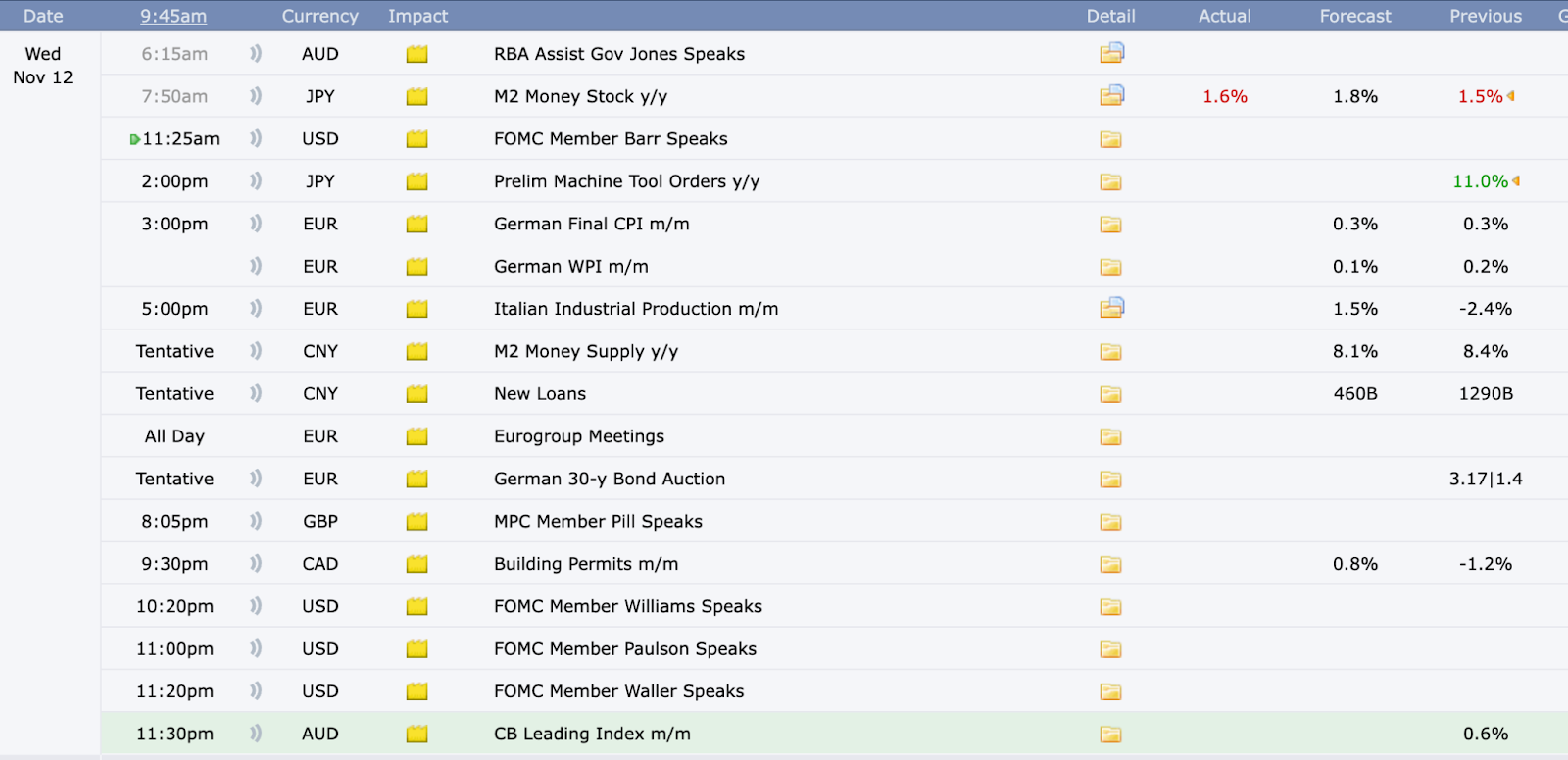
With no major economic data scheduled for release today, traders are shifting their full attention to political developments in Washington. The House of Representatives is expected to vote on the compromise bill approved by the Senate, which could finally bring an end to the partial government shutdown. However, the reopening may come too late for the release of key economic reports that had been due this week, including October’s Consumer Price Index, Producer Price Index, and retail sales. The absence of these releases has left investors without fresh macroeconomic guidance, resulting in subdued market activity and limited direction for the dollar. A successful passage of the funding bill could ease political uncertainty but may also reduce the dollar’s safe-haven appeal. Conversely, any delays or renewed fiscal tension could briefly support the greenback.
From a broader perspective, the dollar’s performance has remained resilient despite these uncertainties. From the multi-year low recorded on September 17, when the Federal Reserve delivered its first rate cut of the year, the Dollar Index has rallied roughly 4.3%, reaching its highest level since the end of May at 100.35. It briefly tested the 200 moving average for the first time since early March last week, signaling a potential shift in market sentiment. However, the momentum appears to have faded as traders await clarity on both monetary policy and the political front.
While the dollar edged slightly higher at times as investors awaited new economic data and central bank commentary, the yen fell to its weakest level since February as optimism increased over progress in ending the US government shutdown. The improved risk appetite reduced demand for traditional safe-haven assets, including the dollar, even as its movements remained steady against most major peers.
Emerging market currencies showed mixed reactions to the dollar’s performance. The Indian rupee held steady as state-run banks stepped in to sell dollars and curb volatility, while the British pound gained ground as traders welcomed stability in UK monetary policy and mild dollar softness. These developments highlight that much of the dollar’s recent moves have been driven more by shifts in domestic policy expectations than by broad global risk sentiment.
Investor positioning also supports the idea of limited volatility in the near term. Expectations for large dollar swings have fallen to their lowest levels since before the last US presidential election, suggesting a market environment of consolidation rather than sharp directional movement.
Overall, the near-term outlook for the US dollar remains neutral to slightly bearish. Unless the reopening of the government and subsequent data releases provide fresh evidence of economic strength, the dollar may continue to trade sideways or experience mild downward pressure.
Analysis by Coach Angel, RoboAcademy
——
Disclaimer: Investing is risky. Investors should study the information before making investment decisions.
